
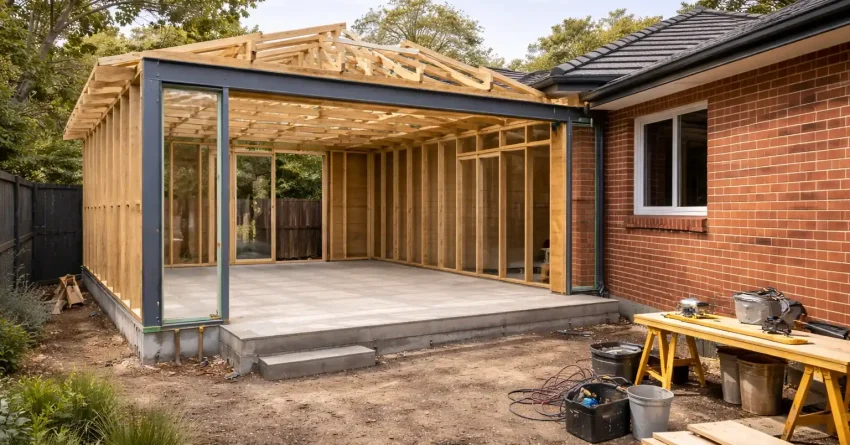
Every home extension in Sydney carries a defined set of structural requirements, engineering, design, and construction standards that determine whether your addition is safe, stable, and legally compliant. Understanding these requirements before you finalise your design saves tens of thousands of dollars in rework, delays, and failed inspections.
This guide covers foundation standards, engineering obligations, building code compliance, cost expectations, and the most common structural pitfalls Sydney homeowners face when extending their properties.
What Are Structural Requirements for Home Extensions?
Structural requirements for home extensions are the engineering, design, and construction standards that ensure a new addition is safe, stable, and compliant with Australian building regulations. They cover everything from how deep your footings need to be, to how new walls connect to existing framing, how loads transfer through the building, and how the completed structure performs under wind, weight, and environmental stress.
These requirements exist to protect occupants, neighbouring properties, and the long-term integrity of the building itself. They are not optional guidelines. They are enforceable standards set by the National Construction Code, local council development controls, and the professional judgement of licensed structural engineers.
How Sydney Councils Define Structural Compliance
In Sydney, structural compliance for extensions is governed by a layered system. At the top sits the National Construction Code (NCC), which sets baseline performance requirements for all residential buildings across Australia. Below that, the NSW Environmental Planning and Assessment Act establishes the approval framework. At the local level, each council applies its own Development Control Plans (DCPs) and Local Environmental Plans (LEPs), which impose additional structural and planning constraints based on zoning, heritage overlays, flood mapping, and bushfire risk.
For most home extensions, you need either a Complying Development Certificate (CDC) or a Development Application (DA). Both pathways require structural documentation. A CDC, processed through a private certifier, follows the State Environmental Planning Policy (Exempt and Complying Development Codes). A DA goes through your local council and applies to more complex or non-standard projects.
The certifier or council requires structural engineering drawings, calculations, and compliance certificates at multiple stages of construction. Missing any of these creates stop-work risks and potential demolition orders.
Why Structural Requirements Matter Before You Build
Structural requirements are not something you address after the design is finished. They shape the design itself. The type of soil on your site determines your footing system. The condition of your existing home determines whether it can support a new load path. The proximity to boundaries determines fire-resistance ratings for walls and openings.
Skipping the structural assessment early means designing an extension that cannot be built as drawn. That produces redesign fees, re-engineering costs, and weeks of lost time. Engaging a structural engineer before your plans are finalised is the single most effective way to avoid this outcome.
Key Structural Elements Every Extension Needs
Every extension, regardless of size or type, must address a core set of structural elements. Getting them right means your extension stands safely for decades. Getting them wrong means cracking, movement, water ingress, and potentially catastrophic failure.
Foundation and Footing Requirements
Foundations are the most critical structural element of any extension. In Sydney, footing design is driven primarily by soil classification. The AS 2870 standard for residential slabs and footings classifies sites from Class A (stable, non-reactive) through to Class P (problem sites requiring specific engineering).
Most Sydney suburbs sit on Class M (moderately reactive) to Class H (highly reactive) clay soils, particularly across Western Sydney, the Hills District, and parts of the Inner West. Reactive soils expand and contract with moisture changes, which means footings must be deeper, stiffer, and more heavily reinforced than those on stable ground.
Common footing types for extensions include:
- Strip footings for load-bearing walls on stable ground
- Pad footings for point loads such as steel columns
- Pier and beam systems for sloping sites or reactive soils
- Raft slabs for ground-floor extensions where a full slab is practical
- Screw piles for sites with difficult access or deep reactive layers
Your structural engineer specifies the footing type, depth, width, reinforcement, and concrete grade based on a geotechnical report or soil test. Without this documentation, your certifier will not approve the footing inspection.
Load-Bearing Walls and Framing Standards
Load-bearing walls carry the weight of the roof, upper floors, and any imposed loads down to the footings. In timber-framed extensions, the framing must comply with AS 1684 (Residential Timber-Framed Construction), which specifies stud sizes, spacings, bracing requirements, and connection details based on wind classification and load paths.
For steel-framed extensions or those using structural steel beams, the design must comply with AS 4100 (Steel Structures). Steel is commonly used in Sydney extensions where large openings are needed, such as bi-fold door spans, open-plan living areas, or where the extension must bridge over existing structures.
Bracing is a critical and often underestimated element. Every extension must resist lateral forces from wind, and in Sydney wind classifications typically range from N1 to N3 depending on terrain category and shielding. Bracing walls, tie-down connections, and top-plate strapping all form part of the structural system. Your engineer calculates bracing requirements based on the specific wind classification for your site, and the resulting bracing layout is documented in the structural drawings; it is not something a builder estimates on site.
Roof Tie-Ins and Connections to Existing Structures
Connecting a new roof to an existing roof is one of the most structurally sensitive parts of any extension. The junction must handle differential movement, maintain weatherproofing, and transfer loads cleanly into the existing structure.
Common approaches include:
- Ridge-to-ridge connections where the new roof meets the existing at the same height
- Lean-to or skillion roofs that attach to the existing wall at a lower level
- Box gutters at the junction between old and new rooflines, which require careful structural support and waterproofing detailing
The existing roof structure must be assessed to confirm it can accept the new loads. In older Sydney homes, particularly pre-1970s fibro or weatherboard houses, the existing rafters and ceiling joists often do not meet current standards. Strengthening or sistering of existing members is frequently required.
Floor Systems and Subfloor Specifications
For extensions built on piers or bearers, the floor system must comply with AS 1684 for timber or the relevant steel standard. Bearer sizes, joist spans, and fixing details are all specified by the engineer based on the intended use of the space and the loads it carries.
Wet areas such as bathrooms require additional structural consideration. The floor must support the weight of tiling, fixtures, and water without excessive deflection; a floor that bounces or flexes cracks tiles and compromises waterproofing membranes. For bathroom extensions specifically, the subfloor must be rigid, level, and designed to accommodate floor waste penetrations and waterproofing upstands.
Concrete slab floors for ground-level extensions must meet AS 2870 requirements and include appropriate reinforcement, vapour barriers, and edge beams.
Engineering and Certification Requirements in Sydney
Structural engineering is not a luxury for home extensions. In most cases, it is a legal requirement. Understanding when you need an engineer, what they produce, and how their work feeds into the certification process helps you budget accurately and avoid approval delays.
When You Need a Structural Engineer
You need a structural engineer for virtually every extension that involves new footings, load-bearing walls, roof modifications, or connections to existing structures. The only exceptions are minor works that fall under exempt development, small pergolas or garden sheds that meet specific size and setback criteria.
For any extension requiring a CDC or DA, the certifier requires structural engineering documentation. This includes:
- New rooms or living areas added to the house
- Second-storey additions
- Bathroom or laundry extensions with wet area requirements
- Removal of internal load-bearing walls to open up floor plans
- Any work that changes the load path of the existing building
Engaging your engineer early, ideally before or during the design phase, ensures the architectural plans are structurally feasible. Retrofitting structural solutions into a finished design is always more expensive.
What a Geotechnical Investigation Involves
A geotechnical investigation is the soil testing process that tells your structural engineer what they are building on. It typically involves a site visit by a geotechnical engineer who drills or excavates test bores at multiple locations across the proposed extension footprint. The number of bores depends on site size and complexity; most residential extensions require two to four.
The bores extract soil samples at varying depths, which are then tested for classification under AS 2870. The resulting report identifies the site class (A through P), the reactive soil depth, the bearing capacity of the ground, and any groundwater or contamination issues. Your structural engineer uses this report to design footings that match the actual site conditions rather than making conservative assumptions. On reactive clay sites, a geotechnical report routinely saves more in footing costs than it costs to commission.
How to Choose a Structural Engineer for Your Extension
A structural engineer working on residential extensions in NSW must hold a current practising certificate issued under the Design and Building Practitioners Act 2020. This is a legal requirement, not a preference. Before engaging any engineer, verify their registration on the NSW Fair Trading register.
Beyond registration, look for an engineer with demonstrated residential extension experience in Sydney soil conditions; council requirements, and construction types vary significantly from other states and from commercial work. Engage them during the design phase, not after plans are finalised, so structural constraints can shape the design rather than force expensive revisions to it.
Structural Engineering Reports and Calculations
A structural engineer produces several key documents for a home extension. Structural drawings show the footing layout, framing plans, steel beam details, connection details, and bracing layout. These are submitted with your CDC or DA application and used by the builder on site.
Structural calculations are the engineering computations that justify every element in the drawings. They demonstrate that each beam, column, footing, and connection safely carries the required loads, and they reference the relevant Australian Standards. Specifications outline material grades, concrete strengths, steel grades, fixing types, and construction methodology requirements.
For extensions on reactive soils or in flood-prone areas, additional reports such as geotechnical investigations or flood impact assessments are required.
Compliance Certificates and Inspection Stages
Construction of an extension in Sydney is subject to mandatory critical-stage inspections conducted by your Principal Certifier; either a council officer or a private certifier. Each inspection must be completed before work proceeds to the next stage.
Typical inspection stages for an extension include:
- Pre-commencement confirming site conditions and erosion controls
- Footings before concrete is poured, verifying depth, width, reinforcement, and formwork
- Framing after walls and roof structure are complete but before cladding
- Waterproofing for wet areas before tiling
- Final inspection before the Occupation Certificate is issued
At each stage, the certifier checks the work against the approved structural drawings and engineering specifications. If the work does not match, you receive a direction to rectify. Proceeding without passing inspections is illegal and results in orders to demolish non-compliant work.
Building Code and BCA Standards for Extensions
The regulatory framework for home extensions in Australia is comprehensive. Understanding which codes apply and how they interact with local planning controls helps you anticipate requirements and avoid surprises during the approval process.
National Construction Code (NCC) Requirements
The National Construction Code is the primary regulatory document for all building work in Australia. For residential extensions, Volume Two (Housing Provisions) applies. It covers:
- Structural adequacy including resistance to wind, earthquake, and imposed loads
- Damp and weatherproofing requirements for walls, roofs, and wet areas
- Fire safety including separation distances, fire-resistance levels, and smoke alarm requirements
- Health and amenity including ventilation, natural light, ceiling heights, and room sizes
- Energy efficiency under Section 13 (NCC 2022), which sets insulation, glazing, and thermal performance standards
Your extension must meet or exceed all applicable NCC performance requirements. The structural engineer addresses the structural adequacy provisions. The architect or building designer addresses the amenity and energy provisions. The builder is responsible for constructing to the approved plans and specifications.
Sydney-Specific Planning Controls and Overlays
Beyond the NCC, Sydney councils impose local planning controls that directly affect the structural scope of your extension. These include:
- Floor space ratio (FSR) limits that cap the total building area relative to lot size
- Height limits that restrict how tall your extension can be
- Setback requirements that determine how close you can build to boundaries
- Heritage conservation areas that require specific materials, construction methods, or design approaches in some cases mandating heavier masonry construction or traditional framing methods that carry higher structural costs
- Flood planning levels that dictate minimum floor heights and structural resilience in flood-prone areas
- Bushfire attack levels (BAL) in fringe suburbs that require specific construction standards under AS 3959 (Construction of Buildings in Bushfire-Prone Areas)
Each of these controls directly impacts your structural design. A flood planning level requirement, for example, means your extension floor must be raised significantly above natural ground, requiring a different footing and floor system than originally anticipated.
Fire Resistance and Separation Requirements
When an extension is built close to a property boundary, the NCC requires specific fire-resistance levels (FRLs) for external walls and limits the percentage of openings permitted in those walls. For walls within 900mm of a boundary, the typical requirement is a minimum FRL of 60/60/60 (structural adequacy/integrity/insulation for 60 minutes). This means a masonry or fire-rated plasterboard wall system with no openings.
Between 900mm and 1.5m from the boundary, limited openings are permitted depending on the wall’s fire-resistance rating. Beyond 1.5m, standard construction is generally acceptable.
These requirements affect both the structural design of heavier wall systems, different framing approaches, and the cost of the extension. They are non-negotiable and must be addressed in the structural and architectural documentation.
How Existing Structures Affect Your Extension Design
Your existing home is not just the starting point for your extension. It is a structural constraint. The age, condition, construction type, and compliance status of your current building all influence what you can build, how you connect to it, and what remedial work is needed.
Assessing the Condition of Your Current Home
Before designing an extension, a thorough assessment of the existing structure is essential. This typically involves:
- Visual inspection of foundations, walls, roof framing, and subfloor areas for signs of movement, cracking, rot, or termite damage
- Structural assessment by an engineer to determine the capacity of existing footings, walls, and roof members
- Identification of existing materials including asbestos-containing materials common in Sydney homes built before the mid-1980s, and present in some homes built as late as 2003. SafeWork NSW recommends testing any pre-2003 home before structural work begins. Licensed removal is required before any structural modification proceeds.
The assessment reveals whether existing footings are undersized for current standards, whether wall framing is deteriorated, or whether the roof structure cannot accept additional loads. These findings directly affect the scope and cost of your extension.
Connecting New Walls to Old Walls
The junction between new and existing construction is a critical structural detail. The two sections behave differently over time due to different foundation conditions, different construction dates, and different material properties.
Common connection strategies include:
- Mechanical ties such as masonry connectors or timber coach screws that physically link new framing to existing walls
- Articulation joints that allow controlled movement between old and new sections, preventing cracking at the junction
- Shared footings where the new footing is tied into or bears against the existing footing, requiring careful engineering to avoid undermining the existing foundation
The choice of connection method depends on the construction type of the existing home, the type of extension being built, and the soil conditions. Your structural engineer details the specific connection requirements in the structural drawings.
Poor Load Transfer Between Old and New Sections
When the connection between the existing home and the new extension is not properly engineered, differential movement occurs. The two sections settle or move at different rates, creating cracks at the junction, gaps in finishes, and water ingress points.
The mechanics are straightforward: the new extension sits on freshly disturbed soil that compresses differently from the consolidated ground under the existing home. Without engineered connections and correctly designed footings on both sides of the junction, that difference in settlement translates directly into visible cracking. Proper load transfer requires engineered connections, appropriate articulation joints, and footings that account for the different loading conditions on each side of the junction. This is one of the most common failure points in extensions built without full structural documentation.
Dealing with Older Homes and Non-Compliant Structures
Many Sydney homes, particularly those built before the 1980s, were constructed to standards that are now superseded. Fibro cottages, unreinforced masonry homes, and early timber-framed houses often have footings, framing, or bracing that does not meet current NCC requirements.
When you extend a non-compliant home, the extension itself must comply with current standards. In some cases, the certifier also requires upgrades to the existing structure, particularly where the extension changes the load path or structural behaviour of the original building.
This is a significant cost consideration. Upgrading existing footings, adding bracing to existing walls, or replacing deteriorated framing members adds substantially to the project budget. Identifying these requirements early through a pre-design structural assessment is the most effective way to manage this risk.
Structural Requirements by Extension Type
Different types of extensions carry different structural demands. The complexity of the engineering, the cost of the structural components, and the approval requirements all vary depending on what you are building.
Single-Storey Ground Floor Extensions
Ground-floor extensions are the most common type in Sydney. They typically involve extending the rear or side of the house to add living space, a kitchen, a bathroom, or a laundry.
Structural requirements for single-storey extensions include:
- Footings designed to soil classification and load requirements
- Load-bearing wall framing or masonry walls to support the roof
- Roof structure tied into or independent of the existing roof
- Bracing to resist wind loads
- Appropriate connections to the existing building
These extensions are generally the most straightforward structurally, but complexity increases when the site is sloping, the soil is reactive, or the extension involves large open spans.
Second-Storey Additions
Adding a second storey is structurally the most demanding type of residential extension. The entire weight of the new level walls, roof, floor, fixtures, and occupant loads must transfer down through the existing ground-floor structure and into the footings.
In many cases, the existing footings and ground-floor framing were not designed to carry a second storey. This means:
- Existing footings need underpinning or replacement to handle the increased loads
- Existing wall framing needs strengthening with additional studs, steel posts, or new load-bearing walls
- New steel beams are required to redistribute loads where existing walls are removed or where the upper-level layout does not align with the ground-floor structure
- The existing roof is completely removed and replaced with a new roof over the full two-storey structure
Second-storey additions require comprehensive structural engineering, detailed construction sequencing, and careful temporary propping of the existing structure during construction. They are significantly more expensive per square metre than ground-floor extensions due to the structural complexity. Underpinning alone the process of extending existing footings deeper or wider to carry the new loads adds $5,000 to $30,000 to the project depending on the method used and the extent of the existing footing network that requires treatment.
Rear and Side Extensions
Rear extensions push the building footprint toward the back boundary, while side extensions extend toward a side boundary. Both are subject to setback requirements under local planning controls, which in turn affect fire-resistance ratings and structural wall specifications.
Side extensions built close to the boundary require fire-rated wall construction, which is heavier and more expensive than standard framing. Rear extensions on sloping sites require retaining walls, stepped footings, or pier-and-beam floor systems to manage the level change. Retaining walls on sloping sites are structural elements in their own right; they must be engineered to resist the lateral pressure of retained soil, and on steep sites this means reinforced concrete or engineered block systems rather than simple timber sleepers. The structural engineer designs the retaining wall in conjunction with the extension footings to ensure the two systems do not conflict or undermine each other.
Bathroom and Wet Area Extensions
Bathroom extensions have specific structural requirements beyond those of dry living areas. The floor structure must be rigid enough to support tiled finishes without cracking, and it must accommodate waterproofing membranes applied before tiling.
Key structural considerations for bathroom extensions include:
- Floor deflection limits that are tighter than for general living areas (typically span/300 or better for tiled floors)
- Subfloor ventilation for raised timber floors to prevent moisture damage
- Hob or step-down details at shower recesses and doorways to contain water
- Support for heavy fixtures such as freestanding baths, wall-hung vanities, and frameless glass shower screens, which require specific blocking or reinforcement in the wall and floor framing
- Plumbing penetrations through structural members, which must be located and sized to avoid compromising the structural integrity of joists and bearers
These requirements add cost and complexity compared to extending a standard living area. They also require close coordination between the structural engineer, the hydraulic designer, and the waterproofing contractor.
Common Structural Issues and How to Avoid Them
Structural problems in extensions are almost always preventable. They arise from inadequate investigation, poor design, or non-compliant construction. Understanding the most common issues helps you ask the right questions and hold your project team accountable.
Inadequate Footings and Foundation Failures
The most common structural failure in Sydney extensions is footing-related. Footings that are too shallow, too narrow, or insufficiently reinforced for the soil conditions will move. That movement shows up as cracking in walls, doors that stick, windows that jam, and in severe cases, structural instability.
The fix is straightforward but non-negotiable: get a soil test, engage a structural engineer, and build the footings exactly as specified. Cutting corners on footings to save a few thousand dollars is the most expensive mistake you can make in a renovation.
Waterproofing and Drainage Structural Considerations
Waterproofing failures in bathroom extensions are frequently caused by structural inadequacy rather than membrane defects. If the floor deflects excessively, the waterproofing membrane cracks. If the junction between the floor and walls moves, the membrane separates.
Structural design for wet areas must prioritise rigidity. This means closer joist spacings, thicker sheet flooring, and careful detailing at all junctions and penetrations. The structural engineer and the waterproofing contractor must coordinate their requirements before construction begins.
Soil Conditions and Site-Specific Challenges in Sydney
Sydney’s geology is diverse. Sandstone bedrock in the Eastern Suburbs and North Shore provides excellent bearing capacity but is expensive to excavate. Clay soils across Western Sydney and the Hills District are highly reactive and require deeper, more heavily engineered footings. Filled or reclaimed land near waterways and former industrial sites requires piled foundations designed to reach stable bearing strata below the fill layer.
A geotechnical investigation, even a basic one, provides the data your engineer needs to design appropriate footings. Without it, the engineer makes conservative assumptions that typically result in more expensive footing systems than the site actually requires.

Structural Costs You Should Budget For
Structural work is one of the largest cost components of any extension. It is also one of the most variable, because it depends heavily on site conditions, extension type, and the condition of the existing home. Understanding the typical cost categories helps you build a realistic budget.
Engineering Fees and Structural Reports
Structural engineering fees for a home extension in Sydney typically range from $2,000 to $8,000 depending on the complexity of the project. A simple single-storey rear extension on a flat site with good soil sits at the lower end. A second-storey addition on reactive soil with heritage constraints sits at the upper end or beyond.
Geotechnical soil reports typically cost between $500 and $2,000 depending on the number of test bores and the level of analysis required. These fees are a small fraction of the total project cost but have an outsized impact on the budget. A well-engineered design optimises material use and avoids over-specification. A poorly engineered or absent design leads to cost blowouts during construction.
The practical link between soil class and cost is direct. A Class A site on sandstone bedrock typically supports standard strip footings at the lower end of the cost range. A Class H2 site on highly reactive clay in Western Sydney requires deeper, more heavily reinforced footings, often at two to three times the cost of the same footing on stable ground. Getting a soil test before finalising your design is the most reliable way to know which scenario applies to your site.
Foundation and Footing Costs
Footing costs vary enormously based on soil conditions and footing type. As a general guide for Sydney:
- Strip footings on stable soil: $150 to $300 per lineal metre
- Pad footings for steel columns: $500 to $1,500 per pad
- Pier and beam systems: $300 to $600 per pier plus bearer costs
- Raft slabs: $100 to $200 per square metre for the slab component
- Screw piles: $500 to $1,200 per pile depending on depth and load
On reactive or problem soils, footing costs run two to three times higher than on stable ground. This is one of the strongest arguments for getting a soil test early; the cost of the test is trivial compared to the potential savings from an optimised footing design.
Steel, Timber, and Framing Material Costs
Structural steel prices in Sydney have fluctuated significantly in recent years. As of 2025, expect to budget:
- Steel beams (UB sections): $800 to $3,000 per beam depending on size and span
- Steel columns: $400 to $1,200 each including base plates and connections
- Timber wall framing: $60 to $100 per square metre of wall area
- Timber roof framing: $80 to $150 per square metre of roof area
- Engineered timber (LVL, glulam): $30 to $80 per lineal metre depending on section size
- Labour for structural framing: $50 to $100 per square metre on top of material costs
Hidden Structural Expenses That Catch Homeowners Off Guard
Several structural costs frequently surprise homeowners because they are not visible in the initial design:
- Temporary propping and shoring during construction, particularly for second-storey additions: $2,000 to $10,000
- Asbestos removal from existing structures before modification: $1,500 to $15,000 depending on extent
- Underpinning existing footings to support new loads: $5,000 to $30,000 depending on method and extent
- Retaining walls for sloping sites: $500 to $1,500 per square metre of wall face
- Remedial work to existing framing including termite damage repair, rot replacement, and bracing upgrades: commonly $3,000 to $15,000
The best way to minimise surprises is to invest in thorough pre-construction investigation. A structural assessment of the existing home, a soil test, and a detailed engineering design identify the vast majority of these costs before construction begins.
How to Plan Your Extension Around Structural Requirements
Structural requirements should not be an afterthought in your extension planning. They need to be integrated from the very first conversation about what you want to build. The earlier structural considerations enter the process, the smoother and more cost-effective the project will be.
Working with Your Builder and Engineer Early
The ideal workflow for a home extension involves three key professionals working together from the outset: your building designer or architect, your structural engineer, and your builder. The designer creates the spatial layout and aesthetic vision. The engineer ensures it can stand up. The builder provides practical input on constructability, cost, and sequencing.
When all three collaborate early, the design that emerges is buildable, compliant, and budget-aligned. Too often, homeowners finalise architectural plans before engaging an engineer; the engineer then identifies structural constraints that require design changes, triggering redesign fees and delays. Engaging the engineer during the design phase, not after it, avoids this cycle entirely.
Understanding the Structural Construction Sequence
The structural work on a home extension follows a defined sequence, and understanding it helps you manage your timeline and avoid costly missteps. The sequence typically runs: geotechnical investigation → structural engineering design → approval (CDC or DA) → site preparation and demolition of any existing structure → footing excavation and inspection → concrete pour → subfloor framing or slab → wall framing → roof structure → framing inspection → cladding and lining → wet area waterproofing and inspection → fit-out → final inspection and Occupation Certificate.
Each stage is a gate. The certifier must inspect and approve footings before concrete is poured. The certifier must inspect framing before cladding goes on. Skipping or rushing a stage does not save time; it creates stop-work orders that cost far more than the inspection itself. Building this sequence into your project timeline from the start, with realistic lead times for engineering, approvals, and inspections, is the most reliable way to keep your extension on schedule.
Getting the Right Approvals Before Construction Starts
No structural work should begin without the appropriate approvals in place. For most extensions in Sydney, this means obtaining a CDC or DA approval with structural engineering drawings included in the submission, appointing a Principal Certifier who conducts the mandatory inspections, notifying the certifier at least two days before commencing work, and obtaining a Construction Certificate (if going through the DA pathway) before starting.
Starting work without approvals is illegal and exposes you to stop-work orders, fines, and potential demolition requirements. It also voids most home building insurance policies.
Aligning Structural Scope with Your Renovation Budget
Structural costs are largely non-negotiable. You cannot reduce the size of a footing below what the engineer specifies, and you cannot omit bracing to save money. What you can do is make informed decisions about the scope and type of extension that align with your budget.
A single-storey ground-floor extension on a flat site with good soil is the most cost-effective option structurally. Second-storey additions, extensions on steep sites, and projects involving significant modification to existing structures always carry higher structural costs. Your builder should provide a detailed structural cost breakdown as part of the overall quotation; if structural costs appear as a single lump sum without detail, ask for a breakdown. Understanding where the money goes helps you make informed trade-offs between structural scope, finishes, and fixtures.
Conclusion
Structural requirements for extensions cover foundations, framing, engineering certification, building code compliance, and the critical connection between new and existing construction. Each element must be addressed correctly to achieve a safe, compliant, and durable result.
Getting structural design right from the start protects your investment and prevents the costly rework that comes from inadequate planning. In Sydney’s diverse building environment, site-specific engineering is not optional.
At Sydney Home Renovation, we coordinate structural engineering, council approvals, and construction delivery so your extension is built right the first time. Contact us to discuss your project and get a clear structural scope and budget before you commit.
Frequently Asked Questions
Do I need a structural engineer for a home extension in Sydney?
Yes. Almost every home extension requiring a CDC or DA needs structural engineering drawings and calculations. We see certifiers require these documents before approving footing and framing inspections on every project we deliver.
What structural approvals are required for extensions in NSW?
You need either a Complying Development Certificate or Development Application approval, both of which require structural engineering documentation. A Principal Certifier must also conduct mandatory inspections at critical construction stages.
How much do structural engineering reports cost in Sydney?
Structural engineering fees for residential extensions typically range from $2,000 to $8,000 depending on project complexity. Geotechnical soil reports add another $500 to $2,000. These costs are a small fraction of total project spend.
Can my existing foundations support a second-storey addition?
In many cases, existing footings were not designed for a second storey and need underpinning or replacement. A structural engineer must assess the existing foundations and determine what strengthening is required before the addition proceeds.
What building codes apply to home extensions in Sydney?
The National Construction Code Volume Two governs residential construction standards. Local council Development Control Plans and Local Environmental Plans add site-specific requirements for setbacks, height, floor space ratio, heritage, flooding, and bushfire.
How do soil conditions in Sydney affect extension foundations?
Sydney has diverse soil types ranging from stable sandstone to highly reactive clay. Reactive soils require deeper, stiffer footings with more reinforcement. A geotechnical investigation identifies your soil classification and directly informs the footing design.
What happens if structural requirements are not met during construction?
The Principal Certifier issues a direction to rectify non-compliant work. Construction cannot proceed until the issue is resolved. In serious cases, non-compliant structures are subject to demolition orders, fines, and insurance implications.


