
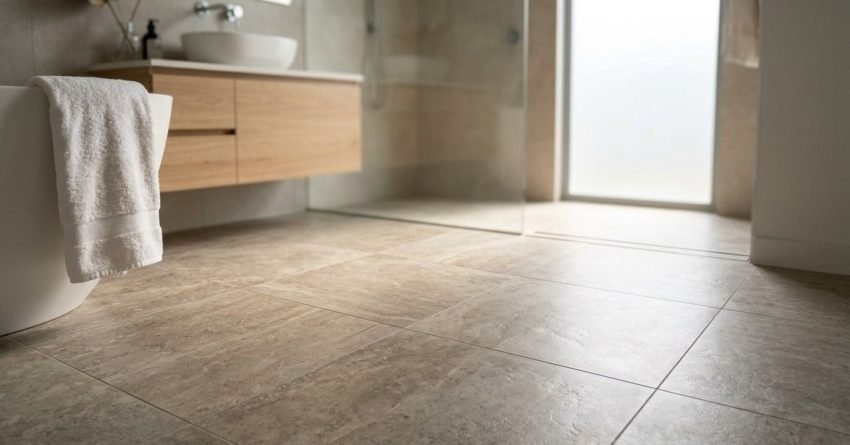
Bathroom floor trends in Sydney have shifted decisively toward large-format tiles, warm neutral tones, and natural stone aesthetics. We’re seeing this combination requested in the majority of renovations we quote, as homeowners chase a contemporary, spa-like feel without sacrificing durability.
We help clients balance visual impact with practicality every day. They want finishes that offer easy maintenance and timeless appeal while supporting long-term property value.
This guide breaks down the dominant bathroom flooring trends shaping Sydney renovations right now, from tile sizes and textures to colour palettes, compliance standards, and eco-friendly options. We’ve included real cost insights and installation considerations to help you choose flooring that suits your budget and long-term goals.
The Rise of Large-Format Tiles in Sydney Bathrooms
Large-format tiles have become our default recommendation for Sydney bathroom renovations. 600×600mm and larger formats now represent the majority of installations we complete, because they create visual continuity, reduce grout lines, and make small bathrooms feel more spacious.
Fewer grout lines mean easier cleaning and reduced long-term maintenance. For clients working with tight budgets, we find large-format tiles deliver a high-end look without requiring premium materials across the entire floor.
In bathrooms measuring 3-5 square metres, which is typical for Sydney homes, this continuity makes rooms feel significantly larger. Installation costs for large-format tiles run 10-15% higher than standard sizes due to specialised handling and levelling precision, but the reduced grout maintenance often justifies the upfront investment.
The most common large-format sizes we install include 600×600mm, 600×1200mm, and 800×800mm. Rectangular formats like 600×1200mm work well for creating linear flow, often laid in brick or stacked patterns depending on room proportions.
For smaller bathrooms, we typically recommend 600×600mm tiles to capture large-format benefits without overwhelming the space. We reserve larger formats like 900×900mm or 1200×1200mm for spacious ensuites and master bathrooms where the scale complements the room.
Natural Stone and Stone-Look Tiles: Timeless Meets Contemporary
Natural stone aesthetics dominate current flooring preferences, with marble, terrazzo, and limestone effects leading design choices. Porcelain tiles replicating natural stone give us the visual appeal of premium materials with superior water resistance and stain protection, making them ideal for wet areas.
Stone-look tiles provide the luxury aesthetic of natural materials at 30-50% lower cost, with improved durability and easier installation. For budget-conscious renovators, we consistently recommend high-quality porcelain stone-look tiles over the real thing.
Marble-look porcelain replicates the veining and depth of natural marble while eliminating sealing requirements and stain vulnerability. These tiles typically cost $60-120 per square metre for quality ranges, compared to $150-300+ per square metre for genuine marble, and installation costs remain comparable.
Terrazzo has made a real comeback in the bathrooms we renovate. The speckled, multi-toned appearance adds visual interest while concealing minor wear and water marks, which we find especially practical for high-traffic family bathrooms. Terrazzo-look porcelain tiles cost $70-140 per square metre.
Limestone and travertine-look tiles bring earthy warmth to bathroom spaces, complementing the shift toward warmer neutral palettes. Porcelain versions eliminate the porosity issues of natural stone while maintaining the authentic look, and we price these at $65-130 per square metre for quality ranges.
Textured Finishes and Slip Rating Compliance
Textured bathroom flooring has evolved beyond purely functional anti-slip surfaces into a genuine design feature. Slip-resistant ratings of R10-R11, as set out under AS 4586, are standard requirements we build to on every bathroom floor we install.
We choose textures that balance grip with cleanability. Overly rough surfaces trap dirt and demand more intensive cleaning, so we lean toward matte finishes, light embossing, and micro-textured surfaces that achieve R10-R11 ratings without an industrial look.
Stone-look tiles with natural texture replication offer inherent slip resistance through subtle surface variation. We always recommend requesting samples to assess grip when wet, since some subtle textures perform far better underfoot than they appear.
Three-dimensional tiles and relief patterns add sculptural interest as feature zones, such as shower floors or bath surrounds. We favour lower-profile relief patterns of 2-5mm depth on floors, since they stay practical for foot traffic while higher relief works better on walls.
Waterproofing Standards Behind Every Trend
Every flooring trend we install sits on top of a waterproofing membrane compliant with AS 3740, the Australian standard for waterproofing wet areas. No tile choice, however visually striking, performs well long-term without correct membrane preparation underneath it.
We factor waterproofing compliance into every quote, not as an add-on but as the foundation the trend sits on. This is one area where cutting corners causes the most expensive future repairs.
Sustainable and Eco-Friendly Flooring Choices
Sustainability has become a real factor in flooring decisions for our clients. Eco-friendly options include recycled content tiles, locally manufactured products, and low-VOC materials that reduce environmental impact and improve indoor air quality.
Some manufacturers now produce tiles with 20-40% recycled content without compromising durability. These products typically cost comparably to standard tiles, so sustainability rarely means a budget premium.
Low-VOC adhesives, grouts, and sealers improve indoor air quality and reduce chemical exposure during installation. They may cost 5-10% more than standard alternatives, but we find the reduced odour and health benefit worthwhile for occupied homes.
Australian-manufactured tiles reduce transportation emissions and often provide cost advantages over imported alternatives once freight is factored in. Locally sourced tiles also mean shorter lead times and easier warranty claims, which matters on a tight renovation schedule.
Warm Neutral Palettes: Beiges, Taupes, and Earthy Tones
Colour preferences have shifted decisively toward warm neutrals. Beige, taupe, greige, and earthy tones have replaced the cool greys that dominated bathrooms a few years ago.
We see cool grey tiles, once ubiquitous, now feeling dated as preferences move toward warmer tones. Warmer grey tones with beige or taupe undertones have replaced stark, cool greys in the new installations we complete.
Warm-toned flooring creates psychological warmth and comfort, which matters in a room where people are often barefoot. Beige and taupe tiles reflect light softly, creating gentler illumination than the harsher reflections of cool-toned tiles.
These colours also disguise minor wear, water marks, and dust better than darker or cooler tones. In bathrooms with limited natural light, warm neutrals avoid the cold, cave-like feeling that cool-toned materials can create.
Timber-Look Tiles: The Best of Both Worlds
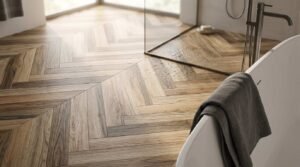
Timber-look porcelain tiles combine the warmth of wood with the water resistance bathrooms demand. Wood-effect tiles have become remarkably realistic, with advanced printing technology replicating grain patterns and colour variation.
These tiles eliminate the moisture damage and warping issues of genuine timber. We price quality timber-look ranges at $55-110 per square metre, comparable to mid-range stone-look tiles and well below engineered timber with waterproofing treatment.
The aesthetic works particularly well in bathrooms connected to bedrooms, where continuing the timber-look flooring creates visual flow between spaces. Timber-look tiles come in plank formats from 150×600mm to 200×1200mm, with longer planks reading as more authentic.
Laying patterns significantly change the visual effect. Straight lay emphasises length and costs $45-65 per square metre to install, while herringbone or chevron patterns increase labour to $65-90 per square metre due to precise cutting requirements.
Hexagonal and Geometric Tile Patterns
Geometric tile shapes, particularly hexagons, have gained real popularity for bathroom floors. Hexagonal tiles range from small mosaic formats of 50-100mm to large statement tiles at 200-300mm, giving us plenty of design flexibility.
We often use geometric tiles as feature zones, such as shower floors or defined areas around freestanding baths, where they create focal points without overwhelming the space. Full-floor geometric coverage suits larger bathrooms, but can feel busy in compact ones.
Combining geometric feature zones with complementary large-format tiles balances visual interest with spatial calm. This approach also manages cost, since geometric tiles typically require more complex installation, and mixed-shape jobs increase labour by 15-25%.
Seamless Grout Lines and Compliance-Grade Finishes
The trend toward minimal grout lines reflects a preference for clean, continuous surfaces. Rectified tiles, cut with precisely straight edges, enable tighter grout joints of 1.5-3mm compared to 3-5mm on standard tiles, creating a more seamless look.
Rectified tiles typically cost 5-15% more than standard tiles, but the visual improvement and installation precision usually justify the premium. We ensure our installers have direct experience with rectified tile work, since consistent joint widths matter here.
Current trends favour grout colours closely matched to the tile, creating a seamless, monolithic appearance. Light grey grout suits most neutral tiles, while warmer grout tones complement beige and taupe palettes; contrasting grout still suits geometric tiles where pattern emphasis is the goal.
Heated Flooring Integration
Underfloor heating has moved from a luxury feature to an expected inclusion in many of the bathroom renovations we manage. Electric heating systems are now affordable and straightforward to install during a floor renovation, and they help reduce moisture and mould by promoting faster drying.
Integration costs for electric underfloor heating run $100-180 per square metre, including materials and installation. Adding heating during a full floor renovation costs significantly less than retrofitting it later.
Most tile types are compatible with underfloor heating, though porcelain and ceramic tiles offer the best heat conductivity. Timber-look tiles are fully compatible too, provided the adhesives and membranes are rated for thermal cycling.
Operating costs depend on usage patterns, but well-insulated bathrooms with programmable thermostats typically add $50-120 annually in electricity costs. We consider heated floors part of total bathroom value rather than an isolated cost, since they reduce damp towels and add a genuine spa-like amenity.
Budget-Friendly Trend Adoption Strategies
Incorporating current trends doesn’t require a premium budget. Strategic material selection, focused feature areas, and smart substitutions let clients adopt these trends across a wide range of budgets.
We invest in quality tiles for high-visibility, high-traffic areas, such as main bathroom floors and ensuite wet areas, since these justify higher per-square-metre costs. We save on tiles for low-visibility areas like enclosed toilet compartments, provided waterproofing and durability standards are never compromised.
Here’s how the material costs compare at a glance:
| Material | Cost Range (per m²) | Best Suited For |
| Marble-look porcelain | $60-120 | Feature floors, ensuites |
| Terrazzo-look porcelain | $70-140 | Family bathrooms, powder rooms |
| Limestone/travertine-look | $65-130 | Naturally lit bathrooms |
| Timber-look porcelain | $55-110 | Bathrooms adjoining bedrooms |
| Rectified tiles (premium) | +5-15% on base tile cost | Seamless, minimal-grout floors |
| Underfloor heating | $100-180 (installation) | Comfort, faster drying |
Combining premium feature tiles with affordable field tiles creates a custom, high-end appearance at moderate cost. We use premium textured or stone-look tiles in defined feature zones, with simpler large-format tiles covering the main floor area.
Choosing the Right Trend for Your Bathroom Renovation
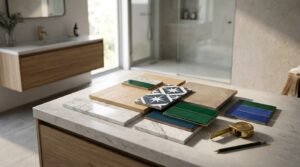
Not every trend suits every bathroom. Matching design choices to your specific space, budget, and long-term plans matters more than chasing every current look.
Large-format tiles suit most bathroom sizes, but they particularly benefit small bathrooms by reducing visual clutter. Geometric tiles work well in larger bathrooms where the pattern has room to develop, but can overwhelm compact spaces.
Some trends offer lasting appeal, including natural stone aesthetics, warm neutrals, and large-format tiles. Geometric patterns and bold colours can date faster as preferences shift, though quality execution extends their relevance.
For maximum longevity, we recommend trends rooted in natural materials rather than fashion-driven colours or patterns. We discuss trend preferences early in planning to make sure selections align with structural requirements, waterproofing needs, and installation timelines, and we always recommend viewing samples in your actual bathroom lighting before finalising anything.
Conclusion
Current bathroom flooring trends in Sydney centre on large-format tiles, natural stone aesthetics, warm neutral palettes, and sustainable materials. These deliver contemporary style with practical performance, low maintenance, and genuine support for property value.
Successful trend adoption means matching design choices to your bathroom’s size, budget, and long-term goals. Strategic material selection and quality installation ensure the trend delivers lasting value rather than short-lived fashion.
We combine current design expertise with transparent cost guidance and skilled workmanship to help you navigate bathroom flooring trends with confidence. Our team at Sydney Home Renovation translates trending styles into practical, budget-appropriate solutions that keep your bathroom current, compliant, and valuable for years ahead.
Frequently Asked Questions
What is the most popular bathroom floor tile in Sydney right now?
Large-format porcelain tiles in warm neutral tones with natural stone aesthetics, particularly marble-look and terrazzo effects, dominate current renovations. These combine contemporary style with practical durability.
Are large-format tiles more expensive to install?
Large-format tiles typically cost 10-15% more to install due to specialised handling and precise levelling. Reduced grout maintenance and a contemporary look usually justify this modest premium.
Do timber-look tiles work in wet areas?
Yes, timber-look porcelain tiles are fully waterproof and suitable for all bathroom wet areas, including showers. They provide authentic wood aesthetics without moisture damage or warping.
How do I choose between natural stone and porcelain?
Porcelain stone-look tiles offer superior water resistance and lower maintenance at 30-50% lower cost than natural stone. We recommend natural stone only if you specifically value authentic material characteristics.
What colour grout is trending for bathroom floors?
Grout colours closely matched to the tile create a seamless, contemporary look, with light grey suiting most neutrals. Matched grout minimises visual grid lines and emphasises the tile itself.
Can I install underfloor heating with any tile type?
Most porcelain, ceramic, and stone tiles are compatible with underfloor heating systems. We ensure heating-compatible adhesives and installation methods are used to prevent failure from thermal cycling.
Should I follow trends or choose timeless flooring?
We recommend balancing trend incorporation with timeless elements, choosing trending materials rooted in natural aesthetics rather than fashion-driven colours. This approach delivers contemporary appeal with lasting renovation ROI.


