
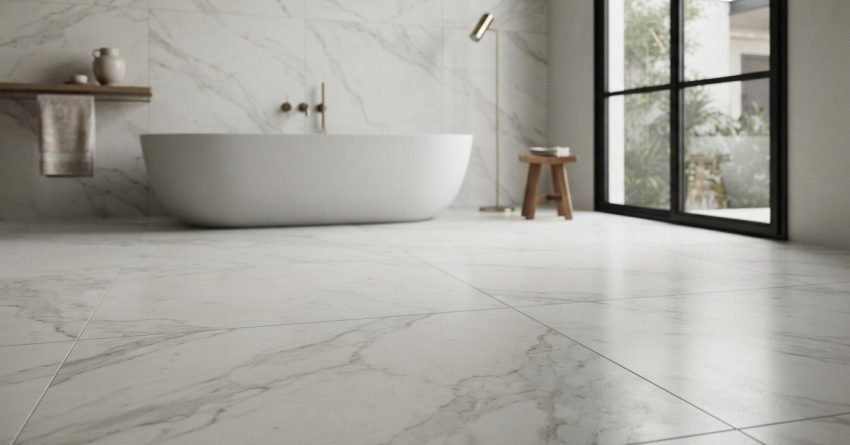
Large-format tiles can completely transform a bathroom, but they come with real trade-offs in cost, substrate preparation, and installation complexity that most homeowners don’t see coming. I’ve worked on enough Sydney bathroom renovations to know that choosing the wrong tile format for the wrong space creates expensive problems. This guide gives you the full picture.
Tile selection is one of the most consequential decisions in a bathroom renovation, and format size affects everything from your budget to your tiler’s day rate.
I’ll walk you through what large-format tiles actually are, where they shine, where they fall short, and what they cost to supply and install in Sydney right now.
What Are Large-Format Tiles?
Large-format tiles are any tiles with at least one edge measuring 600mm or longer. That’s the industry threshold where installation complexity and cost start to climb.
Standard Size Definitions (600×600mm and Above)
The most common large-format sizes I see specified in Sydney bathroom renovations are 600×600mm, 600×1200mm, 800×800mm, and 900×900mm. Anything above 1200mm on one edge is considered a slab-format tile and sits in a different category entirely.
The size jump matters because larger tiles require flatter substrates, stronger adhesives, and more precise layout planning. A 300×300mm tile forgives minor floor irregularities. A 600×1200mm tile does not.
Common Materials Used in Large-Format Tiles
Porcelain is the dominant material in this format range, and for good reason. It’s dense, low-absorption, and dimensionally stable all qualities that matter when you’re working with large panels that need to sit flat and stay flat.
Rectified porcelain is the standard specification for large-format bathroom tiles. Rectified means the edges are precision-cut after firing, which allows for tighter grout joints (as narrow as 1.5–2mm) and a cleaner finished look. Natural stone is available in large formats but requires sealing, careful substrate assessment, and a higher budget. Ceramic large-format tiles exist but are less common in wet areas due to higher water absorption rates.
The Pros of Large-Format Tiles in Bathrooms
There are genuine, measurable benefits to choosing large-format tiles, and they’re not just aesthetic.
Fewer Grout Lines for a Cleaner Look
This is the benefit most homeowners lead with, and it’s legitimate. Fewer grout joints mean less surface area for mould, soap scum, and mineral deposits to accumulate. In a wet area like a bathroom, that’s a real maintenance advantage.
A 600×600mm tile grid produces roughly 60% fewer grout lines than a 300×300mm grid across the same floor area. That’s a meaningful reduction in cleaning effort over the life of the renovation.
Makes Small Bathrooms Feel Larger
Large-format tiles create visual continuity across a floor or wall surface. The eye reads fewer interruptions, which makes the space feel more expansive than it actually is.
This effect works best when tiles are laid with consistent, narrow grout joints and the layout is planned to minimise cuts at the perimeter. A well-planned 600×1200mm floor in a compact Sydney bathroom can genuinely make the room feel 20–30% larger to the eye.
Easier to Clean and Maintain
Fewer grout lines means fewer places for grime to hide. The tile surface itself, particularly polished or semi-polished porcelain, is non-porous and wipes clean easily.
That said, highly polished large-format tiles show water spots and soap residue more readily than matte or textured finishes. The maintenance trade-off shifts from grout scrubbing to surface wiping, which most homeowners find preferable.
Strong Visual Impact and Design Versatility
Large-format porcelain tiles, particularly those with veining patterns that mimic marble or travertine, create a sense of luxury that smaller tiles simply can’t replicate. The veining reads as continuous across the surface rather than interrupted every 300mm.
Rectified edges allow for near-seamless installation that reinforces the high-end finish. This is why large-format tiles dominate contemporary and luxury bathroom renovations across Sydney’s inner suburbs and eastern beaches.
The Cons of Large-Format Tiles in Bathrooms
The benefits are real. So are the drawbacks. I’d rather you know these upfront than discover them mid-renovation.
Higher Material and Labour Costs
Large-format tiles cost more per square metre to supply than standard tiles, and they cost significantly more to install. The material premium reflects manufacturing complexity; larger panels are harder to fire evenly and have higher breakage rates in production and transport.
The labour premium is where most budgets get surprised. Tilers charge more for large-format work because it’s slower, more physically demanding, and requires greater precision. In Sydney, expect to pay a labour cost premium of 20–40% over standard tile installation rates for large-format work.
Substrate and Structural Requirements
This is the con that catches the most homeowners off guard. Large-format tiles are unforgiving of substrate movement, deflection, or unevenness. A floor that’s perfectly adequate for 300×300mm tiles may need significant remediation before large-format tiles can be laid.
Australian Standard AS 3958.1 specifies a maximum variation of 3mm in any 3-metre span for tiled surfaces. For large-format tiles, many tilers and tile manufacturers recommend tightening that tolerance to 2mm in 3m. If your existing floor doesn’t meet that standard, you’re looking at grinding, levelling compound, or structural reinforcement before a tile goes down.
Cutting Waste and Off-Cut Losses
Large tiles produce larger off-cuts. When you cut a 600×1200mm tile to fit around a toilet base or vanity, the off-cut is often too large to use elsewhere and too small to return. That waste adds up.
I typically recommend allowing 10–15% wastage for large-format tiles in bathrooms with complex layouts compared to 7–10% for standard tiles in straightforward rectangular rooms. Factor that into your material budget from the start.
Slip Resistance Considerations
Larger tiles with smooth or polished finishes can present slip resistance challenges in wet bathroom environments. Australian standards require bathroom floor tiles to meet a minimum P3 rating (pendulum test) or R10 rating (ramp test) for wet areas.
Many large-format porcelain tiles in popular finishes, particularly polished and semi-polished, sit at P2 or R9, which is below the recommended threshold for wet bathroom floors. Always check the slip resistance rating before specifying a tile for the floor. Wall applications have no slip resistance requirement, so the same tile that’s unsuitable for the floor may be perfectly appropriate for the walls.

Large-Format Tiles vs. Standard Tiles: Which Is Right for You?
The right tile format depends on your bathroom’s dimensions, your substrate condition, your budget, and your design intent. There’s no universal answer.
When Large-Format Tiles Make Sense
Large-format tiles work best in bathrooms with a floor area of 5m² or more, where the visual continuity effect has room to read properly. They suit contemporary and minimalist design briefs, high-end renovation budgets, and situations where the substrate is already in good condition or is being fully replaced.
They’re also the right choice when you want to minimise long-term maintenance. The reduced grout line surface area pays dividends over years of use, particularly in investment properties where cleaning frequency matters.
When Standard Tiles Are the Better Choice
Standard tiles, typically 300×300mm or 300×600mm, are the better choice for bathrooms with curved walls, complex layouts, or significant level changes. They’re also the practical choice when the existing substrate has movement issues that can’t be economically remediated.
Budget-conscious renovations benefit from standard tiles too. The combined saving on materials and labour can be redirected to better fittings, fixtures, or waterproofing areas that affect long-term performance more than tile format does.
Installation Considerations for Large-Format Bathroom Tiles
Getting large-format tiles right is a technical exercise. The finish is only as good as the preparation underneath it.
Floor Flatness and Substrate Preparation
Floor flatness is the single most important installation variable for large-format tiles. Lippage, where one tile edge sits higher than the adjacent tile, is the most common large-format installation defect, and it almost always traces back to inadequate substrate preparation.
Before any large-format tile goes down, the substrate needs to be assessed with a long straightedge and corrected with grinding or self-leveling compound where needed. This prep work adds time and cost, but skipping it creates a finished floor that looks poor and may crack tiles under load.
Adhesive Selection and Back-Buttering Requirements
Large-format tiles require a flexible, polymer-modified adhesive, not a standard cement-based adhesive. The flexibility accommodates minor substrate movement and thermal expansion without cracking the tile or breaking the bond.
Full back-buttering is mandatory for large-format tiles. That means applying adhesive to both the substrate and the back of the tile before laying. The target is 95% adhesive coverage on the tile back in wet areas, a requirement under AS 3958.1. Voids beneath large tiles create stress concentration points that lead to cracking, particularly on floors.
Waterproofing Beneath Large-Format Tiles
Waterproofing goes down before the tiles, not after. This sounds obvious, but I’ve seen renovations where the sequence was reversed, and the results were expensive.
Under AS 3740, all wet areas in Australian bathrooms require a compliant waterproofing membrane applied to the substrate before tiling. Large-format tiles don’t change this requirement, but they do make it more critical because a failed waterproofing membrane beneath large tiles is far more disruptive and costly to remediate than beneath small tiles. The membrane needs to be fully cured before tiling begins, which adds time to the programme.
Cost of Large-Format Tiles in Sydney Bathrooms
Sydney pricing for large-format tiles varies significantly by material, finish, and format size. Here’s what I see in the current market.
Typical Supply Costs per Square Metre
Entry-level rectified porcelain in 600×600mm or 600×1200mm formats typically runs $40–$80 per m² supply-only in Sydney. Mid-range options with marble-look veining or textured finishes sit at $80–$150 per m². Premium large-format porcelain, including Italian and Spanish imports, ranges from $150–$300+ per m².
Natural stone in large formats starts at around $120 per m² and can exceed $500 per m² for premium marble. Always add 10–15% to your calculated area for wastage before pricing materials.
Labour Cost Premiums for Large-Format Installation
Tiling labour in Sydney for standard tiles runs approximately $55–$85 per m² for supply and lay, depending on complexity. Large-format tiles attract a premium of 20–40% on top of that base rate, reflecting the slower pace, heavier lifting, and greater precision required.
For a typical Sydney bathroom of 8–12m² of tiled surface, the labour premium for large-format tiles adds $800–$2,500 to the tiling cost compared to standard tiles. That’s a real number to factor into your renovation budget before you commit to the format.
Conclusion
Large-format tiles deliver real benefits in bathroom renovations: fewer grout lines, stronger visual impact, and easier long-term maintenance. But they demand proper substrate preparation, compliant waterproofing, and a tiler with genuine large-format experience to deliver those benefits reliably.
The cost premium is real, and so is the installation complexity. Getting both right from the start protects your renovation budget and your finished result.
At Sydney Home Renovation, we plan and price large-format tile installations with full transparency, substrate assessment, waterproofing compliance, and accurate labour costs included from day one. Get in touch to discuss your bathroom renovation.
Frequently Asked Questions
Are large-format tiles suitable for small bathrooms?
Yes, with the right layout planning. Large-format tiles in a small bathroom create visual continuity that makes the space feel larger. The key is minimising perimeter cuts and using consistent, narrow grout joints to maximise the seamless effect.
What is the minimum floor flatness required for large-format tiles?
AS 3958.1 specifies a maximum variation of 3mm in any 3-metre span. For large-format tiles, most tilers and manufacturers recommend tightening that to 2mm in 3m to prevent lippage. Substrate preparation is essential before laying begins.
Do large-format tiles cost more to install than standard tiles?
Yes. In Sydney, large-format tile installation typically costs 20–40% more in labour than standard tile installation. The premium reflects slower laying speeds, heavier handling, and the precision required to achieve a flat, lippage-free finish.
What slip resistance rating do I need for bathroom floor tiles?
Australian standards recommend a minimum P3 rating (pendulum test) or R10 rating (ramp test) for wet bathroom floors. Always check the slip resistance certificate for any tile you’re specifying for a bathroom floor, particularly polished large-format porcelain, which often falls below this threshold.
Can large-format tiles be used on bathroom walls?
Absolutely. Large-format tiles work well on bathroom walls and have no slip resistance requirement in that application. Wall installation requires appropriate adhesive and fixing systems to support the tile weight, particularly for tiles above 900×900mm.
How much tile wastage should I allow for large-format tiles?
Allow 10–15% wastage for large-format tiles in bathrooms with standard rectangular layouts. Increase that to 15–20% for bathrooms with complex shapes, multiple penetrations, or diagonal laying patterns. Factor wastage into your material order from the start.
Are large-format tiles harder to replace if one cracks?
Yes. Matching a large-format tile after the fact is difficult; tile batches vary in shade and texture, and discontinued lines are common. I always recommend ordering 5–10% extra tiles beyond your wastage allowance and storing them for future repairs.


