
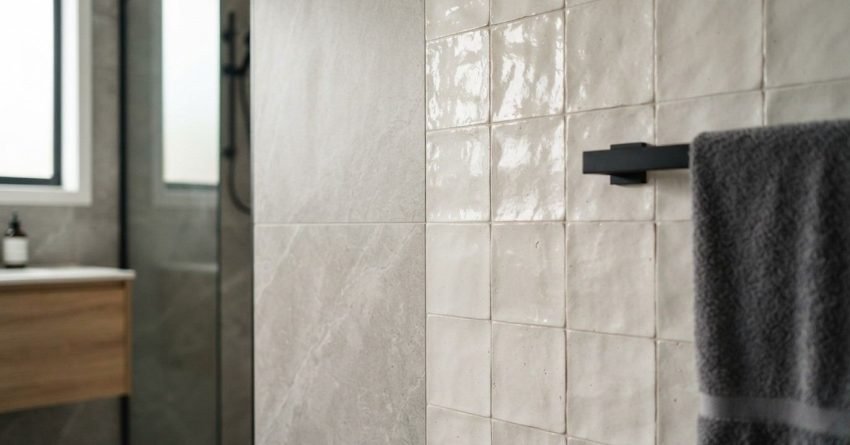
Bathroom wall tiles set the tone for the entire space, and the ideas and trends shaping Sydney renovations right now lean toward bold texture, generous scale, and finishes that feel considered rather than generic. Whether you’re renovating a compact ensuite or a full family bathroom, the tile choices you make on the walls carry more visual weight than almost any other decision in the room.
The Tile Styles Defining Bathrooms Right Now
The strongest bathroom wall tile trends in 2026 share one quality: they make a room feel intentional. Homeowners and renovators are moving away from safe, uniform surfaces and toward tiles that carry character whether through scale, texture, or the natural variation of handcrafted finishes.
Large-format tiles, textured surfaces, earthy tones, and soft neutral palettes are dominating new bathroom builds and renovations across Sydney. Fluted profiles, limewash-effect ceramics, and stone-look porcelain are appearing consistently across both high-end and mid-range projects. The shift is away from purely functional wall coverage and toward tiles that anchor the room’s aesthetic.
Large-Format and Slab Tiles
Large-format wall tiles typically 600x1200mm and above remain one of the most requested finishes in Sydney bathroom renovations. They reduce grout lines, create a cleaner visual plane, and make smaller bathrooms read as larger than they are.
Porcelain slab tiles that replicate marble, travertine, and concrete are particularly popular. They deliver the look of natural stone without the maintenance demands, and they hold up well in wet areas. For feature walls behind freestanding baths or vanity walls, a full-height slab tile run is consistently one of the highest-impact choices available at a mid-range price point.
Textured, Handmade, and Zellige-Style Tiles
Textured wall tiles have moved firmly into the mainstream. Zellige-style ceramics, characterised by their irregular surface, slight colour variation, and handcrafted appearance, are appearing in bathrooms across every price bracket. They work particularly well in shower niches, behind vanities, and as full wet area feature walls.
Fluted tiles, both vertical and horizontal, add depth and shadow play to flat wall surfaces. Handmade-look ceramics in warm whites, sage greens, terracotta, and dusty blues are replacing the cool grey palettes that dominated the previous decade. These tiles photograph well, age gracefully, and hold their appeal beyond a single trend cycle.
The tile you choose for your walls will shape every other decision in the room, from grout colour and fixture finishes to lighting and cabinetry tone. Understanding how tiles are laid and finished helps you evaluate whether a tile that looks right in a showroom will actually perform in your specific bathroom layout.
How to Choose Wall Tiles That Work for Your Bathroom
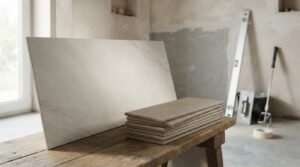
Choosing bathroom wall tiles is not purely an aesthetic decision. Scale, surface finish, slip rating, grout joint width, and substrate compatibility all affect how a tile performs over time. The most common mistake renovators make is selecting a tile based on appearance alone, then discovering it creates installation complications or maintenance challenges that weren’t obvious in the showroom.
Matte finishes hide water marks and soap residue better than polished surfaces, which matters in high-use bathrooms. Rectified tiles cut to precise dimensions allow tighter grout joints and a cleaner finish, but they require a flatter substrate to install correctly. Textured tiles add visual interest but need more attention during cleaning, particularly in wet areas where soap and mineral deposits accumulate in the surface variation.
Matching Tile Choice to Bathroom Size and Layout
Tile scale relative to room size is one of the most practical decisions in a bathroom renovation. Large-format tiles can overwhelm a very small bathroom if the layout requires excessive cutting, which increases waste and cost. In a small bathroom renovation, a 600x600mm or 600x1200mm tile often delivers the clean, spacious look of a larger format without the installation complexity.
In larger bathrooms, going too small with wall tiles can fragment the visual field and make the space feel busier than it needs to be. A consistent tile run from floor to ceiling, particularly in the shower, creates a cohesive, high-end result regardless of the tile’s price point.
Tile Trends Worth Investing In vs. Trends to Approach Carefully
Some tile trends have genuine longevity. Large-format neutrals, stone-look porcelain, and textured handmade ceramics in warm tones have been building momentum for several years and show no sign of fading. These are safe investments for renovators focused on long-term value, particularly in investment properties where broad appeal matters.
Other trends carry more risk. Highly saturated colour tiles, very specific pattern combinations, and niche finishes tied to a single aesthetic moment can date quickly. For a bathroom renovation budget in Sydney, the practical question is whether a trend-forward tile choice adds resale value or simply reflects a personal preference that future buyers may not share.
The most durable approach is to use trending finishes in contained zones a feature wall, a niche, a vanity splashback while keeping the broader tile palette in a timeless neutral. This gives the bathroom personality without locking the entire space into a single trend moment.
Conclusion
Bathroom wall tile ideas and trends in Sydney are moving toward texture, scale, and warm finishes that feel crafted rather than generic and hold their appeal well beyond a single renovation cycle.
For homeowners and investors, the strongest tile choices balance visual impact with practical performance, keeping the broader palette neutral while using trend-forward finishes in contained, high-impact zones.
We help clients at Sydney Home Renovation navigate tile selection as part of a fully planned renovation. Get in touch to start building your brief.
Frequently Asked Questions
What are the most popular bathroom wall tile sizes in Sydney right now?
Large-format tiles in 600x1200mm and 600x600mm are the most requested sizes. They reduce grout lines, simplify cleaning, and create a cleaner visual result in both small and large bathrooms.
Are matte or gloss tiles better for bathroom walls?
Matte tiles are more practical for most bathrooms. They hide water marks and soap residue more effectively than gloss surfaces, which show every splash and fingerprint in high-use wet areas.
How do I make a small bathroom feel larger with wall tiles?
Use large-format tiles to reduce grout lines, run tiles floor to ceiling in the shower, and keep the colour palette light and consistent. Avoid small mosaic tiles, which fragment the visual field and make compact spaces feel busier.
What tile colours are trending for Sydney bathrooms in 2026?
Warm whites, soft sage greens, terracotta, dusty blues, and earthy neutrals are replacing the cool grey palettes of the previous decade. Stone-look porcelain in travertine and warm beige tones is particularly strong across mid-range and premium renovations.
How much do bathroom wall tiles typically cost to supply and install in Sydney?
Supply and installation costs vary significantly by tile type, format, and substrate condition. Budget-range ceramic tiles start from around $50–$80 per square metre supplied, with installation adding $60–$120 per square metre depending on complexity and site conditions.


