
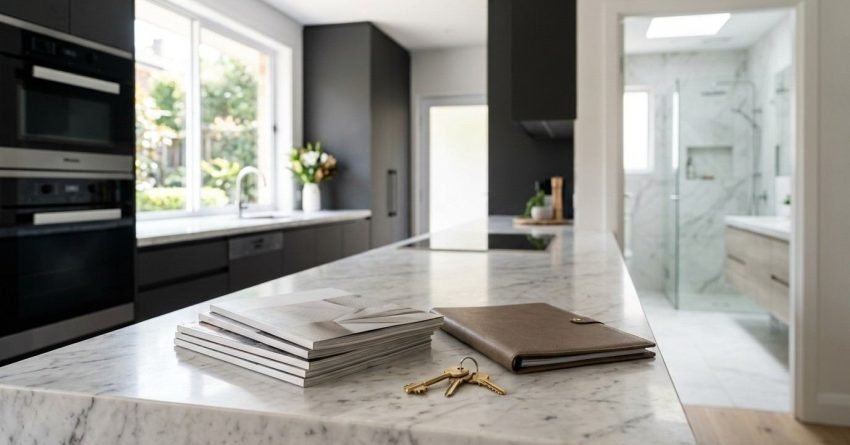
Bathrooms and kitchens add the most value to a house. Well-executed bathroom upgrades return 60% to 80% of their cost at resale, and kitchens follow closely behind. These wet areas face the heaviest scrutiny during inspections and shape the final sale price directly.
I have watched this pattern hold across hundreds of projects. The difference between a profitable renovation and an expensive mistake comes down to knowing which rooms genuinely build equity and which simply drain cash.
Whether you plan to sell, build equity, or improve daily liveability, strategic room upgrades add tens of thousands to your property’s worth. This guide breaks down the value-adding potential of each room, with realistic ROI expectations, renovation priorities, and the specific upgrades Sydney buyers pay premiums for.
Room-by-Room Value Ranking at a Glance
We work from a simple ranking when we sit down with clients to allocate a budget. The table below sets out typical Sydney costs against typical added value, so you see the net position before you commit.
| Room | Typical Renovation Cost | Typical Value Added | Return Position |
| Bathroom (existing) | $25,000–$45,000 | $10,000–$30,000 | 60–80% recovery |
| Second bathroom (new) | $30,000–$60,000 | $50,000–$100,000 | Often exceeds 100% |
| Kitchen (mid-range) | $35,000–$50,000 | $25,000–$40,000 | 60–80% recovery |
| Additional bedroom | $25,000–$60,000 | $50,000–$150,000 | Frequently above 100% |
| Open-plan conversion | $5,000–$30,000+ | $30,000–$80,000 | Strong, structure-dependent |
| Paint, flooring, and lighting | $8,000–$25,000 | $15,000–$35,000 | Highest return per dollar |
| Laundry upgrade | $8,000–$18,000 | $10,000–$20,000 | Roughly cost-neutral to positive |
| Outdoor living area | $15,000–$40,000 | $20,000–$50,000 | Solid when integrated |
| Energy efficiency package | $8,000–$25,000 | $15,000–$35,000 | Rising sharply |
| Swimming pool | $50,000–$100,000 | $20,000–$40,000 | Loss making |
| Purpose-built home office | $10,000–$25,000 | $5,000–$15,000 | Weak |
The pattern is consistent. Adding a room that a property lacks outperforms upgrading a room it already has.
Why Certain Rooms Add More Value Than Others
Property value is not distributed evenly across your home. Buyers and valuers assess specific areas with far greater scrutiny, and these high-impact zones determine whether your renovation spend converts into genuine equity.
The rooms that add the most value share common characteristics. They are spaces where buyers immediately notice quality or the absence of it, and functional areas where outdated fixtures create friction in daily life.
Most importantly, they are rooms where renovation costs compare accurately against measurable resale returns. Wet areas such as bathrooms, kitchens, and laundries consistently outperform other spaces because waterproofing, plumbing, and tiling represent significant replacement costs.
Buyers calculate what they need to spend to bring these rooms up to standard, then adjust their offers accordingly.
Bathrooms: The Highest Value-Adding Room
Bathrooms deliver the strongest return on renovation investment for Australian homeowners. A well-executed bathroom renovation recovers 60% to 80% of its cost at resale, and in single-bathroom homes the addition of a second bathroom regularly returns more than 100%.
Wet areas carry this premium because their replacement cost is high and their condition is fully visible at inspection. Across our Sydney projects, a completed bathroom upgrade typically lifts assessed value by $10,000 to $30,000, depending on scope and finish quality.
Why Bathrooms Top the Value List
Bathroom condition drives buyer perception of overall property maintenance. A dated bathroom signals potential hidden problems such as waterproofing failure, plumbing faults, and structural concerns that buyers fold into their risk assessment.
The cost-to-value equation favours bathrooms because replacement expenses are substantial. A complete bathroom renovation in Sydney costs $25,000 to $45,000 for a standard-sized space, and buyers pay premiums for properties where that work is already finished to a high standard.
The Replacement-Cost Discount Buyers Apply
Here is the mechanism most guides skip, and it explains why completed wet-area work returns more than its cash cost.
When a buyer walks into a dated bathroom, they do not simply dislike the tiles. They mentally deduct the $25,000 to $45,000 replacement cost from their offer, then add a further risk margin because nobody knows what sits behind a twenty-year-old shower wall.
That risk margin is the hidden profit in a bathroom renovation. We routinely see buyers discount $50,000 or more on a bathroom that costs $35,000 to rebuild properly, because they are pricing in the unknown alongside the known.
A completed renovation with documented waterproofing removes both the cost and the uncertainty in one move.
Bathroom Upgrades That Maximise ROI
Not all bathroom renovations deliver equal returns. We direct spending toward elements buyers visually assess and physically test.
High-impact upgrades include:
- Modern vanity units with stone benchtops
- Frameless shower screens replacing curtains or framed enclosures
- Quality tapware in contemporary finishes
- Floor-to-ceiling tiling in neutral tones
- Adequate lighting with dimmer controls
- Heated towel rails in cooler climate areas
Lower-priority items:
- Luxury spa baths, which carry limited appeal at high cost
- Overly personalised colour schemes
- Technology features with limited practical benefit
Adding a Second Bathroom
Properties with only one bathroom face significant value limitations. Adding a second bathroom, even a compact ensuite or powder room, lifts property value by $50,000 to $100,000 in Sydney’s middle-ring suburbs on the projects we have delivered.
Adding a bathroom costs $30,000 to $60,000 depending on access to existing plumbing and whether new wet-area infrastructure is required. This investment frequently delivers returns above 100% when it converts a single-bathroom home into a two-bathroom property.
Kitchens: The Heart of Home Value
Kitchens rank second only to bathrooms in value-adding potential. A quality kitchen renovation returns 60% to 80% of its cost at resale across the Sydney market.
What Makes Kitchens So Valuable
The kitchen functions as the operational centre of a modern home. Open-plan living has raised kitchen visibility, which makes dated cabinetry and tired appliances impossible to ignore during an inspection.
Buyers assess kitchens against three criteria: functionality, storage capacity and aesthetic appeal. Renovations that address all three command the strongest premiums.
Kitchen Renovation Priorities
We focus kitchen spending where buyers notice quality first.
Essential investments:
- Stone benchtops, with engineered stone delivering durability below natural stone pricing
- Soft-close cabinetry with modern hardware
- Quality appliances from recognised brands
- Adequate task lighting and power points
- A functional layout with a clear work triangle
Cost-effective improvements:
- Replacing cabinet doors while retaining the carcasses
- Upgrading tapware and the sink
- Installing a tile or glass splashback
- Repainting existing cabinetry in contemporary colours
That second list matters more than most homeowners expect. A door-and-benchtop refresh at $12,000 to $18,000 often captures a large share of the value a $50,000 rebuild delivers.
Kitchen Renovation Costs by Budget Tier
Complete kitchen renovations in Sydney run from $20,000 for budget refreshes to $80,000 and above for high-end installations. Mid-range renovations between $35,000 and $50,000 deliver the strongest percentage returns, because they provide quality finishes without over-capitalising.
Which Room Should You Renovate First?
Most homeowners arrive with a fixed budget and no sequence, and that is where money leaks. The ranking above tells you which rooms pay best, but sequence decides how much of that payment you actually collect.
We work through a property deficiency-first. A house with one bathroom gets the second bathroom before any cosmetic work anywhere else, because that move shifts the property into a different search filter and a different buyer pool. A house with three bedrooms in a four-bedroom street gives the additional bedroom the same priority.
Only once the structural deficiencies are closed do we spend on surfaces. At that point, the order runs main bathroom, then kitchen, then laundry, then living areas, then outdoors.
Budget tiers make this concrete. Under $30,000, we put everything into one wet area and finish it properly rather than half-finishing two. Between $30,000 and $70,000, we close the single largest deficiency and add a cosmetic refresh to the main bathroom or kitchen.
Above $70,000, structural and cosmetic work run together, and the renovation timeline becomes the constraint rather than the money. The failure mode is always the same: spreading a modest budget thinly across five rooms produces five rooms that still read as unrenovated.
Cosmetic Versus Structural Renovation Spend
This distinction decides more renovation outcomes than any single room choice, and almost nobody explains it clearly.
Cosmetic work changes surfaces. Paint, tiling, tapware, cabinetry fronts, flooring and lighting sit in this category, and the spend typically lands between $5,000 and $25,000 per room.
Structural work changes the building. Removing load-bearing walls, relocating plumbing stacks, adding rooms, and altering the roofline sit here, and costs escalate quickly past $30,000.
Why Cosmetic Spend Often Wins on Percentage
Cosmetic renovations recover a higher proportion of their cost because buyers respond to what they see and touch. A $15,000 cosmetic bathroom refresh frequently adds $20,000 to $25,000 in perceived value, because the buyer’s replacement-cost calculation drops to zero the moment the room presents well.
Structural work recovers a lower percentage but unlocks larger absolute gains. Converting a three-bedroom home into a four-bedroom home costs more and returns a smaller ratio, yet it moves the property into a different comparable-sales bracket entirely.
We advise clients to exhaust cosmetic opportunities before committing to structural change. Specific deficiencies such as a single bathroom or a closed-off kitchen justify structural spend on their own.
Paint, Flooring and Lighting: The Cheapest Value Lever
These three items sit outside the room-by-room ranking, and they beat every room on return per dollar spent.
A full interior repaint in a standard Sydney house runs $6,000 to $12,000. Replacing tired carpet and worn vinyl with quality hybrid or engineered timber across the main living zones costs $8,000 to $20,000, and a lighting upgrade to LED downlights with dimmer control adds $2,000 to $5,000.
Together, that package lands between $8,000 and $25,000 and adds $15,000 to $35,000 in most middle-ring suburbs. The return holds because these three elements touch every room simultaneously, which no single-room renovation achieves.
The mechanism is presentation consistency. A buyer walking through a house with fresh paint, continuous flooring,g and even light reads the whole property as maintained, and one renovated bathroom in an otherwise tired house reads as a patch.
We start here on every project where the budget sits under $25,000, and the wet areas are functional rather than failing. Dated but working beats renovated but isolated.
Laundries: The Overlooked Wet Area
Laundries sit in the same wet-area category as bathrooms and kitchens, yet homeowners consistently leave them until last. That order costs money.
A laundry renovation runs $8,000 to $18,000 for a standard internal space, and it adds $10,000 to $20,000 in most Sydney markets. The return is modest in dollar terms and reliable in percentage terms.
What Makes a Laundry Add Value
Buyers assess a laundry on function rather than beauty. Bench space, a full-size tub, dedicated storage, and room for both a washer and a dryer carry more weight than premium finishes.
Value-adding laundry features:
- A dedicated bench for folding
- Full-height storage for cleaning products and linen
- Provision for a separate washer and dryer, including plumbing and ventilation
- Durable, sealed flooring
- A door to the outdoors or a drying area
Where Laundries Cost You Value
A laundry crammed into a kitchen cupboard or a bathroom corner actively suppresses offers in family-home markets. Buyers in Sydney’s middle-ring suburbs treat a genuine laundry as a baseline requirement, not a luxury.
We regularly recover more value by carving a compact dedicated laundry out of an oversized hallway or garage return than by upgrading finishes elsewhere.
Living Areas: Space That Sells
Living rooms and open-plan areas contribute significantly to property value, though the returns are harder to quantify than wet-area renovations.
The Value of Functional Living Space
Buyers pay premiums for homes that feel spacious and flow naturally between zones. Living area improvements focus on maximising perceived space rather than adding fixtures.
Value-adding living area upgrades:
- Removing non-structural walls to create open-plan layouts
- Installing quality flooring in timber or high-grade hybrid
- Upgrading window treatments for light control
- Adding built-in storage to reduce visual clutter
- Improving heating and cooling systems
Storage as a Standalone Value Driver
Storage rarely gets its own line in a renovation budget, and that is a mistake in Sydney’s smaller floorplans. Buyers read visible clutter as insufficient space, and they read generous built-in storage as a larger house.
Built-in joinery costs $3,000 to $12,000 per room depending on run length and finish, and it consistently returns more than the same money spent on decorative upgrades. Full-height wardrobe walls, under-stair joinery and a genuine linen cupboard do the heaviest lifting.
The test is simple. A family who cannot see where their belongings go during a ten-minute inspection prices the house as too small regardless of its actual floor area.
Open-Plan Conversions
Converting separate living, dining and kitchen spaces into an open-plan layout adds $30,000 to $80,000 to property values in Sydney, depending on the structural work involved. Costs vary dramatically with whether the walls carry load.
Non-structural wall removal costs $5,000 to $15,000. Load-bearing modifications that require steel beams and engineering certification exceed $30,000.
Bedrooms: Quantity and Quality Matter
Bedroom count drives property valuation directly, and each additional bedroom adds measurable value within comparable sales data.
The Bedroom Number Premium
Adding a fourth bedroom to a three-bedroom home increases value by $50,000 to $150,000 in Sydney’s family-oriented suburbs. That premium reflects buyer demand for home offices, guest accommodation, and growing families.
The mechanism is search behaviour as much as space. A three-bedroom listing never appears for buyers filtering on four bedrooms, so the property loses an entire demand pool before anyone inspects it.
We treat the three-to-four transition as the highest-leverage structural change available in most Sydney houses. The four-to-five transition returns considerably less, because the additional demand pool shrinks sharply.
Bedroom Conversion Opportunities
Common bedroom-adding strategies include:
- Converting formal dining rooms, which sit unused in most modern households
- Enclosing large verandahs or sunrooms
- Dividing oversized bedrooms into two functional spaces
- Converting attached garages, which requires council approval
Each option carries a different cost profile. Dividing an oversized bedroom costs $8,000 to $15,000, while enclosing a verandah runs $25,000 to $50,000 once weatherproofing and insulation are done properly.
Larger footprint gains come from a home extension, which changes the cost base entirely and brings the roofline and slab into scope.
Garage, Attic and Basement Conversions
These conversions add habitable floor area without extending the building footprint, which makes them attractive on paper and complicated in practice.
A garage conversion costs $25,000 to $50,000 once we address flooring levels, insulation, ventilation, glazing and access. The added value reaches $40,000 to $90,000 where the property retains off-street parking, and losing the last parking space reverses the equation in most Sydney suburbs.
Attic conversions cost $60,000 to $120,000 because they involve structural framing, a compliant staircase and dormer windows. They suit properties with steep roof pitch and adequate head height only.
Master Suite Value
Properties with an ensuite and walk-in robe command premiums over standard bedroom configurations. The master suite concept combines sleeping, bathing and dressing functions, and it appeals strongly to buyers who want hotel-style convenience.
Building a master suite into an existing bedroom footprint costs $35,000 to $65,000, with the ensuite absorbing most of that spend. Adding the walk-in robe alone runs $6,000 to $14,000 and delivers a disproportionate share of the perceived upgrade.
The demand mechanism is separation rather than luxury. Parents pay for a bathroom they do not share with children, and that single functional change carries the premium far more than the finishes do.
Energy Efficiency Upgrades That Buyers Pay For
Energy performance has moved from a nice-to-have to a pricing factor, particularly for buyers who have lived through several years of rising utility costs.
Australian buyers increasingly ask about insulation, glazing and heating efficiency during inspections. An energy efficiency package costs $8,000 to $25,000 and adds $15,000 to $35,000 where the work is documented and visible.
The Upgrades That Move Value
We prioritise measures buyers can verify with their own senses on inspection day.
- Ceiling and wall insulation upgraded to current standards
- Double glazing or secondary glazing on west-facing and street-facing windows
- Reverse-cycle air conditioning replacing gas or electric resistance heating
- LED lighting throughout
- Draught sealing around doors, windows and floorboards
- Solar hot water or heat-pump hot water systems
Why Documentation Matters
An insulated ceiling looks identical to an uninsulated one from a hallway. We photograph and document every energy upgrade, because a buyer pays for efficiency they can confirm and ignores efficiency they have to take on faith.
Comfort sells the upgrade before the paperwork does. A house that holds temperature on a hot afternoon inspection converts interest into offers.
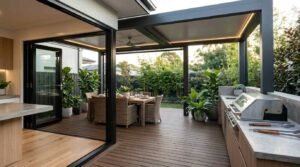
Outdoor Living: Extending Usable Space
Outdoor areas add value when they function as genuine living extensions rather than unused yard space.
Deck and Patio Returns
Quality outdoor entertaining areas add $20,000 to $50,000 to property values, with returns depending on integration with indoor spaces and climate-appropriate design.
High-value outdoor features:
- Covered entertaining areas with ceiling fans
- Built-in barbecue facilities
- Outdoor lighting for evening use
- Privacy screening from neighbours
- A direct connection to indoor living zones
Integration determines the return more than size does. A modest covered deck that opens directly off the kitchen outperforms a large deck stranded at the far end of a yard, because buyers read the first as extra living space and the second as extra maintenance.
Weather protection carries similar weight. A covered area sees year-round use in Sydney’s climate, while an uncovered deck sits idle through summer afternoons and winter evenings alike.
Landscaping Impact
Professional landscaping improves street appeal and creates a positive first impression. Australian property commentary from Domain places the uplift from well-maintained gardens at roughly 5% to 10% of property value, and returns diminish rapidly for elaborate installations that demand ongoing maintenance.
The cost bands are narrower than most homeowners expect. A front-garden reset with turf, mulched beds, established plantings and a repaired path runs $5,000 to $15,000 for a standard Sydney block, and full landscaping with retaining, irrigation and hard paving climbs past $40,000.
We stop at the point where maintenance becomes visible work. A garden that needs a fortnightly gardener reads as a recurring cost to buyers, which cancels the presentation gain it created.
Native and low-water plantings hold the aesthetic without the drag. That combination captures most of the available uplift for a fraction of the elaborate-build cost.
Façade and Entry Presentation
The façade sets the buyer’s expectation before they walk through the door, and it costs comparatively little to fix.
Rendering or repainting an exterior runs $8,000 to $20,000 for a standard Sydney house. Replacing a tired front door, adding external lighting, and repairing a cracked path costs $3,000 to $8,000 and shifts the first impression substantially.
We treat entry presentation as the highest return per dollar spent on any exterior work. Buyers form a price expectation in the first ten seconds, and every room they see afterward is judged against that anchor.
How Long Each Room Renovation Takes
Timelines matter as much as costs, because every week of work carries holding costs and every delayed room delays a listing date.
| Room / Project | Typical On-Site Duration | Main Delay Risk |
| Paint, flooring and lighting | 1–2 weeks | Trade sequencing |
| Laundry | 2–3 weeks | Plumbing rough-in |
| Bathroom (existing footprint) | 3–5 weeks | Waterproofing cure, tile lead time |
| Kitchen (mid-range) | 4–6 weeks | Cabinetry and stone fabrication |
| Second bathroom (new) | 5–8 weeks | Drainage connection, approvals |
| Open-plan conversion | 4–10 weeks | Engineering certification |
| Garage conversion | 6–10 weeks | Council approval |
| Additional bedroom or extension | 10–20 weeks | Approvals, weather, structural trades |
Two items dominate the delay column. Custom cabinetry and stone benchtops carry lead times of three to six weeks from measure to install, and anything requiring approval sits idle until the certificate is issued.
We book long-lead items before demolition starts. That single sequencing decision removes more schedule risk than any amount of on-site pressure.
Council Approval and How It Affects Value
Approval status changes the value of completed work, and unapproved work creates a discount rather than a premium.
Most cosmetic renovations proceed as exempt development. Bathroom and kitchen upgrades that retain existing wall positions and plumbing locations generally need no development application under the NSW planning framework, though the work still requires licensed trades and compliance certificates.
Work That Requires Approval
Structural and footprint changes trigger a formal pathway.
- Removing or altering load-bearing walls
- Converting a garage into habitable space
- Enclosing a verandah or adding a room
- Adding a second storey or altering the roofline
- New wet areas that require drainage connections
A complying development certificate through a private certifier takes several weeks and costs $2,000 to $6,000. A full development application through council takes longer and costs more.
Why Unapproved Work Destroys Value
Buyers and their conveyancers check approvals. Unapproved habitable space does not count toward the bedroom or bathroom figure in a valuation, which means a converted garage without approval adds close to nothing on paper.
Worse, it introduces a liability the buyer prices aggressively. We insist on documented approval for every structural project, because the certificate is a substantial part of what the buyer actually pays for.
Rooms That Don’t Add Proportional Value
Not every renovation delivers a positive return. Understanding which improvements over-capitalise helps allocate a budget effectively.
Swimming Pools
Pools rarely return their installation cost at resale. Installation expenses of $50,000 to $100,000 typically add only $20,000 to $40,000 to property value, and ongoing maintenance erodes the net position further.
Annual pool running costs reach $1,500 to $3,500 once chemicals, power, servicing, and compliance inspections are counted. Over five years of ownership, that maintenance consumes a meaningful share of whatever value the pool contributed.
Pools also narrow the buyer pool. Families with young children and buyers unwilling to take on maintenance responsibility step away, which reduces competition at the moment competition matters most.
Home Offices
Dedicated home office spaces gained prominence through 2020 and 2021, then normalised as hybrid work settled. Purpose-built offices add minimal value against flexible spaces buyers configure to their own needs.
The distinction sits in reversibility. A room with a door, a window and a power supply reads as a bedroom, a study or a nursery depending on the buyer, and it carries the value of whichever reading is highest.
Built-in desks and custom joinery lock the room into one use and strip that optionality away.
Luxury Fixtures in Modest Homes
Installing premium fixtures in entry-level properties rarely recovers the cost. A $15,000 bathroom vanity in a $600,000 home does not deliver a proportional return, because buyers in that price bracket prioritise functionality over luxury finishes.
The ceiling is set by the street, not the specification. We benchmark every finish decision against the top recent sale in the immediate area, then specify to that level rather than above it.
The Five Mistakes That Destroy Renovation Returns
Across hundreds of projects, the same five errors account for most of the money that never comes back.
Spreading the budget too thin. Five partially renovated rooms present as an unrenovated house. One finished room raises the whole property’s value.
Renovating in the wrong order. Surfaces before deficiencies means the second bathroom never gets built, and the property stays in the wrong search filter.
Specifying above the street. A finish level that exceeds the suburb’s top recent sale converts directly into unrecovered cost.
Skipping approvals to save weeks. Unapproved habitable space carries no valuation credit and hands the buyer a liability to price against.
Ignoring lead times. Stone and cabinetry ordered after demolition adds three to six idle weeks, and holding costs run through every one of them.
None of these are technical failures. Every one is a planning failure, which makes them the cheapest mistakes on the list to avoid.
Calculating Your Renovation ROI
Realistic return expectations prevent over-capitalisation and direct budget toward the highest-impact improvements.
The 10% Rule
A useful guideline caps renovation spending at 10% of current property value for any single project. A $1 million property supports a $100,000 renovation budget across all improvements.
The rule works as a ceiling rather than a target. Plenty of profitable projects spend 4% to 6% and capture most of the available uplift.
Comparative Market Analysis
Before renovating, we research recent sales of comparable properties in the immediate area. The price gap between renovated and unrenovated homes establishes a realistic value-add expectation.
The method needs discipline to work. Compare properties with the same bedroom and bathroom count, similar land size, and the same street type, then isolate the premium attributable to condition alone.
Six months of sales data gives a reliable picture in an active suburb. Thin-volume suburbs need a wider radius rather than a longer timeframe, because market conditions shift faster than geography does.
Renovating to Sell Versus Renovating to Stay
The same house justifies two different budgets depending on your timeline, and confusing the two is a common and expensive error.
Renovating to sell means spending on what buyers see and value within the next six months. We specify durable, neutral, broadly appealing finishes and skip anything that serves personal preference over market preference.
Renovating to stay means spending on what you use daily across the next decade. Underfloor heating, a premium cooktop and a bespoke layout make complete sense here, even though none of them return their cost at resale.
Professional Valuations
For significant renovations, we recommend obtaining before-and-after valuations from a licensed valuer. That data quantifies actual returns and informs future investment decisions.
A residential valuation costs $400 to $900 in Sydney and takes roughly a week from inspection to report. The valuation needs to happen prior to demolition, which catches most homeowners out.
The report earns its cost in three ways. It supports a refinance at the higher figure, it gives you a defensible number when an agent proposes a listing price, and it builds a record you carry into the next project.

Sydney-Specific Value Considerations
Local market conditions influence which renovations deliver the strongest returns.
Inner-City Priorities
Terrace homes and apartments in Sydney’s inner suburbs benefit most from:
- Maximising natural light through skylights and rear glazing
- Creating storage solutions in narrow floorplans
- Modernising compact bathrooms within the existing footprint
- Improving energy efficiency in single-brick construction
Suburban Family Homes
Middle-ring properties attract families who prioritise:
- Multiple bathrooms
- Open-plan living and kitchen areas
- Outdoor entertaining spaces
- Additional bedrooms for growing families
Coastal and Lifestyle Areas
Northern Beaches and Eastern Suburbs properties command premiums for:
- Indoor-outdoor flow through wide-opening doors
- Quality outdoor entertaining under permanent cover
- Low-maintenance landscaping suited to salt exposure
- Weather-resistant materials and marine-grade fixings
How Value Rules Change for Apartments and Units
Everything above assumes a freestanding house. Apartments follow a different set of rules, and applying house logic to a unit wastes money reliably.
The structural levers disappear first. You cannot add a bedroom by extending; you cannot convert a garage, and you rarely relocate a wet area because the plumbing stack position is fixed and shared.
That removes the highest-return moves from the table entirely. What remains is cosmetic, and cosmetic performs unusually well in units.
A kitchen and bathroom refresh at $25,000 to $45,000 combined typically returns close to its full cost, because unit buyers compare a small number of near-identical floorplans and condition becomes the only differentiator.
Storage and light carry outsized weight in the same way. Built-in joinery, mirrored wardrobe fronts and removing a non-structural kitchen wall change how large the apartment reads without changing its area.
Strata approval governs the timeline. Any work touching common property, waterproofing membranes or the building’s plumbing requires owners corporation consent before it starts, and that process runs weeks ahead of any trade booking.
Conclusion
Bathrooms and kitchens deliver the highest returns on renovation investment, and strategic upgrades in these spaces add genuine equity to your property. Knowing which rooms add value and which improvements over-capitalise separates a profitable renovation from an expensive mistake.
The strongest returns come from adding what a property lacks rather than upgrading what it already has. A second bathroom, a fourth bedroom and a functional laundry move a house into a new comparable-sales bracket in a way that finish upgrades alone never achieve.
At Sydney Home Renovation, we plan and deliver value-adding bathroom and kitchen renovations with transparent pricing and detailed cost breakdowns from the first conversation. We help you direct every dollar toward the rooms that repay it, and we stay on budget and on schedule while we do it. Contact our team to discuss your renovation goals and receive a comprehensive quote matched to your property’s value-adding potential.
Frequently Asked Questions
What room renovation gives the best return on investment?
Bathroom renovations deliver the highest ROI, returning 60% to 80% of cost at resale. Quality upgrades resolve buyer concerns about waterproofing and plumbing while improving daily function.
How much value does a second bathroom add to a house?
A second bathroom adds $50,000 to $100,000 in Sydney’s middle-ring suburbs. The return exceeds 100% on single-bathroom homes because buyers pay significant premiums for that convenience.
Do kitchen renovations add value to your home?
Yes. Kitchen renovations return 60% to 80% of cost at resale, and mid-range projects between $35,000 and $50,000 deliver the strongest percentage returns without over-capitalising.
Does adding a bedroom increase home value?
Adding a fourth bedroom to a three-bedroom home increases value by $50,000 to $150,000 in Sydney. Bedroom count drives valuations and determines which buyers see your listing at all.
Does a laundry renovation add value?
Yes. A laundry renovation costs $8,000 to $18,000 and adds $10,000 to $20,000. Buyers in family-home markets treat a genuine dedicated laundry as a baseline requirement.
Which room should I renovate first on a limited budget?
Close the property’s biggest deficiency first, such as a missing second bathroom or fourth bedroom. Finish one room properly rather than spreading a modest budget thinly across several.
Which renovation adds the most value per dollar spent?
Paint, flooring, and lighting add the most per dollar because they touch every room at once. A $15,000 package frequently returns $20,000 to $30,000 in presentation-driven value.
How long does a room renovation take?
A bathroom runs three to five weeks and a kitchen four to six weeks on site. Extensions and approvals push timelines to ten weeks and beyond.
What renovations should you avoid for resale value?
Swimming pools, overly personalised finishes and luxury fixtures in modest homes rarely recover their cost. Pools return roughly 40% to 50% of installation expense while narrowing your buyer pool.
How much should I spend on renovations before selling?
Cap total renovation spending at 10% of current property value. Direct that budget to bathrooms and kitchens rather than spreading it thinly across lower-return improvements.
Do outdoor living areas add value to a house?
Quality outdoor entertaining areas add $20,000 to $50,000 when they integrate with indoor living spaces. Covered areas with lighting and built-in features outperform basic uncovered decking.


