A gut renovation strips your home back to its structural bones. We remove all internal finishes, fixtures, plumbing, electrical systems, and non-load-bearing walls, then rebuild from scratch inside the existing shell.
In Sydney, gut renovations cost between $2,000 and $4,500 per square metre, driven by property condition, material selections, and structural complexity. The line between a necessary gut renovation and an expensive overcapitalisation comes down to accurate assessment and honest arithmetic.
This covers the warning signs, the real Sydney numbers, the approval sequence, and the test we use to decide whether stripping back to the studs is worth it at all.
What Is a Gut Renovation?
A gut renovation is the most comprehensive form of home renovation short of demolition and rebuild. It means removing virtually everything inside your home’s external walls and roof structure, then rebuilding all systems and finishes from scratch within the existing structural shell. Unlike surface-level updates or room-specific remodels, nothing internal survives except the frame.
Gut Renovation Definition and Scope
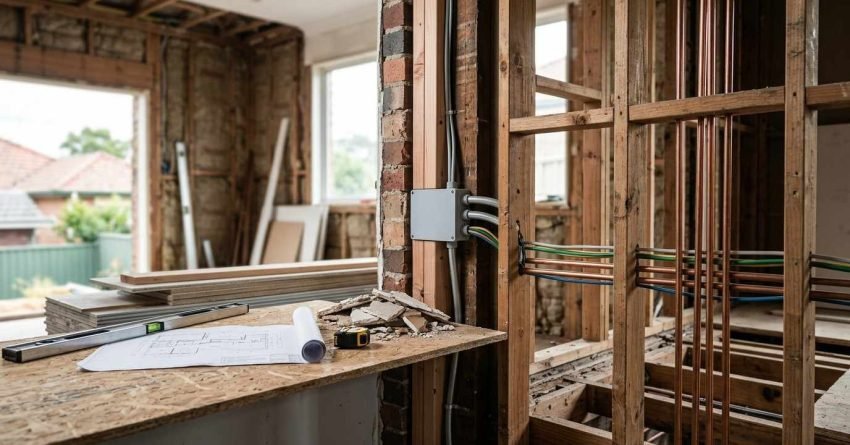
Gut renovation means stripping a property down to its structural framework. We remove all internal wall linings, ceilings, flooring, cabinetry, fixtures, electrical wiring, plumbing pipes, and insulation. What remains are the external walls, roof structure, floor joists, and load-bearing internal walls.
The scope extends well beyond demolition. After stripping the interior, we rebuild with new electrical systems, plumbing, insulation, wall linings, flooring, and fixtures. You are creating a new home inside an existing structural shell.
That blank slate is the whole point. This approach allows complete reconfiguration of floor plans, modernisation of every building system, and proper remediation of hidden problems. Termite damage, water damage, and structural deficiencies that surface-level renovations cannot reach all become accessible.
What Gets Removed in a Gut Renovation
During a gut renovation, we remove:
- Wall and ceiling finishes, including plasterboard, lath and plaster, timber panelling, and every paint or wallpaper layer. This exposes the wall framing and ceiling joists for inspection and modification.
- All flooring materials from carpet and tiles to timber floorboards and underlays. We assess the floor joists once exposed and retain, reinforce, or replace them based on what we find.
- Complete electrical systems including wiring, switchboards, power points, light fittings, and non-compliant components. We install entirely new infrastructure meeting the current wiring rules referenced by the National Construction Code.
- Entire plumbing networks, from water supply pipes and drainage to hot water systems and gas lines. Old galvanised and degraded copper pipes get replaced with modern materials.
- Kitchen and bathroom fixtures including cabinetry, benchtops, sinks, toilets, showers, baths, and all associated plumbing connections.
- Internal non-load-bearing walls wherever the new floor plan calls for a different layout, plus load-bearing walls where engineered structural support replaces them.
- Insulation, ventilation systems, and hazardous materials such as asbestos sheeting, lead paint, and degraded fibreglass batts.
Gut Renovation vs Full Renovation vs Cosmetic Renovation
The distinction between renovation types drives your budget more than any other early decision.
Cosmetic renovation addresses surface finishes only. It covers painting, replacing flooring, updating fixtures, and refreshing kitchens and bathrooms without moving walls or replacing building systems. This tier suits properties where the structure and services are already sound, and it runs $500 to $1,500 per square metre in Sydney.
Full renovation goes deeper without stripping everything back. It includes new kitchen and bathroom fit-outs, targeted electrical and plumbing upgrades, floor plan modifications, and comprehensive finishing work, while retaining services that still have life in them. Sydney full renovation costs generally fall between $1,500 and $2,500 per square metre.
Gut renovation assumes nothing survives except the structural shell. Every system gets replaced, every surface gets renewed, and the entire interior gets rebuilt. It suits properties with services beyond repair, comprehensive layout changes, or hidden defects that make selective work impractical.
When Is a Gut Renovation Needed?
Not every older home requires a gut renovation. Specific conditions make comprehensive stripping and rebuilding the most practical and cost-effective path, and we look for these before recommending the full scope.
Structural Damage and Foundation Issues
Significant structural problems push us toward gut renovation because the repairs need access to framing, foundations, and load-bearing elements sitting behind wall linings.
Common signs of structural damage in Sydney homes include:
- Visible cracks in walls wider than 5mm
- Doors and windows that no longer close properly
- Uneven or sloping floors
- Gaps opening between walls and ceilings
- Reactive clay soil movement causing foundation shifts
- Water damage from poor drainage or stormwater intrusion
- Termite damage to structural timbers
Patch repairs behind intact walls buy time rather than solve the problem. Gut renovation gives us complete structural assessment, proper remediation, and confidence that nothing hidden got missed.
Outdated Electrical and Plumbing Systems
Sydney homes built before the 1980s frequently carry electrical and plumbing systems that fail current safety standards and cannot support modern loads.
Electrical warning signs include two-prong power points without earthing, ceramic fuse boxes instead of circuit breakers, too few outlets, flickering lights, and circuits that trip constantly. Aluminium wiring and cloth-covered cables present a genuine fire risk and demand complete rewiring.
Plumbing red flags include galvanised steel pipes showing corrosion, lead pipes in pre-1930s homes, persistent low pressure, discoloured water, and repeat leaks. Old clay and concrete drainage cracks or become root-affected and need replacement rather than repair.
Rewiring and replumbing an occupied home behind intact walls is disruptive, expensive, and usually incomplete. Gut renovation gives clear access for comprehensive system replacement.
Asbestos, Lead Paint, or Hazardous Materials
Properties built in Sydney before 1990 often contain asbestos in wall linings, ceiling tiles, floor tiles, insulation, and exterior cladding. Homes built before 1970 carry lead-based paint.
Encapsulation works for undisturbed material, but renovation activity disturbs it and triggers removal obligations. SafeWork NSW requires licensed removalists for bonded asbestos above 10 square metres and for all friable material, which makes piecemeal remediation during partial renovation impractical.
Hazardous material removal adds $10,000 to $50,000 or more to gut renovation costs depending on extent. That figure buys documented compliance and a home that meets health and safety standards.
Major Layout Changes and Open Plan Conversions
Older Sydney homes often feature compartmentalised floor plans with small separate rooms, narrow hallways, and kitchens cut off from living areas. Converting to open plan living means removing multiple walls and installing engineered support in their place.
Layout changes that relocate kitchens or bathrooms drag plumbing and electrical services with them. Combined with wall removal, new structural supports, and comprehensive finishing, the scope reaches gut renovation territory regardless of where the project started.
Starting with a gut renovation when major layout changes are on the table produces cohesive design and efficient sequencing. It also avoids the compromises that come from working around finishes you decided to keep.
Partial Gut vs Full Gut
A full gut is not the only option, and we stage the work whenever the property allows it. Partial gut renovation strips selected zones back to frame while leaving sound areas intact.
This suits homes where the kitchen, bathrooms, and wet areas have failed but the bedroom wing carries serviceable wiring, sound plaster, and no hazardous material. Staging lets you spread cost across financial years and sometimes keeps part of the house habitable.
The trade-off is efficiency. Trades mobilise twice, temporary protection between zones adds cost, and junctions between old and new services create weak points that are awkward to certify. Once a partial scope covers more than roughly 60% of the internal floor area, the full gut almost always costs less per square metre and delivers a better result.
We recommend a full gut when hazardous material is distributed through the house, when the switchboard and mains need replacing anyway, or when the layout change crosses the whole footprint.
Purchasing an Older Sydney Property
Buyers taking on unrenovated properties from the 1960s or earlier face a choice between extensive selective repairs and comprehensive gut renovation.
Properties marketed as renovator’s delights and blank canvas opportunities reveal cascading issues once work begins. What looks cosmetic on inspection day conceals outdated wiring, deteriorating plumbing, absent insulation, and structural concerns.
For properties needing work across multiple systems, gut renovation delivers cost certainty that selective renovation cannot. We address everything systematically instead of discovering new problems every fortnight.
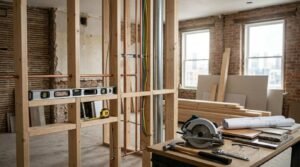
The Gut Renovation Process Step by Step
We walk every client through a structured process. Understanding each stage produces realistic timelines and far fewer costly surprises.
Assessment and Scoping
Everything starts with a thorough property assessment. We inspect the structural condition, existing building systems, hazardous materials, and overall property state before recommending any scope of work.
This assessment tells us what we are actually dealing with behind the walls. A pre-renovation building inspection by a qualified inspector costs $500 to $1,500 and prevents budget-destroying discoveries mid-project.
Design and Approvals
Once we understand the property’s condition, design begins. This covers architectural drawings, engineering specifications for structural changes, and material selections.
We lodge approvals during this stage, either a Complying Development Certificate or a Development Application depending on scope. Design and approvals take 2 to 6 months before construction starts.
Demolition and Strip-Out
The physical gut renovation starts with controlled demolition. We strip the interior back to the structural frame, removing all finishes, fixtures, and building systems.
Licensed removalists handle hazardous materials first. The strip-out phase takes 1 to 3 weeks depending on property size and hazardous material extent.
Structural Works and Rough-In
With the structure exposed, we complete structural modifications including steel beam installation, wall removal, and floor reinforcement. The rough-in trades then install new electrical wiring, plumbing pipes, and HVAC ducting within the open framing.
This is the stage where we catch and fix hidden problems. Inspections happen at each milestone before we close up the walls.
Lining, Finishing, and Fit-Out
New wall linings, insulation, ceilings, and flooring go in. Then we move to fit-out, covering kitchen cabinetry, bathroom tiling and fixtures, painting, and every finishing trade.
Fit-out takes the longest, typically 60% to 70% of total construction time. Quality control here determines the final result.
Final Inspections and Handover
We arrange all required inspections and obtain the Occupation Certificate, which is the document that legally clears you to move back in. Nothing else in the handover pack matters until that one is issued.
You also receive compliance certificates for the new electrical and plumbing work, waterproofing certification for wet areas, and manufacturer warranties for appliances and fixtures. We compile these into a single handover pack, because scattered paperwork becomes a genuine problem at resale.
Handover includes a detailed walkthrough and an agreed defects list. The statutory defects liability period runs for six years on major defects and two years on other defects under NSW home building law, so we document condition carefully at completion.
How Much Does a Gut Renovation Cost in Sydney?
A gut renovation in Sydney costs $2,000 to $4,500 per square metre of internal floor area. For a typical 120 square metre three-bedroom home, that puts the total between $240,000 and $540,000, with finish level and structural complexity deciding where you land inside that range.
Average Gut Renovation Cost Per Square Metre
That range spans budget-conscious work in standard materials through to high-end projects in premium finishes. These are our own quoting figures from Sydney projects, not published averages.
Budget gut renovation, $2,000 to $2,800/sqm. Builder-grade materials, standard fixtures, minimal custom work, straightforward layouts. We recommend this tier for investment properties and owner-occupiers who want function over luxury.
Mid-range gut renovation, $2,800 to $3,500/sqm. Quality materials, better fixtures, some custom cabinetry, considered design features. This is the most common choice for Sydney homeowners balancing quality against value.
High-end gut renovation, $3,500 to $4,500+/sqm. Premium materials, designer fixtures, extensive custom joinery, high-end appliances, architectural detailing. We see this tier in premium suburbs where the local ceiling supports the spend.
Cost Breakdown by Room Type
Different spaces carry very different cost weightings because of service density and fixture requirements.
Kitchen gut renovation: $30,000 to $80,000 depending on size and specification. Kitchens combine extensive plumbing, electrical, ventilation, cabinetry, and appliances, which makes them the most expensive room per square metre in the house.
Bathroom gut renovation: $25,000 to $55,000 per bathroom. Waterproofing, tiling, plumbing fixtures, and mechanical ventilation drive bathroom costs well above general living space.
Living areas and bedrooms: $1,500 to $2,500 per square metre. These spaces need less intensive services but still require complete electrical, wall linings, flooring, and finishing. Laundry runs $10,000 to $25,000 depending on size and inclusions, with plumbing and cabinetry driving the variation.
Budget vs Mid-Range vs High-End Gut Renovation Costs
Category | Cost/sqm | 120sqm Home | Inclusions |
Budget | $2,000–$2,800 | $240,000–$336,000 | Laminate benchtops, standard tiles, builder-grade fixtures, basic cabinetry |
Mid-range | $2,800–$3,500 | $336,000–$420,000 | Stone benchtops, quality tiles, good fixtures, semi-custom cabinetry |
High-end | $3,500–$4,500+ | $420,000–$540,000+ | Premium stone, designer tiles, high-end fixtures, custom joinery throughout |
These figures cover demolition, hazardous material removal, all trades, materials, fixtures, and project management. They exclude furniture, landscaping, and external works.
Factors That Affect Gut Renovation Costs in Sydney
Several variables decide where your project sits inside those ranges.
Property Age and Condition
Older properties cost more to gut renovate. Non-standard construction demands custom solutions, and pre-war homes bring irregular framing, unusual ceiling heights, and techniques unfamiliar to modern trades.
Accumulated deterioration adds another layer. Structural timber damage, foundation movement, and degraded building fabric all need repair before the rebuild proceeds, and hazardous materials appear far more often in older stock.
Sydney terraces and semis carry their own premium. Party walls limit access, shared services complicate isolation, and single-fronted floor plans leave no room to stage materials on site. Federation homes add decorative plaster, leadlight, and joinery that clients want retained, which means protection during demolition rather than clean removal.
Properties built after 1990 present fewer surprises and lighter remediation, which reduces cost by roughly 10% to 20% against pre-war equivalents.
Structural Changes and Engineering Requirements
Removing load-bearing walls, adding openings, and modifying floor structures all require engineering design and structural work that lands directly on the budget.
Steel beam installation for wall removal costs $3,000 to $15,000 per opening depending on span and load. Floor reinforcement for relocated bathrooms or heavy fixtures adds $5,000 to $20,000.
Engineering fees for structural design and certification run $2,000 to $10,000 depending on complexity. We keep structural changes to what the design genuinely needs, though the right structural move often delivers a layout improvement that justifies every dollar.
Council Approvals and Heritage Overlays
Sydney council requirements vary by location and property classification. A Development Application for significant external changes, floor area increases, or heritage-listed properties adds $5,000 to $20,000 in fees and consultant costs, plus 2 to 6 months to the timeline.
A Complying Development Certificate for internal works meeting the standard criteria costs $2,000 to $5,000 and is processed in 2 to 4 weeks.
Heritage controls in areas like Paddington, Balmain, and Hunters Hill add 20% to 40% to project costs through mandated conservation approaches. Conservation area controls reach further inside the house than most owners expect.
Original room proportions in the front rooms, ceiling roses and cornices, staircases, and fireplace surrounds frequently sit inside the protected fabric, which rules out the very wall removals that motivated the project. We resolve heritage constraints during design rather than during demolition, because a refused variation mid-build stops everything.
Material and Fixture Selections
Material choice creates the largest cost variation after structural scope.
Flooring. Laminate at $30 to $60/sqm installed, engineered timber at $80 to $150/sqm, solid hardwood at $120 to $250/sqm. Across a whole house, that spread is substantial.
Tiles. Basic ceramic at $40 to $80/sqm installed, quality porcelain at $80 to $150/sqm, natural stone at $150 to $400/sqm. Bathrooms and kitchens absorb most of this.
Cabinetry. Flat-pack kitchen installation at $8,000 to $15,000, semi-custom at $15,000 to $30,000, fully custom at $30,000 to $60,000+. Fixtures and fittings vary by 300% to 500% between builder-grade and premium designer.
We put money into high-impact visible elements and economise on hidden components. That approach maximises perceived value inside a fixed budget.
Hidden Costs and Unexpected Expenses
Hidden costs catch homeowners out on nearly every gut renovation. The most common surprises include:
- Asbestos or hazardous materials found after demolition begins, adding $10,000 to $50,000+ in licensed removal
- Structural deficiencies behind wall linings, including rotted framing, inadequate footings, and termite damage, all needing remediation before the rebuild
- Council-imposed conditions during approval that mandate additional works
- Temporary services, skip bin hire, scaffolding, and site protection that many quotes exclude
We recommend 15% to 20% contingency specifically for these unknowns.
Labour and Trades Availability
Sydney’s construction market moves through cyclical demand that affects both labour availability and pricing. High-demand periods push trade rates up 10% to 20% and stretch timelines.
Planning a gut renovation for the traditionally slower autumn and winter window yields better pricing and better scheduling. Trade shortages in waterproofing, electrical, and tiling create bottlenecks that stall a critical path.
A builder with established trade relationships keeps momentum, which is worth more than a marginally cheaper quote. Location premiums also apply for properties with difficult access, limited parking, or inner-city constraints that cut trade productivity.
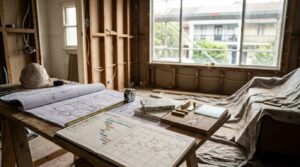
Gut Renovation Timeline and Planning
Realistic timelines prevent both frustration and budget overruns.
How Long Does a Gut Renovation Take?
Typical gut renovation timelines for Sydney homes:
- Small property, under 100sqm: 4 to 6 months from demolition to completion
- Medium property, 100 to 150sqm: 6 to 9 months
- Large property, 150 to 250sqm: 9 to 12 months
- Complex projects with heritage requirements or extensive structural work: 12 to 18 months
These timelines start from approvals already in hand. A DA pathway adds 2 to 6 months in front of construction.
Factors that stretch timelines include material supply delays, unexpected conditions found at strip-out, design changes during construction, and trade availability.
Planning for Temporary Accommodation
Gut renovation requires vacating the property entirely. We disconnect every service, run hazardous demolition, generate extensive dust and debris, and leave zero habitable space during construction.
Budget for alternative accommodation across the whole project duration. Rental accommodation runs $500 to $1,500 per week depending on Sydney location and property size, and short-term furnished rentals cost more weekly while including furniture and utilities.
For a six-month project, accommodation adds $12,000 to $36,000 to total project investment. That belongs in your renovation budget, not beside it.
Two practical traps catch people here. Standard residential leases run twelve months while your build runs six to nine, so negotiate a break clause or accept the overlap as a cost. Furniture storage adds $200 to $500 per month, and families staying inside a school catchment routinely pay a premium over moving further out.
Financing Your Gut Renovation
Most Sydney homeowners fund gut renovations through equity, construction finance, or a combination. Locking finance before you sign a building contract is one of the smartest moves available.
Home equity loans and lines of credit let you borrow against existing property equity at competitive rates. A redraw facility on your mortgage works similarly, drawing funds as stages are completed and charging interest only on what you have used, which makes it the most cost-effective route for homeowners sitting on significant equity.
Construction loans release funds in stages as work progresses, so you pay interest only on drawn amounts. The staged-draw structure fits gut renovations well because major expenditure arrives in phases, covering demolition, rough-in, and fit-out rather than landing all at once. Lenders require a fixed-price contract and a licensed builder before approval.
Renovation-specific personal loans suit smaller projects and carry higher rates than secured options. Some homeowners combine approaches, using equity release for the bulk of works and a smaller personal loan for contingency, and we recommend speaking with a mortgage broker who specialises in construction finance before choosing a structure.
Finance approval before contract signing gives you hard budget boundaries and real negotiating confidence. Builders take fixed-budget clients seriously, and you avoid scope creep against an undefined ceiling.
Permits and Approvals Required in Sydney
Approvals run as a dependency chain rather than a checklist. Each one gates the next, and the sequence decides your start date.
Step 1: Planning Approval Pathway
Complying Development Certificate (CDC) suits internal works meeting predetermined standards. Private certifiers process it in 10 to 20 business days at a cost of $2,000 to $5,000.
Development Application (DA) applies to heritage properties, non-complying works, and significant external changes. Local council processes it over 40 to 90+ days at $5,000 to $20,000, including consultant reports. Current pathways and requirements sit on the NSW Planning Portal.
Step 2: Construction Certificate
A Construction Certificate is required before construction commences and confirms detailed plans comply with the National Construction Code. It costs $2,000 to $4,000 and depends on your planning approval already being in place.
Step 3: Occupation Certificate
An Occupation Certificate is required at completion, confirming the work matches approved plans and is safe to occupy. It costs $1,000 to $2,000 and is the document that ends your temporary accommodation.
Additional approvals include Section 68 approval for plumbing and drainage, heritage approval for listed properties, and tree removal permits where landscaping is affected.
Strata properties add a layer. Owners corporation approval is required for work touching common property, which includes most wet area waterproofing, service penetrations through slabs, and window replacement. By-laws often restrict work hours and specify acoustic underlay requirements, so we read the by-laws before scoping any apartment gut.
Is a Gut Renovation Worth It?
The financial and practical case for gut renovation depends on property specifics, market conditions, and your own objectives.
The Overcapitalisation Test
Here is the arithmetic I run before quoting any gut renovation.
A gut renovation needs to cost no more than 60% to 70% of the expected value increase to deliver a positive return. Estimate the realistic post-renovation sale price for your street, subtract the current value, then multiply the difference by 0.65. That result is your ceiling, and a scope that exceeds it is overcapitalisation regardless of how well it gets built.
In premium Sydney suburbs, well-executed gut renovations add $1.50 to $2.00 in value for every $1.00 spent. In middle-ring suburbs, expect closer to $1.00 to $1.30.
Return on Investment for Sydney Properties
Gut renovation ROI varies by suburb, property type, and execution quality.
High-ROI scenarios include established suburbs with strong demand across the Inner West, North Shore, and Eastern Suburbs, homes with good bones and severely outdated interiors, properties bought below market value because of condition, and areas where renovated stock commands a clear premium.
Those same suburbs also sit at the top of the cost range, and the reason is physical rather than postcode-based. Terrace frontages in Paddington and Balmain restrict access, heritage density lifts consultant and conservation costs, and North Shore sites with steep driveways slow every delivery. Budget toward $3,000/sqm and above in these areas even for mid-range specification.
Lower-ROI scenarios include suburbs with price ceilings that cap capitalisation, homes where land dominates total value, specification beyond suburb expectations, and properties with fundamental limits like poor orientation or a busy road frontage.
When Gut Renovation Is the Wrong Choice
Not every property justifies the full approach, and calling it early saves serious money.
Gut renovation is wrong when the structural bones are genuinely poor. Cracked slabs, severely compromised footings, and timber frames beyond economic repair all point to demolition and rebuild as the smarter investment. It is also wrong when the desired changes exceed what the existing floor plan can absorb, and a new build delivers more for similar cost.
Properties where land dominates total value rarely recoup gut renovation spend. A block worth $1.5M with a realistic finished ceiling of $2M will not carry a $600,000 gut renovation, no matter how well we execute it. A targeted refresh or a sale in unrenovated condition makes better financial sense.
When to Gut Renovate vs Knock Down and Rebuild
Sometimes demolition and new construction beats gut renovation outright.
Gut renovation suits:
- Properties with heritage value or character worth preserving
- Homes with solid structural bones and workable layouts
- Situations where existing floor area already meets your needs
- Properties carrying demolition restrictions
- Budgets that fall short of new construction
Knock down rebuild suits:
- Properties where the existing structure caps the outcome
- Homes with extensive structural deficiencies
- Situations requiring significant floor area increases
- Sites where building orientation or position is fundamentally wrong
In Sydney, new construction costs $2,500 to $4,500 per square metre for project homes and $3,500 to $6,000+ for custom designs. Once a gut renovation quote approaches those figures, new construction delivers the better outcome.
Adding Value Through Strategic Gut Renovation
Maximising value requires strategic decisions at every stage. We prioritise layout improvements that lift liveability and flow, because open plan living, genuine indoor-outdoor connection, and sensible kitchen placement add lasting value that buyers register immediately.
Kitchens and bathrooms deliver disproportionate value perception. These rooms drive buyer decisions more than any other space, and we see it consistently across Sydney suburbs at every price point.
Bedrooms and living areas need quality finishes, not expensive ones, since premium flooring in bedrooms adds cost without proportional return. Match finish level to suburb expectations, because premium finishes in entry-level suburbs fail to recoup and budget finishes in premium suburbs cap your sale price.
Energy Efficiency Upgrades During Gut Renovation
A gut renovation is the one moment when deep energy upgrades are genuinely affordable. Walls are open, services are exposed, and work that costs a fortune to retrofit becomes incremental.
High-performance insulation in walls, ceilings, and under floors is the highest-value upgrade available. Open framing means full-depth batts or boards installed continuously, without the gaps and compressions that plague retrofit blow-in work. We also address thermal bridging and air leakage at this stage, because sealing penetrations and service holes while they are visible produces a measurably tighter building than any later attempt.
Double-glazed windows, draught sealing, and improved mechanical ventilation all go in during the rebuild at a fraction of retrofit cost. Window replacement in particular is cheap while the reveals are already open and expensive once the linings are back on.
Ventilation deserves deliberate attention in a tight house. We specify exhaust to wet areas and consider heat recovery where the design and budget support it, because sealing a house without ventilating it creates moisture problems.
We also pre-wire for solar panels and battery storage even when installation is years away, since running cable and conduit during construction is a minor cost against retrofitting through finished walls and a completed roof. The same logic applies to induction cooking, heat pump hot water, and EV charging.
New residential work in NSW is assessed under BASIX, and major renovations frequently trigger those requirements. We resolve compliance during design so performance targets shape the specification rather than arriving as a late constraint.
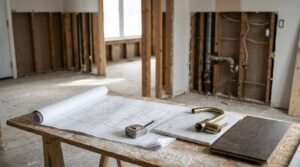
Common Gut Renovation Mistakes We See in Sydney
Five mistakes account for most of the gut renovation projects that go wrong. Every one of them is avoidable at the planning stage.
Skipping the pre-purchase or pre-scope inspection. A $500 to $1,500 inspection routinely reveals $50,000 worth of concealed problems. Clients who skip it discover the same problems mid-demolition, without budget or leverage.
Running no contingency. A gut renovation opens up everything, which guarantees discoveries. Without 15% to 20% held back, the first surprise forces either a scope cut or a finance scramble.
Selecting finishes late. Late selections stall trades and trigger variations. We lock every fixture, tile, and fitting before demolition begins, because a tiler waiting on a tile decision is a tiler you pay to wait.
Overcapitalising against the street. This is the expensive one. Premium specification in a suburb with a hard price ceiling converts renovation spend into unrecoverable cost, which is exactly what the overcapitalisation test prevents.
Choosing on price alone. The cheapest quote usually excludes something. We see missing provisional sums, absent site costs, and no allowance for hazardous material, all surfacing later as variations against an owner with no negotiating room.
How to Choose a Gut Renovation Contractor in Sydney
Choosing the right contractor makes or breaks a gut renovation. The stakes are too high and the timeline too long to get this wrong.
Licensing and Insurance Requirements
Every gut renovation contractor in NSW needs a valid licence from NSW Fair Trading, and residential building work above $5,000 legally requires one. Verify licence status directly rather than accepting a licence number on a quote.
Confirm your contractor carries comprehensive insurance including public liability, workers compensation, and contract works insurance covering full project value. Request certificates of currency before signing anything.
Home Warranty Insurance and HBCF Cover
Residential building work in NSW valued above $20,000 requires Home Building Compensation Fund cover, and the builder must provide the certificate before taking any deposit or starting work. Every gut renovation clears that threshold comfortably.
HBCF cover protects you where the builder dies, disappears, becomes insolvent, or has their licence suspended for failing to rectify defects. It responds for six years on structural defects and two years on non-structural work, running from completion.
A builder who cannot produce an HBCF certificate either cannot obtain one or is not licensed for the value of your job. We treat that as a hard stop, not a negotiating point.
Builder-Managed vs Owner-Builder
Most clients engage a builder to manage the whole project, which puts one party accountable for programme, trade coordination, defects, and warranty.
Owner-builder arrangements shift that responsibility to you. It requires an owner-builder permit for work above the threshold, removes HBCF protection on the work you manage, and makes you responsible for coordinating every trade and inspection across a six- to twelve-month programme.
The apparent saving is real but narrow, and I tell every client the same thing: a gut renovation is the worst possible project to learn on. Sequencing errors between structural, rough-in, and lining stages cost far more than a management margin.
Project Management and Communication
Ask how the builder actually runs the job before you compare prices, because a six- to twelve-month programme lives or dies on communication rhythm. We hold a weekly site meeting, issue a written progress update against the programme, and give you a single point of contact rather than a rotating cast of trades.
Variations need a written process with a price and a time impact stated before work proceeds. Verbal approvals on site are where budgets quietly break, and a builder who resists putting variations in writing is telling you how the rest of the job will run.
Confirm who holds the programme and how slippage gets reported. On a gut renovation, the critical path runs through rough-in inspections and waterproofing sign-off, so those milestone dates matter more than the finish date on the contract.
What to Look for in Quotes and Contracts
A reliable gut renovation quote breaks costs down by trade and material category. Lump-sum quotes with no detail make value comparison and variation tracking impossible.
Understand which contract structure you are signing. A fixed-price contract puts cost risk on the builder and suits gut renovations where the scope is well defined after inspection, while a cost-plus contract passes actual costs through with a management margin, which offers transparency but leaves you carrying the risk.
Provisional sums sit inside fixed-price contracts for genuinely unknown items like hazardous removal, and every provisional sum needs a stated basis and a reconciliation method.
Your contract needs a fixed price or clearly defined provisional sums, a detailed scope of works, a realistic timeline with milestone dates, a payment schedule tied to completed stages rather than large upfront deposits, and a clear variation process. We recommend a construction lawyer review any contract above $200,000.
Red Flags to Watch For
Unusually low quotes signal corner-cutting, hidden exclusions, or a plan to recover margin through variations. Large upfront payment demands before work begins point to cash flow problems.
No fixed address, no verifiable references, and reluctance to provide a written contract are all deal-breakers. A contractor who pressures you to skip council approvals is putting your investment and your legal position at risk.
Conclusion
Gut renovation is a significant undertaking, and knowing when it is genuinely needed versus when a lighter approach works better is what protects your money. The right assessment, honest budgeting, and a structured process turn an overwhelming prospect into a manageable project with a predictable outcome.
Properties with failed systems, hazardous materials, structural problems, or layouts that need real modification justify the comprehensive approach. The discipline lies in matching your scope and finish level to your property’s potential and your suburb’s ceiling.
We help Sydney homeowners get that judgement right from the start, so nobody spends $400,000 on a home that cannot carry it. Reach out to the Sydney Home Renovation team for an honest assessment of your property, a realistic cost range, and a clear answer on whether a gut renovation is the right call.
Frequently Asked Questions
What is the difference between a gut renovation and a full renovation?
A gut renovation strips everything back to structural framing and replaces all systems and finishes. A full renovation updates multiple areas but retains functional existing elements. We recommend gutting when systems are beyond selective repair.
Can you live in a house during a gut renovation?
No. We disconnect all services, including electricity, water, and gas, during demolition and reconstruction. The property stays uninhabitable until we reconnect services and obtain the Occupation Certificate, typically 4 to 12 months.
Do I need council approval for a gut renovation in Sydney?
Most gut renovations need at minimum a Complying Development Certificate for internal works. Heritage-listed properties, external changes, and non-complying works require a Development Application. We confirm requirements during scoping.
How do I find a reliable gut renovation contractor in Sydney?
We recommend licensed builders with demonstrated gut renovation experience, verified references from completed projects, current insurance including HBCF cover, and clear contract documentation. Request quotes broken down by trade and material.
What is the cheapest room to gut renovate?
Bedrooms and living areas cost the least per square metre because they need minimal plumbing and simpler electrical work. We quote $1,500 to $2,500 per square metre for these spaces against $3,000 to $5,000+ for kitchens and bathrooms.
How much contingency budget do I need for a gut renovation?
We recommend 15% to 20% contingency. Older properties and those with unknown conditions warrant the full 20%. This covers additional structural damage, hazardous materials, and compliance requirements that emerge once walls open.
Does a gut renovation increase home value in Sydney?
Quality gut renovations increase Sydney property values. In established suburbs with strong demand, we see $1.30 to $2.00 in value per $1.00 spent. Success depends on suburb-appropriate specification and genuine deficiency correction.
What is the first step in planning a gut renovation?
We start with a thorough property assessment. This inspection identifies structural condition, system status, hazardous materials, and full scope before we provide any cost estimate. A pre-renovation inspection costs $500 to $1,500.
How do I budget for a gut renovation in Sydney?
Start with the range of $2,000 to $4,500 per square metre and multiply by internal floor area. Add 15% to 20% contingency plus temporary accommodation. Get at least three detailed quotes before committing.
Are gut renovations worth it for investment properties?
They make financial sense when post-renovation value clearly exceeds purchase plus renovation cost. We focus investment gut renovations on the budget tier at $2,000 to $2,800/sqm with durable, tenant-friendly finishes that protect yield without overcapitalising.