A spa bath installation in Sydney typically costs between $3,500 and $12,000 all-in, covering the unit, labour, plumbing, electrical work, and associated finishing costs. That range moves significantly depending on the type of spa bath you choose, the condition of your existing bathroom, and how much structural or compliance work is needed before the unit goes in.
Getting this wrong is expensive. Underestimating the full scope is one of the most common reasons bathroom renovations blow their budgets.
In this guide, I cover everything you need to know from technical installation requirements to a realistic cost breakdown, the hidden expenses most homeowners miss, and how to plan a budget that actually holds.
What Is a Spa Bath and Is It Right for Your Bathroom?
A spa bath is a bathtub fitted with water jets, air jets, or a combination of both, designed to deliver hydrotherapy and relaxation benefits beyond a standard soak. They range from basic air-jet models to fully featured hydrotherapy systems with programmable controls, chromotherapy lighting, and heated surfaces.
Before committing to one, it is worth being clear on whether your bathroom can actually support it. Not every space is suitable without modification, and the cost of those modifications adds up fast.
Freestanding vs. Built-In Spa Baths
Freestanding spa baths sit independently on the floor and make a strong visual statement. They tend to cost more upfront and require careful plumbing placement since supply and waste lines need to meet the unit from below or behind without a surrounding structure to conceal them.
Built-in or alcove spa baths are set into a three-wall surround or a tiled deck. They are generally easier to plumb and finish, and they suit smaller or more standard bathroom layouts better than freestanding models. For most Sydney renovation projects I work on, built-in configurations are the more practical and cost-effective choice.
Drop-in spa baths sit inside a custom-built tiled deck. They offer a premium look but add tiling and carpentry costs to the overall budget.
Space and Structural Suitability
Standard spa baths run between 1,500mm and 1,800mm in length and 700mm to 900mm in width. You need clear floor space beyond those dimensions to allow for installation access, door clearance, and comfortable use.
Weight is the other critical factor. A filled spa bath, water plus occupant, can exceed 400kg. Timber-framed floors need a structural assessment before installation. Concrete slabs are generally fine, but older homes with suspended timber floors often require reinforcement before the unit goes in.
Spa Bath Installation Requirements
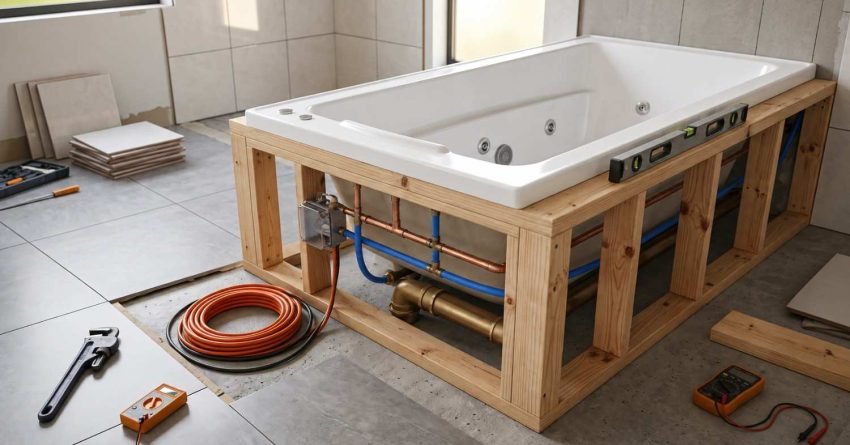
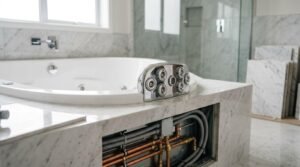
Installing a spa bath is not a straightforward swap-out. It involves licensed trades across plumbing, electrical, and sometimes structural work, all of which need to meet Australian standards and local council requirements.
Skipping any one of these creates compliance problems, insurance risks, and potential safety hazards.
Plumbing and Drainage Requirements
A spa bath needs both hot and cold water supply lines sized to deliver adequate flow to the jets. Most units require a minimum flow rate that a standard bathroom supply line may not meet without upgrading the pipe diameter.
Drainage is equally important. Spa baths hold more water than standard baths and drain faster when jets are running. The waste outlet and drain line need to handle that volume without backing up. A licensed plumber must connect all supply and waste lines; this is not DIY territory under Australian plumbing regulations.
Electrical Requirements and Safety Standards
Every spa bath with powered jets requires a dedicated electrical circuit. In Australia, this work must comply with AS/NZS 3000:2018, the Wiring Rules that govern all electrical installations in wet areas.
The circuit must be protected by a residual current device (RCD), commonly called a safety switch rated to trip within milliseconds of a fault. All electrical work in a bathroom must be carried out by a licensed electrician. No exceptions, and no workarounds.
The switchboard may also need upgrading if your home’s existing electrical capacity cannot support the additional load. That is an additional cost that catches many homeowners off guard.
Structural and Floor Load Considerations
As I mentioned above, the weight of a filled spa bath is substantial. For homes with timber-framed floors, a structural engineer’s assessment is often required before installation can proceed.
If reinforcement is needed, it typically involves adding additional floor joists or installing a load-spreading platform beneath the unit. This work adds cost and time but is non-negotiable for safety and building compliance. On a concrete slab, this concern largely disappears, but it is still worth confirming with your builder before assuming the floor is adequate.
How Much Does Spa Bath Installation Cost in Sydney?
The total cost of a spa bath installation in Sydney sits between $3,500 and $12,000 for most residential projects. That figure covers the unit itself, all labour, plumbing, electrical work, and standard finishing. Complex projects, particularly those requiring structural work, full bathroom reconfiguration, or premium units, can push beyond that range.
Here is how the numbers break down.
Labour Cost Breakdown
Labour is typically the largest single cost component after the unit itself. In Sydney, you can expect to pay:
- Licensed plumber: $120–$180 per hour. A standard spa bath connection takes 4–8 hours depending on access and existing pipe condition.
- Licensed electrician: $120–$170 per hour. Dedicated circuit installation, RCD fitting, and switchboard work typically runs 3–6 hours.
- Tiler: $60–$120 per hour or $45–$80 per square metre for surrounding tile work.
- Builder or project coordinator: $90–$150 per hour for structural work, carpentry, or overall project management.
Total labour across a standard installation runs between $1,800 and $4,500, depending on scope and trade rates at the time of your project.
Spa Bath Unit Costs by Type
The unit itself is a major variable. Prices in the Australian market currently range across three broad tiers:
- Entry-level acrylic spa baths: $800–$2,000. Basic air or water jets, standard controls, limited warranty.
- Mid-range spa baths: $2,000–$5,000. Better jet systems, improved materials, more configuration options.
- Premium and hydrotherapy spa baths: $5,000–$15,000+. Full hydrotherapy systems, chromotherapy, heated surfaces, programmable controls, and extended warranties.
For most homeowners renovating a family bathroom in Sydney, the mid-range tier delivers the best balance of quality, durability, and cost.
Additional and Hidden Costs to Budget For
This is where renovation budgets most commonly come unstuck. Beyond the unit and direct labour, a realistic spa bath installation budget needs to account for:
- Waterproofing: $400–$900 for membrane application to walls and floor. Mandatory under the National Construction Code.
- Tiling and grout: $600–$2,500 depending on tile selection and area covered.
- Waste removal and skip bin: $200–$500.
- Building permits (if required): $200–$800 depending on council and scope.
- Structural reinforcement (if required): $500–$2,500.
- Switchboard upgrade (if required): $800–$2,000.
- Contingency allowance: I always recommend a minimum 10–15% buffer on top of your quoted total. Unexpected conditions behind walls and under floors are common in Sydney’s older housing stock.
Factors That Affect Your Total Installation Cost
Two projects with the same spa bath unit can end up with very different total costs. The variables below are the main drivers of that difference.
Bathroom Size and Layout Complexity
A larger bathroom with good access and a straightforward layout keeps labour hours down. A compact bathroom, an awkward floor plan, or a tight doorway that limits how the unit can be brought in all add time and cost.
Custom tiling around a non-standard unit shape, or a layout that requires relocating existing fixtures to accommodate the spa bath, adds further to the total. Every additional trade hour in Sydney adds $120–$180 to the bill.
Existing Plumbing and Electrical Condition
Older Sydney homes, particularly those built before the 1980s, often have galvanised steel pipes that are corroded, undersized, or non-compliant. Discovering this during installation means the scope expands whether you planned for it or not.
The same applies to electrical systems. An older switchboard without RCD protection needs upgrading before a spa bath circuit can be added. These are not optional upgrades; they are compliance requirements. Building them into your contingency budget from the start is the right approach.
Is a Spa Bath Worth the Investment?
For the right property and the right buyer, yes. A well-installed spa bath in a quality bathroom renovation adds genuine lifestyle value and can contribute to property appeal in Sydney’s competitive market.
The keyword is “well-installed.” A spa bath that was fitted without proper waterproofing, electrical compliance, or structural support becomes a liability, not an asset.
Return on Investment for Sydney Homeowners
Bathroom renovations consistently rank among the highest-returning renovation categories for Australian residential property. According to the Housing Industry Association, bathroom upgrades are among the most valued improvements by buyers and renters alike.
A spa bath adds the most value in mid-to-upper-tier properties where buyers expect premium finishes. In entry-level properties, the cost of installation may not be fully recovered at resale, so the decision is better framed around lifestyle benefit than pure ROI.
For investment properties, a spa bath can support higher rental yields in the right market segment, particularly in Sydney’s inner suburbs where tenant expectations for quality finishes are higher.
How to Plan Your Spa Bath Installation Budget
Start with a realistic total figure, not just the unit price. The unit is one line item. Labour, compliance, finishing, and contingency are the rest of the budget, and they often add up to more than the unit itself.
Get at least three detailed quotes from licensed contractors. A quote that covers only supply and basic installation without addressing waterproofing, electrical compliance, or structural assessment is not a complete quote; it is a starting point that will grow.
Build your contingency in from day one. Ten to fifteen percent on top of your quoted total is the minimum I recommend for any Sydney bathroom renovation involving a spa bath. Older homes warrant the higher end of that range. Lock your unit selection before finalising your budget, because the unit’s weight, dimensions, and jet configuration all affect the labour scope and trade requirements.
Conclusion
Spa bath installation in Sydney is a meaningful investment that rewards careful planning. The total cost, the technical requirements, and the hidden expenses are all manageable but only when you go in with a complete picture of what is actually involved.
The difference between a renovation that stays on budget and one that blows out almost always comes down to how thoroughly the scope was defined before work started. Compliance, structural suitability, and contingency planning are not optional extras.
At Sydney Home Renovation, we help homeowners and property investors plan and deliver spa bath installations with full cost transparency, licensed trades, and no surprises. Reach out to us to get a detailed quote and start your renovation with confidence.
Frequently Asked Questions
Do I need council approval to install a spa bath in Sydney?
In most cases, a spa bath installation falls under exempt development in NSW and does not require a DA. But if the work involves structural changes, moving walls, or significant electrical upgrades, a complying development certificate or building permit may be required. Check with your local council or ask your contractor before starting.
Can I install a spa bath myself?
No. Plumbing and electrical connections for a spa bath must be carried out by licensed trades under Australian law. Attempting DIY plumbing or electrical work in a wet area is illegal, voids your home insurance, and creates serious safety risks. The unit itself can be selected and positioned by the homeowner, but all connections require licensed professionals.
How long does a spa bath installation take?
A straightforward installation on a prepared bathroom typically takes two to four days across all trades. If structural work, retiling, or compliance upgrades are required, the timeline extends to one to two weeks. Complex full bathroom renovations involving a spa bath can run three to four weeks.
What maintenance does a spa bath require?
Spa bath jets and internal pipework need regular cleaning to prevent biofilm and bacteria buildup. Most manufacturers recommend a monthly flush with a spa bath cleaner and a quarterly deep clean of the jet system. The pump and motor should be serviced every two to three years by a qualified technician.
What is the difference between a spa bath and a jacuzzi?
Jacuzzi is a brand name, one of the original manufacturers of jetted bath systems. A spa bath is the generic term for any bathtub fitted with a jet system. All Jacuzzis are spa baths, but not all spa baths are Jacuzzis. The functional difference between brands comes down to jet quality, pump power, warranty, and price.
How much does it cost to run a spa bath in Sydney?
Running costs depend on how frequently you use it and the unit’s pump and heating specifications. A mid-range spa bath used two to three times per week adds approximately $15–$40 per month to your electricity bill based on current Sydney electricity rates. Water usage is comparable to a standard bath fill.
What happens if my floor cannot support a spa bath?
A structural engineer assesses the floor and specifies the reinforcement required. This typically involves adding floor joists, installing a load-spreading platform, or in some cases, pouring a concrete pad. The cost ranges from $500 to $2,500 depending on the extent of work. It is a necessary step, not an optional one, and skipping it creates serious structural and safety risks.