The material you choose for your bathtub surround shapes everything: waterproofing performance, maintenance load, renovation cost, and the overall look of your bathroom. Tiles, stone, and panels each bring a genuinely different set of trade-offs, and the right choice depends on your budget, your lifestyle, and what you want the space to do long-term.
Surround material is one of the most consequential decisions in any bathroom renovation, and getting it wrong costs real money to fix.
I’ll walk you through every major option: tile, stone, and panel, with honest cost figures for Sydney, practical comparisons, and the style trends worth knowing before you commit.
What Is a Bathtub Surround and Why Does It Matter?
A bathtub surround is the wall cladding that lines the three walls directly above and around a bathtub, protecting the substrate from water, steam, and splash while defining the visual character of the space. It is not decorative trim. It is a functional wet-area system that sits at the intersection of waterproofing, aesthetics, and long-term durability.
Get the surround right, and the bathroom performs well for decades. Get it wrong, and water finds its way behind the wall, into the substrate, and eventually into the structure of the building.
The Role of the Surround in Bathroom Waterproofing
The surround works in tandem with the waterproofing membrane beneath it. The membrane stops water at the substrate level. The surround stops water from reaching the membrane in the first place or at least slows it down significantly.
Every material handles this differently. Tiles rely on grout joints that need to stay sealed. Stone relies on sealing the material itself. Panels eliminate joints entirely, which changes the waterproofing equation completely.
In Sydney, AS 3740-2021 sets the minimum waterproofing requirements for wet areas in residential construction. Any surround installation needs to comply, and the material choice directly affects how that compliance is achieved.
How Surround Material Affects Renovation Cost and Longevity
Material choice is the single biggest lever on both upfront cost and long-term maintenance spend. A budget panel system and a marble surround can differ by $5,000 or more in supply and install costs alone, and the maintenance gap over ten years can be just as significant.
Lifespan varies too. A well-installed tile surround lasts 20 to 30 years with proper grout maintenance. Natural stone, sealed correctly, performs similarly. Quality panel systems typically carry manufacturer warranties of 10 to 25 years depending on the product.
The renovation goal matters here. An investment property needs a different answer than a forever home.
Tile Bathtub Surrounds: Designs, Finishes, and What to Expect
Tile is the most common bathtub surround material in Australian bathrooms, and for good reason. The range of formats, finishes, colours, and price points is enormous. A tiled surround done well looks sharp, performs reliably, and holds its value.
The trade-off is grout. Every grout joint is a potential maintenance point, and in a wet area that sees daily use, grout needs attention over time.
Ceramic and Porcelain Tile Options for Bathtub Surrounds
Ceramic and porcelain tiles dominate the mid-range surround market. Porcelain is denser, less porous, and more durable than ceramic, making it the better choice for a wet area that takes a beating. Rectified porcelain tiles, with their precise edges and minimal grout joints, are particularly well-suited to bathtub surrounds.
Large-format tiles 600×600mm and above are increasingly popular because they reduce the number of grout joints and create a cleaner visual. They also require a flatter substrate and more skilled installation, which affects labour cost.
Slip ratings matter on floor tiles but are less critical on vertical surround walls. Focus instead on water absorption rating, surface hardness, and finish durability.
Mosaic and Feature Tile Ideas for a Designer Look
Mosaic tiles penny rounds, small hexagons, glass mosaics work beautifully as feature elements within a tiled surround. A full mosaic surround is a statement. A single mosaic feature wall behind the bath head is a more restrained, cost-effective way to introduce texture and visual interest.
Subway tiles remain a reliable choice for surrounds because they are timeless, widely available, and easy to work with. The offset brick pattern is the classic layout. Stacked vertical or horizontal arrangements give a more contemporary result.
Feature tiles with relief patterns, handmade textures, or metallic glazes add depth without requiring a complete redesign of the space.
What Tile Surrounds Cost in Sydney and What Drives the Price
In Sydney, a standard tiled bathtub surround three walls, standard bath size, mid-range porcelain tile typically costs between $1,800 and $3,500 supply and install. Premium tiles, complex layouts like herringbone, or large-format rectified tiles push that figure toward $4,000 to $6,000 or higher.
Labour is the dominant cost variable. Sydney tilers charge between $65 and $110 per hour, and a surround installation typically takes one to two days depending on complexity. Waterproofing, substrate preparation, and grout sealing add to the total.
Tile supply cost ranges from $30 to $150+ per square metre depending on format, finish, and brand. Budget tiles are available below that range, but quality control and consistency become a concern.
Stone Bathtub Surrounds: Natural and Engineered Options
Stone surrounds sit at the premium end of the market. Natural marble, travertine, and slate bring a material richness that no tile or panel fully replicates. Engineered stone offers a more consistent, lower-maintenance alternative at a similar or slightly lower price point.
Both options require skilled installation and a solid understanding of the material’s behaviour in a wet environment.
Natural Stone: Marble, Travertine, and Slate Surrounds
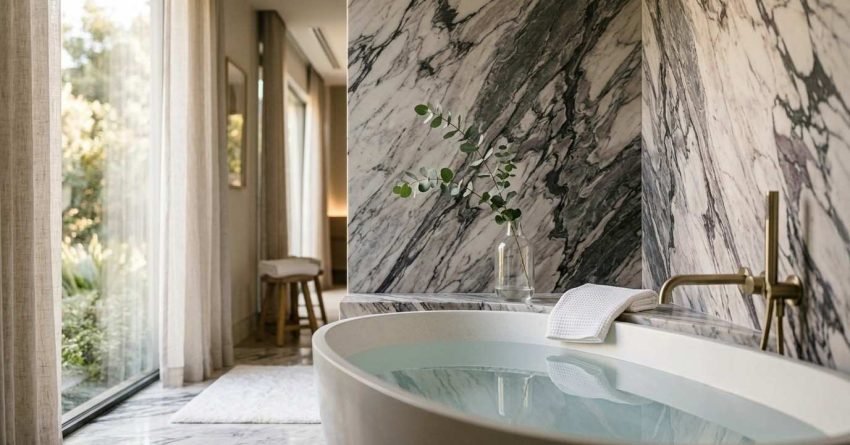
Marble is the prestige choice. The veining, the depth, the way it catches light nothing else looks quite like it. It is also porous, requires regular sealing, and is susceptible to etching from acidic cleaning products. In a bathroom used daily, marble demands a maintenance commitment.
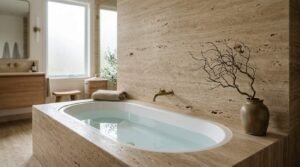
Travertine has a warmer, more textured character. It is slightly more forgiving than marble but still porous and still requires sealing. Filled and honed travertine is the most practical finish for a wet area.
Slate is the most durable of the natural stone options for a bathroom context. It is dense, naturally slip-resistant, and handles moisture well. The aesthetic is more industrial and earthy, not right for every brief, but genuinely excellent where it fits.
Engineered Stone Surrounds: Durability Without the Maintenance
Engineered stone quartz composite is manufactured from crushed quartz bound with resin. It is non-porous, does not require sealing, and offers consistent colour and pattern across slabs. For a bathtub surround, that consistency is a practical advantage: matching slabs across three walls is straightforward.
The aesthetic is cleaner and more uniform than natural stone. Some homeowners prefer that. Others find it lacks the organic character of marble or travertine. Both responses are valid.
Engineered stone is also harder and more scratch-resistant than most natural stone options, which matters in a family bathroom.
Stone Surround Costs and Installation Considerations in Sydney
Natural stone surrounds in Sydney typically cost between $4,000 and $9,000 supply and install for a standard bathtub surround, depending on stone type, slab thickness, and complexity. Marble at the premium end can exceed that range significantly.
Engineered stone surrounds generally sit between $3,500 and $7,000 for supply and install. The fabrication process cutting, profiling, and polishing is a significant cost component regardless of whether the stone is natural or engineered.
Installation requires a stonemason or highly experienced tiler. Waterjet cutting for precise fits around tapware and fixtures adds to the cost but is worth it for a clean result.
Panel Bathtub Surrounds: Acrylic, PVC, and Solid Surface
Panel systems are the fastest-growing segment of the surround market in Australia. They are grout-free, quick to install, and available at price points that suit budget renovations through to premium builds. The technology has improved significantly; modern panel systems look nothing like the cheap acrylic of twenty years ago.
The key advantage is the absence of grout joints. No grout means no grout maintenance, no mould in the joints, and a genuinely easier cleaning routine.
Acrylic and PVC Panel Systems: Fast, Affordable, Grout-Free
Acrylic and PVC panels are the entry-level panel option. They install over existing walls in many cases, which dramatically reduces labour time and cost. A full surround installation takes a day or less for an experienced installer.
The range of finishes has expanded considerably. Stone-look, timber-look, solid colour, and textured finishes are all available. The visual quality at the better end of the market is genuinely convincing.
The limitation is surface hardness. Acrylic and PVC panels scratch more easily than tile or stone, and they are not repairable in the same way. A scratched tile can be replaced. A scratched panel section is harder to address without replacing the whole panel.
Solid Surface Panels: The Premium Seamless Option
Solid surface panel products like Corian and similar composites are the premium panel option. They are thicker, harder, and more durable than acrylic or PVC. Joints between panels are bonded and sanded to near-invisibility, creating a genuinely seamless surround.
Solid surface is also repairable. Surface scratches and minor damage can be sanded out and refinished on-site. That repairability is a meaningful long-term advantage.
Custom fabrication is possible with solid surface integrated shelving, curved profiles, and bespoke sizing are all achievable. For a high-specification bathroom, solid surface panels offer a level of design flexibility that standard tile cannot match.
Panel Surround Costs and What Sydney Homeowners Should Know
Acrylic and PVC panel surrounds in Sydney typically cost between $800 and $2,500 supply and install for a standard bathtub surround. The lower end covers basic systems installed over existing walls. The upper end covers premium-finish panels with full substrate preparation.
Solid surface panel surrounds sit between $3,000 and $6,500 supply and install, depending on panel thickness, finish, and fabrication complexity. Custom work pushes costs higher.
Installation labour for panel systems is generally lower than for tile or stone because the process is faster and requires less substrate preparation in most cases.
Comparing Bathtub Surround Materials: Which One Is Right for You?
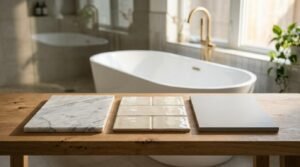
No single material is objectively best. The right answer depends on budget, maintenance tolerance, renovation goal, and aesthetic preference. Here is how the three categories compare across the dimensions that matter most.
Durability and Maintenance Comparison
Tile surrounds last 20 to 30 years when installed correctly. The tile itself is extremely durable. Grout is the maintenance point; it needs cleaning regularly and resealing every two to three years in a wet area. Failed grout allows water ingress, which is the primary failure mode for tiled surrounds.
Natural stone lasts as long as tile but requires more active maintenance. Sealing is annual in most cases. The stone itself is vulnerable to etching and staining from cleaning products if the wrong chemicals are used.
Engineered stone requires no sealing and is highly resistant to staining. Maintenance is minimal: wipe down with a non-abrasive cleaner and the surface stays in good condition.
Panel systems acrylic and PVC are the easiest to maintain day-to-day. No grout, no sealing, just a wipe. The trade-off is surface vulnerability to scratching and impact. Solid surface panels combine easy maintenance with repairability, making them the most practical long-term panel option.
Cost Comparison Across Tiles, Stone, and Panels
| Material | Supply & Install Range (Sydney) | Maintenance Level | Lifespan |
| Ceramic / Porcelain Tile | $1,800 – $6,000+ | Medium (grout) | 20–30 years |
| Natural Stone | $4,000 – $9,000+ | High (sealing + care) | 20–30 years |
| Engineered Stone | $3,500 – $7,000 | Low | 20–25 years |
| Acrylic / PVC Panel | $800 – $2,500 | Very Low | 10–20 years |
| Solid Surface Panel | $3,000 – $6,500 | Very Low | 20–25 years |
These are indicative ranges for Sydney. Final costs depend on bathroom size, substrate condition, fixture complexity, and the specific products selected.
Best Surround Material by Renovation Goal
Investment property or rental: Acrylic or PVC panels win on cost and maintenance simplicity. Tenants are not going to seal grout. A grout-free panel system holds up better with less intervention.
Family bathroom: Porcelain tile or engineered stone. Both handle heavy use well. Engineered stone removes the grout maintenance variable entirely.
Luxury or forever home: Natural stone or solid surface panels. Both deliver the material quality and visual depth that justify the investment in a space you plan to live with for decades.
Quick renovation or tight budget: Acrylic or PVC panels over existing walls. Fast, affordable, and the result looks far better than it did ten years ago.
Bathtub Surround Ideas for Sydney Homes: Style and Finish Trends
Sydney bathrooms have their own character influenced by coastal light, open-plan living, and a design culture that sits somewhere between the warmth of Mediterranean interiors and the clean lines of Scandinavian minimalism. The surround ideas that work best here reflect that.
Popular Tile Patterns and Layouts for Australian Bathrooms
Large-format porcelain in a stacked or offset layout is the dominant choice in new Sydney bathroom renovations right now. The minimal grout lines and clean geometry suit the contemporary aesthetic that most homeowners are working toward.
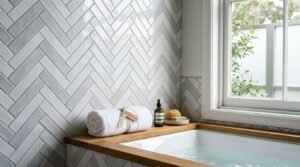
Herringbone remains popular for feature walls and smaller surrounds. It adds movement and visual interest without requiring a complex tile selection. A simple white or off-white porcelain in herringbone reads as considered and deliberate.
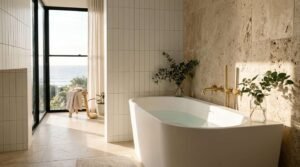
Vertical stacked subway tile is gaining ground as an alternative to the traditional horizontal offset. It makes ceilings feel higher and suits narrow bathroom footprints, which describes a lot of Sydney terrace and apartment bathrooms.
Stone and Panel Finishes That Work in Sydney’s Climate
Sydney’s humidity, particularly in coastal suburbs, means matte and honed finishes outperform high-gloss in practical terms. Gloss surfaces show water marks and soap residue more readily. A honed marble or a matte-finish engineered stone holds its appearance better between cleans.
For panel systems, a stone-look matte finish in warm grey or greige tones suits the Sydney palette well. These finishes photograph well, age gracefully, and work across a wide range of fixture and fitting styles.
Ventilation matters more than material in managing humidity long-term. A well-ventilated bathroom with a mid-range tile surround outperforms a poorly ventilated bathroom with premium stone every time.
Mixing Materials: When Combining Tile and Stone Works Well
Combining tile and stone in a single surround works when there is a clear logic to the combination. A stone feature panel behind the bath head with tiled side walls is a well-established approach; it concentrates the premium material where it has the most visual impact and keeps the overall cost manageable.
Tile and panel combinations work similarly. A solid surface panel on the back wall with tiled side walls gives a seamless focal point without the cost of a full solid surface installation.
The transition between materials needs a clean detail: a metal trim strip, a shadow line, or a deliberate step in plane. A poorly resolved transition reads as unfinished. A well-resolved one reads as intentional design.
Conclusion
Tiles, stone, and panels each solve the bathtub surround problem differently, and the right material depends entirely on what you need the space to do. Cost, maintenance, lifespan, and aesthetic all pull in different directions depending on which option you choose.
The decision gets easier when you anchor it to a clear renovation goal. Investment property, family bathroom, and luxury finish each point toward a different answer, and knowing that upfront saves time and money.
At Sydney Home Renovation, we help homeowners and investors work through exactly this kind of decision with honest cost guidance, material recommendations grounded in real project experience, and the trades to deliver the result. Reach out, and we’ll help you get the surround right from the start.
Frequently Asked Questions
What is the most durable material for a bathtub surround?
Porcelain tile and engineered stone are the most durable options for a bathtub surround. Both handle daily wet-area use well, resist staining, and last 20 to 30 years with minimal intervention. Engineered stone removes the grout maintenance variable entirely, which gives it a practical edge in high-use bathrooms.
Are panel surrounds as good as tiles?
Modern panel surrounds, particularly solid surface systems, perform comparably to tile in a wet area. They are grout-free, easy to clean, and durable. The trade-off is surface hardness: quality tiles are harder and more scratch-resistant than most panel systems, though solid surface panels are repairable in a way that tile is not.
How much does a bathtub surround cost in Sydney?
A bathtub surround in Sydney costs between $800 and $9,000+ depending on material. Acrylic panel systems start around $800 to $2,500 for supply and install. Mid-range tiled surrounds run $1,800 to $6,000. Natural stone surrounds sit between $4,000 and $9,000 or more. Final cost depends on bathroom size, substrate condition, and product selection.
Can I tile over an existing bathtub surround?
Tiling over an existing surround is possible in some situations but carries real risk. The existing surface needs to be structurally sound, flat, and properly bonded. Adding tile weight to an already-tiled wall increases load on the substrate and can cause adhesion failure over time. A full strip-back and fresh installation is the more reliable approach in most cases.
What is the easiest bathtub surround to maintain?
Acrylic, PVC, and solid surface panel surrounds are the easiest to maintain. No grout means no grout cleaning, no resealing, and no mould in the joints. A wipe-down with a non-abrasive cleaner keeps the surface in good condition. Engineered stone is the easiest low-maintenance option among the harder materials.