Tapware is one of the most visible decisions in any bathroom renovation, and it’s also one of the most misunderstood. Most homeowners focus on tiles and vanities first, then treat tapware as an afterthought, and that’s where budgets blow out and style choices fall flat. Getting the right bath mixer and tapware sorted early shapes everything from your plumbing layout to your finished look.
Tapware selection affects your renovation timeline, your plumbing costs, and the long-term durability of your bathroom. Choosing the wrong product at the wrong stage creates expensive rework.
We cover every tapware decision you’ll face: types, finishes, materials, budget ranges, installation requirements, and the mistakes that catch renovators off guard.
What Are Bath Mixers and Tapware?
Bath mixers and tapware are the fittings that control water flow and temperature in your bathroom. Tapware is the broad category; it covers every tap, mixer, and spout in the space. A bath mixer is a specific type of tapware that blends hot and cold water through a single fitting before it reaches the spout.
Understanding the category properly saves you from buying the wrong product for your plumbing setup. Not all tapware works with all water systems, and not all mixers suit all bath configurations.
Bath Mixer vs. Separate Taps: What’s the Difference?
A bath mixer uses one body to control both hot and cold water, typically through a single lever or a pair of handles feeding into a shared spout. Separate taps have individual hot and cold outlets with no blending water mixes in the bath itself.
Mixers are the standard choice in modern renovations. They’re easier to use, more water-efficient, and compatible with contemporary bathroom designs. Separate taps still appear in traditional and period-style bathrooms where the aesthetic calls for it.
The practical difference matters for your plumber. Mixers require balanced hot and cold pressure to function correctly. Separate taps are more forgiving on older or unbalanced systems.
Common Tapware Configurations for Bathrooms
Most bathroom renovations involve three tapware positions: the bath mixer or filler at the bath, basin mixers at the vanity, and a shower mixer controlling the shower rose. Some bathrooms also include a separate hand shower or a diverter that switches flow between a bath spout and a hand shower.
Keeping all tapware in the same finish and from the same range creates visual consistency. It also simplifies ordering and reduces the risk of mismatched thread sizes or valve types across fittings.
Types of Bath Mixers Available for Renovations
The type of bath mixer you choose is determined by your bath style, your wall construction, and where your plumbing rough-in sits. There are three main configurations used in Australian bathroom renovations.
Choosing the wrong type at the planning stage means relocating plumbing, and that adds cost fast.
Wall-Mounted Bath Mixers
Wall-mounted mixers are fixed directly into the wall above or beside the bath. The hot and cold supply lines run inside the wall cavity, and only the mixer body, handles, and spout are visible. This gives a clean, minimal look that suits contemporary and Hamptons-style bathrooms.
The rough-in position is critical. The centres between hot and cold inlets must match the mixer’s specifications exactly, typically 150mm apart for standard Australian fittings. Getting this wrong during the waterproofing stage means cutting into finished walls later.
Wall-mounted mixers work best in new builds or full gut renovations where the wall is open before tiling. Retrofitting them into an existing tiled wall is possible but adds labour cost.
Freestanding Bath Fillers
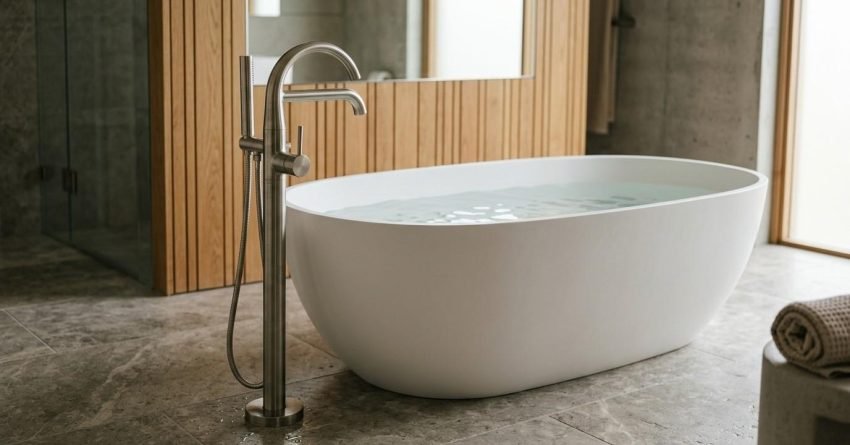
Freestanding bath fillers are floor-mounted and designed specifically for freestanding baths. The supply lines run up through the floor rather than the wall, and the filler stands independently beside or at the end of the bath.
These are a premium option both in product cost and installation complexity. The floor penetration needs to be planned before the slab is poured or the subfloor is finished. Waterproofing around the floor penetration requires careful detailing to prevent long-term moisture issues.
Freestanding fillers make a strong visual statement. They’re the right choice when the bath itself is a feature piece, and the overall design calls for a sculptural, high-end finish.
Deck-Mounted Mixers
Deck-mounted mixers are installed directly through the rim or deck of the bath. They’re a practical option for built-in baths with a tiled or stone surround, where the deck provides a solid mounting surface.
The supply connections run below the deck, keeping the plumbing hidden. Deck-mounted mixers are generally easier to install than wall-mounted options because the rough-in position has more flexibility; the plumber connects to the underside of the deck rather than inside a finished wall.
They suit traditional, transitional, and contemporary styles depending on the mixer design chosen.
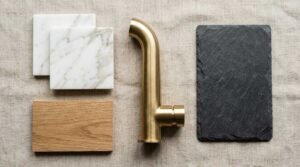
Tapware Finishes and Materials: What Lasts in a Bathroom
Finish is the first thing people notice and the first thing that shows wear. Choosing a finish based on looks alone without understanding the underlying material and coating technology leads to tapware that looks tired within a few years.
The bathroom environment is harsh: constant humidity, cleaning products, and daily contact all degrade inferior finishes faster than most renovators expect.
Chrome, Brushed Nickel, and Matte Black Compared
Chrome is the most durable standard finish. It’s hard, non-porous, and resistant to most bathroom cleaning products. Quality chrome tapware holds its finish for decades with basic maintenance. It suits contemporary, classic, and transitional bathroom styles equally well.
Brushed nickel sits in the mid-range for durability. The brushed texture hides water spots and minor scratches better than polished chrome, which makes it a practical choice for busy family bathrooms. It reads as warmer than chrome and pairs well with timber vanities and neutral palettes.
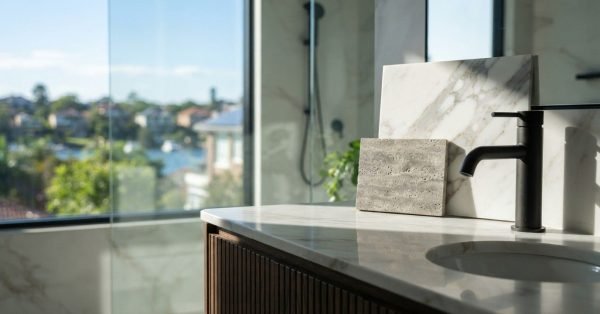
Matte black is the most popular premium finish in Australian renovations right now. The durability depends entirely on the coating technology. PVD (Physical Vapour Deposition) coated matte black tapware is highly durable and resistant to tarnishing. Standard painted or lacquered matte black finishes chip and fade particularly around the spout and handle where contact is highest. Always confirm the coating type before purchasing matte black tapware.
Brass vs. Zinc Alloy: Why the Base Material Matters
The finish sits on top of the base material, and the base material determines how long the fitting lasts. Solid brass is the industry benchmark. It’s corrosion-resistant, dimensionally stable, and holds threads and valve seats reliably over decades of use.
Zinc alloy (also called zamak) is lighter and cheaper to manufacture. It’s used in entry-level and mid-range tapware to reduce cost. Zinc alloy is more susceptible to corrosion in humid environments and can crack under stress, particularly at threaded connections. It’s not a poor material for every application, but it has a shorter service life than brass in a bathroom context.
For a renovation you’re planning to live with for 15 to 20 years, solid brass tapware is worth the price difference. For an investment property where you’re targeting durability at a controlled budget, quality zinc alloy from a reputable brand is a reasonable compromise.
How to Choose the Right Tapware for Your Renovation
Tapware selection comes down to four decisions: style, budget, water efficiency, and compatibility with your plumbing. Getting all four right at the same time is where most renovators need guidance.
Making one decision in isolation buying tapware you love without checking the others is the fastest way to create problems on site.
Matching Tapware to Your Bathroom Style
Contemporary bathrooms suit clean geometric forms, square spouts, lever handles, and minimal detailing in chrome, brushed nickel, or matte black. Hamptons and coastal styles work well with cross handles, curved spouts, and brushed nickel or brushed brass finishes. Traditional and period bathrooms call for porcelain-handled mixers, exposed pipework, and polished chrome or antique brass.
The key principle is consistency. Every tapware fitting in the bathroom bath mixer, basin mixer, shower mixer, and accessories should come from the same design family. Mixing styles across fittings creates visual noise that undermines even an expensive renovation.
Budget Ranges: Entry-Level to Premium Tapware
Entry-level tapware in Australia starts around $150 to $300 per fitting for basin mixers and $300 to $600 for bath mixers. These products are typically zinc alloy with standard chrome or painted finishes. They’re functional and appropriate for investment properties or tight renovation budgets.
Mid-range tapware runs from $400 to $800 per fitting for basin mixers and $700 to $1,500 for bath mixers. This tier typically uses solid brass bodies, better valve cartridges, and more durable finish options including PVD coatings. This is the sweet spot for owner-occupier renovations where longevity matters.
Premium tapware starts at $1,000 per fitting and can reach $3,000 or more for designer bath fillers. At this level, you’re paying for design, material quality, extended warranties, and brand reputation. Premium tapware is appropriate when the bathroom design is a key feature of the property, and the investment is justified by the overall renovation scope.
Water Efficiency Ratings and WELS Compliance in Australia
All tapware sold in Australia must carry a WELS (Water Efficiency Labelling and Standards) rating under the Water Efficiency Labelling and Standards Act 2005. The rating runs from 0 to 6 stars; more stars means less water used per minute.
For bath mixers and basin taps, a 4-star or higher WELS rating is a practical target for Sydney renovations. Higher-rated tapware reduces water bills and aligns with sustainability expectations in the current market. Some Sydney councils and state government rebate programs also recognise WELS-rated products worth checking before you finalise your tapware selection.

Installation Considerations for Bath Mixers and Tapware
Tapware installation is licensed plumbing work in New South Wales. Every connection to the water supply must be completed by a licensed plumber, and the work must comply with the Plumbing Code of Australia. This isn’t optional; unlicensed plumbing work voids insurance and creates liability issues at resale.
Understanding the installation requirements before you buy tapware prevents costly surprises on site.
Rough-In Requirements and Wall Preparation
The rough-in is the plumbing infrastructure installed before walls are tiled or lined. For wall-mounted bath mixers, the hot and cold supply inlets are set into the wall at a fixed position during the rough-in stage. The centres, height, and projection must match the mixer you’ve selected, and this needs to be confirmed before the plumber sets the rough-in, not after.
Wall preparation for tapware also involves waterproofing penetrations correctly. Every pipe penetration through a waterproofed surface needs to be sealed to prevent moisture ingress behind the wall. This is a detail that gets missed on rushed jobs and causes long-term damage that’s expensive to fix.
When to Upgrade Tapware During a Full Bathroom Renovation
A full bathroom renovation is the right time to upgrade tapware, not a partial refresh. When walls are open, waterproofing is being redone, and plumbing is already being touched, the incremental cost of upgrading from entry-level to mid-range tapware is minimal compared to the cost of doing it as a standalone job later.
Retrofitting new tapware into a finished bathroom means cutting tiles, disturbing waterproofing, and replastering work that costs significantly more than making the right choice during the original renovation. Treat tapware as a long-term decision and budget accordingly from the start.
Common Tapware Mistakes Renovators Make
Most tapware mistakes happen early, before a single fitting is ordered. They’re planning failures, not product failures. And they’re almost entirely avoidable with the right sequencing.
The most expensive mistakes aren’t choosing the wrong finish. They’re buying tapware before confirming it works with the rest of the renovation.
Buying Tapware Before Confirming Plumbing Compatibility
The most common and costly tapware mistake is purchasing fittings before the plumber has confirmed compatibility with the existing or planned plumbing system. Thread sizes, valve types, water pressure requirements, and rough-in dimensions all need to match, and they don’t always.
Freestanding bath fillers, for example, require a minimum dynamic water pressure to function correctly. In some Sydney properties, particularly older terrace houses and apartments, the existing pressure is too low without a pump. Buying a freestanding filler before pressure is tested means either returning the product or adding a pump to the budget.
The fix is simple: confirm your plumbing specifications with your licensed plumber before ordering any tapware. Get the rough-in dimensions, pressure readings, and compatibility requirements in writing. Then shop.
Conclusion
Bath mixer and tapware selection is a decision that shapes your bathroom’s look, function, and long-term maintenance costs. Getting the type, finish, material, and budget right from the start prevents the rework and regret that come from treating tapware as an afterthought.
The right tapware choice connects directly to your plumbing layout, your renovation timeline, and the overall value of the finished bathroom. It’s a small percentage of the total renovation budget with an outsized impact on the result.
At Sydney Home Renovation, we help homeowners and investors make these decisions with confidence, matching tapware to the full renovation scope, coordinating with licensed plumbers, and ensuring every fitting is specified correctly before a single tile goes up. Reach out to our team to start planning your bathroom renovation the right way.
Frequently Asked Questions
What is the difference between a mixer tap and a separate tap?
A mixer tap blends hot and cold water inside a single body before it reaches the spout, controlled by one lever or two handles on one fitting. Separate taps have individual hot and cold outlets with no internal blending. Mixers are the standard choice for modern bathroom renovations in Australia.
How much should I budget for tapware in a bathroom renovation?
For a standard Sydney bathroom renovation, I’d budget $1,500 to $3,500 for a complete tapware set covering the bath mixer, basin mixer, and shower mixer. Entry-level sets start around $800 to $1,200. Premium tapware for a high-specification renovation can reach $5,000 or more for the full set.
Is matte black tapware durable for everyday use?
Matte black tapware is durable when it carries a PVD coating over a solid brass body. PVD-coated matte black holds its finish reliably under daily use and standard bathroom cleaning. Painted or lacquered matte black finishes are less durable and show wear faster, particularly around high-contact areas like handles and spouts.
Do I need a licensed plumber to install a bath mixer in Sydney?
Yes. All tapware installation involving connections to the water supply is licensed plumbing work in New South Wales. This applies to bath mixers, basin mixers, and shower mixers. Using an unlicensed tradesperson voids your home insurance and creates compliance issues that affect resale.
What does WELS rating mean for tapware?
WELS stands for Water Efficiency Labelling and Standards. It’s a mandatory Australian rating system that measures how much water a fitting uses per minute. Tapware is rated from 0 to 6 stars; higher stars mean greater water efficiency. All tapware sold in Australia must carry a WELS rating under federal law.
Can I mix tapware brands in the same bathroom?
Mixing brands is possible but requires careful management. The visual risk is mismatched proportions, finish tones, and design language across fittings. The practical risk is incompatible valve cartridges and thread sizes that complicate future maintenance. Staying within one brand’s range for all fittings in a bathroom is the cleaner and more reliable approach.
How long does quality tapware last in a bathroom?
Quality solid brass tapware with a PVD or chrome finish lasts 15 to 25 years with normal use and basic maintenance. Valve cartridges, the internal mechanism controlling flow, typically need replacement every 8 to 12 years and are inexpensive to service. Entry-level zinc alloy tapware has a shorter service life, typically 5 to 10 years before finish degradation or valve failure becomes noticeable.