
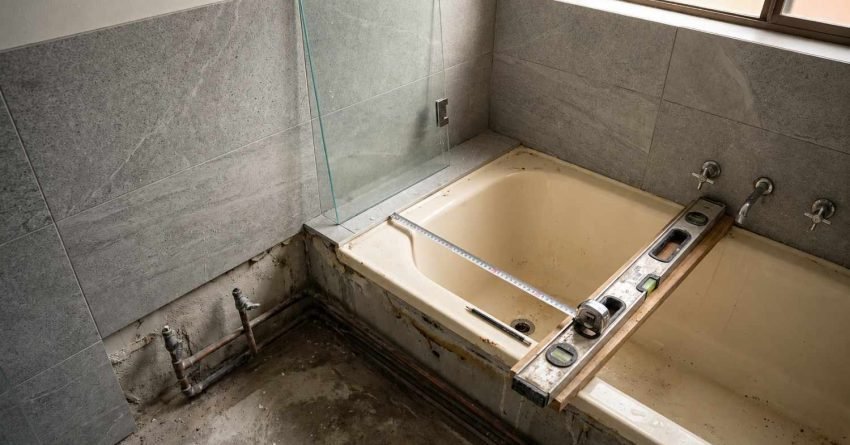
Keeping the bathtub protects your resale value in most Sydney family homes, but removing it and installing a walk-in shower can be the smarter move depending on your property type, buyer profile, and bathroom layout.
This decision carries more financial weight than most renovators realise. Get it wrong, and you either waste money preserving a fixture nobody wants, or you cut your buyer pool at the worst possible time.
I’ll walk you through both sides of the argument, the Sydney-specific factors that shift the answer, and a clear framework for making the final call.
Why the Bathtub Decision Matters More Than Most Renovators Expect
Most people treat the bathtub question as a style preference. It is not. It is a financial decision with direct consequences for your renovation budget, your property’s appeal, and your eventual sale price.
A bathtub removal is not just pulling out a fixture. It triggers a cascade of trades: waterproofing, tiling, plumbing reconfiguration, and potentially a full wet area rebuild. That changes the cost equation significantly before you have even chosen a new showerhead.
On the other side, keeping a bathtub that is cracked, stained, or poorly positioned can drag down the entire renovation. A tired tub in an otherwise fresh bathroom sends the wrong signal to buyers and inspectors alike.
The Case for Keeping the Bathtub
There are genuine, well-supported reasons to keep the tub. The decision is not always about personal preference; it is about who will buy or rent this property after you.
Families and Resale Value
Families with young children rely on bathtubs. That is not a trend; it is a practical reality that shapes buyer behaviour in Sydney’s family-oriented suburbs. Real estate professionals consistently advise that homes with at least one bathtub attract a broader buyer pool, particularly in areas where families dominate the demographic.
CoreLogic’s research on Australian buyer preferences has highlighted bathroom configuration as one of the top five features influencing buyer decisions in residential property. Removing the only bathtub in a home, especially a three-bedroom house in a family suburb, narrows your market before the first open home.
The resale risk is real and measurable. Keep the tub if families are your likely buyer.
Cost Savings When the Tub Is in Good Condition
A bathtub in solid structural condition does not need to go. Refinishing or resurfacing a tub costs a fraction of a full removal and replacement, typically between $400 and $900 for a professional resurface, compared to $2,000 to $5,000 or more for a full removal, waterproofing, and shower conversion in Sydney.
If the enamel is dull but the substrate is sound, a professional resurface gives you a near-new finish without the trade cascade. That money stays in your budget for fixtures, tapware, or tiling that buyers actually see and touch.
Refinishing is not a compromise. It is a smart allocation of renovation spend.
When the Layout Actually Works
Some bathroom layouts are genuinely designed around a bathtub. The wet area waterproofing, the floor waste position, and the wall tiling all assume the tub stays where it is. Removing it in these configurations means re-waterproofing the entire wet area, a non-negotiable step that adds both cost and time to the project.
When the tub sits in a recess with existing waterproofing in good condition, keeping it and upgrading the surrounds with new tiling, a frameless shower screen over the bath, and updated tapware delivers a high-impact result for a fraction of the cost of a full conversion.
The Case for Removing the Bathtub
There are equally strong reasons to remove it. The key is knowing which situation you are actually in.
Walk-In Showers and the Modern Bathroom Trend
The shift toward walk-in showers is not a passing design trend. It reflects a genuine lifestyle change: more people shower daily and bathe rarely, and the demand for accessible, low-maintenance bathrooms has grown steadily across all age groups.
For investment properties, apartments, and homes targeting downsizers or professionals without children, a well-designed walk-in shower is often more appealing than a bathtub. The open floor plan, the ease of cleaning, and the visual spaciousness all work in its favour.
Accessibility is another driver. A curbless walk-in shower serves a wider range of users, including older Australians and those with mobility considerations, which matters increasingly in Sydney’s ageing demographic.
Space Gains and Functional Upgrades
In smaller Sydney bathrooms, particularly those under 8 square metres, a standard 1500mm bathtub consumes a disproportionate share of the floor plan. Removing it and installing a frameless walk-in shower can reclaim 1.5 to 2 square metres of usable space.
That recovered space changes what the bathroom can do. A larger shower footprint, a built-in niche, a double vanity, or simply more breathing room these are upgrades buyers and renters notice immediately. In a compact bathroom, the tub is often the single biggest obstacle to a functional layout.
Small bathroom renovations in Sydney benefit most from this trade-off.
When the Tub Is Beyond Saving
Some bathtubs are simply not worth keeping. Fibreglass tubs with structural cracks, acrylic tubs with deep staining that resurfaces through any coating, and cast iron tubs with compromised enamel all fall into this category.
A tub in this condition is a liability, not an asset. It undermines the renovation visually and signals deferred maintenance to buyers. When the tub cannot be saved, the removal decision makes itself the only question is what replaces it.
What Sydney Renovators Need to Factor Into This Decision
The general principles above apply everywhere. But Sydney has specific market conditions that shift the answer in ways that matter.
Local Buyer Expectations in the Sydney Property Market
Sydney’s property market is not uniform. A three-bedroom house in Penrith or Campbelltown draws a very different buyer profile than a two-bedroom apartment in Surry Hills or a townhouse in Mosman. Buyer expectations around bathrooms vary significantly by suburb, price point, and dwelling type.
In family-oriented outer and middle-ring suburbs, the bathtub remains a genuine selling point. In inner-city apartments and premium properties targeting professionals or downsizers, a walk-in shower is often the stronger choice. Understanding your suburb’s buyer demographic before you commit to either direction is not optional; it is the foundation of the decision.
Talk to a local selling agent before you finalise the bathroom brief. Their read on what buyers in your specific suburb expect is worth more than any general renovation guide.
Cost Difference Between Keeping and Removing
The cost gap between keeping and removing a bathtub in Sydney is wider than most renovators budget for. Here is a realistic breakdown for the Sydney market in 2026:
Keeping and upgrading the bathtub:
- Bathtub resurface/refinish: $400–$900
- New tapware and spout: $300–$800
- Tiling surrounds (if replacing): $1,500–$3,500
- Frameless bath screen: $600–$1,200
- Total range: $2,800–$6,400
Removing and converting to walk-in shower:
- Bathtub removal and disposal: $300–$600
- Plumbing reconfiguration: $800–$2,000
- Full wet area waterproofing: $1,200–$2,500
- New shower base or hob-less floor: $800–$2,000
- Tiling (floor and walls): $2,500–$5,000
- Frameless shower screen: $1,200–$2,500
- Total range: $6,800–$14,600
The conversion costs roughly two to three times more than an upgrade. That gap needs to justify itself through either a measurable improvement in buyer appeal or a genuine functional gain for your household.
How to Make the Final Call
The bathtub decision comes down to four questions. Answer them honestly and the right path becomes clear.
- Who is the likely buyer or tenant for this property? Families need a bathtub. Professionals and downsizers generally do not. Know your market before you commit.
- Is this the only bathroom in the home? A home with a single bathroom and no bathtub is a harder sell in most Sydney markets. A home with two bathrooms has more flexibility: keep the tub in one, convert the other.
- What condition is the existing tub in? A structurally sound tub in a working wet area is worth keeping and upgrading. A damaged or failing tub is worth removing regardless of other factors.
- What does your renovation budget actually allow? A full shower conversion is a significant spend. If the budget is tight, a bathtub upgrade delivers better value per dollar in most cases.
Get a professional opinion before you finalise the decision. A bathroom renovation contractor who understands both the construction costs and the local market can give you a clear, unbiased read on which direction makes sense for your specific property.
Conclusion
The bathtub question has no universal answer; it depends on your property type, your suburb’s buyer profile, and the condition of what you already have. Both keeping and removing can be the right call.
What matters is making the decision based on real market data and accurate cost information, not assumptions. The wrong choice costs you money twice: once during the renovation and again at sale.
At Sydney Home Renovation, we help homeowners work through exactly this kind of decision before a single tile is lifted. Reach out, and we will give you a straight answer based on your property, your budget, and your goals.
Frequently Asked Questions
Does removing a bathtub hurt resale value?
It depends on the property. In family-oriented Sydney suburbs, removing the only bathtub can reduce buyer appeal and narrow your market. In apartments or properties targeting professionals, a walk-in shower often performs better.
How much does it cost to remove a bathtub in Sydney?
Bathtub removal and disposal typically costs $300 to $600 in Sydney. The full conversion to a walk-in shower, including waterproofing, plumbing, tiling, and a shower screen, ranges from $6,800 to $14,600 depending on the scope.
Can I replace a bathtub with a walk-in shower in a small bathroom?
Yes, and in many small Sydney bathrooms it is the better outcome. Removing a standard 1500mm tub can reclaim 1.5 to 2 square metres, which allows for a larger shower footprint, better layout, and improved functionality.
Is it worth refinishing an old bathtub instead of removing it?
For a structurally sound tub with surface wear, refinishing is absolutely worth considering. A professional resurface costs $400 to $900 and delivers a near-new finish a fraction of the cost of a full removal and shower conversion.
What do Sydney buyers actually prefer: bath or shower?
It varies by suburb and buyer profile. Families in outer and middle-ring suburbs consistently prefer at least one bathtub. Inner-city buyers and downsizers tend to prioritise walk-in showers. Local agent advice for your specific suburb is the most reliable guide.
Do I need council approval to remove a bathtub in NSW?
Removing a bathtub is generally considered exempt development in NSW and does not require council approval, provided the work stays within the existing bathroom footprint and does not involve structural changes. Always confirm with your contractor and check current NSW planning rules before starting.


