The right shower seat transforms a bathroom from a slip risk into a space that works for everyone, whether you’re renovating for accessibility, ageing in place, or simply want a more comfortable shower experience.
A poorly planned bathroom is one of the most common renovation regrets I hear from homeowners. Getting the seat right from the start saves money, stress, and a second renovation.
In this guide, I cover built-in bench designs, fold-down options, materials, sizing rules, and realistic Sydney costs so you can plan with confidence.
Why Shower Seats Matter for Accessibility and Everyday Comfort
Most people think shower seats are only for elderly residents or people with mobility challenges. That’s a narrow view, and it leads to bathrooms that age poorly and add zero resale value.
A well-designed shower seat serves the whole household. It’s useful for washing children, recovering from surgery, shaving legs, or simply sitting down after a long day.
The Safety Case for a Fixed Shower Seat
Wet shower floors are one of the leading causes of home injury in Australia. According to Monash University Accident Research Centre, bathroom falls account for a significant proportion of home injury hospitalisations, particularly among adults over 65.
A fixed shower seat gives the user a stable, non-slip surface to sit on, reducing the need to balance on one leg or reach awkwardly. Paired with a grab rail at the right height, it creates a genuinely safe wet area.
This isn’t just about disability. It’s about designing a bathroom that doesn’t become a liability.
Comfort Benefits Beyond Disability and Mobility Needs
I’ve seen clients initially resist a shower seat because they associate it with aged care. By the end of the renovation, it’s one of the features they use most.
A bench seat at the right height makes shaving, exfoliating, and washing feet dramatically easier. It also gives the shower a spa-like quality that buyers notice during inspections.
For property investors, a shower seat as part of an accessible bathroom renovation is increasingly a selling point, not a concession.
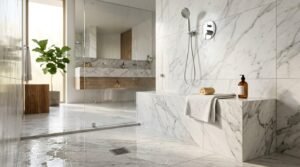
Built-In Shower Seat Designs That Work Hard and Look Great
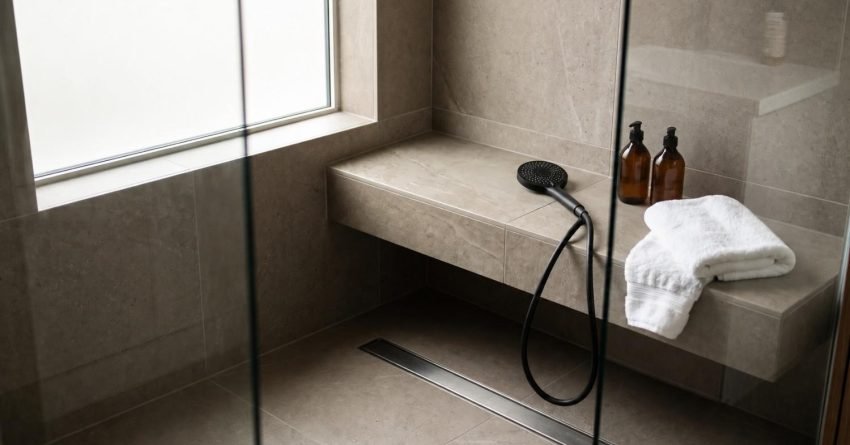
Built-in seats are the gold standard for permanence, aesthetics, and load-bearing strength. They’re constructed as part of the shower structure itself, tiled to match the walls and floor, and built to last the life of the bathroom.
These are the designs I recommend most often for full bathroom renovations in Sydney.
Full-Width Bench Seats for Open Shower Spaces
A full-width bench runs the entire length of one shower wall, typically the back wall in a walk-in or frameless shower. It creates a generous seating surface and doubles as a shelf for toiletries.
This design works best in showers wider than 1,200mm. In a 1,500mm or 1,800mm shower, a full-width bench feels intentional and luxurious rather than cramped.
The tile finish on the bench top should match the floor tile for visual continuity. A slight fall toward the drain on the bench surface prevents water pooling.
Corner Bench Seats for Compact Bathrooms
Corner benches are the smarter choice when floor space is limited. They sit diagonally across one corner of the shower, using dead space that would otherwise go to waste.
A well-built corner bench in a 900mm x 900mm shower still delivers a usable seating surface without blocking the shower entry or the floor drain. I’ve installed these in Sydney apartments where every centimetre counts.
The triangular footprint keeps the shower feeling open while still delivering full accessibility function.
Floating Tiled Bench Seats for a Seamless Finish
A floating bench is built off the wall with no visible support legs, giving it a clean, architectural look. The tile wraps continuously from the wall onto the bench face and top, creating a seamless surface.
This design suits contemporary and minimalist bathrooms where visual clutter is the enemy. It pairs particularly well with large-format tiles and frameless shower screens.
Structurally, a floating bench requires a solid steel or concrete block substrate behind the tile. It’s not a DIY job; the substrate has to be built correctly before tiling begins.
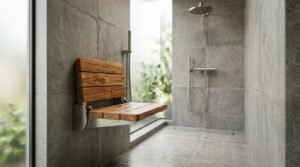
Fold-Down and Removable Shower Seat Options
Not every bathroom has the space or the budget for a built-in bench. Fold-down and removable seats are practical alternatives that still deliver real accessibility and comfort benefits.
They’re also the right choice when a renovation is staged; you can add a fold-down seat now and plan a full built-in bench in a future renovation.
Wall-Mounted Fold-Down Seats for Small Showers
A wall-mounted fold-down seat attaches to the shower wall on a hinged bracket. When not in use, it folds flat against the wall and takes up virtually no floor space.
These seats are available in teak, aluminium, and plastic-composite finishes. For a Sydney bathroom renovation, I recommend a teak or aluminium finish; they hold up in wet environments and look far better than plastic over time.
The critical installation requirement is wall substrate. A fold-down seat rated to 150kg needs to be fixed into a solid timber or steel nogging, not just plasterboard. This is where DIY installations fail.
Freestanding and Portable Shower Stools
A freestanding shower stool requires no installation at all. It sits on the shower floor and can be moved, stored, or replaced without any building work.
Teak stools are the most popular choice for their natural water resistance and warm aesthetic. Aluminium stools with non-slip rubber feet are the more durable, lower-maintenance option.
The trade-off is stability. A freestanding stool is not appropriate as a primary accessibility aid for someone with significant mobility challenges; for that, a fixed or wall-mounted solution is always the right call.
Materials, Finishes, and Design Considerations
The material you choose for a shower seat affects durability, maintenance, slip resistance, and how well the seat integrates with the rest of the bathroom design. Getting this decision right at the planning stage saves costly replacements later.
Tiled Seats vs. Timber Slat Seats vs. Solid Surface
Tiled seats are the most durable and lowest-maintenance option for a built-in bench. Porcelain or stone tile is fully waterproof, easy to clean, and matches the surrounding shower surfaces. The grout lines do require periodic sealing, but the tile itself is essentially maintenance-free.
Timber slat seats, typically teak or treated hardwood, bring warmth and a natural texture to the shower. Teak is naturally water-resistant due to its high oil content, but it still requires periodic oiling to maintain its appearance and prevent cracking over time.
Solid surface materials like Corian or similar acrylic composites offer a seamless, grout-free finish that’s easy to clean and highly water-resistant. They’re a premium option that suits contemporary bathrooms where a monolithic look is the goal.
Matching Your Seat to the Rest of the Bathroom Design
A shower seat that clashes with the surrounding tile, fixture finishes, or overall design language undermines the whole renovation. I always plan the seat material and finish at the same time as the tile selection, not as an afterthought.
For a tiled bench, the bench top tile should either match the floor tile exactly or use a complementary format, for example, a smaller mosaic tile on the bench top against a large-format wall tile. For a timber slat seat, the timber tone should complement the vanity cabinetry or flooring elsewhere in the bathroom.
The goal is a bathroom that reads as a single, considered design, not a collection of separate decisions.
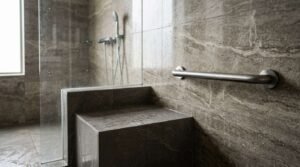
Shower Seat Sizing, Height, and Placement Rules
Getting the dimensions wrong on a shower seat is one of the most common and most frustrating renovation mistakes. A seat that’s too high, too shallow, or positioned in the wrong corner of the shower defeats its own purpose.
Standard Dimensions and Weight Ratings to Know
The Australian Standard AS 1428.1 for accessible design specifies a shower seat height of 460–480mm from the finished floor level. This aligns with the natural seated height for most adults and makes transferring from a wheelchair or mobility aid straightforward.
A seat depth of at least 380–400mm is recommended for comfortable seating. Anything shallower than 350mm is uncomfortable for extended use and doesn’t meet accessibility guidelines.
For weight ratings, a built-in tiled bench with a correctly constructed substrate handles well over 200kg. A wall-mounted fold-down seat should be rated to a minimum of 150kg; check the manufacturer’s specification before purchasing.
Where to Position a Shower Seat for Maximum Usability
Position the seat on the wall opposite or adjacent to the showerhead, not directly under it. Sitting directly under a fixed showerhead is uncomfortable and makes it harder to control water temperature while seated.
The seat should be within easy reach of a grab rail, ideally a horizontal rail at 800–820mm above the floor, positioned on the wall beside the seat. This allows the user to push up from seated to standing safely.
In a corner shower, position the seat so the user faces the shower controls when seated. Reaching across the body to adjust a tap is a balance risk that good placement eliminates entirely.
What to Budget for a Shower Seat in Sydney
Shower seat costs in Sydney vary significantly depending on the type, material, and whether installation is included in a broader bathroom renovation or quoted as a standalone job.
Cost Ranges for Built-In vs. Fold-Down vs. Freestanding
A built-in tiled bench seat as part of a full bathroom renovation typically adds $800–$2,500 to the overall project cost, depending on size, tile selection, and substrate requirements. As a standalone addition to an existing shower, expect $1,500–$3,500 including waterproofing, tiling, and labour.
A wall-mounted fold-down seat costs $150–$600 for the unit itself, plus $200–$500 for professional installation, particularly if nogging needs to be added to the wall first. Total installed cost typically lands between $350 and $1,100.
A freestanding shower stool ranges from $80 for a basic plastic model to $400–$600 for a quality teak or aluminium option. No installation cost applies.
For Sydney homeowners planning a full bathroom renovation budget, I always recommend including a built-in seat in the original scope rather than adding it later; the cost saving is significant when waterproofing and tiling are already underway.
Conclusion
Shower seat design is one of those renovation decisions that pays dividends for years. The right seat built-in, fold-down, or freestanding makes the bathroom safer, more comfortable, and more valuable to future buyers.
The material, size, and placement decisions all connect. Getting one wrong affects the others, which is why planning them together from the start produces a far better result than making them separately.
At Sydney Home Renovation, we help homeowners and investors plan and build bathrooms that work beautifully for the long term. Reach out to our team to discuss your shower seat options and get a clear, honest quote for your renovation.
Frequently Asked Questions
What is the best type of shower seat for a small bathroom?
A corner bench seat or a wall-mounted fold-down seat works best in a small bathroom. Both options use minimal floor space while still delivering a functional, comfortable seating surface.
How much weight can a built-in shower bench hold?
A correctly constructed built-in tiled bench with a solid concrete block or steel substrate handles well over 200kg. The substrate quality matters far more than the tile finish on top.
Are fold-down shower seats as strong as built-in benches?
A quality wall-mounted fold-down seat fixed into solid nogging is strong and reliable for everyday use. It won’t match the load capacity of a full built-in bench, but a 150kg-rated fold-down seat is more than adequate for most households.
What materials are safest for a wet shower environment?
Porcelain tile, teak timber, and solid surface materials like Corian are all safe and durable in a wet shower environment. Avoid untreated timber, MDF, or any material not rated for continuous wet area exposure.
Do I need a builder to install a shower seat in Sydney?
A built-in tiled bench always requires a licensed builder and tiler. A wall-mounted fold-down seat requires a builder or carpenter if nogging needs to be added. A freestanding stool requires no installation at all.