
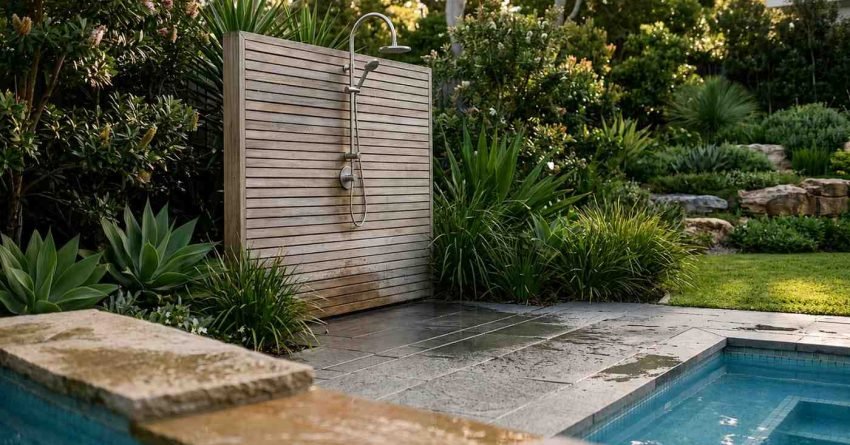
A well-designed outdoor shower does more than rinse off chlorine; it extends your living space, protects your indoor plumbing, and adds a feature that genuinely lifts a property’s appeal. Getting the design right from the start means fewer problems with drainage, materials, and compliance down the track.
Poor planning costs money. The decisions you make around placement, materials, and plumbing scope determine whether your outdoor shower lasts a decade or starts deteriorating in two years.
This guide covers everything you need to plan an outdoor shower for a pool or garden area in Sydney from design principles and material selection through to drainage, privacy, fixtures, costs, and council requirements.
What Makes a Good Outdoor Shower Design
A good outdoor shower design balances three things: function, durability, and integration with the surrounding space. It needs to work well every day, hold up against the elements, and look like it belongs where it sits.
Function comes first. The shower needs adequate water pressure, a drainage solution that handles volume without pooling, and a layout that makes it easy to use without tracking water back into the house or pool area. Placement relative to the entry point of the home matters more than most people realise.
Durability is non-negotiable outdoors. Every material choice, every fitting, and every structural element faces UV exposure, moisture, and temperature variation year-round. Design decisions that ignore this create maintenance problems fast.
Pool-Side vs Garden Shower: Key Design Differences
A poolside shower serves a specific purpose: rinsing before and after swimming. It sits close to the pool, handles high foot traffic, and needs to drain quickly. The design is typically more utilitarian: open, fast, and easy to access from wet feet on a hard surface.
A garden shower operates differently. It integrates into a softer landscape, often with more privacy screening, and the surrounding ground material changes the drainage approach entirely. Garden showers also tend to serve a broader range of uses: post-gardening rinse-offs, outdoor entertaining, or a dedicated outdoor bathing space.
The design brief for each is genuinely different, and treating them the same leads to a result that works poorly for both.
Outdoor Shower Materials: What Lasts and What Doesn’t
Material selection is where most outdoor shower designs either succeed long-term or start failing within a few years. The outdoor environment is harsh: UV radiation, moisture, temperature swings, and in coastal Sydney, salt air.
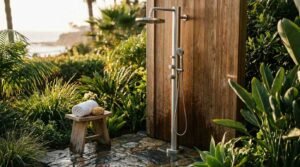
Stainless steel (grade 316) is the benchmark for outdoor shower fixtures and structural components. It resists corrosion, handles UV exposure without degrading, and requires minimal maintenance. Teak and other hardwoods work well for decking and screening when properly sealed, but they need annual maintenance to stay in good condition. Stone and porcelain tile are excellent for floor surfaces, durable, slip-resistant when textured, and visually strong. Composite materials offer a lower-maintenance alternative to timber for screening and cladding, though the aesthetic is different.
Avoid powder-coated mild steel in exposed outdoor positions. It looks fine initially, but the coating degrades, and once moisture gets underneath, rust follows quickly.
Material Choices for Sydney’s Climate
Sydney’s climate adds specific pressure on outdoor materials. Coastal suburbs deal with salt-laden air that accelerates corrosion on anything less than marine-grade stainless steel or properly sealed stone. Inland western suburbs face intense UV and heat that degrade plastics, sealants, and lower-grade composites faster than most product specs suggest.
Humidity in Sydney’s summer months also affects timber. Untreated or poorly sealed hardwood expands and contracts with moisture changes, which loosens fixings and opens gaps in screening panels over time. Choosing materials rated for the specific microclimate of your site, not just “outdoor use” generically, is the difference between a five-year and a twenty-year installation.
Drainage and Plumbing Considerations for Outdoor Showers
Drainage is the most technically important element of any outdoor shower design. Get it wrong, and you end up with pooling water, soil erosion, structural damage to nearby surfaces, or a council compliance issue.
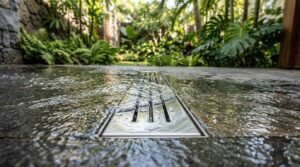
The three main drainage approaches are a connected floor drain (piped to the stormwater or sewer system depending on council requirements), a gravel soak pit, and a surface-graded runoff design where the surrounding ground absorbs and disperses water naturally. A connected floor drain is the most reliable and the most compliant option for high-use showers. Soak pits work for lower-use garden showers in free-draining soil, but they need adequate depth and the right fill material to function properly. Surface runoff only works where the surrounding landscape genuinely handles the volume without directing water toward structures or boundaries.
Greywater from outdoor showers is regulated in NSW. The NSW Environment Protection Authority sets out the requirements for greywater reuse and disposal; it’s worth checking before you commit to a drainage design that assumes free discharge to garden areas.
Hot and Cold Water Supply: What’s Involved
Adding hot water to an outdoor shower is a significant step up in plumbing scope. A cold-only supply is straightforward: a single line run from the nearest supply point, with an isolation valve and a wall outlet. Hot and cold requires a second supply line, a tempering valve (mandatory in NSW for any shower delivering water above 50°C), and a longer pipe run if the hot water system is on the other side of the house.
The cost difference between cold-only and hot-and-cold is real. For most poolside showers, cold-only is entirely adequate; the water temperature after a swim is rarely the issue. For a garden shower used as a genuine outdoor bathing space, hot water makes a significant difference to usability year-round.
Privacy Screens and Enclosure Options
Privacy is a design requirement, not an optional extra. An outdoor shower without adequate screening is one most people won’t use comfortably, which defeats the purpose of building it.
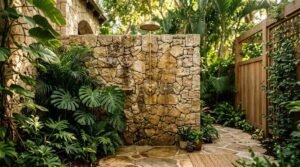
The most common screening options are timber louvre panels, masonry walls, bamboo screening, and purpose-built steel or aluminium privacy frames. Timber louvres offer good airflow, a natural aesthetic, and reasonable privacy at a mid-range cost. Masonry walls provide the best privacy and durability but require footings and add high cost. Bamboo is a lower-cost option that works well in garden settings but degrades faster than hardwood or masonry in exposed positions. Steel and aluminium frames with infill panels offer a contemporary look and strong durability, particularly in coastal areas where timber maintenance is a concern.
The height and configuration of the screen matters as much as the material. A screen that blocks sightlines from the house but leaves the shower visible from a neighbouring property hasn’t solved the problem.
Freestanding vs Wall-Mounted Enclosures
A freestanding enclosure stands independently without fixing to an existing structure. It requires footings or a weighted base for stability, and it can be positioned anywhere on the site. This makes it a practical option for rental properties or situations where a permanent structural fix isn’t desirable.
A wall-mounted enclosure fixes to an existing wall, typically the house, a fence, or a garden wall. It’s structurally more stable, requires less material to achieve the same privacy, and integrates more cleanly into the existing built environment. For most permanent residential installations, wall-mounted is the stronger design choice.
Fixtures, Fittings, and Tapware for Outdoor Showers
Outdoor shower fixtures need to meet a different standard than indoor tapware. The key specification is the IP (Ingress Protection) rating; outdoor shower fixtures should carry a minimum IP65 rating, which means they’re protected against water jets from any direction. Anything lower than this is not rated for direct outdoor shower use.
Shower heads for outdoor use range from simple fixed wall-mount heads to adjustable arm-mounted heads and rainfall-style ceiling heads. For poolside showers, a simple fixed head at a practical height is usually the right call; it’s durable, easy to use, and easy to maintain. For a more considered garden shower design, a rainfall head or a dual-function head adds to the experience without a dramatic cost increase.
Tapware should be marine-grade stainless steel or solid brass with a quality surface finish. Avoid chrome-plated zinc alloy (zamak) in outdoor positions; the plating degrades in UV and moisture, and the underlying alloy corrodes.
Budget vs Premium Fixture Ranges: What to Expect
At the entry level, a functional outdoor shower fixture set head, arm, and mixer runs from around $150 to $400. These are adequate for a basic pool rinse-off shower and will perform reasonably well if the IP rating is correct and the material is stainless steel.
Mid-range fixtures from established Australian brands sit between $400 and $1,200 for a complete set. The quality jump is real: better seals, more robust internals, longer warranties, and a finish that holds up over years rather than months.
Premium and designer outdoor shower fixtures start above $1,500 and can reach well beyond $5,000 for architectural-grade installations. For most residential projects, the mid-range delivers the best balance of quality, longevity, and cost.
Outdoor Shower Installation Costs in Sydney
A basic cold-water outdoor shower supply line, wall outlet, shower head, and simple drainage — typically costs between $1,500 and $3,500 installed in Sydney, depending on the distance from the existing supply point and the drainage solution required.
A mid-range installation with hot and cold supply, quality fixtures, a privacy screen, and a connected floor drain sits between $4,000 and $8,000. A fully designed outdoor shower with a masonry enclosure, premium fixtures, a tiled floor, and full drainage connection can reach $12,000 to $20,000 or more for complex sites.
These are supply-and-install figures covering licensed plumbing, drainage work, and basic structural elements. They don’t include landscaping, electrical work for lighting, or council application fees where required.
What Affects the Final Price
Site access is a major cost variable. A shower positioned close to existing plumbing on a flat, accessible site costs significantly less to install than one on a sloped block with limited access and a long pipe run. The existing plumbing infrastructure matters too; a house with a hot water system on the opposite side of the property adds pipe run cost immediately.
Material grade, enclosure type, and drainage complexity each add to the scope. A gravel soak pit costs less than a connected floor drain. A timber louvre screen costs less than a masonry wall. Every upgrade decision has a cost implication, and understanding those implications before finalising the design prevents budget surprises during construction.
Planning Approvals and Council Requirements in NSW
Most standard outdoor shower installations in NSW fall under exempt development, meaning no council approval is required, provided the work meets the relevant development standards. The key conditions relate to setbacks from boundaries, drainage compliance, and the absence of any enclosed habitable space.
The NSW Planning Portal sets out the exempt development criteria in detail. If the installation involves a structure that exceeds height or setback limits, or if the drainage design requires a formal connection to the sewer system, a complying development certificate or a development application may be required.
It’s worth confirming the specific requirements with your local council before starting work. Requirements vary between councils, and a licensed plumber completing the drainage connection will need to comply with the relevant plumbing code regardless of the planning pathway.
Conclusion
Outdoor shower design brings together materials, drainage, privacy, and plumbing into a single set of decisions that need to work together, not in isolation. Each choice affects the others, and the best results come from planning the full scope before committing to any one element.
Done well, an outdoor shower is a long-term asset. It protects the home, extends the usable outdoor space, and adds genuine appeal to any property with a pool or established garden.
We help homeowners and property investors in Sydney plan and build outdoor features that are built to last and priced honestly. Contact Sydney Home Renovation to talk through your outdoor shower design and get a clear scope and quote.
Frequently Asked Questions
Do outdoor showers add value to a property?
Yes, a well-designed outdoor shower adds measurable appeal to a property, particularly homes with pools or established gardens. It signals quality outdoor living and reduces wear on indoor bathrooms, both factors buyers and tenants notice.
What is the best location for an outdoor shower next to a pool?
The best position is between the pool and the house entry point, close enough to the pool for convenient use but positioned so wet feet don’t track water through the house. Proximity to existing plumbing also reduces installation cost significantly.
Can an outdoor shower be used year-round in Sydney?
Yes. Sydney’s climate is mild enough for outdoor shower use across all seasons. A hot and cold supply makes year-round use more comfortable, particularly in winter months when a cold-only shower is less appealing.
What drainage system works best for an outdoor shower?
A connected floor drain piped to the stormwater or sewer system is the most reliable and compliant option for regular use. A gravel soak pit works for lower-use garden showers on free-draining sites, but it requires correct sizing and appropriate fill material.
How long does outdoor shower installation take?
A straightforward cold-water installation typically takes one to two days. A more complex installation with hot and cold supply, enclosure construction, tiling, and drainage connection generally takes three to five days depending on site conditions and scope.
What materials are best for a low-maintenance outdoor shower?
Grade 316 stainless steel for fixtures, porcelain tile for the floor, and powder-coated aluminium or composite panels for screening give the best combination of durability and low maintenance in Sydney’s climate. These materials resist corrosion, UV degradation, and moisture without requiring regular sealing or treatment.
Do I need a licensed plumber for an outdoor shower in NSW?
Yes. Any plumbing work in NSW, including connecting a water supply line or a drainage outlet, must be carried out by a licensed plumber. This is a legal requirement under the NSW Fair Trading plumbing licensing rules, and the plumber must issue a compliance certificate on completion.


