
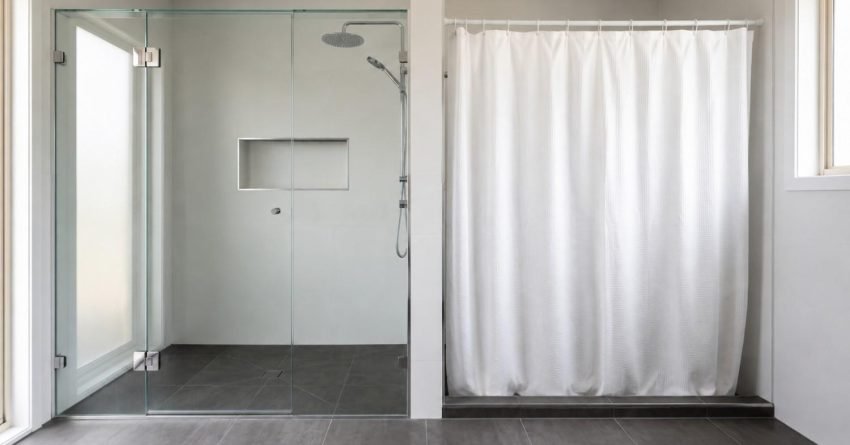
A shower door and a shower curtain do the same job: keep water in the shower, but they deliver completely different outcomes for your bathroom’s look, maintenance load, upfront cost, and long-term value. For Sydney homeowners and renovators, this decision sits right at the intersection of budget, practicality, and resale appeal. Getting it wrong costs more to fix than getting it right from the start.
This choice matters more than most people realise during a bathroom renovation. The wrong call affects daily cleaning, water damage risk, and how buyers or tenants perceive the space.
I’ll walk you through the real pros and cons of each option, break down what they actually cost in Sydney, and help you land on the right decision for your specific situation.
What’s the Real Difference Between a Shower Door and a Shower Curtain?
These two options solve the same problem with completely different approaches. One is a fixed, structural element. The other is a flexible, removable fixture. That distinction shapes everything: cost, installation, maintenance, and how the bathroom feels to use every day.
How Shower Doors Work and What They’re Made Of
A shower door is a rigid panel almost always tempered safety glass mounted directly to the shower frame, wall, or floor channel. The three main types are framed, semi-frameless, and frameless. Framed doors use a full aluminium border around the glass. Semi-frameless doors have framing only on the fixed panels. Frameless doors use thick glass (typically 10mm) with minimal or no metal framing at all.
Doors open by pivoting, sliding, or folding depending on the configuration and the space available. Once installed, they are a permanent part of the bathroom. Replacing them means a tradesperson, new hardware, and potentially new waterproofing work.
How Shower Curtains Work and What They’re Made Of
A shower curtain hangs from a rod mounted across the shower opening. The curtain itself is fabric, vinyl, or PEVA, a non-chlorinated plastic that’s become the standard for budget-conscious renovators. Most setups include an outer decorative curtain and an inner waterproof liner.
Installation takes under an hour and requires no trades. The rod sits in tension between two walls or mounts to brackets. The curtain slides along rings or hooks. When it wears out, you replace it in minutes. That simplicity is the curtain’s biggest selling point and its biggest limitation.

Shower Door Pros and Cons
Advantages of Shower Doors
Shower doors create a watertight seal that curtains simply cannot match. Water stays where it belongs, which protects your floor, your grout, and the subfloor beneath. Over time, that protection matters enormously; water damage is one of the most expensive problems a bathroom renovation can uncover.
The visual impact is significant. A frameless glass shower door opens up the space, makes the bathroom feel larger, and gives the room a premium finish that buyers and tenants notice immediately. Durability is another major advantage: a quality shower door, properly installed and maintained, lasts 20 years or more.
- Watertight seal: no water escaping onto the floor
- Premium aesthetic: especially frameless glass
- Long lifespan: 15–25 years with proper care
- Adds resale value: buyers respond to quality finishes
- No mould on fabric: glass and aluminium don’t harbour mould the way fabric does
Disadvantages of Shower Doors
The upfront cost is the biggest barrier. A frameless shower door in Sydney costs significantly more than a curtain rod and liner. Installation requires a glazier or experienced bathroom tradesperson, which adds to the total spend.
Cleaning is more involved than most people expect. Soap scum builds up on glass quickly, especially in hard-water areas. Framed doors collect grime in the tracks and seals. Frameless doors are easier to clean but still need regular attention to stay looking sharp.
- Higher upfront cost: supply and installation combined
- Permanent fixture: not easily changed or relocated
- Soap scum and water spots: require regular cleaning
- Track maintenance: framed and semi-frameless doors collect grime
- Repair costs: damaged glass or hardware is expensive to fix
Shower Curtain Pros and Cons
Advantages of Shower Curtains
Cost is the curtain’s strongest argument. A complete setup rod, curtain, liner, and rings costs a fraction of even the most basic shower door installation. For rental properties, first-time renovators working to a tight budget, or bathrooms that are functional rather than feature spaces, that cost difference is decisive.
Curtains are also renter-friendly and landlord-friendly. They install without trades, replace without trades, and adapt to changing styles without any structural work. The variety of colours, patterns, and textures available means a curtain can genuinely contribute to a bathroom’s look rather than just serving a functional role.
- Low upfront cost: complete setup from $50–$350
- No installation trades required: DIY in under an hour
- Easy to replace: style updates cost almost nothing
- Flexible for renters: no permanent modifications needed
- Wide style variety: colours, textures, patterns
Disadvantages of Shower Curtains
Water containment is the curtain’s weakest point. Even with a well-fitted liner, water escapes around the edges and onto the floor. Over time, that moisture works into grout lines, floor tiles, and the subfloor. In a bathroom that already has waterproofing concerns, a curtain makes the problem worse.
Mould is a genuine issue. Fabric and vinyl curtains trap moisture and develop mould quickly in poorly ventilated bathrooms. Liners need replacing every 6–12 months in heavy-use bathrooms. And from a presentation standpoint, a shower curtain reads as a budget finish, which matters when you’re trying to attract quality tenants or maximise sale price.
- Poor water containment: splash escapes around edges
- Mould risk: fabric and vinyl harbour mould in humid conditions
- Liner replacement: ongoing cost every 6–12 months
- Dated aesthetic: reads as budget in a renovation context
- No structural contribution: adds nothing to bathroom value
Cost Comparison: Shower Door vs Shower Curtain in Sydney
Cost is where this decision gets concrete. Sydney labour rates and material costs are specific, and understanding the real numbers helps you budget accurately rather than getting caught short mid-renovation.
What a Shower Door Costs to Supply and Install
In Sydney, a frameless shower door installation sits in a wide range depending on glass thickness, door configuration, and the complexity of the opening. Here’s a realistic breakdown:
| Option | Supply Cost | Installation Labour | Total Estimate |
| Framed shower door | $300–$700 | $200–$400 | $500–$1,100 |
| Semi-frameless door | $600–$1,200 | $300–$500 | $900–$1,700 |
| Frameless glass door | $900–$2,000+ | $400–$700 | $1,300–$2,700+ |
These figures cover supply and installation only. If your shower opening needs modification, new waterproofing, or tiling adjustments to accommodate the door, add those costs separately. A bathroom renovation contractor who provides transparent cost planning will itemise these clearly before work starts.
What a Shower Curtain Costs to Supply and Install
A shower curtain setup is a DIY job in almost every case. The cost breakdown is straightforward:
| Item | Cost Range |
| Tension or bracket-mount rod | $30–$150 |
| Decorative curtain | $20–$200 |
| Waterproof liner | $15–$60 |
| Rings or hooks | $10–$40 |
| Total | $75–$450 |
No labour cost. No trades required. The entire setup installs in under an hour. The ongoing cost is a liner replacement budget of $15–$60 every 6–12 months, depending on use and ventilation.

Which One Is Right for Your Bathroom Renovation?
The right answer depends on your bathroom, your budget, and what you’re trying to achieve. There’s no universal winner, but there are clear patterns that make one option the obvious choice in specific situations.
Best Choice for Small Bathrooms
Small bathrooms benefit from a shower door more than any other space. A frameless glass door creates visual openness; the eye travels through the glass rather than stopping at a curtain. That effect makes a compact bathroom feel significantly larger than it is.
A sliding or bi-fold door also solves the swing-clearance problem that plagues small bathrooms with pivot or hinged doors. For tight spaces, a space-saving shower design that incorporates a sliding frameless panel is almost always the better long-term investment.
Best Choice for Rental Properties and Investment Renovations
For rental properties, the calculus shifts. Durability and replacement cost matter more than aesthetics. A shower curtain is easier and cheaper to replace when tenants damage it, and tenant damage is a reality of property management.
That said, a quality semi-frameless door in a rental property signals a better-maintained property, which attracts better tenants and supports higher rent. The right call depends on the property’s price point and target tenant. Budget rentals: curtain. Mid-to-upper rental market: semi-frameless door. The bathroom renovation ROI for investment properties calculation almost always favours the door at the mid-market level and above.
Best Choice for Long-Term Value and Resale Appeal
For owner-occupiers renovating to live in the home and eventually sell, a frameless or semi-frameless shower door is the clear choice. Buyers in Sydney’s market respond to quality bathroom finishes. A frameless glass shower reads as premium. A shower curtain reads as temporary.
According to Houzz’s 2024 Australia Renovation Trends Report, bathroom renovations consistently rank among the top projects that homeowners undertake before selling, and the quality of fixtures and finishes directly influences buyer perception. A shower door is a fixture. A curtain is a fitting. That distinction matters at sale time.
Conclusion
Shower doors and shower curtains both work, but they work for different budgets, different bathrooms, and different renovation goals. A frameless door delivers long-term value, premium aesthetics, and genuine water containment. A curtain delivers flexibility, low cost, and easy replacement.
For most Sydney homeowners renovating to live in or sell their property, the shower door is the stronger investment. For rental properties and budget-first renovations, a quality curtain setup is a practical, sensible choice.
We help homeowners and investors make these decisions with clear cost guidance and honest advice at every stage. Contact Sydney Home Renovation to plan your bathroom renovation with confidence.
Frequently Asked Questions
Are shower doors worth the extra cost?
Yes, in most renovation contexts. A shower door lasts 15–25 years, contains water more effectively, and adds genuine resale value. The upfront cost is higher, but the long-term cost per year of use is often lower than replacing curtains and liners repeatedly.
Do shower curtains cause mould problems?
They can, especially in bathrooms with poor ventilation. Fabric and vinyl curtains trap moisture and develop mould quickly. Regular liner replacement and adequate exhaust ventilation reduce the risk, but mould on curtains is a common maintenance issue in Sydney’s humid climate.
Can I replace a shower curtain with a shower door later?
Yes, but it’s not a simple swap. Installing a shower door requires a glazier, and depending on your shower opening, it may also require waterproofing work or tiling adjustments. It’s more cost-effective to make the decision at renovation time than to retrofit later.
What type of shower door is easiest to clean?
Frameless glass doors are the easiest to clean because there are no tracks or frames to collect grime. A squeegee after each use and a weekly wipe-down with a glass cleaner keeps them looking sharp. Framed doors require more attention to the aluminium channels and rubber seals.
Do shower doors add value to a home?
Yes. Quality bathroom finishes, including frameless or semi-frameless shower doors, consistently influence buyer perception and sale price. In Sydney’s competitive property market, a premium bathroom finish is one of the most reliable ways to differentiate a property.
Which is better for a rental property: shower door or curtain?
It depends on the property’s market position. Budget rentals suit a curtain for its low replacement cost. Mid-to-upper market rentals benefit from a semi-frameless door, which signals quality, attracts better tenants, and supports stronger rental yields over time.
How long does a shower door installation take?
A standard shower door installation takes half a day to a full day, depending on the door type and any preparatory work needed. Frameless doors with custom glass panels may require a measure-and-order lead time of 1–2 weeks before installation day.


