A dual shower head setup transforms an ordinary shower into a genuinely functional space, but getting it right means understanding the plumbing, spatial, and waterproofing requirements before a single tile goes up. Most installation problems trace back to decisions made at the design stage, not during the build itself. The difference between a system that performs well and one that disappoints comes down to pressure, pipe sizing, drainage, and layout, all of which need to be locked in early.
These requirements matter because retrofitting a dual setup into an undersized or under-plumbed shower costs significantly more than planning it correctly from the start.
In this guide, we cover everything from minimum shower dimensions and plumbing specs to fixture selection, waterproofing compliance, and Sydney installation costs so you can plan with confidence.
What Is a Dual Shower Head Setup?
A dual shower head setup is a shower system that uses two separate water outlets within the one shower recess. The two heads can operate independently, simultaneously, or through a switching valve depending on the configuration and the valve type installed.
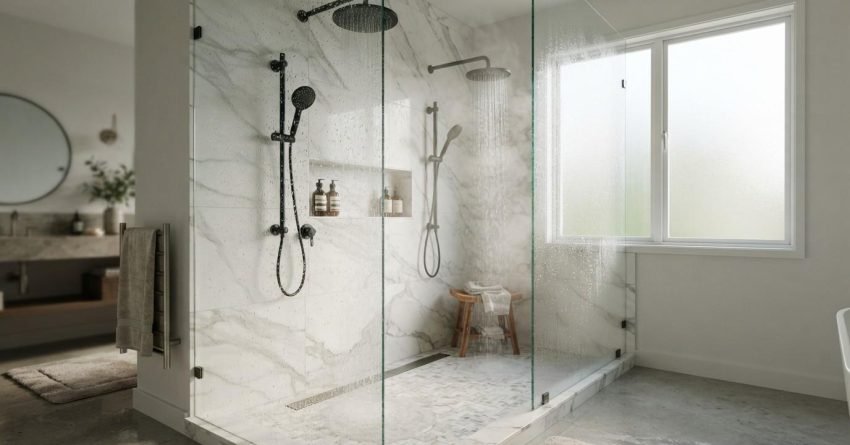
There are two main configurations. The first pairs a fixed overhead head with a handheld unit. The second uses two fixed heads, typically mounted on opposite walls or at different heights.
Both configurations require additional plumbing work beyond a standard single-head shower. The scope of that work depends on the existing pipe layout, water pressure, and the size of the shower recess.
Fixed + Handheld Combinations
The fixed and handheld combination is the most common dual shower head setup in Australian bathrooms. A fixed overhead head, often a rainfall-style fitting, handles the primary wash, while a handheld unit on a slide rail handles targeted rinsing, bathing children, and cleaning the shower recess itself.
A diverter valve or thermostatic mixer controls which head is active. Some valves allow both to run simultaneously; others switch between them.
This configuration suits most standard shower recesses and works well in bathrooms where flexibility matters more than symmetry.
Double Fixed Head Configurations
A double fixed head setup mounts two fixed shower heads within the same recess, typically one overhead and one at body height on a side wall, or two opposing heads for a full-body spray effect.
This configuration is more common in larger ensuite renovations and luxury bathroom builds. It requires a wider recess, higher water pressure, and a thermostatic valve to manage simultaneous flow from both heads without temperature fluctuation.
The plumbing complexity is higher than a fixed and handheld combination, and the hot water demand is greater.
Bathroom Size and Layout Requirements
Not every existing shower recess suits a dual head setup. The space needs to accommodate two spray zones without creating a waterlogging problem or making the shower feel cramped and impractical.
Layout planning happens before any plumbing work begins. Getting the dimensions wrong at this stage means either compromising the design or pulling out completed work.
Minimum Shower Recess Dimensions
For a fixed and handheld combination, a 900mm x 900mm recess is the practical minimum, though 1000mm x 1000mm gives noticeably more comfort and better spray clearance.
For a double fixed head setup with heads on opposing walls, a minimum width of 1200mm is needed to prevent the spray zones from colliding and to allow a person to stand comfortably between them. Anything narrower creates a functional problem, not just a comfort issue.
Australian Standard AS 3740 governs wet area construction, and shower recess dimensions must comply with the relevant building code requirements for the installation type. A licensed builder or bathroom renovator confirms compliance before the design is finalised.
Ceiling Height and Head Positioning
Ceiling height affects where the fixed overhead head can be positioned and how effective the spray pattern is. A minimum ceiling height of 2100mm is standard for habitable spaces in Australia, but for a rainfall-style overhead head, 2400mm or higher gives a noticeably better experience.
The overhead head should be positioned so the spray covers the standing zone without hitting the walls at an angle that drives water outside the recess. Side-mounted fixed heads typically sit between 1500mm and 1800mm from the floor, depending on the user’s height and the spray angle of the fitting.
Head positioning is confirmed during the design phase and locked in before rough-in plumbing begins.
Plumbing Requirements for a Dual Shower Head System
The plumbing requirements for a dual shower head setup go beyond simply adding a second outlet. The existing supply lines, pipe sizing, and hot water system all need to be assessed before the design is confirmed.
Skipping this assessment is the single most common reason dual shower head installations underperform. A second head drawing from an undersized supply line produces weak pressure at both outlets.
Water Pressure and Flow Rate Needs
A single shower head typically requires a minimum dynamic water pressure of 150–200 kPa to function properly. A dual shower head setup running both heads simultaneously needs a minimum of 200–300 kPa at the outlet to maintain acceptable performance at each head.
Flow rate matters equally. Each shower head has a WELS (Water Efficiency Labelling and Standards) rating measured in litres per minute. A 3-star WELS-rated head uses approximately 7.5 litres per minute. Running two simultaneously means the supply line needs to deliver at least 15 litres per minute without pressure drop.
A licensed plumber measures static and dynamic pressure at the point of connection before the design is finalised. Low mains pressure may require a pressure-boosting pump, an additional cost that needs to be factored into the budget.
Pipe Sizing and Supply Line Upgrades
Standard bathroom supply lines in older Sydney homes are often 15mm copper pipe. A single shower head runs adequately on 15mm supply. A dual shower head setup, particularly one running both heads simultaneously, typically requires an upgrade to 20mm or 25mm pipe to maintain adequate flow without pressure loss.
The upgrade scope depends on how far back the undersized pipe runs. In some cases, only the final metre to the shower valve needs upsizing. In others, the supply line from the main riser needs to be replaced, a more involved job that affects the overall cost.
PEX pipe is now commonly used in bathroom renovations as an alternative to copper. It is flexible, easier to route through wall cavities, and performs well in hot water applications.
Hot Water System Capacity
Two shower heads running simultaneously place a higher demand on the hot water system. A continuous flow (instantaneous) hot water system needs a flow rate capacity that covers both heads without the temperature dropping.
A standard 16 litre per minute continuous flow unit handles a single shower comfortably. For a dual setup running simultaneously, a 20–26 litre per minute unit is the practical minimum. Storage tank systems need sufficient tank capacity and recovery rate to sustain the increased draw; a 250–315 litre tank is typically recommended for households where the dual setup will be used regularly.
We assess the existing hot water system as part of every dual shower head project. An undersized unit is identified and addressed before installation begins, not after the first cold shower.
Waterproofing and Drainage Considerations
A dual shower head setup produces significantly more water volume than a single head. That increased volume affects both the drainage requirements and the waterproofing specification two areas where cutting corners creates expensive, long-term damage.
Waterproofing and drainage are non-negotiable compliance items in Australian bathroom construction. They are not optional upgrades.
Increased Water Volume and Drain Sizing
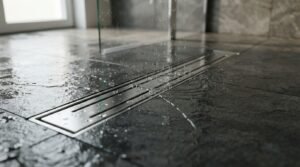
A single 3-star WELS shower head produces approximately 7.5 litres per minute. Two heads running simultaneously produce 15 litres per minute or more. The floor waste and drain line need to handle that volume without water pooling on the shower floor.
A standard 80mm floor waste handles approximately 10–12 litres per minute under normal conditions. For a dual setup running simultaneously, a 100mm floor waste is the recommended minimum. The drain line gradient also needs to be confirmed; a fall of at least 1:60 toward the waste is required under AS 3500.
Upgrading the floor waste during a bathroom renovation is straightforward when the floor is already being opened up. Doing it after the fact means breaking up finished tiles, a cost that far exceeds the original upgrade.
Waterproofing Standards for Dual Setups
All wet areas in Australian bathrooms must be waterproofed to AS 3740. For a shower recess, this means a continuous waterproofing membrane applied to the floor and walls to a minimum height of 1800mm or to the full height of the wall if the shower is fully enclosed.
A dual shower head setup increases the water exposure on walls and floor, particularly if both heads run simultaneously. The membrane must be applied without gaps, holidays, or inadequate upturns at junctions. All penetrations, including pipe outlets, must be sealed with compatible sealant before the membrane is applied.
Waterproofing in NSW must be carried out by a licensed waterproofer. The work is inspected before tiling begins. We coordinate the waterproofing inspection as part of our project management process so nothing is tiled over before compliance is confirmed.
Design Options and Fixture Selection
Once the structural and plumbing requirements are confirmed, fixture selection shapes the final look and function of the setup. The valve type is the most consequential decision; it determines whether both heads can run simultaneously and how temperature is controlled.
Fixture finish is a secondary decision, but it affects the visual coherence of the bathroom and the long-term maintenance requirements.
Thermostatic vs. Standard Diverter Valves
A standard diverter valve switches water flow between two outlets. It does not allow both heads to run simultaneously; it redirects flow from one to the other. Diverter valves are lower cost and suit fixed and handheld combinations where simultaneous use is not required.
A thermostatic mixer valve maintains a set water temperature regardless of pressure fluctuations elsewhere in the system. It allows both heads to run simultaneously at a consistent temperature. Thermostatic valves are the correct choice for double fixed head setups and for any installation where simultaneous use is the primary goal.
Thermostatic valves cost more than diverter valves, typically $400–$900 more for the valve alone, but they deliver a meaningfully better experience and eliminate the temperature shock that occurs when another tap is used elsewhere in the house.
Matching Fixtures and Finish Choices
Fixture finish should be consistent across the entire shower valve, heads, rail, and any accessories. Mixing finishes in the same shower recess reads as unplanned and is difficult to correct without replacing fittings.
Chrome remains the most durable and easiest to maintain finish in a high-moisture environment. Matte black and brushed nickel are popular in contemporary Sydney bathroom renovations but require more careful cleaning to prevent water spot buildup. Brushed brass suits warmer, more traditional design palettes.
We recommend selecting all fixtures from the same manufacturer range where possible. This ensures consistent finish quality, compatible thread sizing, and access to matching accessories if the design evolves.

Installation Costs in Sydney
A dual shower head setup costs more than a standard single-head installation; the additional plumbing work, potential pipe upgrades, and valve selection all affect the final price. Understanding the cost components helps set a realistic budget before the project begins.
Sydney labour rates and material costs are the baseline for the figures below. Every project varies based on site conditions and existing infrastructure.
Labour and Plumbing Cost Breakdown
Licensed plumber labour in Sydney typically runs between $120 and $180 per hour. A straightforward dual shower head installation where the existing pipe sizing is adequate and no rerouting is needed takes approximately 4–6 hours of plumbing time, putting labour at $480–$1,080.
Fixture costs vary significantly by brand and specification. A quality diverter valve and two heads from a mid-range Australian brand cost $300–$600. A thermostatic mixer with two quality fixed heads runs $800–$2,000 or more for premium European brands.
Total installed cost for a dual shower head setup in Sydney, including labour and fixtures, typically falls between $1,200 and $4,500 depending on complexity and fixture selection.
Factors That Affect Final Price
Pipe rerouting or upsizing adds $300–$800 to the plumbing cost depending on the length of pipe involved and the access available through wall cavities. Hot water system upgrades where the existing unit cannot handle the increased demand add $1,200–$3,500 depending on the system type and capacity required.
Drain upgrades from 80mm to 100mm floor waste add $200–$500 when completed as part of a broader bathroom renovation. Tiling and waterproofing costs are separate and depend on the overall bathroom scope.
We provide itemised quotes for every dual shower head project so clients understand exactly what each cost component covers before work begins.
Common Mistakes to Avoid
The most expensive dual shower head mistakes are the ones that only become visible after the bathroom is finished. Avoiding them requires getting the technical decisions right at the design stage.
An Undersized supply pipe is the most common problem. Installing two shower heads on a 15mm supply line produces weak, unsatisfying pressure at both outlets, and fixing it means opening up finished walls.
Inadequate drainage is the second most common issue. A standard 80mm floor waste cannot handle the combined flow of two heads running simultaneously. The result is water pooling on the shower floor, which accelerates grout and membrane deterioration.
Skipping the hot water system assessment creates a setup that runs cold within minutes when both heads are active. This is a particularly frustrating outcome in a renovation that was meant to improve the shower experience.
Non-compliant waterproofing, whether from an unlicensed applicator or inadequate membrane coverage, creates water damage behind walls and under floors that can take years to become visible and costs far more to remediate than the original waterproofing job.
Finally, choosing a diverter valve when the design intent is simultaneous use means the system never delivers what the client expected. Valve selection needs to match the intended use pattern, not just the budget.
Frequently Asked Questions
Can I add a second shower head to my existing shower?
Yes, in most cases, but the existing plumbing needs to be assessed first. Pipe sizing, water pressure, and hot water system capacity all determine whether the existing infrastructure supports a second head without performance issues.
Do dual shower heads use more water?
Running both heads simultaneously uses roughly double the water of a single head. A 3-star WELS-rated head uses approximately 7.5 litres per minute, so two heads running together use around 15 litres per minute. Choosing high-efficiency WELS-rated heads reduces consumption.
What water pressure is needed for a dual shower head setup?
A minimum dynamic pressure of 200–300 kPa at the outlet is needed to run two heads simultaneously with acceptable performance. A licensed plumber measures existing pressure before the design is confirmed.
Do I need council approval for a dual shower head installation?
The plumbing work requires a licensed plumber and a plumbing compliance certificate in NSW. If the installation is part of a broader bathroom renovation involving structural changes, a development application or complying development certificate may also be required; your builder confirms this based on the scope.
How long does it take to install a dual shower head system?
A straightforward installation takes one to two days of plumbing work. Projects involving pipe rerouting, hot water system upgrades, or full bathroom renovation scope take longer, typically three to ten days depending on the full project.
Can a standard hot water system handle two shower heads?
It depends on the system’s capacity. A continuous flow unit rated at 16 litres per minute is typically insufficient for two heads running simultaneously. A 20–26 litre per minute unit is the practical minimum. We assess the existing system as part of every dual shower head project.
What is the cost of a dual shower head setup in Sydney?
Total installed cost in Sydney typically falls between $1,200 and $4,500, depending on fixture selection, pipe upgrade requirements, and whether the hot water system needs upgrading. We provide itemised quotes so every cost component is clear before work begins.
A dual shower head setup is one of the most practical upgrades in a bathroom renovation, but only when the plumbing, drainage, and waterproofing are specified correctly from the start. Getting the design right means the system performs well from day one and holds up for years without remediation costs.
At Sydney Home Renovation, we handle every element of a dual shower head project from pressure assessment and pipe sizing through to waterproofing compliance and fixture installation. Every quote is itemised, every trade is licensed, and every project is built to last.
Contact us today to discuss your dual shower head setup and get a clear, honest quote for your Sydney bathroom renovation.