
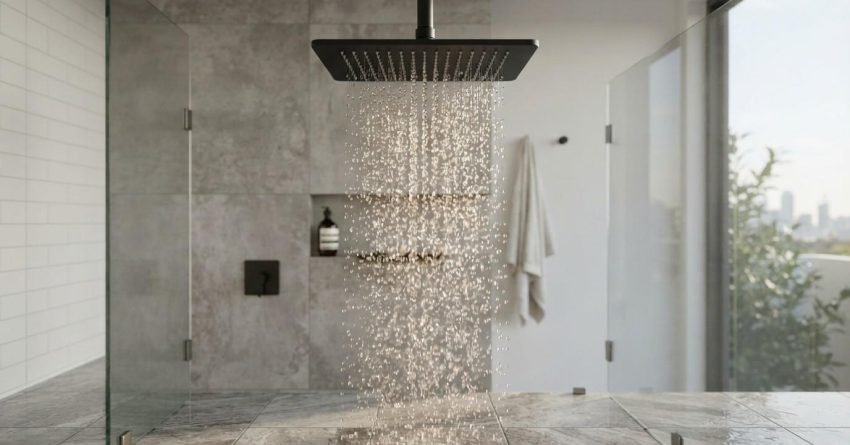
A rainfall shower head delivers a wide, overhead spray that mimics the feel of standing in warm rain, and for the right bathroom, it genuinely transforms the daily shower experience. I’ve seen it become one of the most requested upgrades in Sydney bathroom renovations over the past few years, and the interest makes sense.
The question isn’t whether they look good. It’s whether one fits your home, your plumbing, and your budget right now.
This article covers what rainfall shower heads actually cost in Sydney, where they work well, where they fall short, and how to decide if one belongs in your renovation.
What Is a Rainfall Shower Head?
A rainfall shower head is a large-format, overhead shower fixture designed to deliver water in a wide, even, downward flow across the full width of your shoulders and head. Most models range from 200mm to 400mm in diameter, with some designer options going wider.
The defining feature is the spray angle. Water falls almost vertically, at low velocity, covering a broad surface area rather than hitting from a single concentrated point.
How It Differs from a Standard Shower Head
A standard shower head delivers water at a higher velocity through a smaller spray face, typically 80mm to 120mm wide. You can angle it, adjust the spray pattern, and direct the flow where you need it.
A rainfall head is fixed. The spray is gentle and wide, not forceful or targeted. That’s the trade-off: you get full-body coverage and a relaxed, immersive feel, but you lose the directional control and rinsing power of a traditional handset.
Common Configurations: Ceiling-Mounted vs Arm-Mounted
Ceiling-mounted rainfall heads are installed directly into the ceiling with the water supply running through the ceiling cavity. They deliver the most authentic overhead experience and look the cleanest architecturally.
Arm-mounted versions attach to a wall-mounted extension arm that angles the head overhead. They’re easier to retrofit into an existing shower because they connect to the existing wall outlet; no ceiling rough-in required. The trade-off is a slightly less immersive angle and a more visible fitting.
The Real Benefits of a Rainfall Shower Head
The appeal is real, and it goes beyond aesthetics. I’ve worked on enough bathroom renovations to know that the right fixture in the right space genuinely changes how a room feels and functions.
The Spa-Like Experience at Home
The overhead, full-coverage flow is the closest thing to a spa shower you can install in a residential bathroom. Water falls across your entire upper body simultaneously, which feels fundamentally different from a standard shower: more relaxing, less functional, more like a ritual than a task.
For homeowners who use their master ensuite as a daily decompression space, this matters. It’s not a luxury for luxury’s sake. It’s a fixture that changes how you experience the room every single day.
Aesthetic and Resale Value Impact
A well-chosen rainfall shower head in a renovated bathroom signals quality to buyers and renters. It reads as a premium finish without necessarily costing premium money at the fixture level.
In Sydney’s property market, bathroom presentation carries real weight in buyer perception. A ceiling-mounted rainfall head in a tiled, well-lit ensuite is one of the most photographable features in a renovation, and that visibility translates to perceived value at inspection time.
The Honest Drawbacks You Should Know
I’m not going to oversell this. There are real limitations to rainfall shower heads, and they matter depending on your home and how you use your shower.
Water Pressure and Flow Rate Limitations
Rainfall heads need adequate water pressure to perform properly. The wide spray face distributes water across a much larger area, which means low-pressure systems, particularly gravity-fed setups common in older Sydney homes, often can’t deliver enough flow to make the experience feel satisfying.
Most quality rainfall heads require a minimum dynamic pressure of around 1.5 to 2 bar to perform as intended. If your home runs below that, the shower feels like a weak drizzle rather than a rainfall effect. A shower pump installation solves this, but it adds cost and complexity to the project.
Water Usage and Running Costs
Rainfall heads use more water than standard shower heads. A typical rainfall fixture flows at 12 to 16 litres per minute, compared to 7 to 9 litres per minute for a water-efficient standard head.
According to WaterNSW, water efficiency in residential properties is an increasing priority across Greater Sydney, particularly as the city manages long-term supply pressures. A higher-flow shower head used daily adds up across a year both on your water bill and in hot water energy costs. If water efficiency is a priority for your household or your investment property, look for a WELS-rated rainfall head with a 3-star rating or above, which balances the rainfall experience with a more controlled flow rate.
How Much Does a Rainfall Shower Head Cost in Sydney?
Cost is where the decision gets real. The fixture price is only part of the picture; installation is where the numbers can shift significantly depending on your existing plumbing setup.
Fixture Costs: Entry-Level to Premium
| Tier | Price Range (AUD) | What You Get |
| Entry-level | $80 – $200 | Basic chrome finish, arm-mounted, 200–250mm face |
| Mid-range | $200 – $600 | Better build quality, brushed nickel or matte black, 250–300mm face |
| Premium | $600 – $2,000+ | Designer brands (Grohe, Hansgrohe, Astra Walker), ceiling-ready, 300–400mm face |
The fixture price alone doesn’t tell the full story. A $150 arm-mounted head installed on an existing wall outlet is a very different project to a $900 ceiling-mounted head requiring new rough-in plumbing.
Installation Costs and Plumbing Considerations
For a straightforward arm-mounted installation connecting to an existing wall outlet, expect to pay a licensed Sydney plumber between $150 and $350 in labour, depending on access and complexity.
Ceiling-mounted installations are a different scope entirely. Running new water supply through the ceiling cavity, installing a ceiling rose, and waterproofing the penetration correctly adds significant labour time. As part of a full bathroom renovation in Sydney, ceiling rough-in for a rainfall head typically adds $400 to $900 to the plumbing scope, depending on ceiling height, access, and whether pipe relocation is required.
If you’re retrofitting a ceiling-mounted head into an existing bathroom without a full renovation, the cost climbs further; wall and ceiling reinstatement, tiling, and waterproofing all come into play.
Is a Rainfall Shower Head Worth It for Your Renovation?
The honest answer is: it depends on what you’re renovating, why you’re renovating it, and what your plumbing can support without expensive upgrades.
Best Scenarios Where It Makes Sense
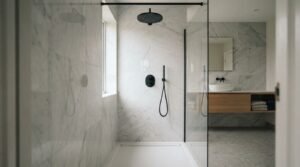
A rainfall shower head makes the most sense in a master ensuite renovation where the primary goal is comfort, presentation, and long-term enjoyment. If you’re investing in a full bathroom renovation new tiling, new fixtures, new waterproofing the incremental cost of adding a ceiling-mounted rainfall head is relatively small compared to the total project budget.
It also makes strong sense for property investors renovating a premium rental or preparing a property for sale in Sydney’s mid-to-upper market. The visual impact at inspection is disproportionate to the fixture cost, particularly when paired with quality tapware and a well-finished shower enclosure.
When a Standard Shower Head Is the Better Call
A standard shower head is the smarter choice when your home has low water pressure and a pump isn’t in the budget. It’s also the right call for a secondary bathroom or a rental property where durability and ease of cleaning matter more than the spa experience.
If your renovation budget is tight and you’re prioritising structural work, waterproofing, or tiling quality over fixtures, spend the money where it protects the building first. A great shower head in a poorly waterproofed shower is the wrong order of priorities.
Conclusion
A rainfall shower head is worth it when the conditions are right: adequate pressure, a renovation scope that absorbs the installation cost, and a clear goal around comfort or property presentation. It’s one of the highest-impact fixtures you can add to a master ensuite for the money.
The key is making the decision with full information, not just based on how it looks in a showroom. Pressure, plumbing configuration, water efficiency, and total installed cost all shape whether it delivers real value in your specific home.
At Sydney Home Renovation, we help homeowners and investors make exactly these calls, matching the right fixtures to the right budget and the right plumbing reality. Reach out to us before you commit to a fixture, and we’ll give you an honest assessment of what works for your bathroom.
Frequently Asked Questions
Do rainfall shower heads need high water pressure?
Yes, most rainfall shower heads perform best at a minimum dynamic pressure of 1.5 to 2 bar. Homes with gravity-fed or low-pressure systems often need a pump to get a satisfying flow from a large-format rainfall head.
Can I install a rainfall shower head in my existing shower?
An arm-mounted rainfall head connects to your existing wall outlet and is straightforward to retrofit. A ceiling-mounted version requires new plumbing rough-in through the ceiling cavity, which is best done as part of a broader bathroom renovation.
How much water does a rainfall shower head use?
Most rainfall shower heads flow at 12 to 16 litres per minute. That’s noticeably higher than a water-efficient standard head. Choosing a WELS 3-star rated rainfall fixture brings the flow rate down while preserving the overhead experience.
Are rainfall shower heads hard to clean?
The wide spray face collects limescale and mineral deposits across a larger surface area than a standard head. Most quality models have silicone nozzles that you can rub clean by hand. In Sydney’s water supply areas, a monthly wipe-down keeps them performing well.
What size rainfall shower head should I choose?
For most residential showers, a 250mm to 300mm head delivers the full rainfall effect without overwhelming a standard shower enclosure. Larger 350mm to 400mm heads suit wider, custom-built shower spaces and look best in ceiling-mounted configurations.
Do rainfall shower heads add value to a home?
In Sydney’s mid-to-upper property market, a well-installed rainfall shower head in a renovated ensuite contributes positively to buyer and renter perception. It signals quality and finish. The value impact is strongest when it’s part of a complete, well-executed bathroom renovation rather than a standalone fixture swap.


