
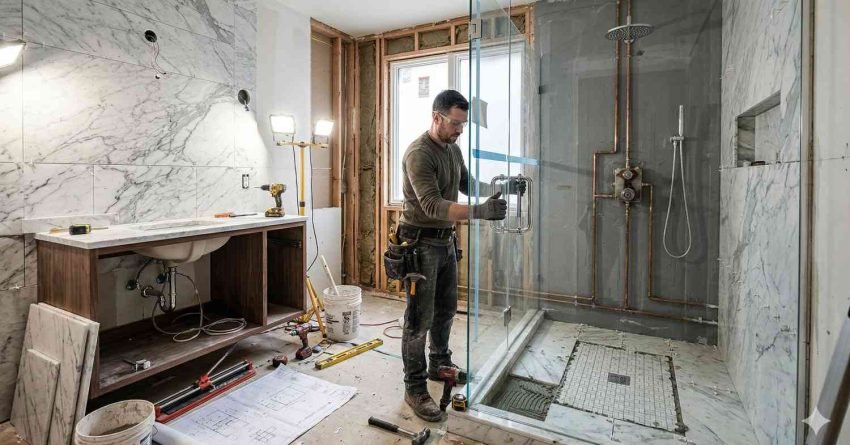
Labour is the most expensive part of a bathroom renovation, typically consuming 40-50% of your total budget. In Sydney, labour costs alone range from $8,000 to $20,000 depending on project complexity. This includes plumbers, electricians, tilers, waterproofers, and builders working across a 2-3 week timeline.
Understanding where your money goes helps you make smarter renovation decisions. Whether you’re updating an ensuite or gutting a main bathroom, knowing the big-ticket items prevents budget blowouts and helps you prioritise spending where it matters most.
This guide breaks down the most expensive bathroom renovation components, explains why labour dominates the budget, and shows you exactly where Sydney homeowners can save without sacrificing quality.
Why Labour Is the Most Expensive Part of a Bathroom Renovation
Labour costs dominate bathroom renovation budgets because bathrooms require multiple licensed tradespeople working in sequence. Unlike other rooms, bathrooms involve complex waterproofing requirements, strict Australian building codes, and coordination between at least four different trades.
A standard Sydney bathroom renovation requires a demolition team, licensed plumber, electrician, waterproofer, tiler, carpenter, and painter. Each trade must complete their work before the next can begin. This sequential workflow means you’re paying for skilled labour across 10-15 working days minimum.
The confined space of most bathrooms also increases labour time. Tradespeople work in tight conditions, often requiring more hours to complete tasks that would take less time in larger spaces. Difficult access, multi-storey homes, and older properties with outdated plumbing add further labour costs.
Labour Cost Breakdown by Trade
Plumbing represents the largest single trade expense, ranging from $2,500 to $6,000 in Sydney. Plumbers handle water supply lines, drainage, toilet connections, shower installations, and basin plumbing. Moving existing plumbing locations significantly increases costs.
Tiling labour costs between $1,500 and $4,500 depending on bathroom size and tile complexity. Large format tiles, intricate patterns, and feature walls require more skill and time. Floor-to-ceiling tiling in a standard bathroom takes 2-3 days of skilled labour.
Electrical work runs $800 to $2,500 for most bathroom renovations. This covers lighting installation, exhaust fan wiring, heated towel rail connections, and power point installation. Upgrading old wiring or adding new circuits increases this cost.
Waterproofing is a non-negotiable expense at $1,000 to $2,000. Australian standards require certified waterproofing in all wet areas. This includes membrane application, proper drainage falls, and compliance certification.
Demolition and removal costs $500 to $1,500 depending on bathroom size and disposal requirements. Asbestos presence in older Sydney homes can push this to $3,000 or more.
The Second Most Expensive Component: Tiling
Tiling ranks as the second-highest bathroom renovation expense when combining materials and labour. Total tiling costs in Sydney range from $3,000 to $12,000 for a standard bathroom.
Tile prices vary dramatically based on material, size, and origin. Budget ceramic tiles start at $25 per square metre while premium porcelain, natural stone, or designer tiles reach $150-300 per square metre. A typical bathroom requires 15-25 square metres of tiles for walls and floors.
Tile Cost Factors
Tile size affects both material waste and labour time. Large format tiles (600x600mm or larger) require fewer grout lines but need perfectly level substrates. Small mosaic tiles create stunning feature walls but dramatically increase installation time.
Tile material determines durability, maintenance, and price. Porcelain tiles offer excellent water resistance and durability at mid-range prices. Natural stone like marble or travertine creates luxury aesthetics but requires sealing and careful maintenance. Ceramic tiles provide budget-friendly options for walls.
Pattern complexity impacts labour costs significantly. Simple grid patterns install faster than herringbone, chevron, or stacked bond layouts. Feature walls with mixed materials or decorative borders add hours to installation time.
Substrate preparation often adds unexpected costs. Older Sydney homes may need cement sheeting replacement, floor levelling, or wall straightening before tiling can begin. This preparation work adds $500-$1,500 to tiling costs.
Fixtures and Fittings: The Third Major Expense
Bathroom fixtures represent 15-25% of total renovation costs, ranging from $2,000 to $10,000 depending on quality selections. This category includes your vanity, toilet, shower screen, tapware, bath, and accessories.
Vanity and Basin Costs
Vanities range from $400 for basic wall-hung units to $4,000+ for custom timber or stone-top designs. The vanity often serves as the bathroom’s focal point, making it a common area for budget upgrades.
Budget vanities ($400-$800) include laminate or polyurethane finishes with ceramic basins. These offer good functionality and clean aesthetics for investment properties or secondary bathrooms.
Mid-range vanities ($800-$2,000) feature stone tops, soft-close drawers, and better quality basins. This range offers the best value for most owner-occupier renovations.
Premium vanities ($2,000-$5,000+) include solid timber construction, integrated basins, designer brands, and custom sizing. These create statement pieces in high-end bathroom designs.
Toilet Costs
Toilets range from $250 for basic close-coupled models to $2,500+ for wall-hung or smart toilets. Wall-hung toilets require concealed cistern frames, adding $300-$600 to installation costs but creating a sleek, easy-clean aesthetic.
Back-to-wall toilets offer a middle ground at $400-$1,000, providing clean lines without the additional frame costs. Rimless designs improve hygiene and reduce cleaning time.
Shower and Bath Costs
Shower screens cost $400 to $2,500 depending on configuration. Frameless glass screens ($1,200-$2,500) create open, modern aesthetics. Semi-frameless options ($600-$1,200) balance style and budget. Framed screens ($400-$800) suit budget renovations.
Freestanding baths range from $800 to $5,000+. Acrylic baths offer lightweight, affordable options while composite stone and cast iron create luxury centrepieces. Installation adds $500-$1,000 for plumbing and positioning.
Shower bases and hobs cost $200-$800 for prefabricated options. Tiled shower bases with linear drains create seamless designs but add $500-$1,000 in additional tiling and waterproofing.
Tapware Costs
Tapware significantly impacts both aesthetics and budget. Basic chrome mixer taps start at $150 while designer brands in brushed nickel, matte black, or brushed brass reach $800-$1,500 per piece.
A complete tapware package (basin mixer, shower mixer, shower head, bath spout if applicable) costs $400-$800 for budget selections, $800-$2,000 for mid-range quality, and $2,000-$5,000+ for premium brands.
Plumbing: The Hidden Cost Driver
Plumbing costs extend beyond labour to include materials, compliance requirements, and potential complications. Total plumbing expenses typically range from $3,500 to $8,000 for Sydney bathroom renovations.
What Drives Plumbing Costs Up
Relocating fixtures dramatically increases plumbing costs. Moving a toilet, shower, or vanity requires new drainage runs, water supply lines, and potentially floor modifications. Each relocated fixture adds $500-$1,500 to plumbing costs.
Upgrading old pipework becomes necessary in many Sydney homes built before 1980. Galvanised steel pipes corrode internally, reducing water pressure and quality. Copper or PEX repiping adds $1,000-$3,000 but prevents future problems.
Hot water system requirements may surface during renovation. Older systems may lack capacity for new fixtures like rain showers or freestanding baths. Upgrading or relocating hot water systems adds $1,500-$4,000.
Drainage modifications require careful planning and compliance. Sydney’s strict plumbing codes mandate proper falls, venting, and inspection. Complex drainage changes may require hydraulic engineering certification.
Waterproofing: Essential but Often Underestimated
Waterproofing costs $1,000 to $2,500 for materials and certified application. While not the largest expense, waterproofing failures cause the most expensive long-term damage. Australian Standard AS 3740 mandates waterproofing in all wet areas.
Waterproofing Requirements
Shower areas require waterproofing to 1800mm height on all walls and across the entire floor. Hob-less showers need waterproofing extending 1500mm beyond the shower area.
General bathroom floors require full waterproofing with proper falls to floor wastes. Membrane must extend 100mm up walls and integrate with shower waterproofing.
Certification is mandatory. Only licensed waterproofers can certify bathroom waterproofing in NSW. This certification protects your investment and is required for insurance and resale purposes.
Signs of Waterproofing Failure
Existing waterproofing failures often reveal themselves during demolition. Soft or damaged substrates, mould presence, or water staining indicate previous failures requiring additional remediation. Budget $500-$2,000 for unexpected waterproofing repairs in older bathrooms.
Electrical Work Costs
Electrical costs range from $800 to $3,000 depending on existing wiring condition and new requirements. Bathrooms have specific electrical safety requirements under Australian standards.
Common Electrical Requirements
Lighting typically includes a central ceiling light, vanity lighting, and potentially shower lighting. LED downlights cost $80-$150 each installed. Feature pendant lights over vanities add $200-$500 per fitting.
Exhaust fans are essential for moisture control. Basic ceiling fans cost $150-$300 installed. Combination light/fan/heater units range from $400-$800 installed.
Heated towel rails require dedicated circuits, adding $200-$400 to electrical costs. Hardwired rails offer cleaner aesthetics than plug-in alternatives.
Power points must meet zone requirements in bathrooms. Shaver points near vanities cost $150-$250 installed. General power points for appliances require specific placement away from water sources.
Electrical Upgrades in Older Homes
Sydney homes built before 1980 often need switchboard upgrades to accommodate modern bathroom electrical loads. Safety switches (RCDs) are mandatory for bathroom circuits. Switchboard upgrades add $500-$1,500 to renovation costs but improve overall home safety.
How Bathroom Size Affects Total Cost
Bathroom size directly impacts material quantities and labour time. Understanding cost-per-square-metre helps you benchmark quotes and set realistic budgets.
Small Bathroom Renovation (Under 4m²)
Small bathrooms and powder rooms cost $10,000 to $20,000 for complete renovation. The compact size reduces material costs but labour remains similar to larger bathrooms. Cost per square metre runs higher at $2,500-$5,000/m².
Small bathrooms benefit from space-saving fixtures like wall-hung vanities and toilets. Frameless shower screens maximise visual space. Light colours and large format tiles create the illusion of more room.
Standard Bathroom Renovation (4-8m²)
Most Sydney bathrooms fall into this category, with renovation costs of $15,000 to $35,000. This size accommodates separate shower and bath, double vanities, and comfortable movement space. Cost per square metre averages $2,000-$4,000/m².
Standard bathrooms offer the most design flexibility. Layout changes remain feasible without excessive plumbing costs. Material selections have the greatest impact on final budget.
Large Bathroom Renovation (Over 8m²)
Large bathrooms and master ensuites cost $25,000 to $60,000+ depending on specifications. Increased floor area requires more tiles, waterproofing, and finishing materials. Cost per square metre drops to $1,800-$3,500/m² due to labour efficiency.
Large bathrooms accommodate luxury features like freestanding baths, double showers, separate toilet rooms, and extensive storage. Premium material selections in larger spaces create significant budget differences.
Sydney-Specific Cost Factors
Sydney bathroom renovations typically cost 15-25% more than other Australian capitals. Several factors contribute to higher Sydney pricing.
Labour Market Conditions
Sydney’s competitive construction market drives higher trade rates. Experienced bathroom specialists command premium rates due to strong demand. Travel time and parking challenges in inner Sydney add to labour costs.
Licensed trades in Sydney charge:
- Plumbers: $80-$120 per hour
- Electricians: $75-$110 per hour
- Tilers: $50-$80 per square metre
- Waterproofers: $60-$90 per square metre
Property Age and Condition
Sydney’s older housing stock presents unique challenges. Federation and interwar homes often contain asbestos in wet areas. Post-war fibro homes require careful material handling. Even 1970s-80s homes may have outdated plumbing and electrical requiring upgrades.
Access and Logistics
Inner-city terrace houses with rear-only access increase material handling costs. Multi-storey apartments require building management coordination and may restrict work hours. Heritage overlays in some suburbs add approval requirements and material restrictions.
Hidden Costs That Blow Budgets
Experienced renovators budget 10-15% contingency for unexpected costs. Understanding common hidden expenses helps you plan realistically.
Asbestos Discovery
Asbestos testing costs $50-$150 per sample. If asbestos is found, licensed removal costs $1,500-$5,000 depending on extent. Sydney homes built before 1990 have high asbestos probability in bathroom walls, floors, and ceilings.
Structural Issues
Removing walls or fixtures may reveal water damage, termite damage, or structural deficiencies. Remediation costs vary widely from $500 for minor repairs to $5,000+ for significant structural work.
Plumbing Surprises
Old drainage may not meet current code requirements. Corroded pipes may need replacement beyond the bathroom. Insufficient water pressure may require pump installation or pipe upgrades.
Compliance Requirements
Some bathroom renovations require council approval, particularly if changing external walls or in heritage areas. Development applications cost $500-$2,000 and add 4-8 weeks to timelines. Hydraulic certificates for complex plumbing add $300-$600.
Smart Ways to Manage Bathroom Renovation Costs
Strategic decisions can reduce costs without compromising quality or functionality.
Keep the Existing Layout
Maintaining current fixture positions eliminates expensive plumbing relocations. A like-for-like renovation focusing on new finishes and fixtures costs 20-30% less than layout changes.
Prioritise Spending on High-Impact Items
Invest in quality tapware and shower screens that you touch and see daily. Save on items hidden from view like basic toilet cistern mechanisms or standard drainage fittings.
Choose Mid-Range Fixtures Strategically
Mid-range Australian brands offer excellent quality without designer price tags. Caroma, Methven, and Phoenix provide reliable fixtures at reasonable prices. Save premium spending for one or two statement pieces.
Time Your Renovation Wisely
Avoid peak renovation periods (spring and early summer) when trades are busiest and prices highest. Winter renovations often secure better availability and potentially lower quotes.
Get Detailed, Comparable Quotes
Request itemised quotes from at least three contractors. Compare like-for-like specifications. Understand what’s included in allowances and what triggers variations.
Conclusion
Labour costs, tiling, and plumbing represent the three most expensive components of any bathroom renovation. Understanding this cost hierarchy helps you allocate budget effectively and make informed decisions about where to invest and where to economise.
Every bathroom renovation involves trade-offs between cost, quality, and design aspirations. The key is knowing which expenses are fixed (labour, waterproofing, compliance) and which offer flexibility (fixtures, tiles, finishes).
At Sydney Home Renovation, we provide transparent, itemised quotes that show exactly where your money goes. Contact our team for a detailed bathroom renovation consultation and discover how to achieve your dream bathroom within your budget.
Frequently Asked Questions
What percentage of a bathroom renovation budget goes to labour?
Labour typically consumes 40-50% of total bathroom renovation costs. In a $25,000 renovation, expect $10,000-$12,500 for combined trade labour including plumbing, electrical, tiling, waterproofing, and general carpentry.
Can I reduce costs by doing some work myself?
DIY demolition can save $500-$1,000 but requires proper waste disposal. Painting is another DIY option saving $300-$600. However, plumbing, electrical, and waterproofing must be completed by licensed professionals for compliance and insurance purposes.
Why do bathroom renovations cost more than other rooms?
Bathrooms require waterproofing certification, multiple licensed trades, strict building code compliance, and specialised fixtures. The combination of plumbing, electrical, and wet area requirements makes bathrooms the most complex rooms to renovate.
How much should I budget for contingency?
Budget 10-15% contingency for unexpected costs. On a $25,000 renovation, set aside $2,500-$3,750 for surprises like asbestos, hidden water damage, or plumbing complications. Older homes warrant higher contingency allowances.
Is it cheaper to renovate a small bathroom?
Small bathrooms cost less overall but more per square metre. Labour costs remain similar regardless of size since the same trades and processes are required. Material savings in small bathrooms are offset by proportionally higher labour costs.
What’s the best way to save money without compromising quality?
Keep existing plumbing locations, choose mid-range Australian brand fixtures, select standard tile sizes, and avoid complex tile patterns. These decisions reduce costs while maintaining quality and functionality.
How do Sydney bathroom renovation costs compare to other cities?
Sydney renovations cost 15-25% more than Melbourne, Brisbane, or Perth. Higher labour rates, property access challenges, and older housing stock contribute to Sydney’s premium pricing. A $25,000 Melbourne renovation might cost $29,000-$31,000 in Sydney.


