Not all shower screens are built the same, and picking the wrong type for your bathroom is one of those renovation decisions that costs you twice, once at installation and again every time you clean it. I’ve worked across enough Sydney bathrooms to know that the right screen comes down to three things: your layout, your budget, and how much upkeep you’re actually willing to do.
Choosing the wrong type creates real problems: soap scum traps, leaking seals, and a bathroom that looks dated before the grout even dries.
This guide breaks down every major shower screen type, compares them honestly, and gives you Sydney-specific pricing so you can make a confident, informed decision.
What Makes a Shower Screen the Right Fit?
Key Factors Before Choosing a Type
The shower screen market isn’t short on options, and that’s exactly where most homeowners get stuck. Before you land on a type, four things need to be settled first.
Space and layout come first. A hinged frameless door needs clearance to swing open. A walk-in panel works beautifully in a long, narrow recess. Getting this wrong means a screen that fights your bathroom every single day.
Budget sets the realistic range. Framed screens sit at the affordable end. Frameless glass panels sit at the premium end. Semi-frameless lands in the middle, and for most Sydney renovations, that middle ground is where the value lives.
Maintenance tolerance matters more than most people admit. Frameless screens look stunning and wipe down fast. Framed screens trap water and soap residue in the metal channels, and that build-up is relentless.
Intended use shapes the decision too. A rental property needs durability and low maintenance costs. A family bathroom needs robust hardware. A master ensuite in a prestige renovation deserves the full frameless treatment.
Framed Shower Screens
What Framed Screens Look Like and How They Work
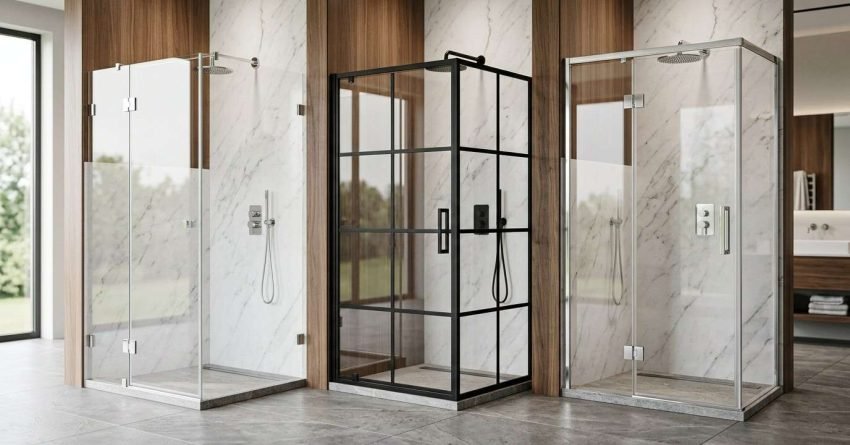
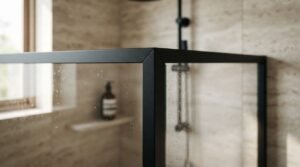
A framed shower screen uses a full aluminium frame around every edge of the glass panel, top, bottom, and both sides. The frame holds the glass in place and provides structural support, which means the glass itself can be thinner and less expensive.
The hardware is visible and functional. You’ll see the frame clearly, and it comes in standard finishes like chrome, brushed nickel, and matte black. It’s a straightforward, proven design that’s been in Australian bathrooms for decades.
Pros and Cons for Sydney Bathrooms
The biggest advantage is cost. Framed screens are the most affordable option on the market, and installation is straightforward for any licensed tradesperson.
The trade-off is maintenance. Water and soap scum collect in the bottom channel and along the frame edges. In Sydney’s hard water areas, that build-up accelerates. Regular cleaning keeps it manageable, but it’s never as easy as wiping down a frameless panel.
Aesthetically, framed screens read as dated in modern renovations. They work, but they don’t elevate a bathroom the way semi-frameless or frameless options do.
Best Suited For
Framed screens are the right call for rental properties, budget renovations, and older homes where the existing bathroom aesthetic already leans traditional. They’re also a practical choice when the renovation budget is tight, and the priority is function over form.
Semi-Frameless Shower Screens
What Sets Semi-Frameless Apart
Semi-frameless screens use a frame on some edges, typically the sides and top, but leave the glass panel itself exposed without a bottom channel. The result is a cleaner look than fully framed screens, with less hardware visible and easier cleaning along the base.
The glass is thicker than framed options, usually 6mm, which gives the screen a more substantial feel. Hardware finishes are the same as framed screens: chrome, brushed nickel, matte black, but the reduced frame presence makes the whole unit look more contemporary.
Pros and Cons
Semi-frameless screens hit a genuine sweet spot. They cost less than frameless but look significantly better than framed. Cleaning is easier because there’s no bottom channel to trap water and soap residue.
The limitation is that they still carry visible hardware on the sides and top. In a high-end renovation, that hardware can feel like a compromise. And while the glass is thicker than framed options, it’s still not the full 10mm toughened glass you get with a premium frameless installation.
Best Suited For
Semi-frameless screens suit mid-range renovations, family bathrooms, and most standard Sydney layouts. They’re the most versatile option in the market, good enough for a quality renovation without the premium price tag of frameless glass.
Frameless Shower Screens
What Makes Frameless the Premium Choice
Frameless shower screens use thick toughened glass, typically 10mm, with no surrounding frame. The glass is held in place by minimal hardware: small hinges, a handle, and sometimes a wall channel. The result is a clean, open look that makes any bathroom feel larger and more luxurious.
There’s no frame to interrupt the sightline, no channel to trap water, and no aluminium edge to corrode or discolour over time. The glass does all the work, and when it’s installed correctly, it’s one of the most durable and low-maintenance options available.
Pros and Cons
The visual impact is the obvious advantage. Frameless screens are the benchmark for high-end bathroom renovations in Sydney, and they consistently add perceived value to a property. They’re also the easiest type to clean; a squeegee after each shower and a weekly wipe-down keeps them looking new.
The cost is the honest trade-off. Frameless screens are the most expensive option, and the installation requires precision. The glass is heavy, the hardware placement is critical, and any error in the wall substrate or floor level shows up immediately. This is not a job for an inexperienced installer.
Best Suited For
Frameless screens belong in high-end renovations, master ensuites, and any bathroom where resale value or rental premium is a priority. For Sydney property investors targeting the prestige rental market, frameless glass is one of the highest-return upgrades available.
Fixed Panel and Walk-In Shower Screens
How Fixed and Walk-In Screens Differ From Framed Types
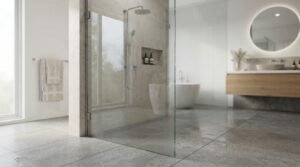
Fixed panel and walk-in screens take a completely different approach to the shower enclosure. Instead of a door that opens and closes, these designs use one or more stationary glass panels to define the shower space, with an open entry point built into the layout.
A fixed panel sits against one wall and angles or extends far enough to contain water spray. A walk-in configuration uses two panels, or one long panel, to create a corridor-style entry. Neither type has a moving door, which eliminates hinges, seals, and the maintenance that comes with them.
Pros and Cons
The maintenance advantage is significant. No door means no door seals to replace, no hinges to clean around, and no pivot mechanism to wear out. The open entry also makes these screens genuinely accessible: no step-over threshold, no door to navigate.
The limitation is water containment. Without a door, the layout needs to be designed carefully to prevent water from escaping the shower zone. This usually means a longer panel, a specific floor gradient, or a recessed shower base. In a poorly planned layout, a walk-in screen creates a wet bathroom floor.
Best Suited For
Fixed panel and walk-in screens work best in compact bathrooms where a swinging door would be impractical, in accessible or age-in-place renovations, and in contemporary open-plan bathroom designs. They’re also a strong choice for wet room conversions.
Shower Screen Glass Types, What Goes Inside the Frame
Toughened Safety Glass vs. Standard Glass
Every shower screen installed in Australia is required to use toughened safety glass under AS/NZS 2208, the Australian and New Zealand standard for safety glazing materials. Standard glass is not compliant and should never appear in a shower installation.
Toughened glass is heat-treated to be significantly stronger than standard glass. When it does break, which is rare under normal conditions, it shatters into small, blunt fragments rather than sharp shards. That’s the safety difference that matters.
Clear, Frosted, and Textured Glass Options
Clear glass is the default for frameless and semi-frameless screens. It maximises light, makes the bathroom feel larger, and is the easiest to keep clean.
Frosted glass offers privacy without blocking light. It’s a practical choice for shared bathrooms or ensuites where the shower is visible from the bedroom. The trade-off is that frosted surfaces show water marks more readily than clear glass.
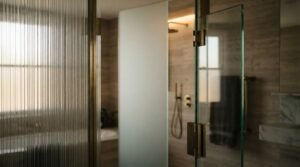
Textured glass, reeded, fluted, or patterned, has made a strong comeback in contemporary Sydney renovations. It adds visual interest and provides privacy, and the texture can actually help disguise water spots between cleans.
Glass Thickness and What It Means for Durability
Glass thickness directly affects rigidity, weight, and cost. Framed screens typically use 4–6mm glass, supported by the surrounding frame. Semi-frameless screens use 6mm as standard. Frameless screens require a minimum of 10mm to stand without full frame support.
Thicker glass feels more substantial, flexes less under pressure, and carries a higher upfront cost. For a frameless installation, 10mm is not optional: it’s a structural requirement.
Side-by-Side Comparison: Which Shower Screen Type Wins?
Summary Comparison Table
| Type | Typical Cost (Supply + Install, Sydney) | Maintenance | Best Use | Style Rating |
| Framed | $400–$900 | High – frame channels trap residue | Rentals, budget renos | ★★☆☆☆ |
| Semi-Frameless | $700–$1,500 | Medium – no bottom channel | Mid-range renos, family bathrooms | ★★★☆☆ |
| Frameless | $1,200–$3,000+ | Low – easy to squeegee | High-end renos, prestige rentals | ★★★★★ |
| Fixed / Walk-In | $900–$2,500 | Very Low – no door seals | Compact bathrooms, accessible design | ★★★★☆ |
No single type wins for every situation. Frameless glass wins on aesthetics and long-term maintenance. Framed wins on upfront cost. Semi-frameless wins on value. Fixed and walk-in win on accessibility and simplicity.
The right answer depends on your bathroom, your budget, and how long you plan to live with the result.
How Much Do Shower Screens Cost in Sydney?
Framed vs. Semi-Frameless vs. Frameless Price Ranges
Sydney pricing for shower screens varies based on type, glass size, hardware finish, and installation complexity. These are realistic supply-and-install ranges for a standard single-panel or single-door configuration:
- Framed: $400–$900
- Semi-frameless: $700–$1,500
- Frameless: $1,200–$3,000+
- Fixed panel/walk-in: $900–$2,500
Custom sizes, premium hardware finishes, and larger glass panels push costs toward the upper end of each range. A double-door frameless enclosure in a large ensuite can exceed $4,000 once installation is factored in.
What Drives the Cost Difference
Three things drive the price gap between types. Glass thickness is the biggest factor; 10mm toughened glass costs significantly more than 4–6mm framed glass. Hardware quality is the second; precision hinges and handles for frameless installations carry a premium over standard framed hardware. Installation complexity is the third; frameless screens require more precise substrate preparation, accurate wall fixing, and a higher skill level to install correctly.
Cutting corners on any of these three factors creates problems that show up fast. A frameless screen installed on an uneven wall or into a weak substrate is a liability, not an upgrade.
Conclusion
Shower screens aren’t a one-size-fits-all decision. The right type depends on your layout, your budget, and the long-term role the bathroom plays, whether that’s a family home, a rental, or a prestige renovation.
Frameless glass leads on aesthetics and maintenance. Semi-frameless delivers the best value for most Sydney renovations. Framed screens serve a purpose in budget and rental contexts. Fixed and walk-in panels solve specific layout and accessibility challenges that doors simply can’t.
At Sydney Home Renovation, we help homeowners and investors choose the right screen for their specific bathroom, and install it to a standard that holds up. Reach out to our team and let’s talk through what works for your renovation.
Frequently Asked Questions
What is the most popular shower screen type in Sydney?
Semi-frameless shower screens are the most commonly specified type across mid-range Sydney renovations. They balance cost, aesthetics, and maintenance in a way that suits most standard bathroom layouts and renovation budgets.
Are frameless shower screens harder to clean?
Frameless screens are actually easier to clean than framed ones. There are no frame channels or bottom tracks to trap soap scum. A squeegee after each shower and a weekly wipe-down keeps the glass in good condition with minimal effort.
Can I install a shower screen myself?
Shower screen installation requires precise wall fixing, correct substrate preparation, and compliance with Australian safety glazing standards. I recommend using a licensed tradesperson; an incorrect installation creates water damage and safety risks that cost far more to fix than the installation itself.
What glass thickness is best for a shower screen?
For frameless screens, 10mm toughened safety glass is the minimum required for structural integrity. Semi-frameless screens use 6mm as standard. Framed screens use 4–6mm glass, supported by the surrounding aluminium frame. Thicker glass is always more rigid and durable.
Do shower screens add value to a bathroom renovation?
Yes, particularly frameless glass. A well-specified frameless shower screen is one of the highest-impact visual upgrades in a bathroom renovation. It signals quality to buyers and tenants, and it consistently features in prestige bathroom renovations that achieve strong resale and rental returns in Sydney.