
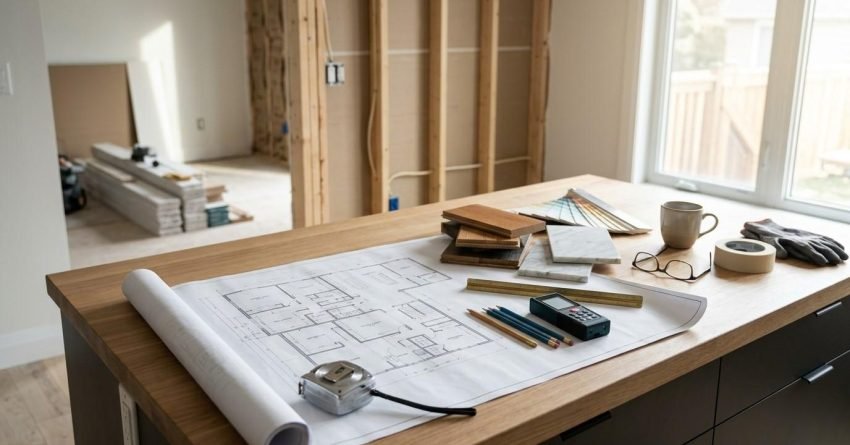
Whole home renovation in Sydney typically costs between $1,200 and $4,500 per square metre, depending on the scope of work, material selections, structural complexity, and the trades required to complete the project. A 200sqm home renovated to a mid-range standard will generally sit between $400,000 and $700,000 in total project cost, with high-end finishes pushing well beyond that threshold.
Renovation budgets in Sydney are under increasing pressure from rising labour rates, material costs, and supply chain delays, making accurate cost-per-square-metre benchmarks more important than ever for homeowners and investors planning a project.
This guide explains what drives renovation cost per square metre, how to break down your budget across rooms and trades, which upgrades deliver the strongest return, and how to get a reliable cost estimate before committing to a project.
What Does Whole Home Renovation Cost Per Square Metre in Sydney?
Whole home renovation in Sydney costs between $1,200 and $1,800 per sqm for entry-level cosmetic work, $1,800 to $3,000 per sqm for mid-range full renovations, and $3,000 to $4,500+ per sqm for high-end projects with architectural changes and premium finishes. The right tier depends on your scope, materials, and the condition of the existing structure.
Renovation cost per square metre in Sydney varies significantly based on the level of finish, the extent of structural work, and the condition of the existing property. The following tiers reflect realistic market pricing for Sydney residential projects in 2025 and 2026.
Entry-Level Renovation Cost Per Square Metre
Entry-level whole home renovations in Sydney typically range from $1,200 to $1,800 per square metre. At this level, the scope generally covers cosmetic updates, new flooring, fresh paint, updated fixtures, and basic kitchen and bathroom refreshes without structural changes or high-specification finishes.
This tier suits investment properties, rental upgrades, and homeowners working within a defined budget who prioritise function over premium aesthetics. We find it works best when spend is concentrated on high-visibility areas like kitchens and bathrooms, where cosmetic improvements deliver the clearest return.
Mid-Range Renovation Cost Per Square Metre
Mid-range whole home renovations in Sydney typically cost between $1,800 and $3,000 per square metre. This tier includes full kitchen and bathroom renovations, updated electrical and plumbing systems, new flooring throughout, and a higher standard of fixtures and finishes.
Most owner-occupier renovations fall within this range. Projects at this level involve a broader trade team, more detailed project coordination, and longer timelines, typically 12 to 20 weeks for a full home depending on size and complexity.
High-End Renovation Cost Per Square Metre
High-end whole home renovations in Sydney range from $3,000 to $4,500 per square metre and above. At this level, projects include architectural changes, premium imported materials, custom joinery, smart home integration, and high-specification finishes throughout every room.
Luxury renovations require experienced project management, longer lead times for bespoke materials, and a tightly coordinated trade schedule to maintain quality and timeline control. We typically see these projects run 20 to 36 weeks from construction start to completion.
Renovation Cost by House Size in Sydney
The per-square-metre rate only tells part of the story. Total project cost scales with floor area, but not always linearly; fixed costs like project management, council approvals, and waste removal apply regardless of size, which means smaller homes often carry a higher effective cost per square metre.
The table below applies mid-range rates ($1,800 to $3,000 per sqm) across common Sydney home sizes to give a realistic total project range.
| Home Size | Entry-Level ($1,200–$1,800/sqm) | Mid-Range ($1,800–$3,000/sqm) | High-End ($3,000–$4,500/sqm) |
| 100 sqm | $120,000–$180,000 | $180,000–$300,000 | $300,000–$450,000 |
| 150 sqm | $180,000–$270,000 | $270,000–$450,000 | $450,000–$675,000 |
| 200 sqm | $240,000–$360,000 | $360,000–$600,000 | $600,000–$900,000 |
| 250 sqm | $300,000–$450,000 | $450,000–$750,000 | $750,000–$1,125,000 |
| 300 sqm | $360,000–$540,000 | $540,000–$900,000 | $900,000–$1,350,000 |
These figures assume an even distribution of cost across the floor area. In practice, wet areas and structural zones cost significantly more per square metre than bedrooms and hallways, so the actual total will vary based on your specific room mix and scope.
Key Factors That Affect Renovation Cost Per Square Metre
The per-square-metre rate is a starting point, not a fixed price. Several variables shift the final cost significantly, and understanding them helps homeowners set realistic budgets before approaching contractors.
Scope of Work and Structural Changes
Cosmetic renovations paint, flooring, fixtures cost far less per square metre than projects involving structural changes. Removing load-bearing walls, re-stumping, underpinning, or reconfiguring floor plans requires engineering assessments, council approvals, and specialist trades that add substantial cost to the overall project.
Structural work in Sydney can add $15,000 to $80,000 or more to a project budget depending on the extent of the work. That figure significantly affects the per-square-metre calculation when spread across the total floor area.
Council Approvals and Permit Costs
Many Sydney homeowners underestimate the cost and time involved in obtaining council approvals. A Development Application (DA) typically costs between $1,500 and $10,000 in council fees alone, with additional costs for architectural drawings, engineering reports, and heritage assessments where applicable.
Complying Development Certificates (CDCs) offer a faster approval pathway for eligible projects and typically cost $800 to $3,000 through a private certifier. We always confirm the correct approval pathway before quoting, because the wrong choice can add months to a project timeline and thousands to the budget.
Material and Fixture Selections
Material choices have one of the largest impacts on renovation cost per square metre. The difference between a standard laminate benchtop and a stone benchtop, or between ceramic tiles and large-format porcelain, can shift the cost of a single room by $5,000 to $20,000.
Fixture selections in bathrooms and kitchens tapware, cabinetry, appliances, and lighting follow the same pattern. Setting clear material allowances before work begins prevents scope creep and keeps the project within budget.
Labour Costs and Trade Coordination in Sydney
Labour consistently represents the largest cost component in any Sydney renovation, typically accounting for 50 to 65 percent of total project cost. Rates vary across trades, and the complexity of coordinating multiple trades on a single project adds project management cost on top of individual trade fees.
The table below reflects realistic Sydney day rates for licensed trades in 2025 and 2026.
| Trade | Typical Day Rate (Sydney, 2025–2026) |
| Licensed Plumber | $800–$1,400 per day |
| Licensed Electrician | $700–$1,200 per day |
| Tiler | $500–$900 per day |
| Carpenter / Joiner | $500–$850 per day |
| Plasterer | $450–$750 per day |
| Painter | $400–$700 per day |
| Project Manager | $600–$1,200 per day |
These rates reflect licensed, insured tradespeople working on residential projects in metropolitan Sydney. Regional and outer-suburban rates may differ.
How Long Does a Whole Home Renovation Take in Sydney?
Timeline is one of the most underestimated variables in renovation planning. A project that runs over schedule costs more: extended site access, delayed trade bookings, and temporary accommodation all add to the final bill.
The table below reflects realistic construction timelines for Sydney whole home renovations, measured from the start of on-site work.
| Renovation Scope | Typical Construction Timeline |
| Cosmetic only (paint, flooring, fixtures) | 4–8 weeks |
| Mid-range (kitchens, bathrooms, electrical, plumbing) | 12–20 weeks |
| Full renovation with structural changes | 20–36 weeks |
| Full renovation with DA approval required | Add 3–6 months pre-construction |
| Luxury / architectural renovation | 36–52 weeks |
Pre-construction time including design, approvals, and trade scheduling adds significantly to the overall project duration. We recommend building at least 8 to 12 weeks of pre-construction lead time into any whole home renovation plan before a single trade sets foot on site.

How to Break Down Your Whole Home Renovation Budget
A per-square-metre rate gives you a total project estimate, but effective budgeting requires allocating that spend across rooms, trades, and contingency reserves before work begins.
Allocating Budget Across Rooms and Zones
Kitchens and bathrooms consistently absorb the largest share of a whole home renovation budget. The table below reflects realistic room-by-room cost ranges for Sydney mid-range renovations in 2025 and 2026.
| Room / Zone | Typical Cost Range (Sydney, Mid-Range) |
| Full kitchen renovation | $25,000–$80,000 |
| Full bathroom renovation | $15,000–$45,000 |
| Ensuite renovation | $12,000–$35,000 |
| Laundry renovation | $5,000–$15,000 |
| Living / dining area (flooring, paint, lighting) | $8,000–$25,000 |
| Bedroom (flooring, paint, built-in wardrobe) | $5,000–$18,000 |
| Hallway and circulation spaces | $3,000–$10,000 |
| Outdoor/alfresco (deck, paving, landscaping) | $15,000–$60,000 |
Living areas, bedrooms, and hallways cost less per square metre because they involve fewer trades and lower-cost finishes. A practical allocation approach assigns higher per-square-metre rates to wet areas and high-use zones, and lower rates to bedrooms and circulation spaces.
Contingency Allowances and Hidden Costs
Every whole home renovation budget should include a contingency reserve of 10 to 20 percent of the total project cost. Older Sydney homes frequently reveal unexpected conditions once walls are opened: asbestos, deteriorated waterproofing, outdated wiring, or subfloor damage, each of which adds unplanned cost to the project.
We recommend 15 percent as a practical starting point for most Sydney homes built before 1990, and 10 percent for newer builds with known construction history. The contingency is not a buffer for scope changes; it exists specifically for genuine site surprises.

Which Renovations Add the Most Value Per Square Metre?
Not all renovation spend returns equal value. Understanding which upgrades deliver the strongest return helps homeowners and investors prioritise their budget for maximum financial outcome.
High-ROI Renovation Zones
Kitchens and bathrooms consistently deliver the strongest return on renovation investment in Sydney residential property. A well-executed kitchen renovation can return $1.50 to $2.00 for every $1.00 spent in the right market, while bathroom renovations in owner-occupier homes typically return between $1.20 and $1.80 per dollar invested.
Kerb appeal upgrades landscaping, facade painting, new front doors, and driveway resurfacing also deliver strong returns relative to their cost, particularly in competitive Sydney sales markets where first impressions drive buyer interest.
Upgrades That Maximise Long-Term Property Value
Energy efficiency upgrades, including insulation, double glazing, and solar installation, add measurable value in Sydney’s current property market where running costs are a key buyer consideration. Structural improvements that increase usable floor area such as garage conversions, deck additions, or second-storey extensions, typically deliver the highest absolute dollar return, though they also carry the highest upfront cost.
We consistently see the strongest combined return from projects that pair a full kitchen and bathroom renovation with energy efficiency upgrades and a kerb appeal refresh. That combination addresses the three factors buyers and tenants weigh most heavily in Sydney’s current market.
How to Get an Accurate Renovation Cost Estimate in Sydney
A reliable renovation cost estimate requires more than a per-square-metre rate applied to your floor area. Accurate pricing depends on a detailed scope of works, site inspection, and trade-by-trade assessment of the actual conditions in your home.
The most reliable approach is to engage a licensed renovation contractor for a detailed quote based on a written scope of works. This document should specify every element of the project materials, finishes, trade inclusions, and exclusions so that quotes from different contractors can be compared on a like-for-like basis.
Understanding Provisional Sums and PC Items
Two line items that frequently cause budget confusion are provisional sums and prime cost (PC) items. A provisional sum is an estimated allowance for work whose full scope cannot be confirmed until construction begins; common examples include subfloor repairs, waterproofing rectification, and electrical upgrades in older homes.
A PC item is an allowance for a specific product or fixture that the homeowner has not yet selected; tapware, tiles, and appliances are the most common examples. Both figures are estimates, not fixed prices, and both can move significantly once work begins. We always flag provisional sums and PC items clearly in our quotes so clients understand exactly which line items carry cost risk.
Owner-Builder vs. Licensed Contractor Costs
Some homeowners consider the owner-builder pathway to reduce costs. In New South Wales, an owner-builder permit is required for any residential building work valued over $10,000, and the permit holder assumes full legal responsibility for the project, including compliance, safety, and defect liability.
The cost saving from owner-building is real but frequently overstated. Without a licensed contractor coordinating trades, delays between trades are common, and the cost of rectifying sequencing errors often exceeds the management fee saved. For whole home renovations, we find that a licensed contractor with a fixed-price contract delivers better cost certainty and a faster timeline than the owner-builder pathway in most cases.

Common Budgeting Mistakes That Blow Out Renovation Costs
The most frequent cause of renovation cost overruns is not unexpected site conditions; it is inadequate planning before work begins. Homeowners who underestimate the scope, select materials without confirmed pricing, or engage contractors without a detailed written contract consistently experience budget blowouts.
The three most common mistakes are: underestimating the contingency reserve, changing the scope after work has started, and selecting materials without confirmed lead times or pricing. Each of these errors compounds the others; a scope change mid-project triggers additional labour costs, delays other trades, and exhausts the contingency reserve before the project is complete.
We see a fourth mistake almost as often: accepting the lowest quote without understanding why it is lower. A quote that is 15 to 20 percent below the field average almost always reflects missing scope, unpriced provisional sums, or unlicensed trades, not genuine efficiency. Comparing quotes on a like-for-like basis using the same written scope document is the only reliable way to identify genuine value.
Renovation Cost Per Square Metre vs. Total Project Budget
The per-square-metre rate is a useful benchmarking tool, but it is not the same as a project budget. A rate of $2,500 per square metre applied to a 200sqm home produces an estimate of $500,000, but that figure assumes an even distribution of cost across the entire floor area, which rarely reflects reality.
Wet areas, structural zones, and high-specification rooms cost significantly more per square metre than bedrooms and hallways. A more accurate approach applies different rates to different zones and adds fixed costs such as project management, council approvals, and waste removal as separate line items rather than folding them into the per-square-metre calculation.
Understanding how contractors structure their pricing matters before you sign anything. Key line items to verify include: the basis for any provisional sums, what triggers a variation, how PC items are reconciled at completion, and whether the quoted price includes GST, council fees, and certifier costs.
Conclusion
Whole home renovation cost per square metre in Sydney ranges from $1,200 for entry-level cosmetic work to $4,500 and above for high-end full renovations, with the final figure shaped by scope, materials, labour, and site conditions.
Accurate budgeting requires moving beyond the per-square-metre rate to a detailed room-by-room allocation, realistic contingency reserves, and a clear scope of works before any contractor is engaged. The decisions made at the planning stage, not on site, determine whether a project finishes on budget.
At Sydney Home Renovation, we provide transparent, detailed cost planning for whole home renovations across Sydney. Contact our team to discuss your project scope and receive an accurate, obligation-free renovation cost estimate.
Frequently Asked Questions
What is the average cost per square metre for a whole home renovation in Sydney?
The average cost per square metre for a whole home renovation in Sydney ranges from $1,800 to $3,000 for mid-range projects. Entry-level cosmetic renovations start around $1,200 per square metre, while high-end full renovations exceed $4,500 per square metre depending on specification and structural complexity.
Does the per-square-metre rate include all trades and materials?
A quoted per-square-metre rate should include labour and materials for all trades within the defined scope, but always confirm what is excluded. Council approvals, engineering reports, asbestos removal, and landscaping are frequently excluded from base rates and should be listed separately in any detailed quote.
How much contingency should I budget for a whole home renovation?
We recommend a contingency reserve of 10 to 20 percent of your total project cost. Older Sydney homes frequently reveal unexpected conditions deteriorated waterproofing, outdated wiring, or subfloor damage once walls are opened, and a well-funded contingency prevents these discoveries from stalling the project.
Which rooms cost the most per square metre to renovate?
Kitchens and bathrooms cost the most per square metre to renovate because they involve the highest concentration of trades: plumbing, electrical, tiling, joinery, and waterproofing within a relatively small floor area. Bedrooms and living areas cost significantly less per square metre as they require fewer specialist trades.
How long does a whole home renovation take in Sydney?
A mid-range whole home renovation in Sydney typically takes 12 to 20 weeks from the start of construction, depending on the size of the home, the scope of work, and trade availability. Projects involving structural changes, council approvals, or custom materials will generally take longer than cosmetic-only renovations.
Can I reduce renovation costs by supplying my own materials?
Supplying your own materials can reduce costs in some cases, but it introduces risks around compatibility, delivery timing, and warranty coverage. Most licensed contractors price their work based on materials they source, and confirm warranties with your contractor before purchasing independently to avoid delays or additional charges if materials are incorrect or damaged.
How do I know if a renovation quote is accurate and fair?
An accurate renovation quote is based on a detailed written scope of works, includes a full list of inclusions and exclusions, and breaks costs down by trade or room rather than presenting a single lump sum. Compare at least three quotes on a like-for-like basis using the same scope document, and be cautious of quotes that are significantly lower than others without a clear explanation.
What is a provisional sum and how does it affect my budget?
A provisional sum is an estimated allowance for work whose full scope cannot be confirmed until construction begins. Common examples include subfloor repairs and waterproofing rectification. Provisional sums can move significantly once work starts, so we always identify them clearly in our quotes so clients understand which line items carry cost risk.
Do I need council approval for a whole home renovation in Sydney?
Most whole home renovations in Sydney require either a Development Application or a Complying Development Certificate. The correct pathway depends on the scope of work, the property’s zoning, and any heritage overlays. We recommend confirming the approval pathway with a licensed certifier before finalising your project scope and budget.


