Kitchen islands are being replaced in 2026 by peninsula benches, integrated storage walls, and flexible multi-zone kitchen layouts. Homeowners across Sydney are moving away from fixed, freestanding islands toward configurations that work harder in smaller footprints, improve traffic flow, and adapt to open-plan living. The shift is not a passing trend. It reflects a fundamental change in how Australians use their kitchens — and how renovation budgets are being spent to maximise both function and long-term property value.
The Kitchen Island Is Losing Ground in 2026
The kitchen island dominated residential design for over two decades. In 2026, it is no longer the default choice. Homeowners, architects, and renovation contractors are increasingly recommending alternatives that deliver more usable space, better circulation, and stronger integration with open-plan living areas.
Why Homeowners Are Moving Away from Fixed Islands
Fixed kitchen islands create problems that only become obvious after installation. In homes under 200 square metres — which describes the majority of Sydney’s residential stock — a standard 900mm x 1800mm island consumes floor space that could otherwise support better traffic flow between the kitchen, dining, and living zones. Islands also limit seating flexibility, restrict natural light movement through open-plan spaces, and add significant cost without always adding proportional function. For property investors and owner-occupiers focused on resale value, a poorly proportioned island can actively reduce buyer appeal rather than enhance it.
What the Design Shift Confirms
The move away from islands is consistent across Sydney’s renovation market. Builders and kitchen designers are reporting stronger demand for peninsula configurations, wall-integrated joinery, and modular kitchen furniture that can be reconfigured as household needs change. The preference for flexibility over fixed form is reshaping how kitchens are planned from the earliest design stage.
Planning your kitchen layout around these alternatives requires a different approach to space, circulation, and storage than a traditional island-centred design.
The Alternatives Taking Over Kitchen Design
Several specific configurations are emerging as the dominant replacements for the traditional kitchen island in 2025. Each solves a different problem, and the right choice depends on the size, shape, and use pattern of the kitchen.
Peninsula Benches and Integrated Storage Walls
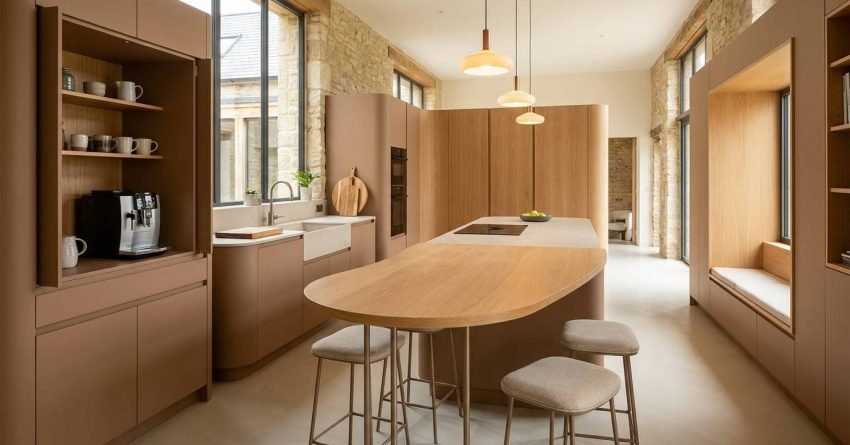
A peninsula bench connects to the existing cabinetry on one end, eliminating the clearance requirement on all four sides that a freestanding island demands. This single change recovers between 600mm and 900mm of floor space in each direction — a meaningful gain in a compact Sydney kitchen. Integrated storage walls take this further by combining bench space, overhead cabinetry, appliance housing, and display shelving into a single continuous joinery run. The result is a kitchen that feels larger, functions more efficiently, and photographs better for resale listings.
Multi-Zone Layouts and Flexible Furniture Solutions
Open-plan kitchen zones are replacing the island as the primary organising principle in modern kitchen design. Rather than anchoring the kitchen around a central fixed structure, multi-zone layouts divide the space into defined functional areas — preparation, cooking, serving, and storage — without physical barriers between them. Flexible furniture solutions, including moveable butcher’s block trolleys and extendable dining tables positioned at the kitchen boundary, provide the occasional extra bench space that an island once offered, without the permanent footprint.
Choosing the Right Alternative for Your Home
The best island replacement depends on three factors: the kitchen’s floor area, the direction of natural light, and how the kitchen connects to adjacent living spaces. Peninsula benches suit kitchens that already have a strong wall run and need additional bench length without sacrificing circulation. Integrated storage walls suit kitchens where storage is the primary constraint. Multi-zone layouts suit open-plan homes where the kitchen, dining, and living areas share a single continuous space.
Factoring in your kitchen renovation budget in Sydney early in the design process ensures the alternative you choose is both functionally right and financially realistic. Peninsula benches typically cost less than a freestanding island because they require fewer linear metres of benchtop and no additional base cabinetry on the fourth side. Integrated joinery walls carry a higher upfront cost but deliver stronger storage outcomes and better long-term value.
Conclusion
Kitchen islands are being replaced by smarter, space-efficient alternatives that better suit how Sydney homeowners actually live and cook in 2025.
For renovators and property investors, this shift creates a genuine opportunity to improve kitchen function, reduce wasted floor space, and strengthen resale appeal through better-considered design choices.
At Sydney Home Renovation, we help you plan and build the right kitchen configuration for your home — on budget, on schedule, and built to last.
Frequently Asked Questions
Are kitchen islands going out of style in Australia?
Yes. In 2025, kitchen islands are declining in popularity across Australia, particularly in Sydney, where smaller home footprints make peninsula benches and integrated joinery more practical and cost-effective alternatives.
What is a peninsula bench and how does it differ from an island?
A peninsula bench connects to existing cabinetry on one end, requiring clearance on three sides instead of four. This recovers significant floor space compared to a freestanding island while delivering equivalent bench length and seating.
Do kitchen island alternatives add value to a home?
Yes, when chosen correctly. Peninsula benches and integrated storage walls improve kitchen function and visual appeal, both of which contribute positively to buyer perception and resale value in the Sydney property market.
What kitchen layout works best in a small Sydney home?
Peninsula benches and multi-zone open-plan layouts perform best in smaller Sydney homes. They maximise usable bench space and circulation without the floor area penalty that a freestanding island creates in compact kitchens.
How much does it cost to replace a kitchen island with a peninsula bench in Sydney?
Peninsula bench costs vary based on benchtop material, cabinetry specification, and trades required. In Sydney, a peninsula bench replacement typically costs less than a freestanding island installation due to reduced benchtop area and simpler base cabinetry requirements.