Choosing the right bathroom color is one of the most critical decisions we help clients make in any renovation. It affects daily comfort, resale value, and how long the investment stays fresh. Trendy colors look appealing in magazines, but they date quickly and force costly updates within a few years.
We guide homeowners toward classic, enduring colors paired with strategic accent choices that add personality without risk. Understanding which colors stand the test of time helps avoid expensive mistakes and keeps a bathroom attractive to future buyers. This guide covers proven timeless bathroom colors, application methods, and combinations that work across different bathroom sizes, styles, and budgets.
Why Bathroom Color Choices Matter for Long-Term Value
Bathroom color choices directly impact renovation costs, property appeal, and how often the space needs updating. Unlike living areas where repainting is straightforward, bathrooms involve tiles, waterproofing, and fixtures. That makes color changes significantly more expensive and disruptive.
Bathrooms serve multiple purposes throughout the day: morning preparation, evening relaxation, everything in between. Color directly affects mood, perceived cleanliness, and spatial perception. Cool tones like whites and soft greys promote feelings of cleanliness and calm, while warm neutrals create comfort without overwhelming small spaces.
White reflects significantly more available light than darker tones, making even windowless bathrooms feel more spacious. Dark or saturated colors absorb light instead, often requiring additional artificial lighting in compact bathrooms. Light neutrals show water spots more readily too, which encourages regular cleaning, while medium greys and beiges hide minor imperfections while still looking fresh.
Domain research indicates neutral bathroom renovations recover 60–80% of their cost at resale, while bold color choices often recover less than 50%. Buyers struggle to see past personalized color schemes and mentally add renovation costs to their purchase calculations. A classic white or grey bathroom lets potential buyers envision their own style without planning immediate changes.
Sydney’s property market spans heritage homes, modern apartments, and suburban family houses. Neutral, timeless colors work across all these contexts, while trendy choices might suit one property type and alienate buyers in another.
Changing bathroom colors after installation gets expensive fast. Wall paint costs $800–1,500 to redo. Tile colors are effectively permanent without complete removal, a process costing $3,000–8,000, including waterproofing, new tiles, and labor. Vanity replacement due to color regret adds $2,000–6,000, and fixture changes can add another $1,500–4,000. We always recommend starting with timeless colors to eliminate these future expenses entirely.
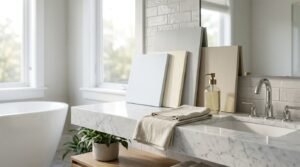
The Foundation: Classic Neutral Bathroom Colors
Neutral colors form the backbone of timeless bathroom design. They provide flexibility, maximize light, appeal broadly, and allow easy updates through accessories. These colors solve fundamental bathroom challenges: limited space, moisture management, and resale appeal.
White: The Ultimate Timeless Choice
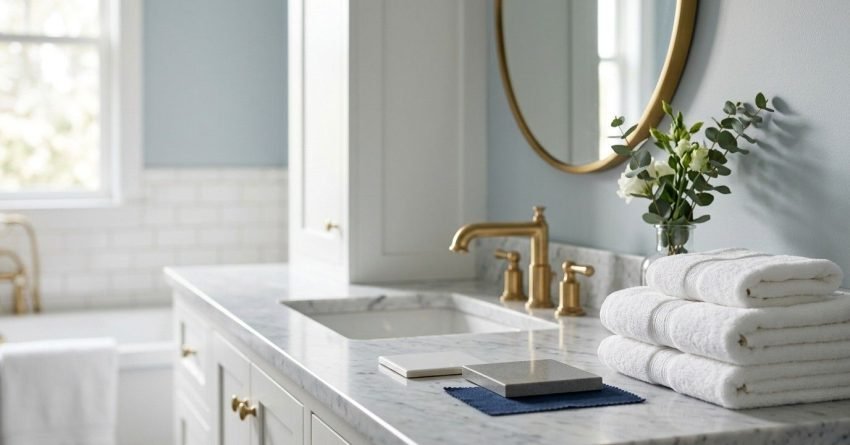
White dominates bathroom design for practical reasons. It maximizes light reflection, creates a clean aesthetic, and works with any accent color. Cool whites carry blue or grey undertones and pair beautifully with chrome fixtures in bathrooms with abundant natural light. Warm whites carry cream or yellow undertones and prevent the cold, clinical feeling that cool whites create under artificial lighting; they also complement brass and timber fixtures more naturally.
We recommend testing both under actual lighting conditions before committing. Purchase sample pots, paint boards at least 1m x 1m, and view them in morning, afternoon, and evening light. The same white can look dramatically different depending on exposure and bulb temperature.
Full white bathrooms create maximum brightness but demand consistent cleaning. White walls with contrasting darker floors hide water marks and daily wear, a practical combination for family bathrooms and rentals. White tiles with painted accent walls balance permanence in wet areas with easy color updates elsewhere.
Soft Greys: Versatile and Sophisticated
Grey has emerged as the modern neutral. It hides minor imperfections better than white and pairs beautifully with both warm and cool accent colors without feeling trendy. Light greys, at roughly 20–30% saturation, add subtle depth while keeping brightness; they work well across bathroom sizes and complement both modern and traditional elements.
Medium greys, at 40–50% saturation, work best as accent elements feature walls, vanity colors, or floor tiles rather than dominating a whole room. We pair them with white fixtures for sophisticated tonal schemes, but we always check lighting first. In bathrooms with limited natural light, medium greys can feel heavy, so we aim for 300–400 lux in task areas when using them extensively.
Beige, Cream, and Ivory: Warm Neutrals That Endure
Beige and cream have remained bathroom staples for decades. They create warm, inviting spaces and complement timber vanities, brass fixtures, and natural stone beautifully. These tones age gracefully; pure white can yellow over time, particularly around fixtures with limited ventilation, while beige and cream hold their appearance more consistently.
We always pair beige and cream with crisp white fixtures and trim to prevent the space from feeling dated. Off-whites and ivories sit between pure white and beige, offering subtle warmth without committing to stronger cream tones. They pair with both silver and gold fixtures, giving flexibility in hardware choices, and photograph well for property marketing.
Timeless Accent Colors That Add Character
Neutrals provide foundation, but strategic accent colors add personality. We choose accents with proven longevity shades that have stayed popular across decades without dominating a neutral framework.
Navy blue has maintained popularity across centuries of interior design. It works beautifully as a vanity color against white walls, pairs with brass, gold, and chrome hardware, and hides water marks better than lighter colors. In tile applications, navy subway tiles or penny tiles add pattern interest without overwhelming a space.
Sage green connects bathrooms to nature and creates calming, spa-like atmospheres. Unlike brighter greens that feel dated, sage’s muted, grey-green tone maintains contemporary appeal. We apply it in moderation accent walls, lower cabinetry, tile features rather than full-room coverage, which keeps the color present without overwhelming the space.
Black and charcoal work best as accents rather than dominant colors. Black-framed shower screens, tapware, and mirrors create striking contrast against white or light grey backgrounds. Charcoal tiles hide water marks and daily wear better than lighter options while providing a sophisticated backdrop. We always balance dark elements with abundant light, aiming for 400–500 lux where dark surfaces dominate to avoid a cave-like feel.
Muted earth tones, soft terracottas, and warm taupes connect bathrooms to natural materials. Modern interpretations use dusty, muted tones rather than bright oranges, pairing well with white fixtures and natural timber. We balance these tones with crisp whites to keep schemes feeling grounded rather than trendy.
Color Combinations That Stand the Test of Time
Individual colors matter, but combinations create the overall bathroom aesthetic. Certain pairings have proven longevity because they balance contrast with cohesion.
White and grey dominate contemporary bathroom design while maintaining classic appeal. White walls with grey floors are the most popular configuration; it maximizes light reflection on vertical surfaces while grey flooring hides wear. Tonal grey schemes layer light, medium, and dark greys for depth, provided all shades share the same undertone.
Neutral bases with navy or black accents create striking, timeless schemes. White walls with a navy vanity or navy tile feature reads as intentional and designed, particularly in heritage homes and Hampton-style bathrooms. We keep accents to roughly 20–30% of visual space so the neutral foundation still feels calm and spacious.
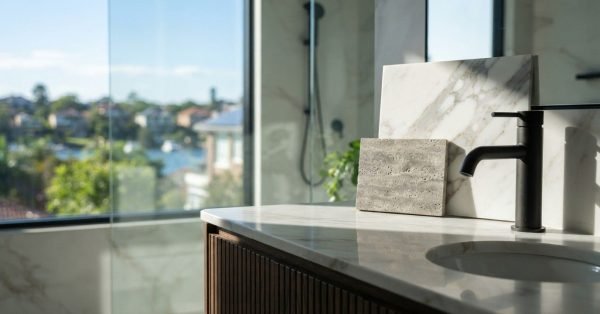
Monochromatic schemes use variations of a single color for cohesive, sophisticated results. All-white schemes create interest through texture instead of color; different finishes and materials keep the space feeling dynamic rather than flat. We also lean on natural materials here: timber vanities add warmth to white or grey bathrooms, and natural stone tiles like marble or travertine bring subtle color variation without breaking the neutral framework. These materials have appeared in bathroom design across centuries, which is exactly why they keep working.
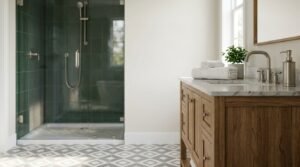
Where to Apply Color in the Bathroom
Color placement affects both aesthetics and practicality. We think through each surface separately before finalizing a palette.
Walls offer the largest surface area. Painted walls provide maximum flexibility at the lowest cost. Quality bathroom paint runs $80–150 per 4L tin, and a standard repaint costs $800–1,500. Wet areas need waterproof membranes and tile coverage instead, since paint alone won’t hold up there. We keep wall colors in neutral ranges and save stronger colors for smaller, easily changed accent areas.
Vanities carry significant visual impact while staying relatively easy to update. White vanities maximize light and appeal universally to buyers. Timber vanities add warmth and organic character, particularly in heritage and Hampton-style bathrooms. Navy or black vanities create striking focal points but work best with abundant natural light, and they can limit buyer appeal in investment properties. Vanity replacement runs $2,000–6,000, though repainting an existing timber or laminate vanity costs just $400–800.
Floor tiles are permanent, so we choose carefully. Light grey has become the modern standard; it hides marks better than white while keeping the space bright. White floors show every water mark and suit powder rooms more than full bathrooms. Natural stone floors add premium appeal with inherent color variation. Floor tile installation runs $80–200 per square meter, which makes the initial color decision important.
Fixtures and hardware offer relatively easy update opportunities. Chrome remains the timeless standard and works with virtually any scheme. Brushed nickel offers a softer, warmer alternative that hides marks well. Matte black creates striking contemporary contrast but shows water marks readily. Brass and gold have returned to popularity and pair beautifully with warm neutral palettes. Tapware sets cost $300–1,500, and for maximum longevity we generally recommend chrome or brushed nickel, saving bolder finishes for bathrooms where the aesthetic direction is already locked in.
Colors to Avoid: Trendy Choices That Date Quickly
Understanding which colors to avoid matters as much as knowing which to embrace. Certain colors and combinations signal specific eras, which dates a bathroom and reduces its appeal to future buyers.
Bright, saturated colors vivid blues, strong greens, bold yellows create immediate visual impact but date quickly. Bright blue tiles read as distinctly 1950s–60s or 1980s–90s. Strong greens overwhelm small spaces and clash with natural materials. Bold yellows and oranges show dirt poorly and develop dingy appearances over time. When clients want color, we suggest adding it through easily changed elements towels, artwork, accessories rather than permanent installations.
Certain combinations date bathrooms just as quickly. Grey and yellow, teal and coral, and millennial pink all read as distinctly of a particular decade already. Full black schemes black walls, tiles, and fixtures together represent a current trend that may feel dated within five to ten years, even though black accents hold up well on their own. We stick to combinations with proven longevity: white and grey, neutral with navy, beige and white.
Bold patterns follow the same rule. Geometric tiles work fine in neutral colors, but bold colored geometric patterns feel trend-driven. Moroccan-inspired patterns in bright colors dominated early 2010s design and already feel dated. For patterns with staying power, we choose simple, classic options: subway tiles, hexagon tiles in white or grey, and simple border details.
How to Test and Choose a Bathroom Color Palette
Selecting colors takes more than browsing paint chips. Proper testing ensures colors work in the actual bathroom conditions before committing to expensive installations.
Natural light varies by window orientation. North-facing bathrooms receive cooler, consistent light. South-facing bathrooms get warmer, stronger light. East-facing bathrooms are bright in the mornings, darker in the afternoons; west-facing reverses this. We test colors at different times of day, since whites and greys especially shift in appearance between morning and evening light. Artificial lighting matters too: warm white bulbs (2700–3000K) can yellow cool whites, while cool white bulbs (4000–5000K) can make warm tones look dingy.
For paint, we purchase sample pots of the top three or four choices and paint boards at least 1m x 1m, viewing them in the actual bathroom across several days. For tiles, we order large samples of at least 300mm x 300mm and view them with grout samples and water splashed on the surface, since wet appearance differs from dry. This entire process costs $50–150 in samples but prevents mistakes that cost thousands after installation.
We also coordinate new colors with anything staying in place. If existing tiles carry grey veining, we choose grey-toned paints to match. If fixtures are white, they work with virtually any new scheme; older colored fixtures need wall and floor colors chosen to complement rather than clash.
Budget-Friendly Color Updates
Full bathroom renovations run $15,000–35,000, but strategic color updates refresh a space without major construction. Repainting walls costs $800–1,500, affordable next to tile replacement, and choosing timeless neutrals here works with existing tiles and fixtures while updating the overall feel.
Painting an existing vanity costs $400–800 professionally, or $100–200 DIY, and changes the room’s aesthetic significantly. New tapware, shower screens, and accessories modernize a bathroom without touching the tile or layout. Grout refresh is often overlooked; professional cleaning and resealing runs $400–800, and full regrouting costs $1,200–2,500 but makes old tiles look genuinely new. Together, these updates allow a color refresh within a $2,000–5,000 budget.

Real-World Timeless Color Schemes in Sydney Homes
Seeing how timeless colors work in actual Sydney renovations helps with visualizing outcomes. These examples span heritage homes, modern apartments, and investment properties across different budgets.
| Property Type | Suburb | Color Scheme | Renovation Cost |
| Terrace house (1890s) | Newtown | White subway tiles, soft grey walls, brass tapware, oak vanity | $28,000 |
| Federation ensuite (1910s) | Mosman | White marble-look tiles, white walls, brushed nickel tapware | $32,000 |
| Victorian cottage (1880s) | Balmain | Cream walls, beige floor tiles, walnut vanity | $25,000 |
| Two-bedroom apartment | Zetland | Light grey tiles, white walls, chrome tapware | $22,000 |
| One-bedroom ensuite | Pyrmont | All-white scheme, matte black tapware accents | $18,000 |
| Studio apartment | Surry Hills | White walls, grey floor tiles, light oak vanity | $15,000 |
| Three-bedroom house | Parramatta | Light grey tiles, white walls, white vanity | $20,000 |
| Two-bedroom unit | Bankstown | White walls, medium grey tiles, grey laminate vanity | $16,000 |
| Granny flat | Blacktown | All-white scheme, chrome tapware | $12,000 |
These renovations share a pattern: neutral foundations with a single, restrained accent decision. Heritage homes lean toward warm neutrals and brass to respect original character, while apartments and investment properties lean toward white and grey combinations that maximize light and appeal broadly to future tenants or buyers.
Conclusion
Timeless bathroom colors protect a renovation investment by maintaining appeal across decades and eliminating costly trend-driven updates. White, grey, beige, and restrained navy or black accents create foundations that work regardless of temporary design shifts, while natural materials add warmth within neutral frameworks.
The right color choices balance personal preference with long-term practicality, a bathroom worth enjoying daily while still showing future buyers value rather than renovation requirements. Testing properly, understanding lighting, and applying colors strategically across each surface deliver results that hold up.
We’re Sydney Home Renovation, and we deliver expert color guidance, transparent budgeting, and quality workmanship that brings timeless bathroom visions to life on schedule, on budget, and built for lasting value.
Frequently Asked Questions
What is the most timeless color for a bathroom?
White remains the most timeless bathroom color, appearing consistently across design eras and property types. It maximizes light, works with any accent color, and provides the most flexibility for future updates.
Should we use the same color throughout a bathroom?
Monochromatic schemes work well but aren’t required. Most successful timeless bathrooms use two to three coordinating neutral colors, like white walls with grey floors, creating interest while maintaining cohesion.
Are grey bathrooms still in style?
Grey bathrooms maintain strong popularity with no signs of dating. Light to medium greys have replaced beige as the modern neutral, working across styles while hiding water marks better than white.
What bathroom colors add the most value to a home?
Neutral colors white, light grey, sand oft beige add the most value by appealing to the broadest buyer pool, since bold color choices often recover less than half their cost at resale.
How do we choose between warm and cool tones?
We consider natural lighting and existing fixtures. Bathrooms with abundant natural light handle cool tones well, while limited-light bathrooms benefit from warm tones that prevent a cold, clinical feeling.
Can we use dark colors in a small bathroom?
Dark colors work in small bathrooms when used strategically, like dark floors with light walls. We ensure adequate lighting and keep most surfaces light to prevent a cramped feeling.
How often do bathroom colors need updating?
Timeless color schemes rarely need updating. White, grey, and beige bathrooms stay fresh for 15–20 years with proper maintenance, while trendy colors can feel dated within three to five years.