Darker bathroom floors create visual grounding and hide everyday wear, while lighter floors maximise brightness in compact spaces. We find the right choice depends on your bathroom’s size, natural light, and long-term maintenance preferences.
This decision affects more than aesthetics. Floor and wall colour relationships influence how spacious your bathroom feels, how easy it is to maintain, and how appealing it looks to future buyers.
We break down when darker floors work best, when lighter floors make sense, and how to match your choice to your bathroom’s specific conditions. You’ll also find practical advice on trending combinations, budget impacts, and mistakes we see clients make.
Understanding the Floor-to-Wall Colour Relationship in Bathrooms
The relationship between your bathroom floor and wall colours creates the foundation for the entire room’s visual impact. This isn’t simply personal preference; it’s how colour placement affects spatial perception, light distribution, and the atmosphere of one of your home’s most-used spaces.
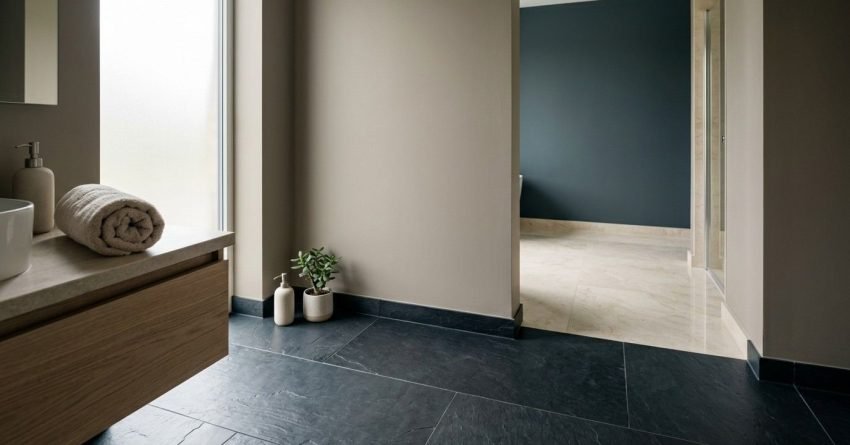
Traditional interior design principles suggest floors should anchor a room. Darker floors paired with lighter walls draw the eye upward, creating a sense of height, while lighter floors with darker walls make a space feel more intimate and cocooned.
Neither approach is universally correct. We find the best choice depends on your bathroom’s specific conditions, and this decision sits within a much broader set of planning choices across a full bathroom renovation, from layout through to final finishes.
How Light and Dark Tones Affect Perceived Space
Colour value, how light or dark a colour appears, directly influences how we perceive room dimensions. Light colours reflect more light, making surfaces appear to recede, while dark colours absorb light and make surfaces feel closer and more prominent.
In bathrooms, this has practical implications. A dark floor creates a visual base that grounds vanities and fixtures, making the room feel stable and well-proportioned, while a light floor blurs the boundary between floor and walls for a more expansive, airy feeling.
We consistently see lighter floor-and-wall schemes read as noticeably more spacious than darker schemes in identically sized rooms. For Sydney’s many compact bathrooms, this perception shift can make a real difference to how the room feels day to day.
The Role of Natural and Artificial Lighting
Your bathroom’s light sources dramatically affect how floor colours appear throughout the day. North-facing Sydney bathrooms receive consistent, cool light that can make dark floors appear even darker, while south-facing bathrooms get warmer, more variable light that softens dark tones.
Artificial lighting adds another layer. Warm LED lighting (2700K–3000K) enhances cream, beige, and warm grey floors while making cool-toned dark floors appear muddy, whereas cool white lighting (4000K+) sharpens contrast and makes both light and dark floors appear more vivid.
We recommend testing samples in your actual bathroom at different times of day. What looks perfect in a showroom under commercial lighting can look completely different in your space.
When to Choose a Darker Bathroom Floor Than Walls
Darker floors remain the most popular choice for Australian bathrooms, and for good reason. They offer practical benefits well beyond aesthetics, particularly for busy households and high-traffic family bathrooms.
Creating Visual Grounding and Stability
A darker floor anchors your bathroom visually, creating a clear distinction between the floor plane and vertical surfaces and giving the room a sense of order and proportion. This grounding effect is especially valuable in bathrooms with multiple fixtures or design elements that could otherwise feel chaotic.
Dark floors also provide contrast that highlights lighter fixtures. White bathtubs, vanities, and toilets stand out more dramatically against charcoal, slate, or deep grey floors, creating visual interest without extra decorative elements.
For bathrooms with high ceilings, common in Sydney’s older homes and modern apartments, dark floors prevent the space from feeling too tall and narrow by bringing visual weight to the lower portion of the room.
Practical Benefits for High-Traffic Bathrooms
Dark floors hide dirt, dust, hair, and water spots far better than light alternatives. This matters significantly in family bathrooms, daily-use ensuites, and rental properties where maintenance time is limited.
Grout lines on dark-tiled floors also show less discolouration over time. Dark grout paired with dark tiles maintains its appearance longer than white grout with light tiles, though proper sealing and cleaning remain essential.
For landlords and property investors, dark bathroom floors reduce how often deep cleaning is needed between tenants and maintain a fresh appearance with standard maintenance routines.
Best Tile and Material Options for Darker Floors
The most durable dark floor options we recommend for Sydney bathrooms include:
- Porcelain tiles in charcoal or slate grey: highly water-resistant, scratch-resistant, and available in large formats that minimise grout lines
- Natural stone in dark granite or basalt: premium appearance with excellent durability, though it requires sealing
- Dark-stained concrete: increasingly popular in contemporary renovations, offering a seamless appearance
- Vinyl plank in dark timber tones: a budget-friendly option that mimics timber without moisture concerns
When selecting dark tiles, we consider the finish carefully. Matte finishes hide water spots and footprints better than polished surfaces, and textured finishes add slip resistance where it matters most.
Slip rating matters as much as colour on bathroom floors. We recommend a minimum R10 rating for dry-finish areas and R11 or higher for shower zones, regardless of whether you choose a dark or light tile.
When to Choose a Lighter Bathroom Floor Than Walls
Lighter floors suit specific bathroom conditions where maximising brightness and perceived space takes priority over hiding everyday wear. Understanding when light floors excel helps you make an informed decision.
Maximising Light in Small or Windowless Bathrooms
Small bathrooms benefit most from light-coloured floors. When floor, wall, and ceiling colours are similar in value, the boundaries between surfaces blur, making compact spaces feel larger and less confined.
Windowless bathrooms, common in Sydney apartments and internal ensuites, particularly benefit from light floors, since dark floors can make these spaces feel cave-like without natural light to soften them.
For bathrooms under 4 square metres, light floors combined with light walls can make the difference between a cramped utility space and a comfortable, functional room.
Achieving a Contemporary or Minimalist Look
Light floors are central to minimalist and Scandinavian-inspired bathroom designs. White, off-white, and pale grey floors create the neutral canvas these clean-lined, calm aesthetics require.
Contemporary designs often pair light floors with feature walls or bold fixtures. The light floor recedes visually, allowing a freestanding bath, dramatic vanity, or textured wall tile to take centre stage.
For homeowners seeking a spa-like atmosphere, we find light floors contribute to the serene, uncluttered feeling associated with high-end wellness spaces.
Maintenance Considerations for Light-Coloured Floors
Light floors require more frequent cleaning to maintain their appearance. Dust, hair, and dirt show more readily, and grout lines can discolour faster without regular attention.
Modern tile technology has improved light floor practicality considerably. Rectified tiles with minimal grout lines, epoxy grout that resists staining, and large-format tiles (600x600mm or larger) all reduce the maintenance burden.
We always factor ongoing maintenance into this decision with clients. For busy households, the additional cleaning commitment can outweigh the aesthetic benefits.
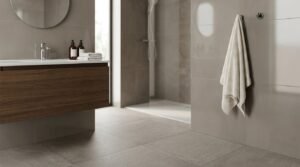
Matching Floor and Wall Tones: When Same-Shade Works
Using the same colour on floors and walls isn’t a design mistake; it’s a deliberate strategy that works well in specific situations. This approach creates visual continuity that can make bathrooms feel larger and more cohesive.
Creating Seamless Visual Flow
Matching floor and wall tones eliminates visual interruptions, letting the eye move smoothly around the room without stopping at colour transitions. This is particularly effective in small bathrooms where colour changes can emphasise limited dimensions.
The key to successful tone-matching is introducing texture variation. We use matte tiles on floors paired with gloss tiles on walls, or combine large-format floor tiles with smaller wall tiles in the same colour.
Many contemporary Sydney bathrooms use this approach with warm grey tones, varied through tile size and finish, to create spaces that feel both modern and timeless.
Where Vanity and Cabinetry Colours Fit In
Floor and wall colour rarely exist in isolation. Vanity and cabinetry finishes act as a third variable that can either reinforce or disrupt your chosen scheme.
A dark floor with light walls and a matching dark timber vanity creates a cohesive, grounded look, while a light vanity against the same combination adds contrast and visual lightness. We recommend choosing your vanity finish alongside your tile samples, not after tiling is complete.
How Bathroom Size Influences Your Floor Colour Decision
Bathroom dimensions should significantly influence your floor colour choice. What works in a spacious master ensuite may overwhelm a compact powder room, and vice versa.
Small Bathroom Colour Strategies
For bathrooms under 6 square metres, we prioritise colours and techniques that maximise perceived space:
- Light floors with light walls: creates the most expansive feeling
- Medium-toned floors with lighter walls: provides some grounding without shrinking the space
- Large-format tiles: fewer grout lines mean fewer visual interruptions
- Consistent colour temperature: keeping all colours in the same warm or cool family
We avoid high-contrast combinations in small bathrooms. A stark white wall with a black floor creates visual tension that emphasises limited space rather than disguising it.
Large Bathroom Colour Strategies
Bathrooms over 10 square metres can accommodate bolder colour choices:
- Dark floors with light walls: a classic combination that works beautifully in spacious rooms
- Contrasting zones: different floor colours can define separate areas, such as shower and vanity zones
- Pattern and texture: larger spaces can handle patterned tiles without feeling busy
- Feature floors: statement tiles or decorative patterns become focal points rather than overwhelming elements
Large bathrooms risk feeling cold or institutional without thoughtful colour choices. Dark floors add warmth and intimacy that prevent that cavernous feeling.
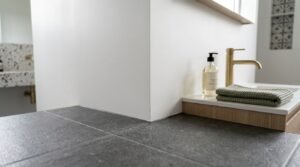
Popular Floor and Wall Colour Combinations for Sydney Bathrooms
Sydney’s bathroom design trends reflect both global influences and local conditions. Understanding popular combinations helps you make choices that feel current while maintaining long-term appeal.
Classic Combinations That Add Property Value
Certain colour combinations have proven staying power and broad appeal important if you’re renovating with resale in mind:
- White walls with grey floors: the most popular combination in Sydney renovations, offering clean aesthetics with practical dark-enough floors
- Warm white walls with timber-look floor tiles: brings natural warmth without real timber’s moisture concerns
- Soft grey walls with charcoal floors: a sophisticated monochromatic scheme that appeals to wide buyer demographics
- White walls with black-and-white patterned floors: a classic combination experiencing renewed popularity
According to Domain’s property market insights, bathrooms with neutral colour schemes and quality finishes consistently rank among the top features influencing Sydney property values.
Trending Palettes for 2025–2026
Current trends in Sydney bathroom design include:
- Warm neutrals: greige (grey-beige), warm whites, and sand tones replacing cool greys
- Terrazzo revival: speckled patterns in floors adding visual interest without bold colour
- Green accents: sage and olive tones appearing in tiles, often paired with white or cream
- Japandi influence: light timber tones with white and black accents
Trends provide useful inspiration, but we always encourage clients to prioritise combinations they’ll enjoy long-term. Bathroom renovations represent a significant investment, and overly trendy choices can date quickly.
Budget Considerations When Choosing Bathroom Floor Colours
Floor colour choices have financial implications beyond initial tile costs. Understanding these factors helps you budget accurately and maximise renovation value, and they sit alongside the broader cost planning that shapes any full bathroom renovation budget.
Cost Differences Between Light and Dark Tiles
Tile colour itself rarely affects price significantly; a white porcelain tile typically costs the same as a charcoal version from the same range. Related factors do influence costs, though:
- Grout colour: colour-matched epoxy grout costs more than standard cement grout, but the difference is modest against total project cost and worth it for longevity
- Tile size: large-format tiles cost more per square metre but require less grout and labour
- Finish type: matte finishes, better suited to dark floors, and polished finishes, sometimes preferred for light floors, vary in price by range
We recommend getting a fixed quote from your tiler once you’ve shortlisted tiles, since exact costs shift with supplier, tile range, and installation complexity.
Long-Term Value and Resale Impact
Neutral floor colours mid-grey, warm grey, greige offer the best resale value. They appeal to the widest buyer range and let future owners personalise with accessories and paint.
Very dark (black) or very light (pure white) floors polarise buyers. While striking in person, they can narrow your buyer pool when selling.
For investment properties, we find mid-toned floors that hide wear while maintaining broad appeal typically deliver the best return on renovation spend.
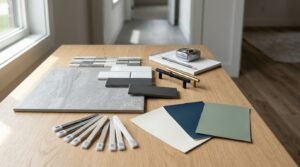
Common Mistakes to Avoid When Selecting Floor and Wall Colours
Learning from others’ errors saves time, money, and renovation regret. These are the mistakes we see most often in Sydney bathroom renovations.
Choosing colours under showroom lighting only. Showroom lighting differs dramatically from residential bathroom lighting, so we always recommend taking samples home to view in your actual space at different times of day.
Ignoring undertones. A “grey” tile can carry blue, green, or purple undertones that clash with your chosen wall colour, and warm greys can look muddy against cool-toned walls. Compare tiles and paint samples side-by-side in natural light before deciding.
Prioritising trends over practicality. That stunning black floor may look incredible in photos but shows every water drop and dust particle in daily use.
Forgetting about grout. Grout colour significantly impacts the final appearance: white grout with dark tiles creates a grid pattern, while matched grout creates seamless surfaces. We encourage clients to decide this intentionally, not as an afterthought.
Not considering the whole home. Your bathroom doesn’t exist in isolation, and floor colours visible from hallways or bedrooms should complement adjacent spaces, especially when multiple rooms are being renovated together.
Skipping professional samples. Small swatches don’t represent how colours appear across large floor areas, so we recommend requesting or purchasing larger samples before committing.
Conclusion
Choosing between lighter and darker bathroom floors depends on your specific space, lighting conditions, maintenance preferences, and design goals. Darker floors offer practical benefits and visual grounding, while lighter floors maximise brightness and perceived space in compact bathrooms.
The most successful Sydney bathroom renovations balance aesthetic preferences with practical realities. We encourage every client to weigh their bathroom’s size, natural light, daily usage patterns, and long-term maintenance commitment before finalising a floor colour choice.
At Sydney Home Renovation, we help homeowners navigate these decisions with expert guidance and transparent planning. Contact our team to discuss your bathroom renovation and create a space that works beautifully for years to come.
Frequently Asked Questions
Does a darker floor make a bathroom look smaller?
Dark floors can make bathrooms feel more intimate but don’t necessarily look smaller. Paired with light walls and adequate lighting, dark floors create grounding without shrinking perceived space.
What colour floor is best for a small bathroom?
Light to medium-toned floors work best in small bathrooms. Pale grey, warm white, or light timber tones reflect light and blur surface boundaries, making compact spaces feel larger.
Should bathroom floor tiles be matte or glossy?
Matte finishes are generally better for bathroom floors. They provide better slip resistance when wet, hide water spots and footprints, and create a more contemporary appearance.
Do light-coloured bathroom floors show dirt more?
Yes, light floors show dust, hair, and dirt more readily than dark floors. Large-format tiles with minimal grout lines and quality sealants help reduce this maintenance burden.
What is the most timeless bathroom floor colour?
Mid-toned grey remains the most timeless bathroom floor colour. It balances practicality with broad aesthetic appeal and neither dates quickly nor polarises buyers.
Can I use the same tile on bathroom floors and walls?
Yes, using the same tile on floors and walls creates seamless visual flow and can make small bathrooms feel larger. We recommend a P3 or higher slip rating for floor use and varying tile size or finish for visual interest.