The three five seven rule is one of interior design’s most reliable styling principles. It states that objects grouped in odd numbers, specifically three, five, or seven, create more visually appealing arrangements than even-numbered groupings. This simple technique transforms ordinary shelves, mantels, and surfaces into professionally styled focal points.
Whether you’re refreshing a living room, completing a bathroom renovation, or styling a newly renovated kitchen, this rule provides instant guidance. It removes the guesswork from decorating decisions and delivers results that feel balanced yet dynamic.
We’ll explain exactly how the three five seven rule works, where to apply it throughout your home, and when breaking it actually makes sense.
What Is the Three Five Seven Rule in Interior Design?
The three five seven rule is a foundational styling principle that guides how decorative objects should be grouped. Rather than arranging items in pairs or fours, designers cluster them in groups of three, five, or seven. This approach creates arrangements that feel organic, interesting, and professionally curated.
The rule applies across virtually every decorating scenario, from cushions on a sofa to vases on a console table, candles in a bathroom, or artwork on a gallery wall. The principle remains consistent regardless of the objects or room involved.
The Core Principle Behind Odd Number Groupings
Odd numbers prevent the eye from splitting a grouping into equal halves. When you place four items together, your brain automatically divides them into two pairs, creating visual predictability that feels static.
Three, five, or seven items resist this mental division. The eye must travel across the entire arrangement, spending more time appreciating each element, which makes odd-numbered groupings feel more dynamic and intentionally designed.
Why Designers Rely on 3, 5, and 7 Specifically
These specific numbers hit a sweet spot between simplicity and complexity. Three items create a focused, impactful statement. Five items add richness without overwhelming, and seven suits larger surfaces where more visual weight is needed.
Numbers beyond seven often become difficult to perceive as a single group. The eye starts treating them as multiple smaller clusters rather than one intentional arrangement. Single items work well for bold statement pieces, but most decorative objects benefit from companionship, which is exactly what this rule provides.
How the Three Five Seven Rule Creates Visual Balance
Visual balance doesn’t require perfect symmetry. Asymmetrical arrangements often feel more sophisticated and collected over time, and the three five seven rule achieves this balance through controlled asymmetry.
When we group objects in odd numbers, we create what designers call “dynamic equilibrium.” The arrangement feels stable without being rigid, with movement and interest but nothing precarious.
Breaking Symmetry Without Creating Chaos
Symmetry is safe but predictable, like two matching lamps flanking a bed or two identical vases on a mantel. These arrangements work, but they rarely excite.
Odd-numbered groupings introduce asymmetry in a controlled way. Three candlesticks of varying heights or five photographs in different frame sizes create interest while the grouping maintains cohesion.
The key is ensuring items share a unifying element. Similar colours, materials, or proportions tie the group together, because without this connection, odd numbers alone won’t save an arrangement from feeling chaotic.
The Psychology Behind Odd Numbers
Designers have observed for decades that odd numbers feel more natural because they mirror patterns found in nature. Flower petals, leaf arrangements, and fruit clusters rarely occur in perfect pairs, and this asymmetry is well documented in visual perception studies.
The Gestalt principle of grouping, first described by psychologist Max Wertheimer in the early 20th century, explains why our brains seek to organise visual elements into related sets rather than isolated pairs. Interior design leverages this natural tendency, and arrangements following the three five seven rule tap into these deep-seated visual responses.
Applying the Three Five Seven Rule Room by Room
Every room presents different opportunities for odd-numbered groupings. The scale of the space, the surfaces available, and the room’s function all influence how we apply the rule.
Living Rooms and Open-Plan Spaces
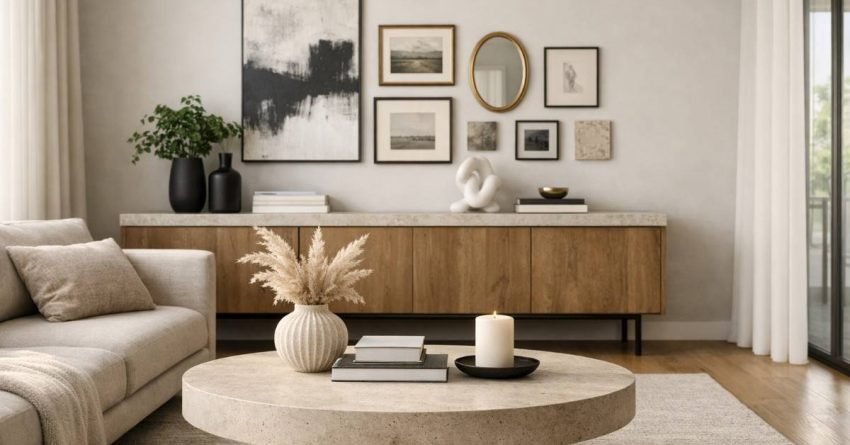
Living rooms offer abundant styling opportunities across coffee tables, console tables, bookshelves, and mantels. On a coffee table, try three stacked books topped with a small decorative object, then add a candle and small plant to create a five-piece arrangement.
Open shelving works beautifully here too. We recommend styling each shelf with three to five objects, varying heights and textures, while leaving negative space between groupings so each arrangement can breathe.
Cushion arrangements on sofas follow the same principle. Three cushions suit a two-seater, five suit a three-seater, and seven work across a large sectional, with varied sizes and patterns maintaining a cohesive colour palette.
Bedrooms and Private Retreats
Bedrooms benefit from calmer applications of the rule. A nightstand might hold three items, such as a lamp, a small plant, and a decorative box, creating function and beauty without overwhelming the space beside your bed.
Dresser tops work well with five-piece arrangements: a tray anchoring the grouping, a jewellery dish, a candle, a small vase, and a framed photo create a collected, personal display. Bedroom shelving can incorporate the rule through book groupings arranged for visual rhythm.
Bathrooms and Compact Areas
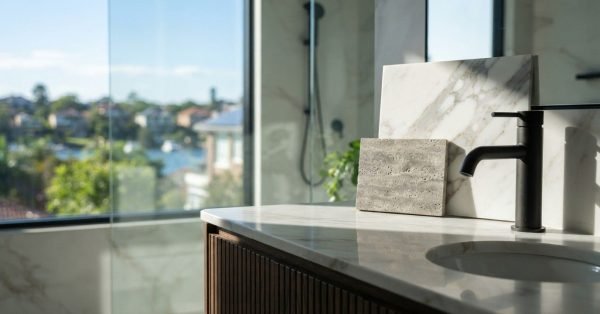
Bathroom styling requires thoughtful application because limited counter space means every item must earn its place. A vanity might feature three items, such as a soap dispenser, a small plant, and a decorative tray holding everyday essentials.
For larger counters or shelving, we expand to five items by adding a candle and a small decorative object to the core three. Open shelving, increasingly popular in bathroom renovations, benefits enormously from this rule too, whether styled with three rolled towels or five matching containers.
During bathroom renovations, we consider how built-in niches and shelving will accommodate styling from the outset. Niche dimensions that suit three or five items make ongoing styling easier, integrating design thinking into the renovation itself.
Kitchens and Dining Spaces
Kitchen styling often focuses on functional items, and the three five seven rule helps these necessities appear intentional rather than cluttered. Open kitchen shelving works beautifully with odd-numbered groupings, whether three matching canisters or five cookbooks between decorative bookends.
Dining table centrepieces follow the rule naturally too. Three candles of varying heights, five small vases with single stems, or seven fruits arranged in a bowl all create focal points without obstructing conversation.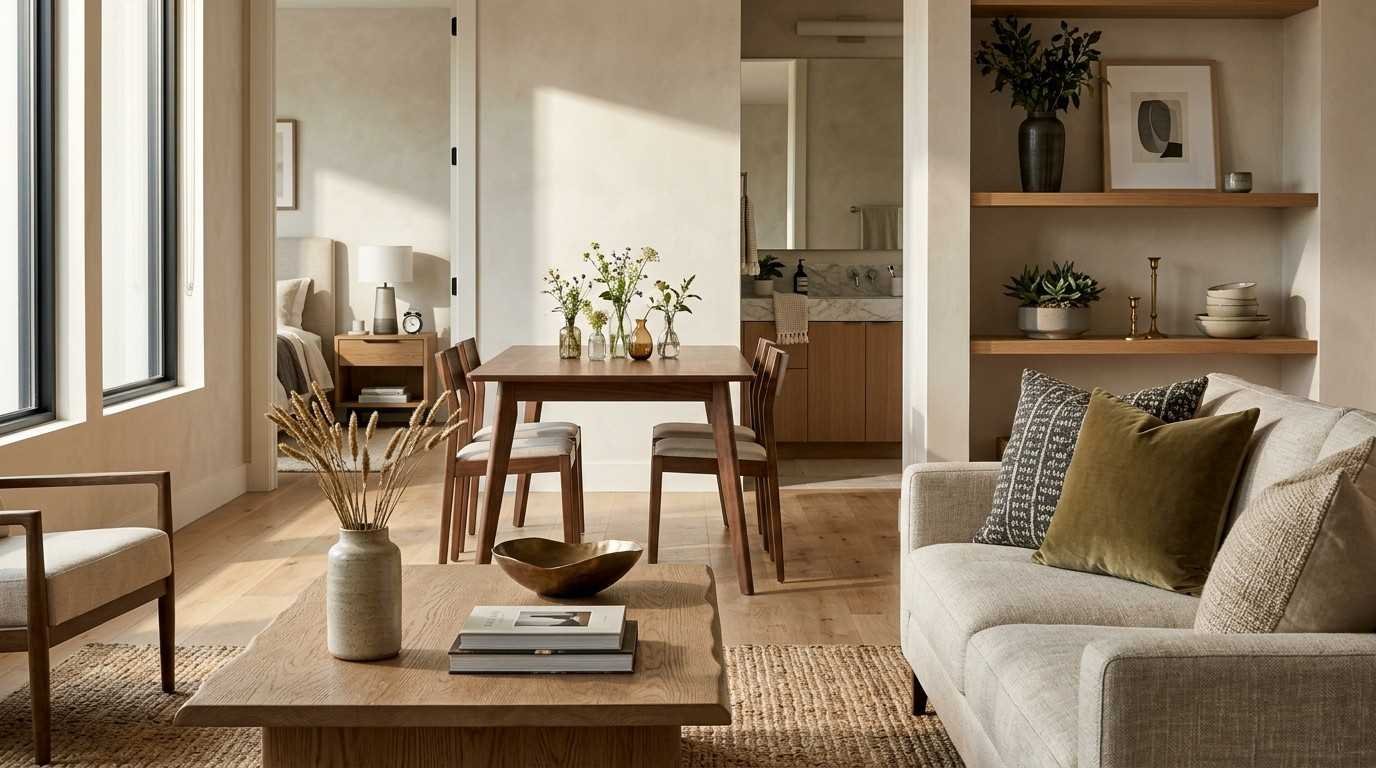
Practical Examples of the Three Five Seven Rule
Theory becomes useful through application. These examples demonstrate how the rule translates into actual styling decisions.
Styling Shelves and Mantels
For a three-item mantel arrangement, try a large central artwork flanked by two candlesticks of different heights. For five-item shelf styling, combine two stacked books, one small plant, one decorative object, and one framed photo, arranging tallest items at the back for depth.
Height variation matters as much as quantity. We arrange items so the eye travels up and down the surface, not just across it, adding dimension to flat spaces.
Arranging Cushions, Artwork, and Tablescapes
Cushions demonstrate the rule in soft furnishings. Three cushions on a sofa might include one large cushion centred with two smaller ones flanking at angles, while mixing patterns and textures adds more interest than identical options.
Gallery walls benefit from the same thinking. A five-piece arrangement might start with the largest piece slightly off-centre, with four smaller works arranged around it for balanced visual weight rather than perfect symmetry. We always recommend laying arrangements on the floor before hanging, allowing experimentation without unnecessary nail holes.
Dining table centrepieces scale the rule to match surface size. Three pillar candles of different heights on a tray, or five small bud vases with single stems, create focal points while staying low enough for conversation across the table.
Common Mistakes When Using the Three Five Seven Rule
Understanding what not to do proves as valuable as knowing correct applications.
Forcing Odd Numbers Where They Don’t Fit
The rule guides, it doesn’t dictate. Matching bedside tables with matching lamps create intentional symmetry, and forcing a third lamp would look awkward here. A single dramatic artwork might need no companions at all, since adding smaller pieces could diminish its impact.
We apply the rule where it enhances a space and ignore it where it conflicts with other valid design principles.
Ignoring Scale and Proportion
Three items of identical size often fail despite following the rule numerically. We aim for height variation within groupings, since tall, medium, and short items create more dynamic arrangements than three same-height objects.
Proportion relative to the surface matters equally. Three tiny objects on a large mantel look lost, while seven large items on a small shelf create clutter, so matching grouping scale to surface scale is essential.
When to Break the Three Five Seven Rule
Design rules exist to guide, not restrict. Understanding when to break the three five seven rule demonstrates design maturity.
Symmetrical and Minimalist Design Intentions
Formal and traditional interiors often rely on intentional symmetry, such as matching pairs flanking a fireplace or twin console tables in an entry. These arrangements serve specific aesthetic goals, and the three five seven rule doesn’t apply when perfect balance is the intention.
Minimalist design often features single statement objects or carefully considered pairs instead. A single sculptural vase on an otherwise empty surface makes a powerful minimalist statement, and adding two more objects just to follow the rule would undermine that aesthetic. We recommend understanding the design style you’re pursuing first, then applying rules that serve it.
Combining the Rule with Other Design Principles
The three five seven rule works alongside other design principles, and understanding these relationships creates more sophisticated results.
The rule of thirds divides a space into a three-by-three grid, with focal points placed at grid intersections to create balanced, engaging compositions. Combining this with three five seven groupings produces powerful results, such as positioning a three-item arrangement at a rule-of-thirds intersection.
Odd-numbered groupings also work best when unified by colour, texture, or material. Three objects in the same colour family but different shades create cohesion, while five items sharing a material, such as all ceramic or all wood, feel intentionally collected. We always consider a room’s existing colours and textures when styling, so groupings complement their surroundings rather than compete with them.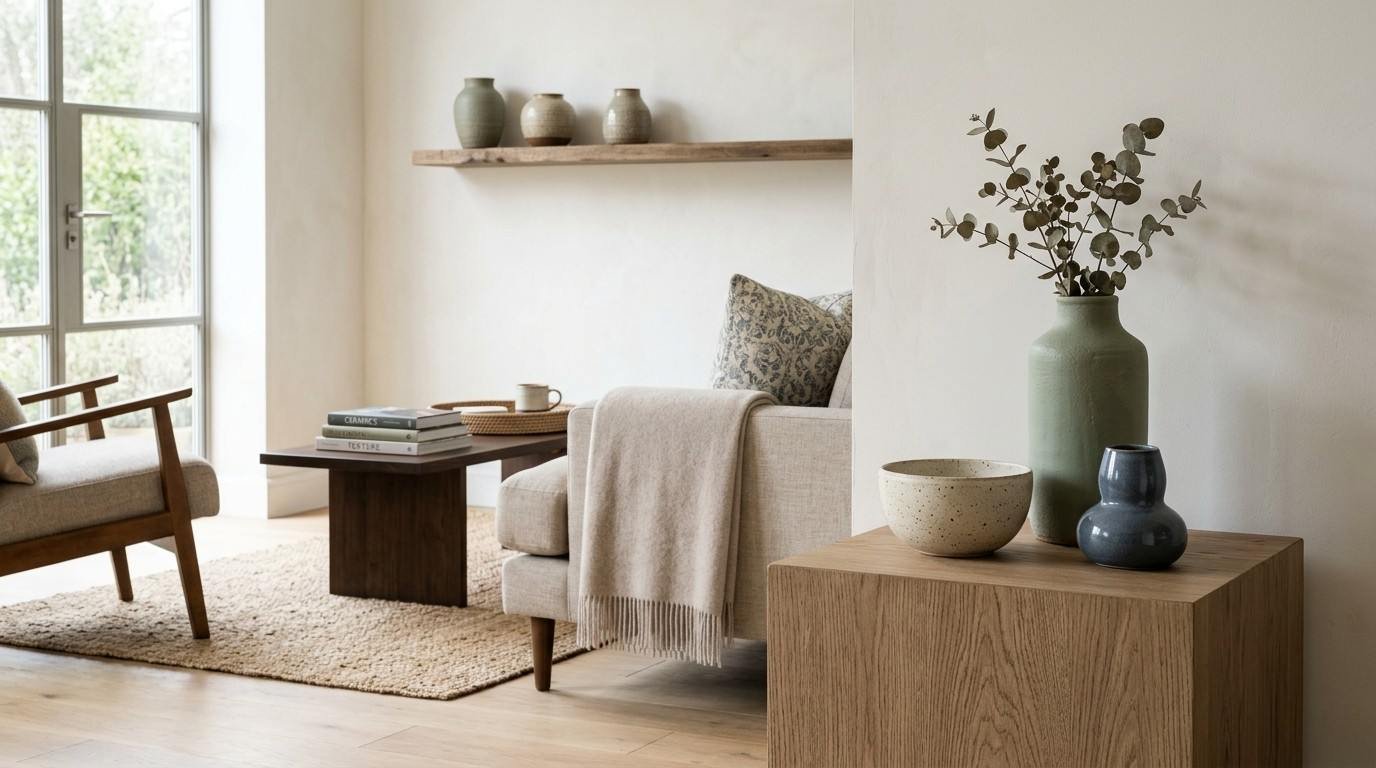
Conclusion
The three five seven rule transforms interior styling from guesswork into confident decision-making. By grouping decorative objects in odd numbers, you create arrangements that feel dynamic, balanced, and professionally curated throughout your home.
Understanding when and how to apply the rule matters as much as knowing the rule itself. Scale, proportion, and design intention all influence whether odd-numbered groupings serve your space, and sometimes symmetry or minimalism calls for a different approach entirely.
At Sydney Home Renovation, we integrate thoughtful design principles into every renovation project, from bathroom renovations with perfectly proportioned niches for styling to kitchen designs with open shelving ready for three five seven arrangements. We’d love to help you create spaces that look as good as they function, so get in touch with our team to discuss how your next renovation can incorporate design thinking from the start.
Frequently Asked Questions
What is the 3-5-7 rule in decorating?
The 3-5-7 rule states that decorative objects look most appealing when grouped in odd numbers, specifically three, five, or seven items. This principle creates visual interest because odd numbers prevent the eye from dividing arrangements into equal halves.
Does the three five seven rule work in small spaces?
Yes, the rule adapts beautifully to compact areas. In small spaces, we focus on three-item groupings to avoid visual clutter, choosing smaller-scale objects with adequate negative space around each arrangement.
How do I use the 3-5-7 rule on open shelving?
Style each shelf as its own grouping opportunity. Arrange three to five objects per shelf, varying heights and textures, and leave breathing room between items for the best visual result.
Can I mix different items when grouping in odd numbers?
Absolutely. Mixing different items creates more interesting arrangements than identical objects, as long as you maintain a unifying element like similar colours, complementary materials, or a shared theme.
Why do odd numbers look better in interior design?
Odd numbers resist visual division into equal parts. When we see four objects, our brains automatically split them into two pairs, while three, five, or seven items force the eye to travel across the entire arrangement for longer engagement.
Should I always use exactly 3, 5, or 7 items?
Not always. These numbers provide reliable guidance, but design context matters, since single statement pieces work for bold focal points and symmetrical pairs suit formal arrangements.
How does the three five seven rule apply to bathroom styling?
Bathroom styling uses the rule on vanity surfaces, open shelving, and niche displays. A three-piece vanity arrangement might include a soap dispenser, small plant, and decorative tray, while shower niches suit three rolled towels or five matching containers.