
Renovating a strata property in NSW requires body corporate approval before any significant work begins and getting that process wrong can cost you far more than the renovation itself.
Understanding the approval process is not optional. It protects your investment, keeps you on the right side of strata law, and prevents the kind of disputes that derail settlements and trigger costly rectification orders.
In this guide, I cover what triggers approval, how the application process works, what resolutions apply, and how your contractor fits into the picture.
What Counts as a Renovation in a Strata Property
Not every change to your lot requires formal body corporate consent. But the line between what does and does not need approval is less obvious than most owners expect.
Strata law in NSW draws a distinction based on the nature, scale, and location of the work. The key question is whether the renovation affects common property, structural elements, or shared building systems.
Minor Works vs. Major Works Where the Line Is Drawn
Minor works are generally cosmetic changes confined entirely within your lot. Repainting internal walls, replacing carpet with new carpet, or swapping out light fittings typically fall into this category.
Major works are a different matter. Anything that touches waterproofing membranes, load-bearing walls, plumbing stacks, or the building’s structural fabric crosses into territory that requires formal approval. The distinction matters because major works carry a higher approval threshold and a more detailed application requirement.
Common Renovation Types That Trigger Approval Requirements
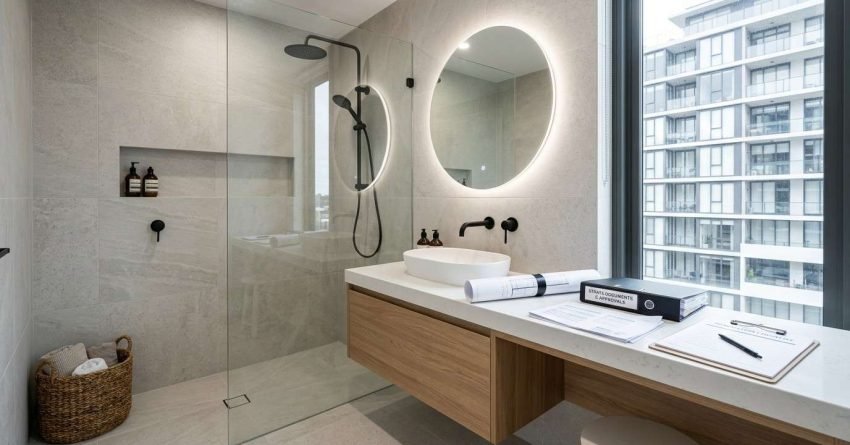
Bathroom renovations almost always require approval in a strata context. Replacing floor tiles involves the waterproofing membrane beneath them, which is typically common property in NSW strata schemes.
Kitchen renovations that involve moving plumbing, altering cabinetry connected to shared walls, or changing electrical circuits also trigger the requirement. Flooring changes from carpet to hard surfaces timber, tile, or hybrid frequently require approval too, because of acoustic impact on neighbouring lots below.
Understanding the Body Corporate’s Role in Renovation Approval
The body corporate formally called the owners corporation in NSW is the legal entity responsible for managing the strata scheme. It does not exist to obstruct renovations. Its role is to protect the collective interests of all lot owners in the building.
When you apply for renovation approval, you are asking the owners corporation to assess whether your proposed works are safe, compliant, and fair to every other owner in the scheme.
What the Body Corporate Actually Controls
The owners corporation controls everything classified as common property. That includes external walls, roofs, floors between levels, shared plumbing and drainage infrastructure, and the structural frame of the building.
It does not control the internal airspace of your lot or the fixtures and fittings you own outright. But the moment your renovation touches or penetrates common property even incidentally the owners corporation has jurisdiction.
By-Laws, Lot Boundaries, and Common Property
Every strata scheme in NSW operates under a set of by-laws registered with NSW Land Registry Services. These by-laws define what owners can and cannot do within their lots, and they often contain specific provisions about renovations.
Some schemes have renovation-specific by-laws that set out exactly what documentation is required, what hours contractors can work, and what reinstatement obligations apply if works cause damage. Reviewing your scheme’s by-laws before you plan anything is a non-negotiable first step.
How to Apply for Body Corporate Approval in NSW
The application process runs through the strata committee or, for works requiring a special resolution, through a general meeting of all owners. The process is more structured than most owners expect, and the quality of your application directly affects how quickly it moves.
A poorly prepared application missing plans, no contractor details, no insurance certificates will be deferred to the next meeting cycle. In a scheme that meets quarterly, that deferral costs you three months.
What to Include in Your Renovation Application
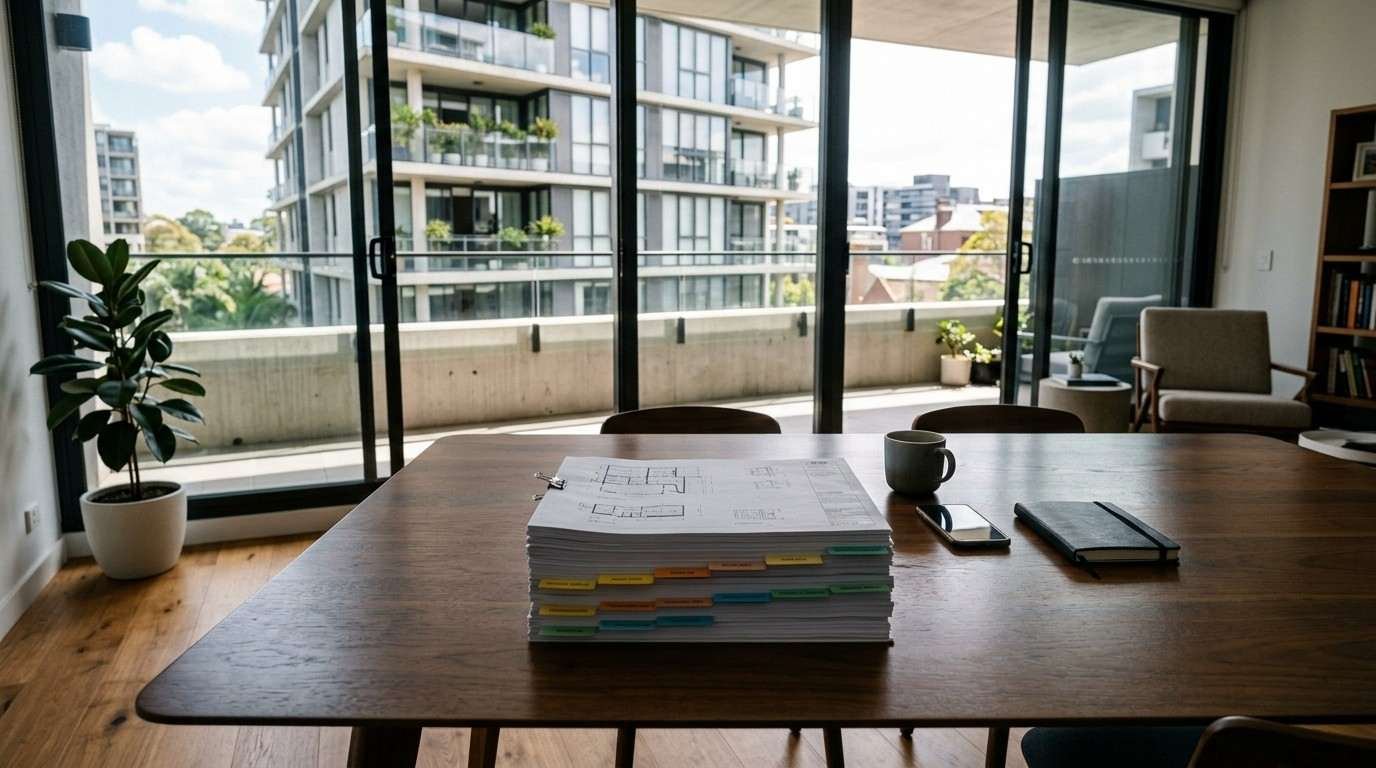
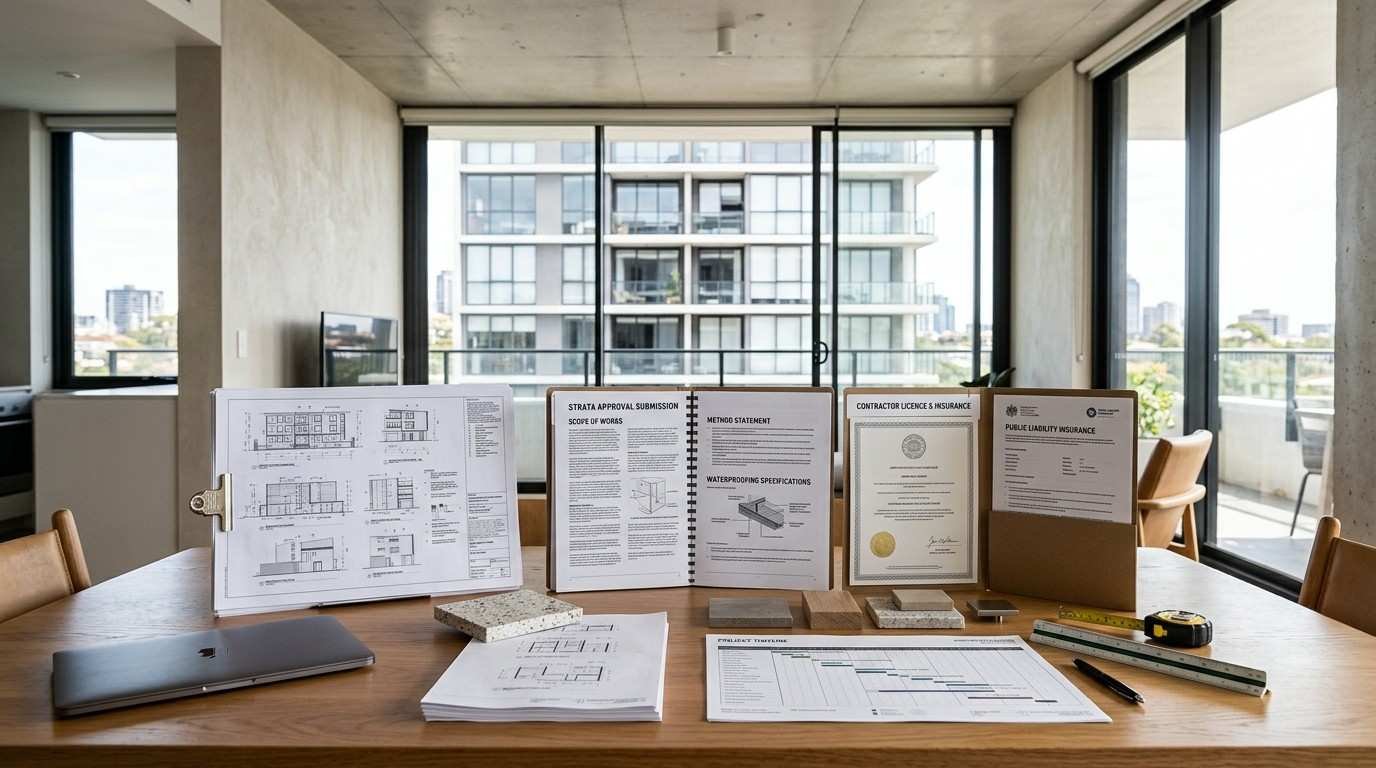
A complete renovation application for a strata scheme in NSW typically includes a written description of the proposed works, scaled plans or drawings, a full scope of works from your licensed contractor, proof of the contractor’s licence and public liability insurance, and a signed indemnity agreement holding the owners corporation harmless for any damage caused during the works.
For bathroom renovations specifically, you will also need a waterproofing specification and, in many cases, a method statement explaining how the existing waterproofing membrane will be protected or replaced. The more complete your submission, the faster it moves through the committee.
Timeframes, Meeting Cycles, and What Causes Delays
The NSW strata legislation under the Strata Schemes Management Act 2015 gives the owners corporation a reasonable timeframe to respond to renovation applications, but “reasonable” is tied to meeting cycles in practice.
Strata committees typically meet monthly or quarterly. An application submitted the week after a meeting may wait the full cycle before it is considered. Factor this into your renovation timeline a six-week buffer between application submission and expected approval is a realistic minimum for most Sydney schemes.
Delays are most commonly caused by incomplete documentation, requests for additional information from the committee, or works that require a special resolution rather than a simple committee decision.
Special Resolutions vs. Ordinary Resolutions Which Applies
Most renovation approvals in NSW are granted by the strata committee under delegated authority this is effectively an ordinary resolution process. The committee reviews the application, assesses it against the by-laws and the Act, and approves or conditions the consent.
Works that involve changes to common property in a more permanent or significant way require a special resolution passed at a general meeting of all owners. A special resolution requires that no more than 25% of votes cast are against the motion. This is a higher bar, a longer process, and a more formal setting and it is the path required for works like structural alterations or the creation of exclusive use areas over common property.
What Happens If You Renovate Without Approval
Proceeding without body corporate approval is not a grey area. It is a breach of the Strata Schemes Management Act 2015, and the consequences are real.
The owners corporation has the legal right to issue a notice requiring you to reinstate the property to its original condition at your own cost. That means ripping out completed work including new tiles, new waterproofing, new cabinetry and restoring what was there before.
Rectification Orders, Fines, and Resale Complications
Beyond reinstatement notices, the owners corporation can apply to the NSW Civil and Administrative Tribunal (NCAT) for a rectification order. NCAT has broad powers to compel owners to undo unapproved works, and it can award costs against the non-compliant owner.
Unapproved works also create serious complications at the point of sale. A section 184 certificate required in every strata property sale in NSW discloses outstanding notices and orders against the lot. Unapproved works that have generated a notice will appear on that certificate and can kill a sale or force a significant price reduction. Getting approval before you start is always cheaper than dealing with the consequences after.
Working With Your Contractor to Navigate the Approval Process
A licensed contractor who understands strata renovation requirements is not just a tradesperson they are a critical part of your approval strategy. The documentation they provide directly determines whether your application succeeds on the first submission or gets deferred.
At Sydney Home Renovation, we prepare the full documentation package as part of our project process. Scope of works, waterproofing specifications, insurance certificates, method statements we have done this enough times to know exactly what strata committees in Sydney expect to see.
Documentation Your Contractor Should Provide
Your contractor should supply a detailed scope of works written clearly enough for a non-technical strata committee to understand. Vague descriptions like “bathroom renovation” are not sufficient the committee needs to know exactly what is being done, what materials are being used, and how common property is being protected or reinstated.
They should also provide a current certificate of currency for public liability insurance (minimum $20 million is standard for most Sydney strata schemes), a copy of their contractor licence, and a signed acknowledgement of the scheme’s by-laws and working hours restrictions. A contractor who cannot produce these documents promptly is not ready to work in a strata building.
Frequently Asked Questions
Do I need body corporate approval for a bathroom renovation in a strata property?
Yes, in almost every case. Bathroom renovations in NSW strata properties involve waterproofing membranes, which are classified as common property. Any work affecting common property requires owners corporation consent before it begins.
How long does body corporate approval take in NSW?
Approval timelines depend on the scheme’s meeting cycle and the completeness of your application. A well-prepared application submitted to an active strata committee can be approved within four to six weeks. Incomplete applications or works requiring a special resolution can take three to six months.
What is the difference between an ordinary resolution and a special resolution in strata?
An ordinary resolution is passed by a simple majority of votes at a meeting or by the strata committee under delegated authority. A special resolution requires that no more than 25% of votes cast oppose the motion it applies to more significant changes affecting common property.
Can the body corporate refuse my renovation application?
Yes. The owners corporation can refuse an application that does not comply with the by-laws, poses a risk to common property, or lacks sufficient documentation. A refusal is not final you can address the committee’s concerns and resubmit, or dispute the decision through NCAT.
What happens if I sell my strata property after doing unapproved renovations?
Unapproved works that have generated notices or orders will appear on the section 184 certificate required for every strata sale in NSW. This can delay settlement, reduce your sale price, or require you to rectify the works before the sale proceeds.
Can I start renovation work while waiting for body corporate approval?
No. Work must not begin until written approval is received. Starting before approval is granted is a breach of the Strata Schemes Management Act 2015 and exposes you to rectification orders and NCAT proceedings regardless of how reasonable the works are.
Does my contractor need to be licensed to work in a strata building?
Yes. All renovation work in NSW must be carried out by a licensed contractor. Strata committees routinely require proof of licence and current public liability insurance as part of the approval application and they are right to do so.
Conclusion
Strata renovation approval in NSW is a structured process with real legal weight behind it. Understanding the distinction between minor and major works, knowing what the owners corporation controls, and submitting a complete application the first time are the three things that separate a smooth renovation from a costly dispute.
The approval process protects every owner in the scheme including you. Working within it is not a bureaucratic hurdle; it is how strata renovation gets done properly.
At Sydney Home Renovation, we manage the full approval documentation process alongside the build itself. Reach out to our team before your renovation planning goes any further getting the process right from the start is always the better investment.


