Laundry waterproofing is not optional it is a mandatory part of any compliant wet area renovation in Australia, governed by AS 3740 and enforced through the National Construction Code. Get it wrong and you are looking at structural water damage, failed inspections, and a renovation that has to be ripped out and redone.
Understanding the requirements upfront saves money, time, and serious headaches down the track. This guide covers everything you need to know.
We walk through the standards, the mandatory zones, membrane types, the on-site process, common failures, costs in Sydney, and licensing rules so you can plan your laundry renovation with confidence.
What Is Laundry Waterproofing and Why It Matters
Laundry waterproofing is the process of applying a continuous, impermeable membrane to the floor and walls of a laundry wet area to prevent water from penetrating the substrate and causing structural damage. It is a non-negotiable part of any compliant laundry renovation in Australia.
Water gets into places you cannot see. And once it does, the damage compounds quietly behind tiles, inside wall cavities, and beneath the subfloor before you notice anything on the surface.
That is why waterproofing is treated as a structural protection measure not just a finishing step.
The Difference Between Waterproofing and Water Resistance
Waterproofing and water resistance are not the same thing, and confusing them is one of the most common mistakes I see in laundry renovations.
Water resistance means a surface slows water penetration. Waterproofing means water cannot penetrate at all. Only a correctly applied, compliant membrane delivers true waterproofing.
Grout, standard render, and most tile adhesives are water resistant not waterproof. They rely on the membrane beneath them to do the real work.
Where Water Damage Starts in a Laundry Room
Most water damage in a laundry starts at the floor-to-wall junction, around the drain, and behind the laundry tub. These are the points where movement, vibration from appliances, and daily water exposure combine.
Once moisture gets past the tile layer, it saturates the substrate. From there it travels into the subfloor, into wall framing, and eventually into adjoining rooms.
The repair bill for that kind of damage is always far higher than the cost of getting the waterproofing right the first time.
Australian Standards for Laundry Waterproofing
In Australia, laundry waterproofing is governed by AS 3740-2021, the Australian Standard for Waterproofing of Domestic Wet Areas. This standard sets out the minimum requirements for materials, application methods, and coverage zones in all domestic wet areas including laundries.
Compliance with AS 3740 is required under the National Construction Code. It is not a guideline. It is the legal baseline.
Every licensed waterproofer in NSW works to this standard, and any renovation that bypasses it creates liability for the homeowner and the tradesperson.
AS 3740 The Governing Standard Explained
AS 3740 defines what a wet area is, how membranes must be applied, what coverage zones are mandatory, and what minimum membrane thickness and cure times are required. It also specifies how junctions floor-to-wall, wall-to-wall, and around penetrations must be treated.
The standard was updated in 2021 and the current version is the one your waterproofer must work to. Older versions are no longer compliant for new work.
I always recommend asking your waterproofer to confirm they are working to the 2021 edition before work starts.
Wet Area Classifications and What They Mean for Your Laundry
AS 3740 classifies wet areas into three types based on water exposure. A laundry typically falls under Class 1 or Class 2 depending on whether it has a shower or just a tub and appliances.
Class 1 areas like a laundry with a shower require full floor and wall waterproofing to specified heights. Class 2 areas a standard laundry with a tub and washing machine still require floor waterproofing and wall waterproofing in defined splash zones.
Knowing your classification determines exactly where the membrane must go and how high it must run up the walls.
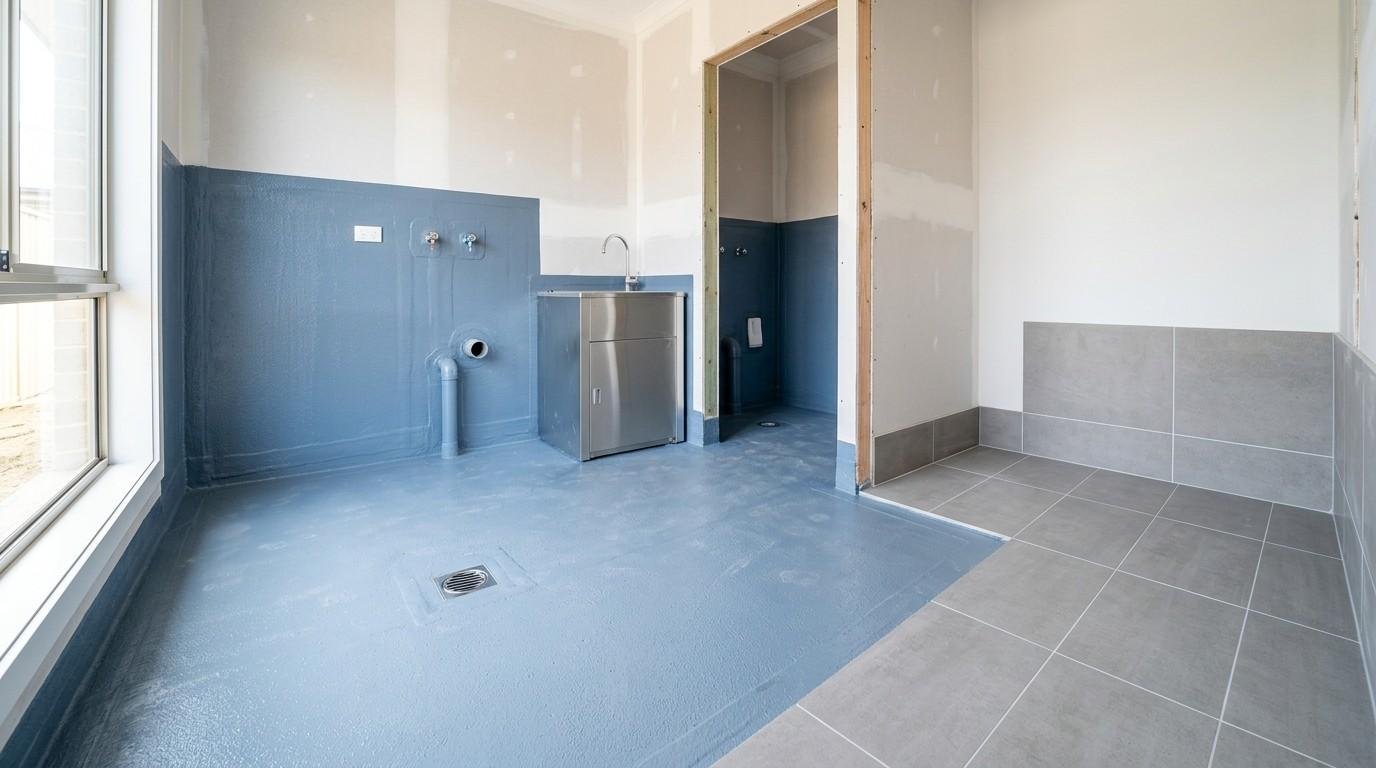
Mandatory Waterproofing Zones in a Laundry
The standard defines specific zones where waterproofing is mandatory. These are not suggestions they are the minimum areas that must be covered for a compliant installation.
Missing any of these zones means the waterproofing is non-compliant, regardless of how well the rest was done.
Floor Waterproofing Requirements
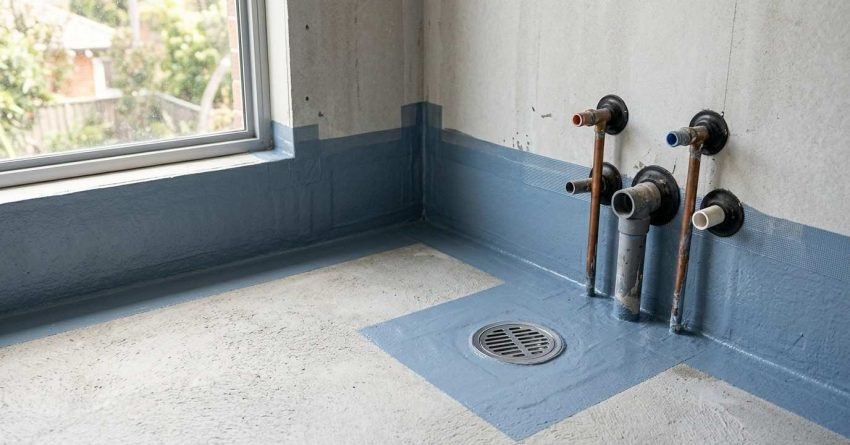
The entire floor of a laundry wet area must be waterproofed. This includes the full floor area, the drain surround, and the floor-to-wall junction which must be treated with a cove or fillet to create a continuous, sealed transition.
The membrane must extend at least 50mm up the wall at the floor junction. In practice, most licensed waterproofers run it higher to provide a buffer.
The drain must be integrated into the membrane system so water cannot bypass the seal at the drain collar.
Wall Waterproofing Requirements
Wall waterproofing requirements depend on the wet area classification and the proximity to water sources. In a standard laundry, walls within 1,500mm of the laundry tub must be waterproofed to a minimum height of 150mm above the finished floor level.
Walls adjacent to a shower if the laundry includes one require full-height waterproofing to the showerhead height plus 150mm.
These heights are minimums. Many builders and waterproofers go higher as a matter of good practice, particularly on walls that face direct water spray.
Around Fixtures Tubs, Sinks, and Appliances
The junction between the laundry tub and the wall is a mandatory waterproofing zone. The membrane must be continuous behind and around the tub, with no gaps at the fixture-to-wall interface.
Washing machine bays are a common oversight. The floor beneath and around the machine must be fully waterproofed vibration from the machine creates movement that can crack grout and tile adhesive over time, and water from hose failures or overflow needs somewhere compliant to go.
Penetrations pipes, waste outlets, and any service entry points must be sealed into the membrane system individually.
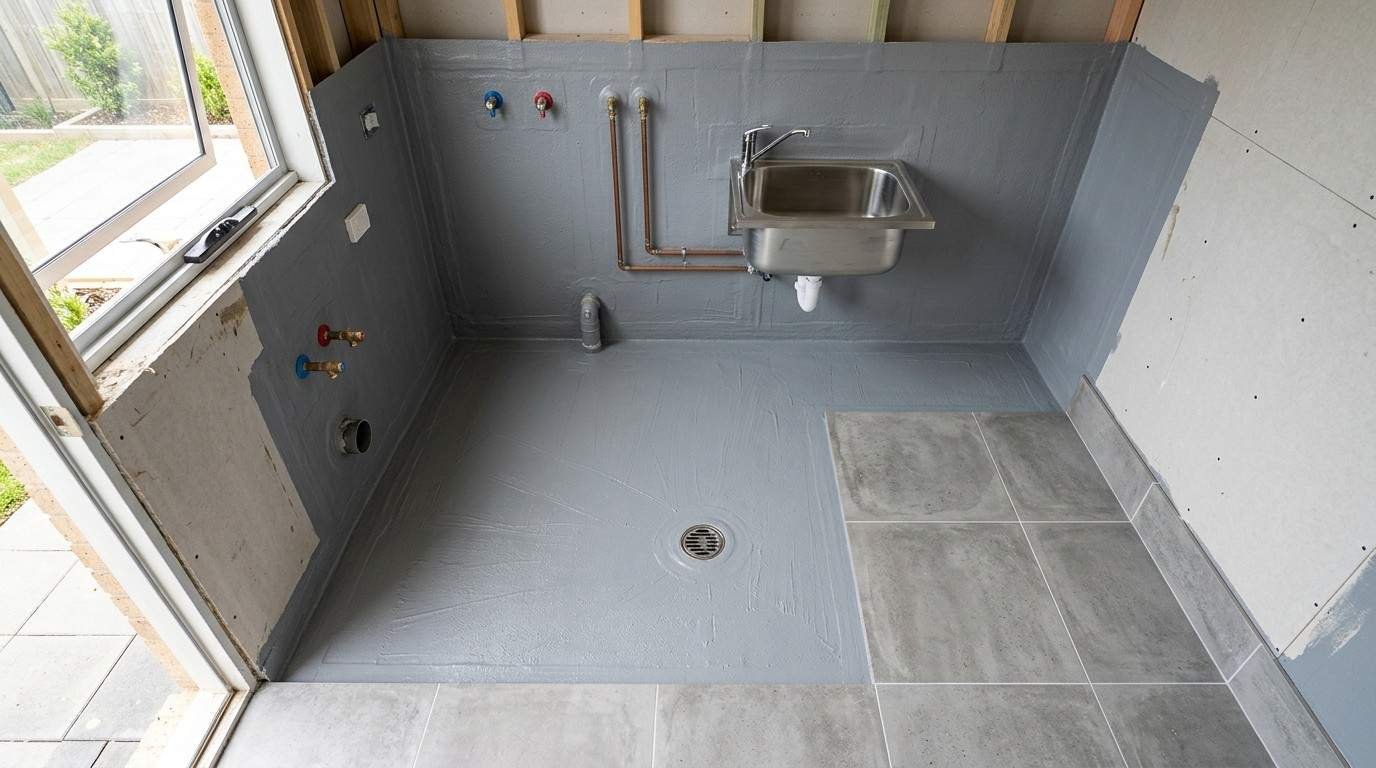
Waterproofing Membranes Types and How to Choose
The membrane is the core of the waterproofing system. Choosing the right one for your laundry depends on the substrate, the level of movement expected, and the application conditions on site.
There are two primary membrane categories used in domestic laundry waterproofing in Australia.
Liquid-Applied Membranes
Liquid-applied membranes are the most common choice for domestic laundries. They are brush, roller, or trowel-applied directly to the prepared substrate and cure to form a seamless, flexible waterproof layer.
The most widely used types are polyurethane and acrylic-based systems. Polyurethane membranes offer excellent flexibility and bond strength, making them well-suited to substrates with minor movement. Acrylic systems are easier to apply and dry faster, which suits tighter renovation timelines.
Liquid membranes conform to irregular surfaces and penetrations more easily than sheet alternatives which is why they dominate in residential laundry work.
Sheet Membranes
Sheet membranes are pre-formed, factory-manufactured panels bonded directly to the substrate. They offer consistent thickness across the application area and are less dependent on applicator technique for achieving a uniform result.
They are more commonly used in commercial applications or where substrate conditions make liquid application difficult. In residential laundries, they appear less frequently but are a legitimate compliant option when specified correctly.
Joints and overlaps in sheet membranes require careful sealing this is where failures occur if the installation is rushed.
Choosing the Right Membrane for Your Laundry
For most Sydney laundry renovations, a liquid-applied polyurethane or acrylic membrane is the right call. It handles the substrate movement that comes with timber-framed construction, applies cleanly around penetrations and junctions, and is well understood by licensed waterproofers across the industry.
The decision should also factor in the tile adhesive and grout system being used the membrane, adhesive, and grout need to be compatible. A good waterproofer specifies these as a system, not as individual products.
Budget matters too, but it should not drive the membrane selection below the minimum performance threshold required by AS 3740.
The Waterproofing Process What Happens on Site
Understanding the process helps you manage the renovation timeline and know what to expect at each stage. Waterproofing is not a one-day job it has mandatory wait times built in that cannot be compressed without compromising the result.
Surface Preparation
Surface preparation is the step that determines whether the membrane performs or fails. The substrate must be clean, dry, structurally sound, and free of any contamination dust, oil, curing compounds, or loose material.
Cracks and voids in the substrate are filled and allowed to cure before the membrane goes on. Any movement joints in the substrate must be carried through the membrane system bridging over them creates a failure point.
Priming is applied to the prepared substrate before the membrane. The primer improves adhesion and seals the substrate surface to prevent the membrane from being drawn into the substrate unevenly.
Membrane Application and Cure Times
Liquid membranes are applied in a minimum of two coats, with the first coat allowed to cure fully before the second is applied. The total dry film thickness must meet the minimum specified in AS 3740 typically 1.0mm for domestic wet areas, though product specifications may require more.
Cure times between coats and before tiling vary by product and site conditions temperature and humidity both affect cure rates. In Sydney’s climate, a minimum of 24 hours between coats is standard, with a full cure of 48–72 hours before tiling begins.
Rushing this step is one of the most common causes of waterproofing failure. The membrane must be fully cured before any load or adhesive is applied.
Inspection and Sign-Off Before Tiling
In NSW, waterproofing in a wet area must be inspected and certified before it is covered by tiles. This is a mandatory hold point in the construction process.
The inspection confirms that the membrane has been applied to the correct zones, at the correct thickness, with all junctions and penetrations correctly treated. A certificate of waterproofing is issued by the licensed waterproofer and forms part of the compliance documentation for the renovation.
Tiling cannot legally begin until this sign-off is in place. Any builder or tiler who proceeds without it is creating a compliance and liability problem for everyone involved.
Common Waterproofing Failures and How to Avoid Them
Most waterproofing failures in laundries are not random they follow predictable patterns. Knowing where they happen means you can ask the right questions and catch problems before they are tiled over.
Skipping the Cove and Corner Details
The floor-to-wall junction is the highest-risk point in any laundry waterproofing installation. Water pools at this junction, and movement between the floor and wall substrate creates stress that a flat membrane application cannot handle alone.
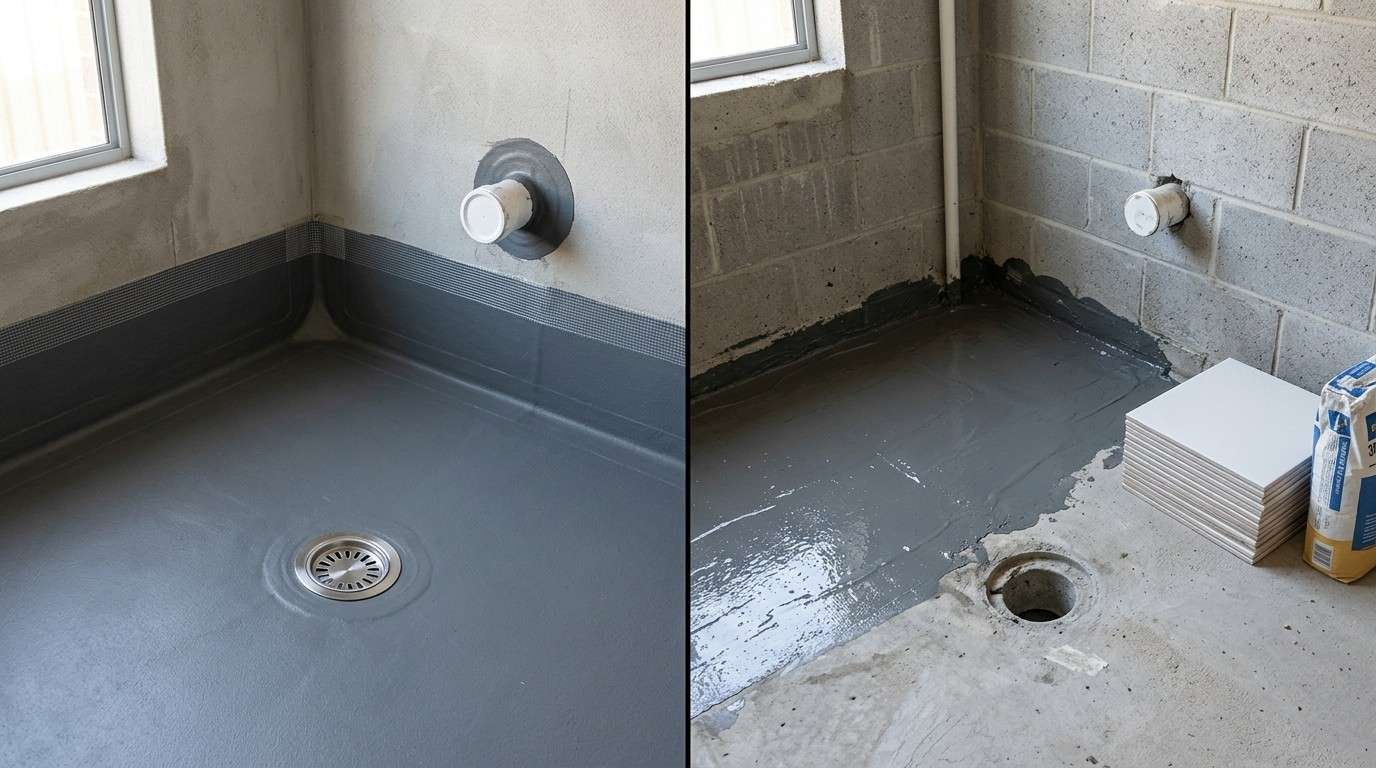
A correctly installed cove bead or fillet at this junction creates a curved transition that the membrane bridges smoothly. Without it, the membrane is applied at a sharp 90-degree angle a point of stress concentration that cracks under movement.
Corner reinforcement fabric or mesh embedded in the membrane at internal corners is equally important and equally skipped by waterproofers cutting corners on time or cost.
Inadequate Cure Time Before Tiling
Tiling over an uncured membrane is the single most common cause of waterproofing system failure I see in renovation defect work. The tile adhesive bonds to the surface of the membrane before it has fully cured, which prevents the membrane from completing its cure cycle properly.
The result is a membrane that never reaches its specified performance it remains soft, loses adhesion to the substrate, and eventually allows water through.
The fix is simple: wait. Follow the manufacturer’s specified cure time, account for site conditions, and do not let schedule pressure override the process.
Waterproofing Costs for a Laundry in Sydney
Laundry waterproofing in Sydney typically costs between $400 and $900 for a standard residential laundry, depending on the size of the area, the membrane system specified, and the complexity of the installation.
This is a small line item in the context of a full laundry renovation and one of the worst places to cut costs.
What Affects the Price
The main cost drivers are floor area, wall coverage required, the number of penetrations and fixtures to seal, and the membrane product specified. A laundry with a shower adds significant wall coverage and increases the cost accordingly.
Labour rates in Sydney also vary between waterproofing contractors. A licensed waterproofer with documented experience in AS 3740 compliance will cost more than an unlicensed operator and is worth every dollar.
Getting two or three quotes from licensed waterproofers is sensible. Getting the cheapest quote from an unlicensed one is not.
Do You Need a Licensed Waterproofer?
Yes. In NSW, waterproofing of wet areas is classified as specialist work and must be carried out by a licensed contractor. This is not a grey area.
Unlicensed waterproofing work is illegal, non-compliant, and uninsurable. It also voids any warranty on the membrane product.
Licensing Requirements in NSW
In NSW, waterproofing is a licensed trade under the NSW Fair Trading contractor licensing framework. A waterproofer must hold a current contractor licence with the appropriate licence class to legally carry out wet area waterproofing work.
You can verify a contractor’s licence on the NSW Fair Trading licence check tool before engaging them. This takes two minutes and protects you from significant legal and financial exposure.
The licensed waterproofer is also the person who issues the waterproofing certificate which is a mandatory compliance document for your renovation.
Frequently Asked Questions
What does AS 3740 require for a laundry?
AS 3740 requires full floor waterproofing, wall waterproofing in defined splash zones, sealed penetrations, and correctly treated floor-to-wall junctions. The standard specifies minimum membrane thickness, cure times, and coverage zones for all domestic wet areas including laundries.
Does the entire laundry floor need to be waterproofed?
Yes. The entire floor area of a laundry wet area must be waterproofed under AS 3740, including the drain surround and the floor-to-wall junction. There is no minimum floor area threshold the whole floor is a mandatory zone.
How high up the walls does waterproofing need to go?
In a standard laundry without a shower, walls within 1,500mm of the laundry tub must be waterproofed to a minimum of 150mm above the finished floor level. Walls adjacent to a shower require full-height waterproofing to the showerhead height plus 150mm.
Can I waterproof my laundry myself?
No. In NSW, wet area waterproofing is licensed specialist work. It must be carried out by a licensed contractor who can issue a waterproofing certificate. Unlicensed waterproofing is non-compliant, illegal, and uninsurable.
How long does waterproofing take to cure before tiling?
Cure times depend on the membrane product and site conditions. As a general rule, allow a minimum of 24 hours between coats and 48–72 hours of full cure before tiling begins. Always follow the manufacturer’s specified cure time rushing this step causes membrane failure.
How do I know if my laundry waterproofing has failed?
Common signs include grout cracking or lifting, tiles becoming loose or hollow-sounding, damp patches on walls or ceilings in adjoining rooms, and musty odours. By the time these signs appear, water has already been penetrating the substrate for some time.
How much does laundry waterproofing cost in Sydney?
A standard residential laundry waterproofing job in Sydney typically costs between $400 and $900. The price varies based on floor area, wall coverage, the number of penetrations, and the membrane system used. A laundry that includes a shower will cost more due to the additional wall coverage required.
Conclusion
Laundry waterproofing requirements exist for good reason water damage behind tiles is expensive, disruptive, and entirely preventable. Getting the membrane right, working to AS 3740, and using a licensed waterproofer are the three non-negotiables in any compliant laundry renovation.
The cost of doing it correctly is a fraction of the cost of fixing it when it fails. Every dollar spent on proper waterproofing protects the structure, the finishes, and the long-term value of the property.
At Sydney Home Renovation, we handle laundry waterproofing as part of a fully coordinated renovation process compliant, certified, and built to last. Get in touch with our team to discuss your laundry renovation and get a clear, honest quote.