
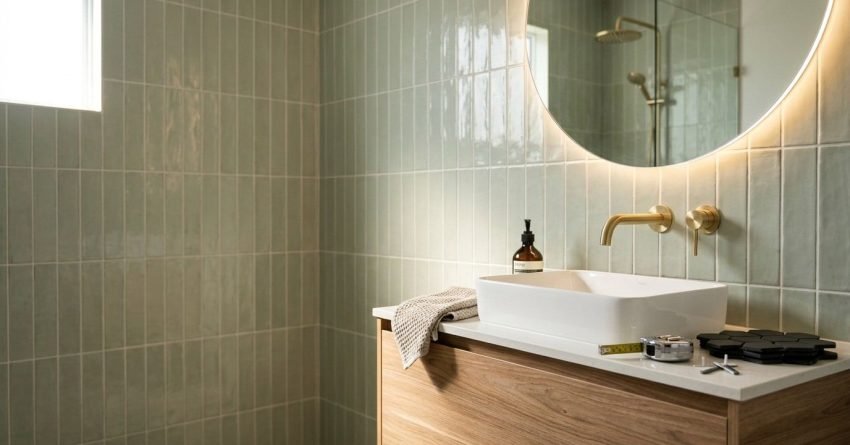
A small bathroom renovation in Australia typically costs between $10,000 and $25,000, depending on your materials, fixtures, and the scope of work involved. For the Sydney homeowners we work with, prices sit at the higher end of that range because labour rates and compliance requirements here run above the national average.
Understanding where your money actually goes is what stops a budget blowout before it starts. Whether you are updating a dated ensuite or preparing a property for sale, knowing the real numbers upfront puts you in control of the conversation with your builder.
I have broken down every expense category below, including the hidden costs most renovators never see coming. You will finish this guide knowing what your bathroom should cost and why.
What Is the Average Cost of a Small Bathroom Renovation in Australia?
The cost of renovating a small bathroom varies widely across the country. Location, material quality, and project complexity all move the final number, and the gap between the cheapest and dearest quote on the same job is often 40% or more.
A small bathroom renovation in Australia costs $10,000 to $25,000 for most projects. Budget refreshes start near $10,000, mid-range renovations land at $15,000 to $25,000, and premium work exceeds $25,000. Expressed by area, expect $2,000 to $5,000 per square metre depending on finish quality and structural work.
National Average Price Ranges for 2025-2026
Across Australia, small bathroom renovations under 5 square metres generally fall into three brackets:
- Budget renovations: $10,000–$15,000
- Mid-range renovations: $15,000–$25,000
- High-end renovations: $25,000–$40,000+
These figures cover labour, materials, fixtures, and standard compliance work. Industry cost tracking from Master Builders Australia puts the national average near $17,000–$20,000 for a complete small bathroom with mid-range finishes, and that matches what I see quoted in the market.
Sydney-Specific Bathroom Renovation Costs
Sydney costs run roughly 15–25% above the national average. Higher trade rates, tighter compliance enforcement, and material transport all push the number up, and we factor every one of those into our quotes rather than discovering them mid-job.
For a small bathroom in Sydney, expect:
- Basic refresh: $12,000–$18,000
- Full renovation with mid-range finishes: $18,000–$28,000
- Premium renovation: $30,000–$45,000+
Inner-city and Northern Beaches suburbs land at the upper end. Access difficulty and parking restrictions stretch timelines, and stretched timelines cost money on every trade.
Small Bathroom Renovation Cost Breakdown by Category
Knowing where each dollar lands lets you prioritise spending and spot real savings. Here is how costs distribute across a standard small bathroom renovation.
Labour Costs and Trade Fees
Labour represents 40–50% of your total budget. A small bathroom still requires multiple licensed trades working in strict sequence, and that sequence is why compressing a schedule rarely saves anything.
| Trade | Estimated Cost |
| Demolition and removal | $500–$1,500 |
| Plumber | $1,500–$4,000 |
| Electrician | $800–$2,000 |
| Waterproofer | $800–$1,500 |
| Tiler | $1,500–$3,500 |
| Carpenter/builder | $1,000–$2,500 |
| Painter | $400–$800 |
Project management and coordination adds another $500–$1,500 when you engage a renovation contractor instead of running the trades yourself. That fee buys you sequencing, and poor sequencing is the most expensive mistake in this trade.
Materials and Fixtures Allowance
Materials account for 30–40% of your budget, covering tiles, adhesives, grout, cement sheeting, and every finishing product. Typical material costs break down as follows:
- Floor and wall tiles: $500–$3,000 depending on quality
- Cement sheeting and substrate: $300–$600
- Adhesives, grout and sealants: $200–$400
- Paint and finishing: $150–$300
Higher-grade porcelain tiles cost more upfront and outlast ceramic in a wet area by years. I specify porcelain on almost every bathroom I price.
Plumbing and Electrical Work
Plumbing and electrical work form the backbone of the job. These costs swing hard depending on whether you keep the existing layout or relocate fixtures.
Plumbing estimates:
- Replace existing fixtures in the same location: $1,500–$2,500
- Relocate toilet or shower: $2,500–$5,000+
- New hot water connections: $500–$1,200
Electrical estimates:
- Update existing circuits and lighting: $800–$1,500
- Add a heated towel rail: $300–$600
- Install an exhaust fan: $200–$500
- Relocate power points: $150–$300 per point
Moving plumbing even 500mm adds thousands once drainage falls and concrete cutting come into play. That single decision separates a $15,000 bathroom from a $22,000 one more often than any fixture choice does.
Waterproofing and Tiling Expenses
Waterproofing is non-negotiable in Australian bathrooms. Every wet area must comply with AS 3740; the work requires a licensed waterproofer, and you receive a certificate of compliance on completion.
Waterproofing costs:
- Standard shower and floor waterproofing: $800–$1,500
- Full bathroom waterproofing: $1,200–$2,000
- Membrane materials: $200–$400
Tiling costs:
- Labour for a small bathroom: $1,000–$2,500
- Complex patterns or large-format tiles: add 20–30%
- Niche installation: $150–$300 each
Waterproofing failures drive the majority of bathroom-related insurance claims, and a failed membrane means the tiles come off and the job gets done twice. Keep your certificate somewhere safe, because it is the document that protects you at resale and at claim time. We never let a tiler start until the membrane has cured and been signed off.
Factors That Affect Your Bathroom Renovation Budget
No two bathroom renovations are priced the same. Several variables push a project above or below the averages above.
Bathroom Size and Layout Complexity
Smaller bathrooms use fewer materials, and they do not cost proportionally less. Tight spaces demand more precise work and slow every trade down, which is why the per-square-metre rate climbs as the room shrinks.
A 3-square-metre bathroom prices at $2,500–$3,500 per square metre. A 6-square-metre space averages $2,000–$2,800 per square metre through simple economies of scale. Complex layouts with multiple angles, niches or custom features add labour hours and material waste on top of that.
An ensuite typically costs 10–20% less than a main bathroom of the same footprint, because it carries fewer fixtures and often no bath. Main bathrooms also tend to get better finishes, since they are the room guests and buyers actually see.
Quality of Fixtures and Fittings
Fixture selection creates the widest variance in any bathroom budget. The spread between entry-level and premium is substantial:
| Fixture | Budget | Mid-Range | Premium |
| Toilet | $200–$400 | $500–$900 | $1,000–$3,000 |
| Vanity with basin | $300–$600 | $800–$1,500 | $2,000–$5,000+ |
| Shower screen | $400–$700 | $800–$1,500 | $1,500–$3,500 |
| Tapware set | $150–$300 | $400–$800 | $1,000–$2,500 |
| Mirror/cabinet | $100–$300 | $400–$800 | $1,000–$2,000 |
Mid-range fixtures give most homeowners the best balance of quality, durability, and value. I steer clients there unless the property value justifies going further.
Structural Changes and Plumbing Relocations
Moving walls, windows, or plumbing positions escalates costs fast. Structural modifications trigger engineering assessments and council approval, and both add time as well as fees.
Cost impacts:
- Remove a non-load-bearing wall: $1,000–$3,000
- Modify a load-bearing wall: $3,000–$8,000+
- Relocate a toilet waste line: $2,000–$5,000
- Move a shower drain: $1,500–$3,500
Keeping fixtures where they are saves thousands and cuts project complexity. Structural work on this scale is assessed and costed the same way it is on larger home extension projects, so the engineering and approval overhead applies whether the room is small or not.
Access Difficulties and Site Conditions
Sydney properties throw up access challenges that quietly inflate quotes:
- Multi-storey buildings without lifts: add 10–20% for manual material handling
- Limited street parking: permit costs and slower deliveries
- Narrow hallways or doorways: smaller material sizes or extra handling
- Strata properties: body corporate approvals and restricted work hours
Older homes bring a second layer of risk. Outdated plumbing and electrical need upgrading to current codes the moment we open a wall, and that upgrade is rarely optional.
Hidden Costs in Bathroom Renovations You Must Plan For
Unexpected expenses cause more budget blowouts than any other factor. These are the ones that catch first-time renovators.
Asbestos Testing and Removal
Homes built before 1990 often contain asbestos in wall linings, floor tiles, or adhesives. Testing happens before demolition, not during it.
Asbestos-related costs:
- Testing and inspection: $200–$500
- Removal under 10 square metres: $1,500–$4,000
- Larger removal projects: $4,000–$10,000+
Licensed removalists must handle this work. Under Safe Work Australia’s asbestos regulations, unlicensed removal is illegal and genuinely dangerous, so we test first on every pre-1990 property.
Council Permits and Compliance Certificates
Cosmetic bathroom updates rarely need council approval. Structural changes, plumbing relocations affecting external drainage, and work on heritage properties all do.
Permit and compliance costs:
- Development application where required: $500–$2,000+
- Plumbing compliance certificate: $150–$300
- Waterproofing certificate: included with a licensed waterproofer
- Final inspection fees: $200–$400
Your contractor identifies which permits apply before work starts. We confirm this in writing at the quote stage so nothing stalls the job later.
Unexpected Repairs and Remediation Work
Once walls and floors come out, hidden problems surface:
- Water damage and rot: $500–$3,000+
- Termite damage: $1,000–$5,000+
- Corroded pipes: $500–$2,000 to replace
- Faulty electrical wiring: $500–$1,500 to upgrade
- Subfloor damage: $1,000–$3,000
None of this is visible during a quote inspection. A contingency budget is what turns these discoveries into an inconvenience instead of a crisis.
Temporary Bathroom Arrangements
Single-bathroom homes need an alternative during the works, and a small bathroom renovation runs 2–4 weeks. Plan for it before demolition day, not after.
- Portable toilet hire: $150–$300 per week
- Gym membership for showers: $50–$100 per month
- Staying with family or friends: variable
- Short-term accommodation: $500–$2,000+ per week
Build these figures into the total budget. On longer or more complex jobs, they become a meaningful line item rather than a rounding error.
How Long a Small Bathroom Renovation Takes and What Delays Cost
Timeline and budget are the same conversation. Every extra week on site means another week of trade availability, temporary accommodation, and holding costs, so schedule slippage shows up directly in what you pay.
Stage-by-Stage Timeline
A typical Sydney small bathroom runs to this sequence:
- Demolition and strip-out: 1–2 days
- Rough-in plumbing and electrical: 2–3 days
- Wall sheeting and preparation: 1–2 days
- Waterproofing plus mandatory cure time: 3–4 days
- Tiling and grouting: 3–5 days
- Fit-off, fixtures and painting: 3–4 days
Total site time lands at 2–4 weeks for a standard job. Structural changes or custom joinery stretch that to 5–6 weeks.
What Actually Causes Delays
Waterproofing cure time cannot be rushed, and I have watched more schedules slip on that one point than on anything else. Custom joinery and imported tapware carry lead times of 4–8 weeks, so they get ordered before demolition begins.
Hidden damage found during strip-out adds days while a variation gets priced and approved. Strata work-hour restrictions in apartment buildings cut productive site time by up to 30%.
The Real Cost of Running Over
Two extra weeks on a single-bathroom home adds $300–$600 in portable toilet hire alone. Add trade re-mobilisation fees and short-term accommodation, and a fortnight of slippage costs $1,000–$3,000 on a job with no change to the scope of work.
Budget vs Mid-Range vs High-End Bathroom Renovations
Each budget level buys a genuinely different outcome. Matching the level to your property and your plans is the decision that determines whether the spend pays off.
Budget Renovation ($10,000–$15,000)
A budget renovation refreshes the room without structural change or premium materials. You get basic demolition and disposal, like-for-like fixture replacement, standard ceramic tiles, entry-level tapware, a basic vanity and toilet, plus full waterproofing and compliance.
Excluded at this level: plumbing relocations, custom cabinetry, heated flooring and premium fixtures. This tier suits investment properties and bathrooms that need to function well rather than impress.
Mid-Range Renovation ($15,000–$25,000)
Mid-range balances quality and value, and it is where most of our owner-occupier clients land. You get a complete strip-out and new substrate, quality porcelain tiles, a mid-range vanity with a stone benchtop, tapware carrying a 10-year warranty, a frameless shower screen, improved lighting and ventilation, plus minor layout adjustments.
Major structural changes and designer fixtures sit outside this bracket, and underfloor heating becomes an optional add-on. Expect the result to look sharp and last 15–20 years.
High-End Renovation ($25,000–$40,000+)
Premium delivers a fully customised bathroom with top-tier materials. That covers custom design and project management, large-format or natural stone tiles, custom joinery, designer tapware, frameless glass, underfloor heating, smart home integration, and considered lighting design.
This tier makes sense on high-value properties where buyers expect premium finishes. Owners at this level frequently roll the bathroom into a broader whole-home renovation so the finishes stay consistent across every room and the trades only mobilise once.
How to Save Money on Your Small Bathroom Renovation
Smart planning protects quality while cutting costs. These are the levers that actually move the number.
Keep the Existing Plumbing Layout
Relocating plumbing is the fastest way to blow a budget. Every moved fixture means new pipework, drainage modifications, and often concrete cutting, and the savings from leaving things alone run to $2,000–$8,000.
When the current layout functions, put that money into better fixtures and finishes instead. Nobody has ever regretted good tapware.
Choose Cost-Effective Materials That Last
Not all savings are equal, and cheap materials that fail early cost more than quality products with real lifespans. The trades I trust make the same four substitutions:
- Porcelain tiles instead of natural stone: similar look, lower cost, easier maintenance
- Engineered stone benchtops instead of natural marble
- Australian-standard tapware instead of imported budget brands
- Semi-frameless screens instead of fully frameless
Spend on what you touch daily. Tapware, handles and fixtures shape your experience of the room far more than the tile you chose.
DIY Versus Hiring Licensed Trades
Homeowners save real money on demolition, painting and fixture removal, and that DIY effort cuts $800–$2,000 from a typical job. Those tasks carry no licensing requirement and no compliance risk.
Plumbing, electrical and waterproofing are a different matter. All three require licensed tradespeople in NSW; unlicensed work voids your home insurance, and a DIY membrane failure costs $5,000–$15,000 to rectify once tiles, sheeting and subfloor come out. We do not price jobs where a client has waterproofed themselves, because the liability sits with whoever signs the certificate.
Prioritise Value-Adding Upgrades
Some upgrades return far more than others. Put your money into good lighting around the mirror, quality exhaust ventilation, adequate storage, solid waterproofing and neutral, timeless tile.
Skip the trendy colours and patterns that date inside five years, excessive decorative features, and fixtures over-specified for the property type. Match the renovation level to your property value and your neighbourhood.
Get Multiple Detailed Quotes
Always obtain at least three quotes from licensed renovation contractors. Compare them like-for-like by checking that each includes a detailed scope of work, specific product brands and models, a timeline and payment schedule, clearly listed inclusions and exclusions, and warranty information.
The cheapest quote is rarely the best value, and it is usually cheapest because something has been left out. I would rather explain a higher number than deliver a surprise variation.
Licensing, Insurance and Warranty Requirements in NSW
Any residential work over $5,000 requires a contractor licensed by NSW Fair Trading, and you can verify a licence number online in under a minute. Work above $20,000 additionally requires Home Building Compensation Fund insurance, which costs roughly $500–$900 and appears as a line item on a legitimate quote.
Statutory warranty in NSW runs 6 years for major defects and 2 years for everything else. A quote that omits HBCF insurance on a $20,000+ job is either priced illegally or priced to be varied later.
How to Set a Realistic Bathroom Renovation Budget
Proper budget planning prevents financial stress and project delays. Four steps get you to a number you can actually work with.
Calculate Your Total Available Funds
Set your maximum spend before you request a single quote, because quotes expand to fill whatever budget you disclose. Count your available savings, your home equity or renovation loan capacity, and any credit facilities, though cash always costs less.
Be honest about what is comfortable rather than what is possible. Stretching to the absolute limit removes your ability to approve a legitimate variation, and that is when projects stall halfway.
Add a 10–15% Contingency Buffer.
Unexpected costs arise in nearly every renovation, so industry practice holds 10–15% of the total budget in reserve. On a planned $20,000 renovation, that means $3,000 set aside and $23,000 in total funds available.
Unused contingency goes toward upgrades or straight back into savings. Needed contingency is the difference between a variation and a stopped job.
Payment Schedules and Deposit Limits
NSW caps deposits at 10% of the contract value, and any contractor requesting more than that is outside the law. Progress payments should follow completed stages rather than dates on a calendar.
A standard structure runs 10% deposit, then payments at rough-in completion, at waterproofing sign-off, at tiling completion, and a final 10% on practical completion. Never pay ahead of work performed, because that deposit is your only real leverage if quality slips.
Understand What’s Included in Quotes
Quotes vary enormously in what they actually cover. Typically included: labour for the specified trades, materials listed in the quote, basic project coordination and standard waste removal.
Often excluded, so ask directly: fixtures and fittings listed as PC items, meaning a provisional cost allowance you can exceed; asbestos testing and removal; permit fees; remediation of hidden damage; and temporary facilities. Wet-area budgeting follows the same logic across every room, and the principles here apply equally to a laundry renovation, where waterproofing and plumbing dominate the cost.
A detailed itemised quote protects you and your contractor equally. It is also the fastest way to tell a professional from an optimist.
Is a Small Bathroom Renovation Worth the Investment?
Beyond the immediate spend, weigh what the renovation returns in property value and daily living.
Return on Investment for Resale Value
Bathroom renovations consistently rank among the highest-return home improvements. Research from the Housing Industry Association indicates a well-executed bathroom renovation recovers 60–80% of its cost at resale, and the figure climbs when the work corrects an obvious defect.
For investment properties, updated bathrooms cut vacancy periods and support higher rental yields. Tenants rate bathroom condition among their top priorities when choosing a rental, which makes this one of the few upgrades that pays while you hold the asset.
Maximising return comes down to matching the renovation level to the property’s value bracket. Over-capitalising on a modest property almost never pays off, and I tell clients that before they spend rather than after.
Lifestyle and Functionality Benefits
Financial return is only part of the picture. A renovated bathroom delivers better functionality through improved storage, layout and fixtures, and it cuts maintenance because new waterproofing and quality materials need less attention.
Modern fixtures use less water and electricity, and proper ventilation prevents the mould that damages both health and structure. Compliant waterproofing protects the building itself for decades.
For owner-occupiers staying long-term, the daily experience of the room outweighs the resale mathematics. That is a legitimate reason to spend, and it is the reason most of our clients give.
Conclusion
A small bathroom renovation in Australia costs $10,000 to $25,000 for most projects, with Sydney sitting at the higher end of that range. Understanding the cost breakdown, the hidden expenses, and the genuine savings levers lets you plan a renovation that delivers lasting value without financial stress.
Success comes down to three things: realistic budgeting with a proper contingency, clear written communication with your contractor, and spending where quality actually matters. Whether you renovate for resale or for your own comfort, informed decisions produce better outcomes and fewer surprises.
We would like to help you plan your bathroom renovation with confidence. Contact us at Sydney Home Renovation for a detailed, transparent quote covering every aspect of your project, and we will show you exactly what your renovation costs and why, then deliver a result that stays on budget.
Frequently Asked Questions
How long does a small bathroom renovation take in Sydney?
Most small bathroom renovations take 2–4 weeks from demolition to completion. Structural changes or custom elements extend that to 5–6 weeks, and material availability affects timelines.
Do I need council approval for a bathroom renovation?
Cosmetic bathroom renovations rarely require council approval. Structural changes, plumbing relocations affecting external drainage, and work on heritage-listed properties do need permits, and your contractor confirms which apply.
What is the most expensive part of a bathroom renovation?
Labour is the largest expense at 40–50% of total cost. Among individual items, custom joinery, quality tiling, and plumbing work rank highest, and relocating fixtures increases costs sharply.
Can I renovate a small bathroom for under $10,000?
Yes, with real compromises. A sub-$10,000 renovation covers cosmetic updates only: repainting, replacing fixtures in existing positions, and basic re-tiling. Full strip-outs with compliant waterproofing exceed this figure.
Should I hire a project manager for my bathroom renovation?
For most small bathrooms, a qualified renovation contractor handles coordination within their service. Separate project managers suit large-scale renovations or homeowners engaging individual trades directly.
How much does waterproofing cost in a bathroom?
Professional waterproofing for a small bathroom costs $800–$2,000 including materials and labour, covering the shower, floor and wet zones. The compliance certificate is mandatory on completion.
What adds the most value to a bathroom renovation?
Quality fixtures, good lighting, adequate storage, and neutral tiles deliver the strongest value. Proper waterproofing and ventilation protect the investment long-term, and avoiding trendy designs prevents early dating.


