
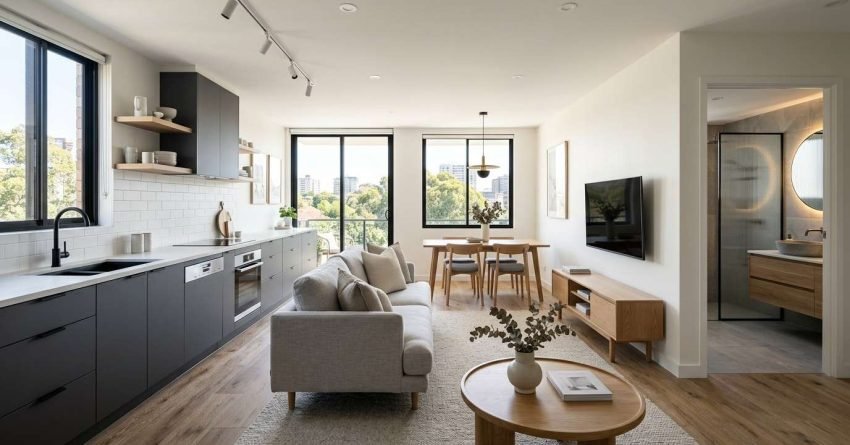
Renovating an Airbnb or short-term rental property in Sydney is one of the highest-return investments a property owner can make but only when the right rooms are targeted, the right materials are chosen, and the budget is built around guest durability rather than personal taste.
Short-term rental renovation is a different discipline from standard home renovation. The decisions that drive nightly rate, occupancy, and review scores are not the same ones that make a home comfortable to live in.
This guide covers what to renovate first, what it costs in Sydney, which materials hold up under high turnover, and how to stay compliant while keeping your calendar full.
Why Short-Term Rental Renovations Are Different
Most homeowners renovate for themselves. Airbnb hosts renovate for strangers dozens of them, every month, with different habits, different levels of care, and different expectations.
That shift in perspective changes every decision you make.
Durability Over Aesthetics the STR Design Principle
The number one mistake I see in short-term rental renovations is choosing finishes that look great in a showroom but fall apart under real guest use. Grout that stains. Timber floors that scratch. Tapware that loosens after a hundred uses.
In a standard home renovation, a surface that lasts ten years is a good surface. In a short-term rental, that same surface needs to look new after five years of weekly turnovers. The standard is higher, and the materials need to match it.
Commercial-grade thinking applied to residential spaces is the core principle. Every finish decision should be filtered through one question: how does this hold up after 200 guests?
Guest Expectations vs. Owner-Occupier Preferences
Guests booking a short-term rental in Sydney are comparing your property to hotels, serviced apartments, and every other listing in your suburb. They are not comparing it to what they have at home.
That means the renovation brief is not “what would I want?” It is “what does a guest paying $200 a night expect to find?” The answer is clean lines, quality fixtures, good lighting, and a space that photographs well.
Personal taste is irrelevant here. Neutral, well-executed, and durable beats bold, personal, and fragile every time.
What to Renovate First Prioritising for Maximum ROI
Not every room delivers the same return. Short-term rental data is consistent on this: guests make booking decisions based on a handful of spaces, and those are the spaces worth investing in first.
Bathrooms and Kitchens the Revenue-Driving Rooms
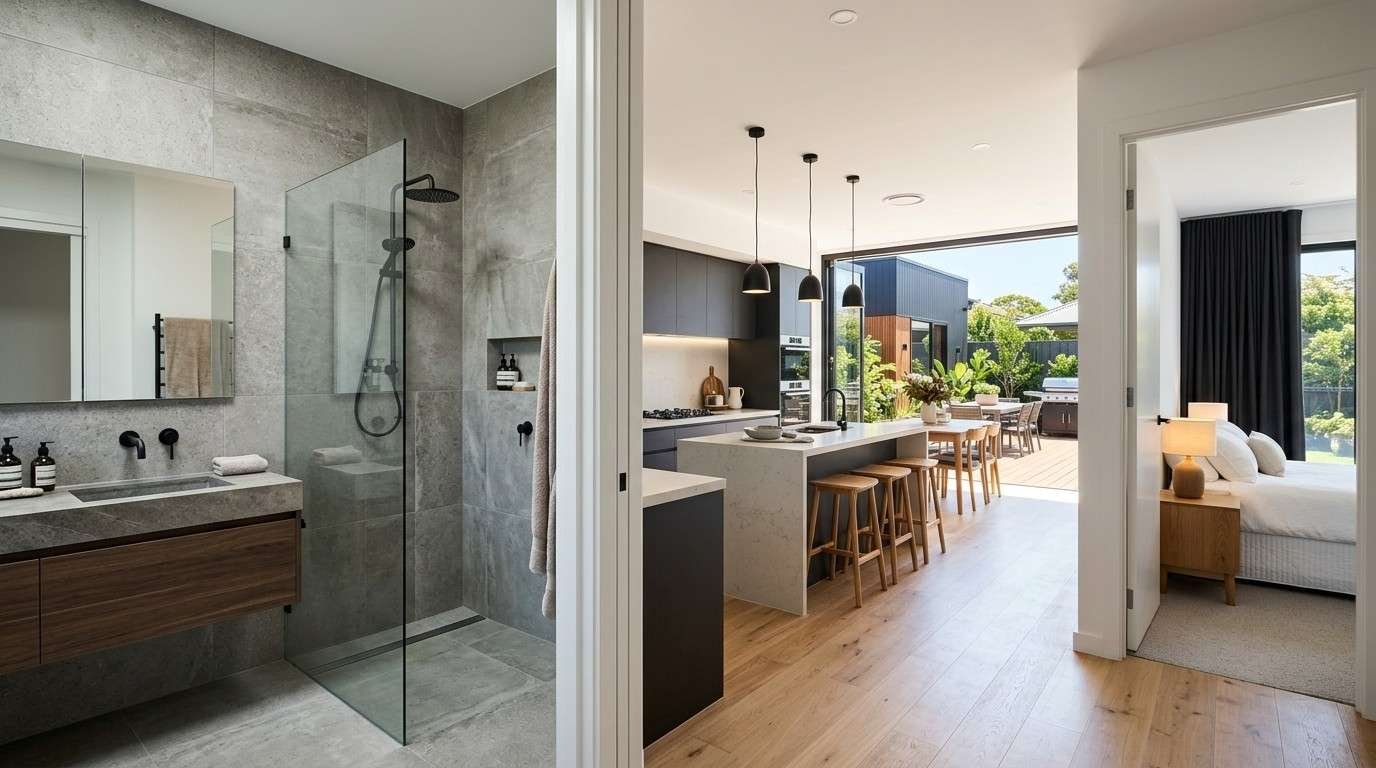
The bathroom is the single highest-impact renovation in a short-term rental. Guests notice it immediately, photograph it, and mention it in reviews. A dated, tired bathroom suppresses your nightly rate regardless of how good the rest of the property looks.
The kitchen comes second. It does not need to be a chef’s kitchen it needs to look clean, modern, and functional. New benchtops, updated cabinetry hardware, and a fresh splashback deliver significant visual impact at a fraction of a full kitchen renovation cost.
I always recommend starting with the bathroom and kitchen before touching anything else. The ROI on those two rooms outperforms every other space in the property.
Outdoor Spaces and Kerb Appeal
Outdoor entertaining areas are a strong secondary priority, particularly in Sydney where the climate supports year-round outdoor use. A deck, a clean courtyard, or a simple outdoor dining setup adds a bookable feature that justifies a higher nightly rate.
Kerb appeal matters for listing photography. The exterior shot is often the first image a potential guest sees. A freshly painted facade, clean landscaping, and a well-presented entry create an immediate impression of quality.
Bedrooms and Sleep Quality Upgrades
Bedrooms are not where guests spend most of their time, but sleep quality drives reviews. Blackout blinds, quality mattresses, adequate storage, and good bedside lighting are the upgrades that generate five-star comments about comfort.
The renovation scope here is usually modest it is more about fittings and furnishings than structural work. But getting it right matters.
Renovation Costs for Airbnb Properties in Sydney
Sydney renovation costs sit at the higher end of the national range. Labour rates, material costs, and trade availability all reflect the city’s cost of living, and short-term rental renovations carry additional considerations around speed and finish quality.
Typical Budget Ranges by Room Type
A bathroom renovation in Sydney typically runs between $15,000 and $35,000 depending on size, scope, and finish level. A full bathroom gut-and-rebuild with quality fixtures and tiling sits around $20,000 to $28,000 for most standard-sized bathrooms.
Kitchen renovations range more broadly from $18,000 for a cosmetic refresh with new benchtops and appliances, up to $60,000 or more for a full structural reconfiguration. For most Airbnb properties, a mid-range kitchen renovation between $25,000 and $40,000 delivers the best balance of impact and cost.
Bedroom upgrades, outdoor areas, and cosmetic refreshes across living spaces typically add $5,000 to $20,000 depending on scope. A full property renovation across all rooms for a two-bedroom Sydney apartment commonly lands between $60,000 and $120,000.
Labour vs. Materials Split for STR Renovations
In Sydney, labour typically accounts for 50 to 60 percent of total renovation cost. That ratio is higher than most homeowners expect, and it is one of the reasons renovation budgets blow out the materials are costed carefully, but the trade hours are underestimated.
For a short-term rental bathroom renovation, a realistic split is roughly $10,000 to $16,000 in labour and $8,000 to $14,000 in materials for a mid-range finish. Project management, waterproofing, and compliance inspections add to the labour side of the ledger.
Understanding this split upfront prevents the most common budget shock in renovation projects.
Choosing Materials and Finishes for High-Turnover Use
Material selection for a short-term rental is not the same conversation as material selection for a family home. The criteria are durability, cleanability, and visual longevity in that order.
Flooring, Surfaces, and Fixtures Built for Wear
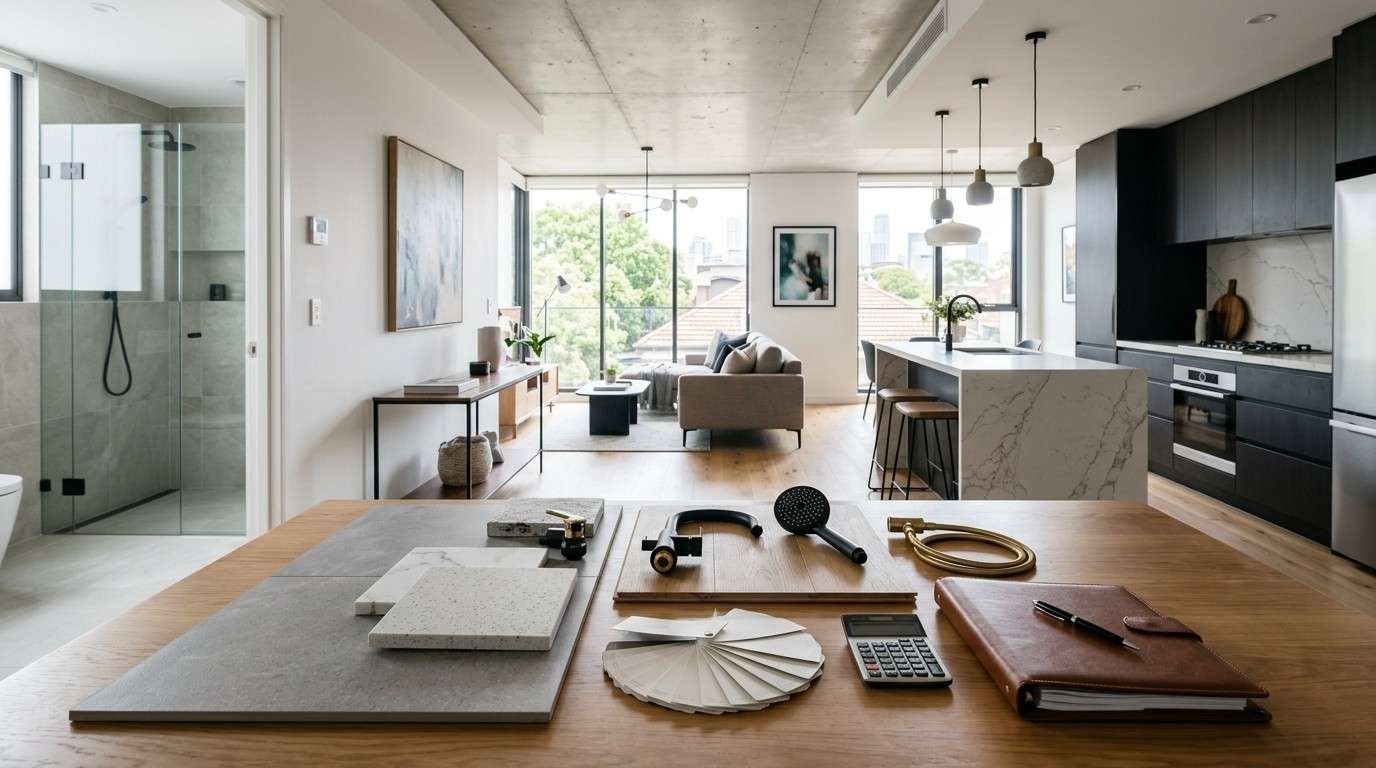
Porcelain tile is the most reliable flooring choice for high-traffic areas in a short-term rental. It is scratch-resistant, waterproof, easy to clean, and holds its appearance under heavy use. Large-format tiles in a matte or satin finish are the current standard for bathrooms and wet areas.
For living areas and bedrooms, engineered timber flooring offers the warmth of timber with significantly better resistance to moisture and surface damage than solid hardwood. Hybrid flooring is a strong alternative at a lower price point.
Stone benchtops particularly engineered stone are the preferred choice for kitchens and bathroom vanities. They are durable, non-porous, and photograph exceptionally well. Avoid laminate in a short-term rental; it shows wear quickly and dates the space.
Colour Palettes and Styling That Photograph Well
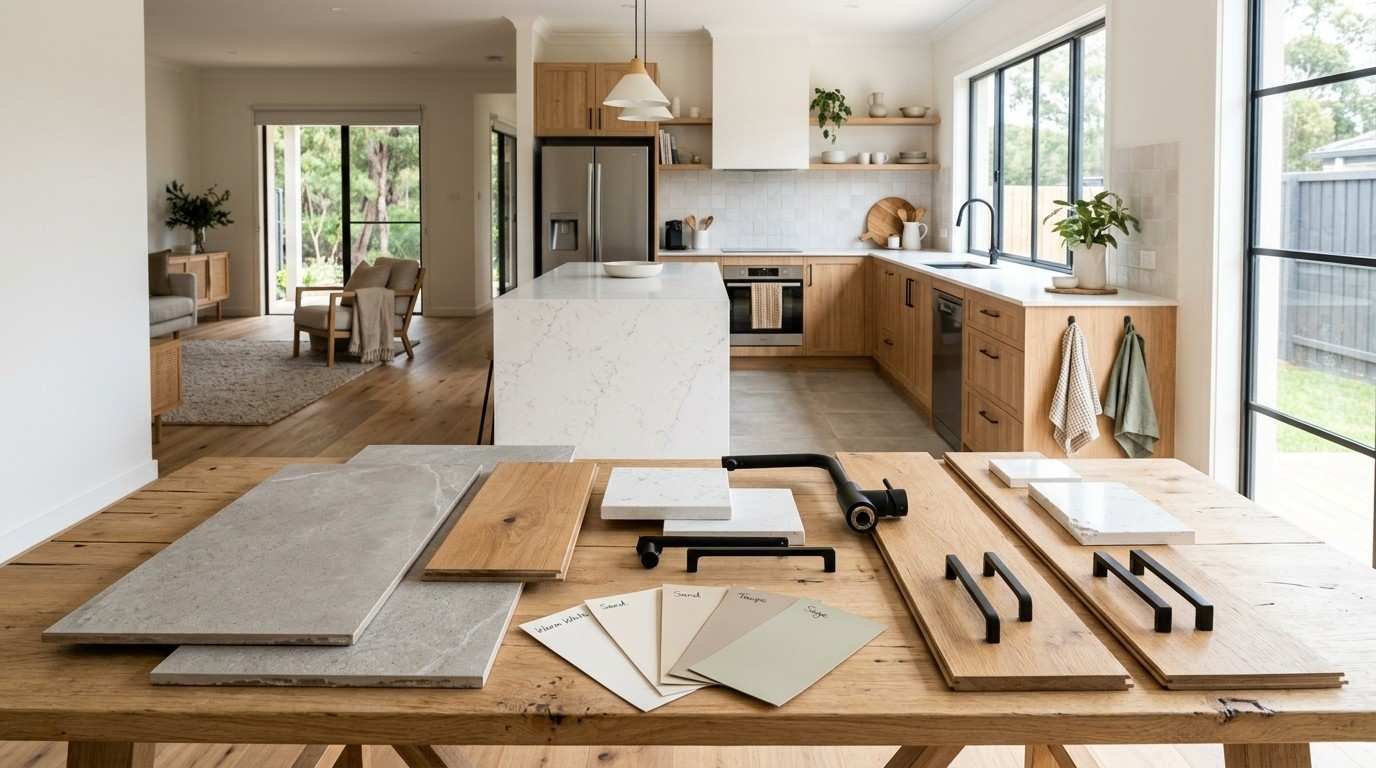
Neutral palettes dominate successful short-term rental listings for a reason. Warm whites, soft greys, and natural timber tones create a clean, inviting aesthetic that reads well in listing photography and appeals to the broadest range of guests.
Bold colour choices narrow your audience and date faster. A feature wall or a considered accent colour is fine but the base palette should be calm, light, and timeless.
Good lighting is as important as colour. Layered lighting ambient, task, and accent makes a space feel larger and more premium in photographs. It is one of the most cost-effective upgrades in any short-term rental renovation.
Compliance, Safety, and Council Requirements in NSW
Renovating a short-term rental in NSW involves obligations that go beyond standard residential renovation. Getting this wrong creates liability, not just inconvenience.
Short-Term Rental Regulations in Sydney
NSW introduced a mandatory short-term rental accommodation framework that applies to all properties listed on platforms like Airbnb. Hosts in Greater Sydney are subject to a 180-day cap per year for non-hosted properties in most council areas, and registration on the NSW Government’s STRA register is mandatory.
Before renovating, confirm your property’s zoning and whether your council applies additional restrictions. Some councils have tighter caps or specific development consent requirements for short-term rental use. Renovations that change the use classification of a space converting a garage to a bedroom, for example require a Development Application.
Safety Upgrades That Are Non-Negotiable
Smoke alarms compliant with the NSW smoke alarm legislation are mandatory in all residential properties, and short-term rentals carry additional scrutiny. Interconnected photoelectric alarms on every level are the current standard.
Residual current devices (RCDs) on all power and lighting circuits are required under NSW electrical safety regulations. Pool fencing must comply with NSW pool safety standards if the property has a pool. These are not optional upgrades they are legal obligations, and they need to be built into the renovation scope and budget from day one.
How to Manage a Renovation Without Losing Booking Revenue
Timing a renovation around an active short-term rental calendar is one of the more complex logistical challenges in property management. It is manageable with the right planning.
Staging the Work Around Peak Booking Periods
Sydney’s peak short-term rental periods run from December through February and during major events. The lowest-risk renovation windows are typically May through August, when occupancy rates soften and booking lead times are shorter.
I recommend blocking a minimum of four to six weeks for a bathroom or kitchen renovation, and eight to twelve weeks for a full property renovation. Trying to compress the timeline to fit around bookings creates quality problems and cost overruns.
The better approach is to accept the revenue loss for a defined period, execute the renovation properly, and recover that loss through a higher nightly rate post-renovation.
Working With a Contractor Who Understands STR Timelines
Not every renovation contractor understands the commercial pressure of a short-term rental calendar. The right contractor communicates clearly about milestones, flags delays early, and structures the work to minimise the gap between completion and your first post-renovation booking.
At Sydney Home Renovation, we work with property investors and Airbnb hosts across Sydney who need renovations delivered on time, to a finish standard that supports premium listing pricing. We understand that every extra day of downtime has a direct cost, and we plan accordingly.
Frequently Asked Questions
How much does it cost to renovate an Airbnb property in Sydney?
A full renovation of a two-bedroom Airbnb property in Sydney typically costs between $60,000 and $120,000. Individual rooms range from $15,000 to $35,000 for a bathroom and $18,000 to $60,000 for a kitchen, depending on scope and finish level.
What renovations increase Airbnb income the most?
Bathroom and kitchen renovations deliver the strongest return in short-term rental properties. A well-executed bathroom renovation directly supports higher nightly rates and better guest reviews, which compound into improved occupancy over time.
Do I need council approval to renovate my short-term rental?
Most cosmetic renovations do not require council approval. Structural changes, additions, or works that alter the use classification of a space require a Development Application through your local council in NSW.
How long does an Airbnb renovation take?
A bathroom renovation takes four to six weeks. A kitchen renovation takes four to eight weeks. A full property renovation across multiple rooms typically takes eight to twelve weeks, depending on scope and trade availability in Sydney.
What materials last longest in a short-term rental?
Porcelain tile, engineered stone, and engineered timber flooring are the most durable choices for short-term rental properties. They resist wear, clean easily, and maintain their appearance under high-turnover use.
Can I renovate while my property is still listed on Airbnb?
Renovating while the property remains listed creates serious risk for guests, for your reviews, and for the quality of the work. Block the calendar for the full renovation period and treat the downtime as a planned investment, not a loss.
What is the return on investment for renovating an Airbnb?
A well-targeted renovation in Sydney can increase nightly rates by 20 to 40 percent and improve occupancy through better listing photography and guest reviews. Most bathroom and kitchen renovations recover their cost within 18 to 36 months through increased revenue.
Conclusion
Short-term rental renovation in Sydney rewards precision the right rooms, the right materials, and a budget built around durability and guest experience rather than personal preference.
The Sydney STR market is competitive, and the properties that command premium nightly rates are the ones that have been renovated with commercial intent and long-term value in mind.
We help property investors and Airbnb hosts across Sydney renovate with confidence on budget, on schedule, and built to perform. Contact Sydney Home Renovation to start planning your STR renovation today.


