
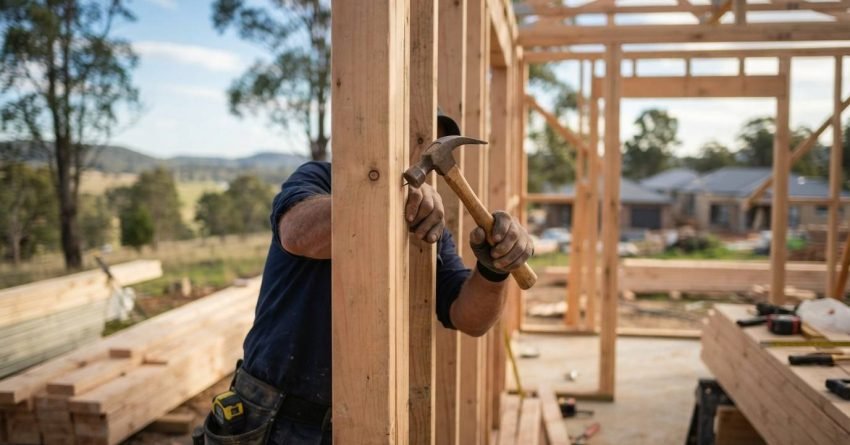
Taking on a building project as an owner-builder in NSW puts you in direct control of your construction, but it comes with a clear set of legal obligations you need to understand before a single tool leaves the shed. The rules exist to protect you, future buyers, and the tradespeople working on your site.
Getting this wrong carries real financial and legal consequences. Unpermitted work, underinsurance, and missed disclosure requirements have cost NSW homeowners tens of thousands of dollars in rectification costs and failed property sales.
In this guide, we cover who qualifies, what permits you need, what work you can legally do, your insurance obligations, and what happens when you sell.
Who Qualifies as an Owner-Builder in NSW
Not everyone can take on the owner-builder role in NSW. NSW Fair Trading sets out specific eligibility criteria, and you need to meet all of them before you apply for a permit.
You must own or co-own the land where the work is being carried out. The property must be, or intend to become, your principal place of residence. And the proposed work must exceed $10,000 in cost.
The 12-Month Residency and Ownership Rule
NSW law limits how often you can act as an owner-builder. You cannot be granted more than one owner-builder permit for a property within any 12-month period, and you cannot hold more than one permit at a time across different properties.
This rule exists to prevent people from using the owner-builder scheme as a commercial building vehicle. It is designed for genuine owner-occupiers, not serial developers.
The land title must be in your name. If the property is held in a company name or trust, you are not eligible for an owner-builder permit under current NSW legislation.
The $10,000 Cost Threshold Explained
The $10,000 threshold refers to the total cost of the residential building work, including labour and materials. It is not just the contract price or just the materials you purchase.
If your project comes in under $10,000, you do not need an owner-builder permit. But the moment your total project cost crosses that line, the permit requirement applies.
Underestimating costs to avoid the threshold is not a grey area. It is a compliance failure with real consequences, including fines and orders to rectify unlicensed work.
The Owner-Builder Permit, What It Is and When You Need One
An owner-builder permit is the legal authorisation that allows you to carry out residential building work on your own property without holding a contractor licence. Without it, any work over $10,000 is unlicensed, and unlicensed residential building work in NSW is an offence under the Home Building Act 1989.
The permit does not make you a licensed builder. It gives you a specific, limited right to manage and carry out work on your own home.
How to Apply Through NSW Fair Trading
The application goes through NSW Fair Trading directly. You submit your application online or in person, provide proof of land ownership, and pay the applicable permit fee.
As of 2025, the fee for an owner-builder permit in NSW is $184 for projects valued between $10,000 and $500,000, with a higher fee applying above that threshold. NSW Fair Trading’s fee schedule confirms current rates.
Fair Trading will assess your application, verify your eligibility, and confirm your education course completion before issuing the permit.
The Owner-Builder Education Course Requirement
Before NSW Fair Trading will issue your permit, you must complete an approved owner-builder education course. This is a mandatory requirement, there are no exemptions for experience or trade background.
The course covers your legal obligations, safety responsibilities, and the basics of managing a building project. NSW Fair Trading’s approved course list shows current providers, and most courses are available online.
Completion of the course does not expire, but your permit is tied to the specific project you applied for.
What Work Owner-Builders Can and Cannot Do in NSW
The owner-builder permit gives you broad authority to manage and carry out general building work on your property. But it does not give you unlimited scope.
There are specific categories of work that remain off-limits regardless of your skill level or experience. These restrictions are not optional, they are embedded in NSW licensing law.
Licensed Trades You Must Still Hire
Certain trades require a licence in NSW, and that requirement does not disappear because you hold an owner-builder permit. You must engage licensed contractors for:
- Electrical work (licensed electrician)
- Plumbing and drainage (licensed plumber)
- Gas fitting (licensed gas fitter)
- Air conditioning and refrigeration work
- Roof plumbing
Each of these contractors must provide you with a certificate of compliance for their work. Keep every certificate — you will need them for your occupation certificate and for any future property sale.
Structural and High-Risk Work Restrictions
Owner-builders can carry out structural work on their own property, but it must comply with the National Construction Code and any applicable council development approval conditions.
High-risk construction work, as defined under NSW Work Health and Safety legislation, requires specific safety management measures regardless of who is doing the work. This includes work near live electrical assets, work at height, and excavation beyond certain depths.
Ignoring these requirements does not just create a compliance risk. It creates a personal liability risk that your insurance may not cover.
Owner-Builder Insurance Obligations in NSW
Insurance is not optional for owner-builders in NSW. It is a legal requirement, and the consequences of getting it wrong extend well beyond the build itself.
At minimum, you need public liability insurance for the duration of the project. This covers injury or property damage to third parties, neighbours, visitors, and tradespeople on site.
Home Warranty Insurance and the 7-Year Liability Rule
If your project value exceeds $20,000 and you intend to sell the property within 7 years of completing the work, you are required to obtain home warranty insurance through icare NSW before you can sell.
This is the part most owner-builders do not fully understand until it is too late. The 7-year window runs from the date of completion, not the date of sale. So even if you complete the build and live in the property for five years before deciding to sell, you may still need to obtain home warranty insurance before the contract of sale can proceed.
The insurance protects the buyer against defects in the work. Without it, your property sale can be delayed or fall through entirely.
Selling a Property Built as an Owner-Builder in NSW
Selling a property where owner-builder work was carried out triggers a separate set of legal obligations. These apply regardless of how long ago the work was done, up to the statutory limit.
Buyers have the right to know about owner-builder work. NSW law requires you to disclose it, and failing to do so can expose you to claims after settlement.
Disclosure Requirements and the 6-Year Resale Rule
Under the Home Building Act 1989, if you sell a property within 6 years of completing owner-builder work valued over $20,000, you must attach a owner-builder defect inspection report to the contract of sale.
The report must be prepared by a licensed builder or building inspector. It gives the buyer an independent assessment of the work and any defects present.
Skipping this step does not make the obligation disappear. It makes you liable for any defects the buyer discovers after settlement, and that liability can be significant.
Common Mistakes Owner-Builders Make in NSW
Most owner-builder compliance failures are not deliberate. They happen because people do not fully understand the rules before they start, or they underestimate how far the obligations extend.
These are the mistakes we see most often, and they are all avoidable.
How to Avoid Permit, Insurance, and Compliance Failures
Starting work before the permit is issued. The permit must be in hand before work begins. Starting early, even on minor preparatory work, can void your permit application and expose you to fines.
Underestimating the project cost. If your project grows beyond your initial estimate and crosses the $10,000 threshold mid-build, you need a permit. Continuing without one is an offence.
Skipping the home warranty insurance step. Many owner-builders only discover this requirement when they try to sell. By then, obtaining the insurance can be complex and expensive, or impossible if defects have already emerged.
Not keeping contractor certificates. Every licensed trade must provide a certificate of compliance. Losing these documents creates problems at occupation certificate stage and at resale.
Assuming the permit covers all work. The permit covers general building work. It does not authorise you to do electrical, plumbing, or gas work yourself. Engaging unlicensed tradespeople for these tasks creates liability for you, not just for them.
We work with homeowners and renovators across Sydney who want to understand exactly where the owner-builder rules apply to their project, and where engaging a licensed contractor is the smarter, safer choice. At Sydney Home Renovation, we help you navigate that line clearly.
Frequently Asked Questions, Owner-Builder Requirements NSW
Do I need an owner-builder permit for a bathroom renovation in NSW?
You need an owner-builder permit if your bathroom renovation involves residential building work valued at over $10,000 in total. That includes labour and materials combined. Most full bathroom renovations in Sydney exceed this threshold, so the permit requirement applies in the majority of cases.
Can I do my own plumbing as an owner-builder in NSW?
No. Plumbing and drainage work in NSW requires a licensed plumber regardless of whether you hold an owner-builder permit. The permit does not override trade licensing requirements. You must engage a licensed plumber and obtain a certificate of compliance for all plumbing work.
How long does it take to get an owner-builder permit in NSW?
NSW Fair Trading typically processes owner-builder permit applications within 10 to 15 business days once all documentation is submitted, including proof of land ownership and your education course completion certificate. Incomplete applications extend this timeline.
What happens if I do owner-builder work without a permit in NSW?
Carrying out residential building work over $10,000 without an owner-builder permit is an offence under the Home Building Act 1989. Penalties include fines, orders to rectify or demolish unlicensed work, and complications when selling the property. Unpermitted work also affects your ability to obtain an occupation certificate.
Is the owner-builder education course hard?
The course is designed for people with no formal construction background. It covers your legal obligations, site safety, and project management basics. Most people complete it in a single day or across a short online module. The content is practical and straightforward rather than technically demanding.
Can I use an owner-builder permit to build a granny flat in NSW?
Yes, provided you meet the standard eligibility criteria, you own the land, the property is or will be your principal place of residence, and the work exceeds $10,000. Granny flat construction is residential building work and falls within the scope of the owner-builder permit scheme.
What insurance do I need as an owner-builder in NSW?
At minimum, you need public liability insurance for the duration of the build. If the project value exceeds $20,000 and you plan to sell within 7 years of completion, you also need home warranty insurance through icare NSW before the property can be sold. Both requirements are non-negotiable under NSW law.
Working Within the Rules as an Owner-Builder in NSW
Owner-builder requirements in NSW are detailed, but they are manageable when you understand them from the start. Eligibility, permits, licensed trades, insurance, and resale obligations all connect, and missing one link in that chain creates problems that compound over time.
The rules protect your investment, your buyers, and the people working on your site. Understanding them before you start is the single most effective way to avoid costly rectification, failed sales, and legal exposure.
At Sydney Home Renovation, we help homeowners and renovators across Sydney plan and execute projects with full compliance confidence. Reach out to our team before your next project, we will help you understand exactly where the owner-builder rules apply and where professional support makes the most sense.


