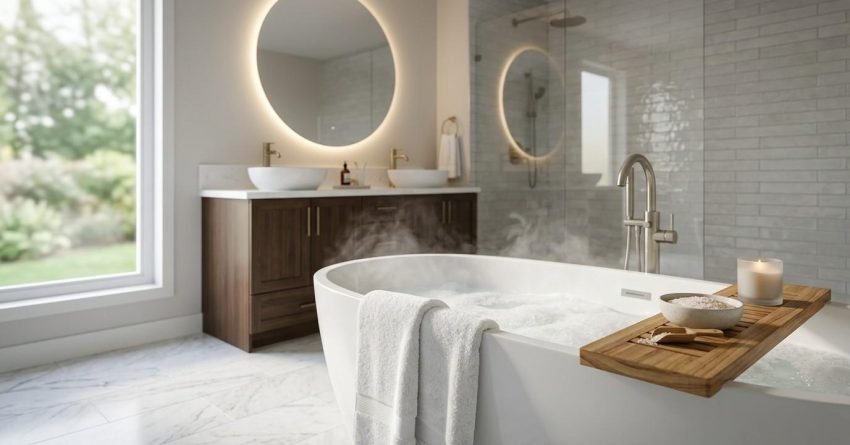
A well-designed master bathroom brings together a freestanding bath, dual vanity, walk-in shower, and considered lighting into one calm, functional retreat. The best ensuite designs balance Sydney’s compact floor plans with materials, fittings, and finishes that hold their value long-term.
For Sydney homeowners and investors, the master bathroom is one of the highest-impact spaces in any renovation, shaping daily comfort and resale value across the entire property. Getting the design right from the start protects both your budget and your finished result.
This guide covers modern, luxury, and small master bathroom ideas, plus layouts, tapware finishes, colour palettes, lighting, storage, waterproofing requirements, and realistic budget guidance for Sydney homes.
What Defines a Master Bathroom Design
A master bathroom is the private ensuite attached to the main bedroom, typically larger than a secondary bathroom and built around personal comfort. It usually includes a double vanity, a generous shower, separate toilet zoning, and often a freestanding bath. Compared with a standard family bathroom, the master suite prioritises spa-like flow, premium finishes, and considered lighting over pure functionality.
We see the strongest master bathrooms designed around three non-negotiables: clear wet and dry zoning, a defined focal point, and material quality that rewards daily use. The floor area matters less than how intelligently that area is organised.
Master Bathroom vs Standard Bathroom
Standard bathrooms are designed for multiple users and rapid turnover. Master bathrooms slow the pace down. Expect wider clearances of at least 900mm between fixtures, soft-close joinery, heated floors, dedicated ventilation circuits, and finishes selected for tactile quality rather than cost alone.
The storage logic differs too. A master ensuite prioritises deep drawer stacks and full-height shaving cabinets over open shelving, because the space is used by the same one or two people every day and benefits from a considered, personal organisation system.
Core Design Principles for a Master Suite
Three principles guide every successful master bathroom. First, clear zoning between wet and dry areas: the shower and bath occupy one zone, the vanity and toilet another, with a visual or physical threshold between them. Second, a defined focal point such as a freestanding bathtub, a feature tile wall, or a full-height mirror that anchors the room and gives the eye somewhere to land. Third, material continuity that connects the bathroom to the adjoining bedroom through shared tones, textures, or timber species.
Master bathrooms sit at the higher end of residential design. Every decision from tile format to tapware finish compounds. Getting the principles right before selecting products saves high cost and redesign time later.
Modern Master Bathroom Design Ideas
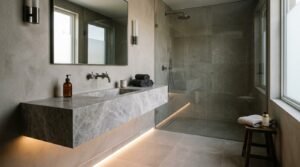
Modern master bathrooms strip away ornament and lean into clean geometry, neutral palettes, and uninterrupted surfaces. They suit contemporary Sydney homes, apartments, and new builds where simplicity and natural light are the priority. We find this style performs particularly well in inner-city apartments and new construction, where the architecture already favours clean lines, and the bathroom needs to match that language.
Minimalist and Floating Vanity Layouts
Wall-hung vanities make the floor feel larger, simplify cleaning, and create space for under-cabinet LED strip lighting that adds warmth without a dedicated light fitting. We recommend pairing a 1,500mm to 1,800mm double vanity with an integrated stone or sintered stone top and a single full-width mirror to anchor the wall.
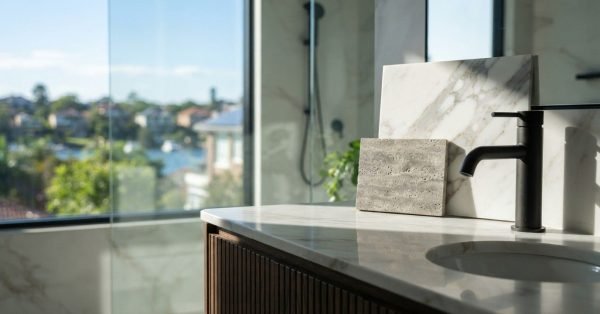
Tapware in matte black or brushed gunmetal reads cleanly against white or grey stone and avoids the fingerprint visibility of polished chrome. Keep the basin profile shallow; a 120mm to 140mm depth suits the proportions of a wall-hung unit and maintains the floating visual effect.
Frameless Glass and Open Shower Concepts
Frameless glass screens let tilework and wall finishes carry through the space without visual interruption. Linear floor drains positioned along the back wall or one side allow large-format tiles to run continuously from the dry zone into the wet zone without a break.
Tiled niches recessed into the shower wall replace bulky shower caddies and keep the glass line clean. We size niches at 300mm wide by 200mm tall as a minimum, deep enough for full-size bottles, flush with the tile face so they read as part of the wall rather than an afterthought.
Luxury Master Bathroom Design Ideas
Luxury is about material quality and detail. It is not about size. A 6 square metre ensuite finished in honed marble, brushed brass, and warm timber will outperform a 12 square metre room finished in builder-grade materials every time. The difference is tactile; it is felt in the weight of a tap handle, the warmth of a stone floor underfoot, and the silence of a soft-close drawer.
Freestanding Bathtubs as a Statement Feature
A freestanding stone resin, acrylic, or matte composite bath positioned beneath a window or against a feature tile wall becomes the anchor of the room. Stone resin baths retain heat longer than acrylic and carry a more substantial visual weight; we recommend them for rooms where the bath is the primary focal point. Allow at least 600mm clearance on all visible sides for a confident, balanced presentation, and confirm floor loading capacity before specifying a filled stone resin bath, which can exceed 300kg.
Floor-mounted bath fillers in brushed brass or matte black complete the composition. Wall-mounted fillers work where floor access is limited, but the floor-mounted option reads as more considered in a luxury context.
Spa-Inspired Wet Rooms and Dual Showers
Wet room layouts combine the bath and shower into a single waterproofed zone, removing screens entirely. The entire floor and wall area is tanked to AS 3740 standard, which we cover in detail under the waterproofing section below. Dual rainfall and handheld shower combinations, steam units, and bench seating turn the space into a daily retreat.
Steam units require a sealed enclosure of no more than 2.5 cubic metres to function efficiently. A wet room with a steam generator needs a glass partition or door to contain the steam, even if the overall aesthetic is open. Bench seating at 450mm depth and 480mm height suits most adults and doubles as a surface for towels and products.
Small Master Bathroom Design Ideas
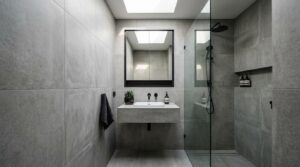
Sydney terraces, semis, and apartments often allocate only 4 to 6 square metres to the master ensuite. Smart design recovers function and visual space without compromising on quality. We work in these footprints regularly, and the constraint consistently produces more considered, resolved designs than larger rooms where decisions get deferred.
Smart Space-Saving Layouts
Wall-hung toilets reclaim up to 200mm of floor depth by concealing the cistern inside the wall cavity. Sliding cavity doors free up the full swing zone of a hinged door, typically 700mm to 800mm, and return that area to usable floor space. Corner vanities, recessed shaving cabinets, and shower niches replace bulky storage furniture and keep sightlines open.
We recommend a minimum 900mm shower recess in a small ensuite; anything narrower reads as a penalty rather than a design choice. A 900mm square frameless shower with a linear drain and a single glass panel delivers the open feel of a much larger space.
Bath or Shower: How to Choose for Your Master Ensuite
In a small master bathroom, the choice between a bath and a walk-in shower is one of the most consequential layout decisions. A generous 900mm by 1,200mm walk-in shower delivers more daily utility than a bath that rarely gets used, and it returns significant floor area to the rest of the room.
We generally recommend retaining at least one bath somewhere in the property for resale purposes. Sydney buyers with young children and investors targeting family tenants consistently value it. If the master ensuite cannot accommodate both, a bath in the main bathroom and a premium shower in the ensuite is the most practical split.
Visual Tricks to Expand a Compact Bathroom
Large-format tiles 600mm by 1,200mm or larger with thin 1.5mm grout lines in a matching grout colour make the floor and walls read as continuous surfaces rather than a grid. Full-height mirrors on the vanity wall double the perceived depth of the room. Continuous tile from floor to ceiling removes the visual break of a paint line and adds height.
Natural light from a skylight or high-set window makes a measurable difference in a small ensuite. A 450mm by 900mm skylight positioned over the shower zone brings daylight into the wettest part of the room and reduces the need for artificial lighting during the day.
Layout and Floor Plan Ideas for Master Bathrooms
The right layout depends on the shape of your ensuite and its connection to the main bedroom. Three layouts solve most Sydney configurations.
The galley layout places fixtures along two parallel walls and suits long, narrow rooms of 1,800mm to 2,200mm width. The vanity sits at one end, the shower at the other, with the toilet on the shorter wall. The L-shape layout works for square ensuites of 2,400mm by 2,400mm or larger and allows a separate bath and shower on perpendicular walls. The three-wall layout with the toilet, shower, and vanity each on their own wall gives the most spacious feel when floor area allows and is the standard configuration for master ensuites above 8 square metres.
Always plan plumbing along shared walls to control cost. Moving a plumbing stack adds $1,500 to $4,000 to a Sydney renovation depending on access and floor type. Keep the toilet out of the immediate sightline from the bedroom door; a 45-degree offset or a partial wall achieves this without a full separate toilet room.
Recommended Clearances
Minimum clearances that we apply to every master bathroom layout: 900mm in front of the toilet, 1,000mm in front of the vanity for comfortable use, 900mm shower recess width, and 600mm on at least two sides of a freestanding bath. These are working minimums: 1,100mm in front of the vanity and 750mm bath clearance read as genuinely generous in a Sydney ensuite.
Waterproofing and Ventilation Requirements
All wet areas in a Sydney bathroom must be waterproofed to AS 3740:2021, which specifies membrane type, application method, and upstand heights. The shower recess requires a minimum 1,800mm upstand on all walls. The bath zone requires a 150mm upstand at the bath rim. Floors throughout the wet area must be fully tanked.
Ventilation is a council and BCA requirement, not a design preference. An exhaust fan rated at a minimum of 25 litres per second must be ducted to the exterior, not into a roof cavity. We recommend a 40 L/s fan for ensuites above 6 square metres, and a timer or humidity sensor switch to ensure the fan runs long enough after a shower to prevent mould.
Tapware and Fixture Finishes for Master Bathrooms
Tapware finish is one of the most visible design decisions in a master bathroom and one of the most permanent. We see homeowners change tiles before they change tapware, so the finish needs to work with the room’s palette for the long term.
Matte black suits cool, monochromatic palettes and reads as contemporary without being trend-dependent. Brushed brass and brushed gold work with warm stone tones, travertine, sandy porcelain, and timber-look surfaces and add warmth without the high-maintenance shine of polished gold. Brushed nickel is the most neutral finish and pairs with almost any palette, making it the safest choice for investment properties where resale flexibility matters. Polished chrome remains the most durable finish for high-use environments but reads as more utilitarian than the brushed alternatives.
We recommend selecting one finish and applying it consistently across basin mixers, shower fittings, bath filler, towel rails, and toilet roll holders. Mixed finishes require a deliberate, confident hand: two finishes maximum, with a clear logic to the pairing.
Colour Palettes and Paint Choices for Master Bathrooms
Colour in a master bathroom operates differently from the rest of the house. The surfaces are predominantly tile and stone, so paint appears only on the ceiling and occasionally one non-wet wall. The palette is set by the tile and stone selection first, with paint chosen to complement rather than lead.
Neutral palettes warm whites, soft greiges, and pale stone tones are the most enduring choice for Sydney master bathrooms. They read as calm, photograph well for resale, and age without looking dated. Warm neutrals (cream, sand, warm grey) suit homes with timber floors and natural stone. Cool neutrals (white, pale grey, soft blue-grey) suit contemporary homes with concrete, terrazzo, and polished surfaces.
Contrast palettes: dark feature walls in charcoal, deep green, or navy behind the bath or vanity work when the rest of the room is light. We recommend limiting the dark tone to one wall and keeping all wet surfaces in a lighter, easier-to-maintain finish. Ceiling colour in a bathroom should always be white or near-white to maximise light reflection and avoid the room feeling compressed.
Materials, Tiles and Finishes That Define the Design
Materials carry the design more than any other single decision. They shape mood, durability, and long-term maintenance, and in a master bathroom, they are touched and seen every day.
Natural Stone, Porcelain and Timber Looks
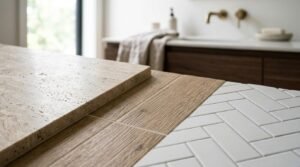
Honed marble and travertine create timeless warmth but demand sealing every 12 to 18 months and carry a higher slip risk when wet; specify a minimum P3 slip rating for floor tiles in any wet area. Porcelain stone-look tiles deliver the same visual without the maintenance, and the best current ranges are genuinely difficult to distinguish from natural stone at normal viewing distance.
Timber-look planks on the vanity wall or behind the bath introduce softness without exposing real timber to moisture. We recommend a rectified porcelain timber-look tile at 200mm by 1,200mm for the most convincing result; the long format reads like real timber boards and the rectified edge allows a 1.5mm grout joint.
Tile Patterns That Elevate the Space
Vertical stack-bond, herringbone, and oversized slab tiling each create a distinct mood. Vertical stack-bond adds height and suits narrow ensuites. Herringbone reads as considered and traditional; it works in both classic and contemporary rooms depending on the tile material. Oversized slab tiling in 1,200mm by 2,400mm format creates the most seamless, gallery-like result and suits luxury ensuites with high ceilings.
Use one feature pattern per room and let the remaining surfaces stay calm. Grout colour has a significant impact; a matching grout colour makes the pattern recede and the surface read as continuous, while a contrasting grout makes the pattern the focal point. Decide which effect you want before grouting begins, because it cannot be changed without retiling.
Lighting, Storage and Smart Features
Lighting layers, storage logic, and integrated technology separate a competent bathroom from a memorable one.
Layered lighting combines ambient ceiling lights, task lights at the vanity mirror, and accent strips inside niches or under floating vanities. All fittings in the wet zone must carry a minimum IP44 rating, and IP65 for fittings directly above the shower or bath. Dimmable circuits let the room shift from bright morning function to evening calm, and we recommend a separate dimmer circuit for the vanity task lights and the ambient ceiling fitting.
For storage, drawer stacks outperform cupboards for daily access: 150mm deep drawers for cosmetics and 200mm deep drawers for hair tools and larger items. Full-height shaving cabinets recessed into the wall recover storage without protruding into the room. We specify a minimum 100mm recess depth for a shaving cabinet to sit flush with the tile face.
Smart additions worth considering include heated towel rails on a timer circuit, in-floor hydronic or electric heating, demister mirrors with integrated LED lighting, motion-sensor toe-kick lighting for night use, and thermostatic shower controls that hold a set temperature. Thermostatic valves add $400 to $900 to the shower fitting cost but eliminate the daily ritual of adjusting temperature a genuine quality-of-life improvement in a master ensuite used every day.
How a Master Bathroom Renovation Affects Sydney Property Value
A well-executed master bathroom renovation is consistently cited by Sydney selling agents as one of the highest-return upgrades in residential property. The return is not guaranteed by spend alone; it depends on finish alignment with the suburb’s buyer profile and the rest of the home.
In inner-city and eastern suburbs markets, buyers expect stone surfaces, frameless glass, and quality tapware as a baseline in any home above the median price point. A master bathroom that falls below that expectation actively reduces perceived value. In western and south-western Sydney markets, a clean, functional ensuite with quality fittings and a neutral palette delivers strong return without requiring luxury-tier finishes.
We recommend aligning the master bathroom finish level with the kitchen, the two rooms buyers inspect most carefully and compare most directly. A luxury kitchen paired with a builder-grade ensuite creates a disconnect that experienced buyers notice immediately. Matching the quality level across both rooms produces the most coherent result and the strongest resale position.
Budget Planning for Sydney Master Bathroom Designs
Design ambition needs to match available budget. In Sydney, a standard master bathroom renovation typically falls in the $18,000 to $30,000 range for a like-for-like replacement with quality mid-range finishes. Luxury master bathrooms with natural stone, custom joinery, and premium tapware typically sit between $35,000 and $60,000 or above for larger ensuites.
Labour, demolition, waterproofing, and plumbing rough-in usually account for 35 to 45 percent of the total spend. Tiles, fittings, and vanities make up the remainder, with tapware and stone surfaces carrying the most variability. A basin mixer ranges from $180 to $1,800 depending on brand and finish.
Hidden costs to plan for include rectifying old waterproofing membranes (add $1,500 to $3,000), relocating plumbing stacks ($1,500 to $4,000), asbestos checks and removal in pre-1990 homes ($500 to $3,000 depending on extent), and council requirements for ventilation and drainage upgrades. Pricing varies significantly across Sydney suburbs, and a detailed master bathroom renovation cost breakdown gives you realistic labour rates, tile allowances, and fittings budgets to match design ambition to spend.
Bringing Your Master Bathroom Design to Life
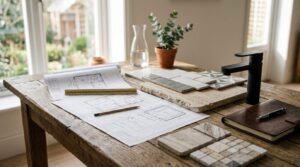
Moving from inspiration to a finished room takes a clear sequence and the right team. Start with a written brief that lists must-haves, nice-to-haves, and a firm budget ceiling. This document becomes the reference point for every trade and supplier conversation.
Get fixed-price quotes that itemise demolition, waterproofing, plumbing, electrical, tiling, and finishing trades separately so you can see exactly where the money goes. A lump-sum quote without a breakdown makes it impossible to identify where costs are running over or where savings can be made without compromising the result.
Confirm lead times for tiles, tapware, and vanities before construction begins. Long delivery windows, particularly for imported tiles and custom joinery, are the most common cause of bathroom project delays in Sydney. We recommend having all materials on site or confirmed for delivery before demolition starts. Choosing a designer or a design-and-build contractor who coordinates trades and manages the programme removes the sequencing burden from you and reduces the risk of costly delays between trades.
Conclusion
The strongest master bathroom designs balance layout, materials, lighting, and storage into one calm, functional retreat that lifts daily life and long-term property value. Getting those decisions right early, before a tile is selected or a tap is ordered, is what separates a renovation that performs from one that disappoints.
Whether you lean modern, luxury, or space-smart, the right design choices made at the planning stage protect your budget and your finished result across every Sydney home. The details compound: a well-chosen finish, a correctly sized clearance, a properly waterproofed wet zone each one matters.
We at Sydney Home Renovation turn master bathroom ideas into honestly priced, beautifully built spaces, handling design, trade coordination, and project management so you get a finished room that works as well as it looks. Book a free design and budget consultation today, and we will walk you through exactly what your ensuite can achieve.
Frequently Asked Questions
What is the average size of a master bathroom in Sydney?
Most Sydney master bathrooms range between 6 and 12 square metres. Terraces and apartments sit at the lower end, while newer freestanding homes typically allow a larger ensuite with separate bath and shower zones.
Do I need both a bath and a shower in a master bathroom?
Not always. If space is tight, a generous walk-in shower is often more practical. For family homes and resale value, keeping at least one bathtub somewhere in the property is generally recommended by Sydney agents.
What are the most timeless master bathroom design choices?
Neutral tiles, honed stone, matte black or brushed nickel tapware, frameless glass showers, and floating timber-look vanities consistently age well. Avoid trend-heavy colours and overly bold patterns on permanent surfaces.
How long does a master bathroom renovation take in Sydney?
A standard master bathroom renovation typically takes 3 to 5 weeks of on-site work, plus planning and material lead times. Custom joinery, imported tiles, and structural changes can extend the total project to 8 to 12 weeks.
Does a master bathroom renovation add value to a Sydney home?
Yes. A well-designed master bathroom is one of the highest-return renovations in Sydney property, particularly when finishes align with the rest of the home, and the layout suits the suburb’s typical buyer profile.
Do I need council approval for a master bathroom renovation in Sydney?
Most like-for-like bathroom renovations in Sydney are exempt development and do not require a DA. Work that moves plumbing stacks, alters structural walls, or changes the room’s footprint may require approval; confirm with your local council or a certifier before demolition begins.
What tapware finish works best for resale in Sydney?
Brushed nickel is the most versatile finish for resale because it pairs with almost any tile palette and reads as quality without being polarising. Matte black and brushed brass are strong design choices but suit a narrower range of buyers.
Should I use a bathroom designer or go directly to a builder?
A designer adds value when the layout is complex, the budget is above $35,000, or you want a resolved material palette before going to tender. For straightforward like-for-like renovations, an experienced design-and-build contractor who handles both the design and the construction typically delivers a faster, more cost-efficient result.