
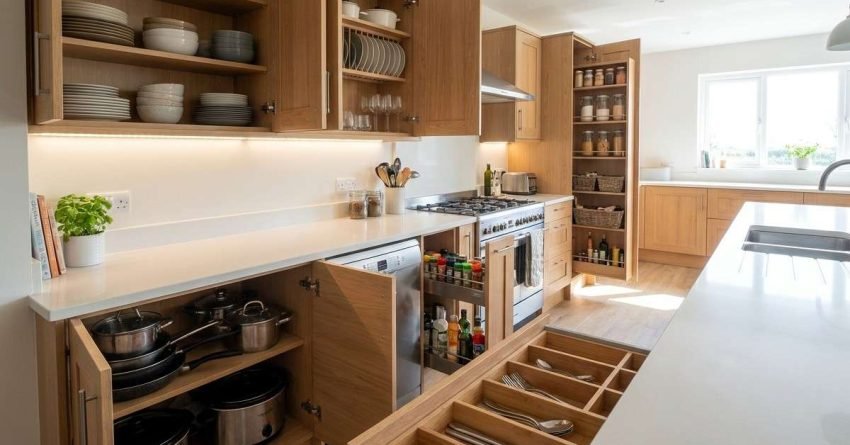
The way your kitchen cupboards are arranged determines how efficiently your kitchen functions every single day. We’ve seen a well-planned layout reduce wasted movement, maximise storage capacity, and make cooking and cleaning genuinely easier. Poor arrangement creates frustration that no amount of stylish cabinetry can fix.
We work with Sydney homeowners on this exact decision constantly, whether they’re planning a full renovation or simply reorganising an existing kitchen. This guide covers upper and lower cabinet organisation, pantry layout, appliance zones, small kitchen solutions, and what to plan before a renovation begins.
What Is the Best Way to Arrange Kitchen Cupboards?
The best way to arrange kitchen cupboards is to organise storage around how you actually use your kitchen. We always recommend placing frequently used items within easy reach and grouping related items together by function. Effective arrangement follows a zone-based system aligned with your cooking workflow.
Before moving a single item, we map out the kitchen’s primary activity zones: food preparation, cooking, cleaning, and storage. Plates and glasses near the dishwasher. Pots and pans near the cooktop. Dry goods near the food preparation bench.
This logic-driven approach is the foundation of a functional kitchen layout.
Understanding the Kitchen Work Triangle and Zone-Based Layout
The kitchen work triangle connects the three primary work points in any kitchen: the sink, the cooktop, and the refrigerator. Efficient cupboard arrangement supports this triangle by positioning storage so the items you need at each point are immediately accessible.
Zone-based layout expands on this by dividing the kitchen into functional areas. A cooking zone groups the cooktop, oven, and nearby cupboards storing oils, spices, and cookware. A preparation zone centres on the main bench with access to cutting boards and utensils. A cleaning zone surrounds the sink, and a consumables zone covers the pantry and refrigerator area.
When your cupboard arrangement aligns with these zones, the kitchen becomes intuitive to use. You stop searching for items because everything lives where it’s logically needed.
How Cupboard Placement Affects Kitchen Workflow and Efficiency
Cupboard placement directly controls the number of steps you take during meal preparation. Studies in kitchen ergonomics from the National Kitchen and Bath Association show that reducing unnecessary movement during cooking lowers fatigue and improves the overall cooking experience, a principle documented in their kitchen planning guidelines. When cupboards are arranged without workflow logic, even making breakfast requires crossing the kitchen multiple times.
Practical placement decisions we recommend include storing everyday dishes closest to the dishwasher, keeping spices and oils immediately adjacent to the cooktop, and positioning the bin under the sink or near the prep area. These small decisions, multiplied across every meal, create a kitchen that genuinely works for you.
How Should You Organise Upper Kitchen Cupboards?
Upper kitchen cupboards should store lightweight, frequently used items that are safe and comfortable to reach at eye level or slightly above. Anything you use daily belongs at a height you can access without a step stool, while less frequent items can occupy higher shelves.
Upper cabinets work best for everyday plates, bowls, glasses, mugs, and food storage containers. They’re not ideal for heavy items like cast iron cookware, which create safety risks when lifted overhead.
What to Store in Upper Cabinets for Easy Daily Access
Organising by frequency of use is the most practical approach we suggest to clients. Items you reach for every day should occupy the most accessible shelves, typically between shoulder and eye height.
Recommended items for upper kitchen cupboards include:
- Everyday plates, bowls, and side plates
- Drinking glasses, mugs, and cups
- Food storage containers and lids
- Cereal, pasta, rice, and dry goods in sealed containers
- Spices and condiments in a dedicated cabinet near the cooktop
- Baking ingredients used regularly
- Lightweight serving dishes and salad bowls
Items that don’t belong in upper cabinets include heavy cast iron pans, large stockpots, and bulky appliances. These create overhead lifting hazards and suit lower storage better.
How High Should Upper Cupboards Be Mounted Above the Bench?
Upper cupboards should be mounted approximately 450 to 600 millimetres above the benchtop. This gap provides comfortable working clearance while keeping the cabinet base reachable. The standard Australian bench height of 900 millimetres, as referenced in the Australian Building Codes Board’s residential design standards, places the base of upper cabinets at roughly 1,350 to 1,500 millimetres from the floor.
Mounting cabinets too high creates dead storage most people can’t reach. Mounting them too low restricts bench workspace. We always confirm this measurement with the cabinetmaker before installation, since it’s costly to adjust once cabinets are fixed to the wall.
How Should You Arrange Lower Kitchen Cupboards?
Lower kitchen cupboards should store heavier items, bulky cookware, and appliances too large for upper cabinets. Base cabinets are structurally designed to carry more weight and provide easier access without the overhead lifting risk.
The most functional arrangement groups items by cooking zone, keeps the heaviest items in the most accessible drawers, and uses internal organisers to prevent deep base cabinets from becoming disorganised black holes.
Best Storage Solutions for Base Cabinets and Deep Drawers
Deep base cabinets are one of the most underutilised storage spaces we encounter in Australian kitchens. Without internal organisation, items stack on top of each other and the back becomes inaccessible.
The most effective solutions we recommend include:
- Deep drawer systems for pots, pans, and lids stored flat and visible
- Pull-out shelves that bring the back of the cabinet forward
- Vertical dividers for baking trays and chopping boards
- Dedicated bin drawers near the sink
- Pull-out pantry columns for dry goods
- Under-sink organisers that work around plumbing
Deep drawers are widely considered the most functional option because you can see everything without crouching. If you’re planning a renovation, we always suggest specifying deep drawers over traditional doored base cabinets.
Where Should Pots, Pans, and Heavy Items Be Stored?
Pots, pans, and heavy cookware should sit in lower cabinets or deep drawers immediately adjacent to the cooktop. This eliminates carrying heavy items across the kitchen and reduces accident risk.
Practical storage options include a deep drawer system with lids stored separately, a pull-out cabinet with stacked shelving, or a pegboard-style pot drawer insert. Hanging pot racks above islands are popular in larger kitchens too.
Heavy appliances like stand mixers are best kept on the benchtop if used often, or in a lower cabinet with a pull-out shelf. Storing heavy appliances overhead is a safety risk we advise against every time.
Should You Declutter Before Rearranging Your Cupboards?
Yes. We always recommend a full declutter before reorganising, because arranging cupboards around items you no longer use wastes prime storage space. Pulling everything out, sorting by use frequency, and donating or discarding duplicates and broken items creates room for the zone-based system to actually work.
This step also reveals genuine storage gaps before you invest in new organisers or pull-out systems. Skipping it often means paying for storage solutions that end up holding clutter instead of solving the problem.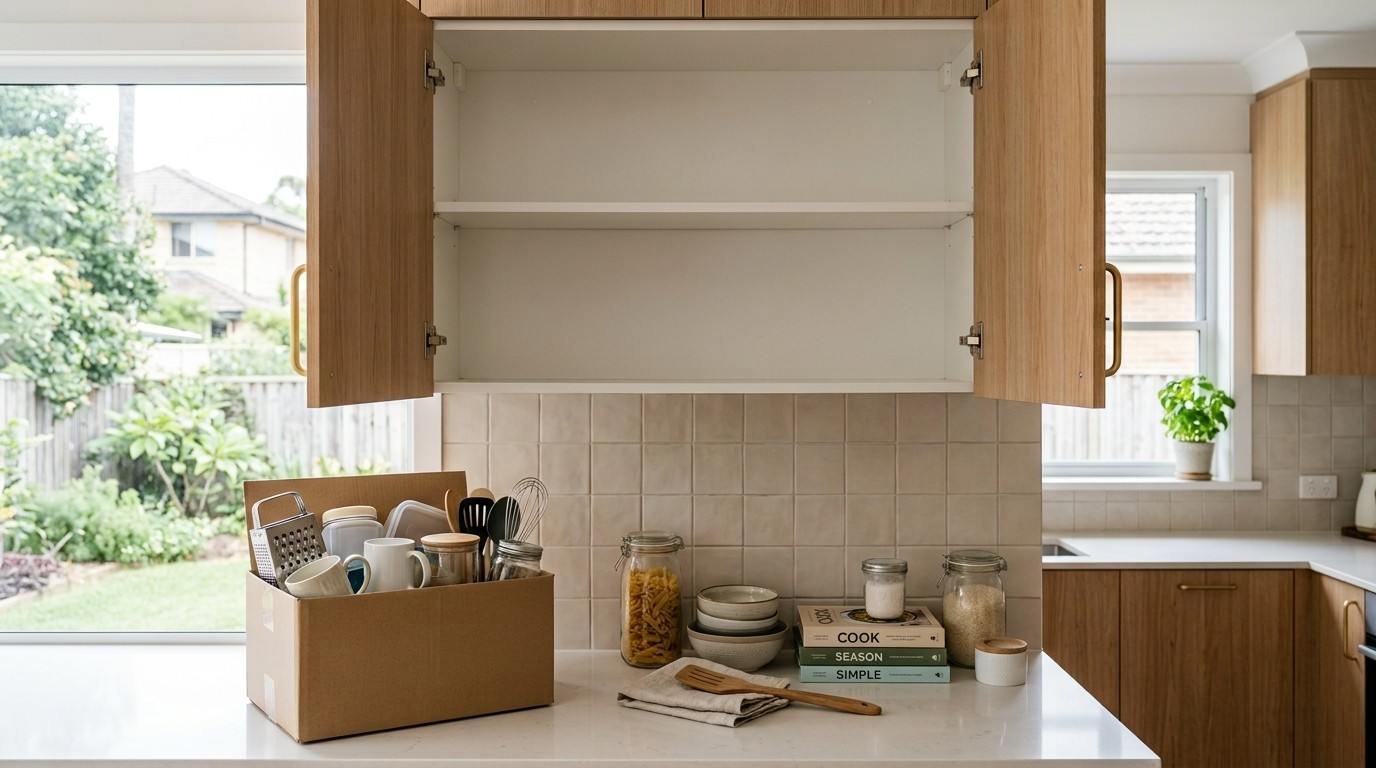
How Do You Arrange Kitchen Cupboards Around Appliances?
Arranging cupboards around appliances means treating each major appliance as an anchor point for a dedicated storage zone. The cupboards surrounding your oven, cooktop, refrigerator, and dishwasher should store items relevant to that appliance’s function.
Cupboard Placement Around the Oven, Cooktop, and Rangehood
The cupboards flanking your cooktop and oven form the cooking zone. The drawer immediately beside the cooktop is the highest-value storage position in most kitchens, ideal for oils, spices, and frequently used utensils.
Overhead cabinets above the cooktop are typically occupied by the rangehood. Avoid storing anything flammable or heat-sensitive in cabinets directly above or beside the cooktop.
The drawer beneath the oven, if present, works well for baking trays and oven mitts. Cabinets beside the oven suit pots and casserole dishes.
How to Organise Storage Near the Fridge and Dishwasher
The refrigerator zone should have adjacent space for food storage containers, wrap, and foil. A tall pantry cabinet near the refrigerator creates a logical consumables zone.
The dishwasher zone is one of the most overlooked areas in cupboard planning. Positioning everyday crockery directly above or beside the dishwasher dramatically reduces unpacking effort, and we prioritise this adjacency in every layout plan we design.
An appliance garage, a small cabinet with a roll-up or lift-up door built into the benchtop, is worth considering for kettles, toasters, and coffee machines. It keeps small appliances accessible but out of sight, which frees up bench space without losing storage.
What Is the Most Efficient Way to Arrange a Small Kitchen?
The most efficient way to arrange a small kitchen is to maximise every available vertical and horizontal surface while eliminating wasted space in corners and above cabinets. Small kitchens demand more deliberate planning because every centimetre carries greater weight.
Maximising Vertical Space with Stacked Cupboards and Tall Pantry Units
In a small kitchen, vertical space is the most underutilised resource. Standard upper cabinets typically stop 300 to 400 millimetres below the ceiling, leaving a dead-space gap that collects dust.
Tall pantry units, sometimes called larder cabinets, are one of the most space-efficient solutions we install for small kitchens. A single 600-millimetre pantry column can store as much as several standard cabinets combined.
Additional strategies we recommend include:
- Open shelving above the bench for frequently used items
- Magnetic knife strips on the splashback to free drawer space
- Hooks inside cabinet doors for lids and measuring cups
- Pegboard panels for hanging cookware
- Stacking shelf inserts to double usable shelf space
Corner Cupboard Solutions: Lazy Susans, Pull-Outs, and Magic Corners
Corner cabinets are notoriously difficult to use efficiently. The standard L-shaped corner creates a deep, awkward space where items pushed to the back are effectively lost.
A lazy Susan is a rotating shelf system that brings items forward with a simple spin, and it works well for pantry items and small appliances. A magic corner, or Le Mans unit, uses a linked shelf system that swings out when the door opens. Pull-out corner drawers are a more contemporary alternative.
We always specify the right corner solution before cabinetry is ordered, since retrofitting is possible but far more limited.
How Should a Kitchen Pantry Cupboard Be Arranged?
A kitchen pantry should be arranged by category and frequency of use, with everyday items at eye level, heavier items on lower shelves, and rarely used items on the highest shelves. A well-organised pantry reduces food waste and speeds up meal preparation.
Organising Pantry Shelves by Category and Frequency of Use
The most effective system divides contents into clear categories with a consistent shelf position for each. We recommend organising by shelf level as follows:
- Eye level: everyday staples like pasta, rice, canned tomatoes, and cooking oils
- Below eye level: snacks, spreads, and condiments used at the bench
- Lower shelves: heavy items like bulk flour or bottled drinks
- Upper shelves: rarely used and backup stock
- Door shelves: spices, small jars, and frequently accessed sauces
Grouping items by category makes the pantry intuitive to navigate. Using clear containers for dry goods improves visibility and makes it obvious when supplies run low.
Pantry Door Storage and Pull-Out Shelf Systems
The inside of a pantry door is valuable space most households leave unused. Door-mounted racks hold spices, small jars, and slim items that would otherwise occupy shelf space.
Pull-out shelf systems convert deep, fixed shelves into accessible drawers. This is especially valuable in tall pantry columns, where depth makes items at the back difficult to reach, and we consider it one of the most worthwhile upgrades during any renovation.
How Do You Arrange Kitchen Cupboards During a Renovation?
Arranging cupboards during a renovation is fundamentally different from reorganising an existing kitchen. You get to design the layout from scratch, specifying position, size, and internal configuration before any cabinetry is manufactured.
Working With a Kitchen Designer or Renovation Contractor in Sydney
We work with Sydney homeowners through every stage of the kitchen planning process, from initial layout consultation through to cabinetry specification and final fit-out. A skilled contractor assesses your existing kitchen, identifies workflow inefficiencies, and proposes an arrangement that maximises storage within your footprint.
Key decisions made during design include cabinet position relative to appliances, drawer versus door configurations, corner storage solutions, and upper cabinet height. These are locked in once cabinetry is ordered, which is why thorough planning matters so much.
Reconfiguring existing cupboards without a full renovation is often more affordable than people expect, particularly when the cabinet carcasses are sound and only internal fittings, drawer runners, or pull-out systems need upgrading. A full renovation makes sense when the layout itself needs to change, but many workflow problems can be solved by retrofitting smarter internals into cabinets you already have.
Planning Cupboard Layout Before Cabinetry Installation Begins
The most common and costly mistake in kitchen renovations is finalising the cabinetry order without fully thinking through daily use. Changes made after installation are expensive and sometimes impossible without significant rework.
Before installation begins, we always confirm the following in writing:
- The exact position of every cabinet relative to the sink, cooktop, oven, fridge, and dishwasher
- The internal configuration of each base cabinet
- The height of upper cabinets and whether they extend to the ceiling
- The corner storage solution for each corner cabinet
- The pantry column position and internal configuration
- The position of any appliance-specific storage like bin drawers or appliance garages
Locking in these details before installation protects your budget and eliminates the frustration of discovering a layout problem after the renovation is complete.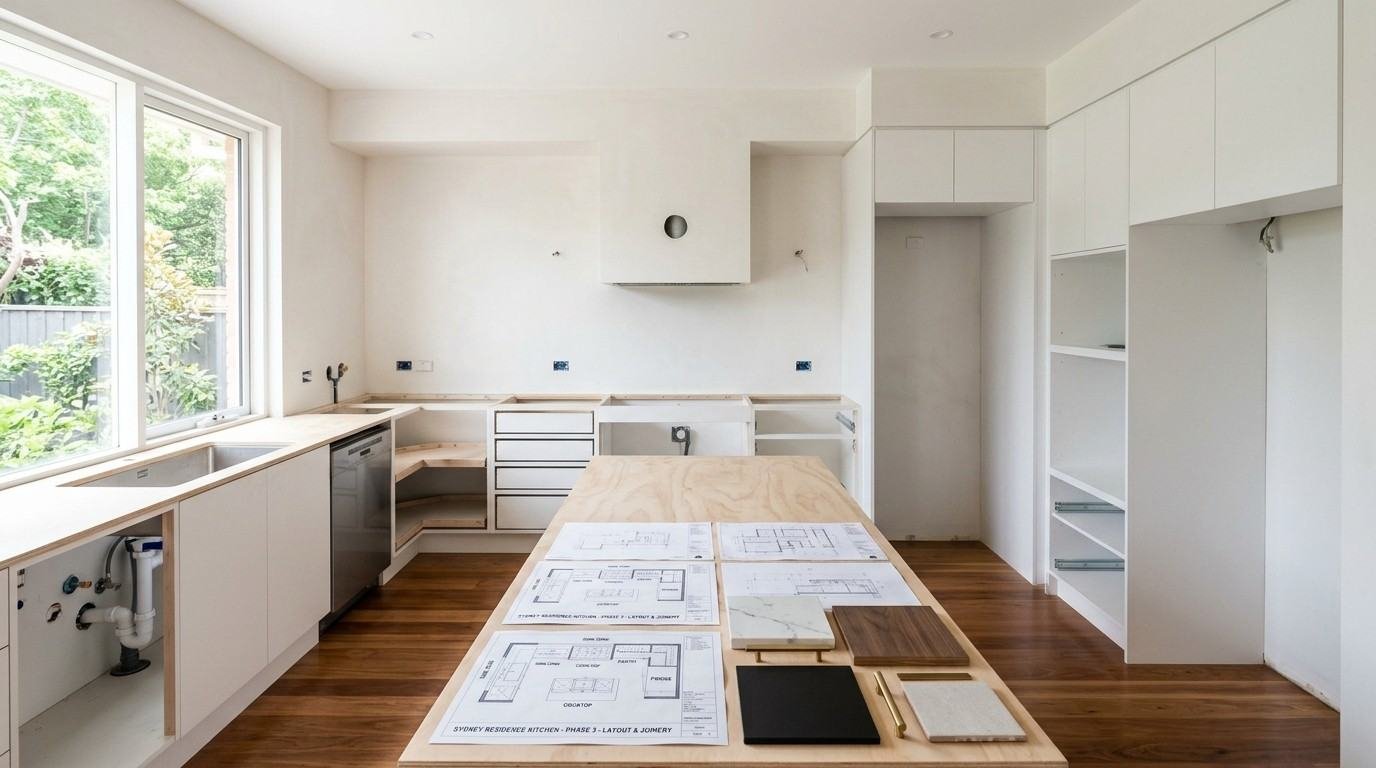
Conclusion
Arranging kitchen cupboards effectively comes down to one principle: storage should follow function. When upper cabinets hold lightweight everyday items, lower cabinets store heavy cookware near the cooktop, and pantry space is organised by category, the kitchen becomes genuinely efficient to work in.
The decisions that matter most are made before a renovation begins. Cupboard placement relative to appliances, internal drawer configurations, corner storage solutions, and pantry design all determine how well your kitchen functions for years afterward.
At Sydney Home Renovation, we help Sydney homeowners plan kitchen cupboard layouts that work from day one. Contact our team to discuss your kitchen renovation and get expert guidance on cupboard arrangement, cabinetry specification, and layout planning tailored to your home.
Frequently Asked Questions
What should go in upper kitchen cupboards?
Upper kitchen cupboards should store lightweight, frequently used items including everyday plates, bowls, glasses, mugs, and food storage containers. Spices and dry goods used regularly also work well up there. Avoid storing heavy items due to overhead lifting risk.
How do I arrange kitchen cupboards for maximum storage?
Assign every cabinet a specific function based on its proximity to the relevant work zone. Use deep drawers for cookware, pull-out shelves for base cabinets, and extend upper cabinets to the ceiling to eliminate dead space. Grouping related items maximises usable capacity.
Should heavy items go in upper or lower cupboards?
Heavy items should always go in lower cupboards or deep drawers. Storing heavy cookware overhead creates a safety risk and makes items harder to access safely. Base cabinets are built to carry greater weight.
How do I organise deep kitchen cupboards?
Use pull-out shelves, internal drawer inserts, or vertical dividers that bring items at the back into view and reach. Without internal organisation, deep base cabinets become difficult to use. Pull-out shelves are the most effective solution.
What is the kitchen work triangle and how does it affect cupboard layout?
The kitchen work triangle connects the sink, cooktop, and refrigerator. Cupboard layout should support this by positioning relevant storage near each point. This reduces unnecessary movement and improves overall efficiency.
How should I arrange cupboards in a small kitchen?
Extend upper cabinets to the ceiling, use tall pantry columns instead of multiple standard cabinets, specify deep drawers for accessibility, and install corner solutions like lazy Susans. Every centimetre should serve a clear purpose.
When should I consult a professional about kitchen cupboard layout?
Consult a professional before finalising any cabinetry order during a renovation. Once cabinetry is manufactured, layout changes are expensive and often impractical. A professional can design an arrangement that avoids costly mistakes.


