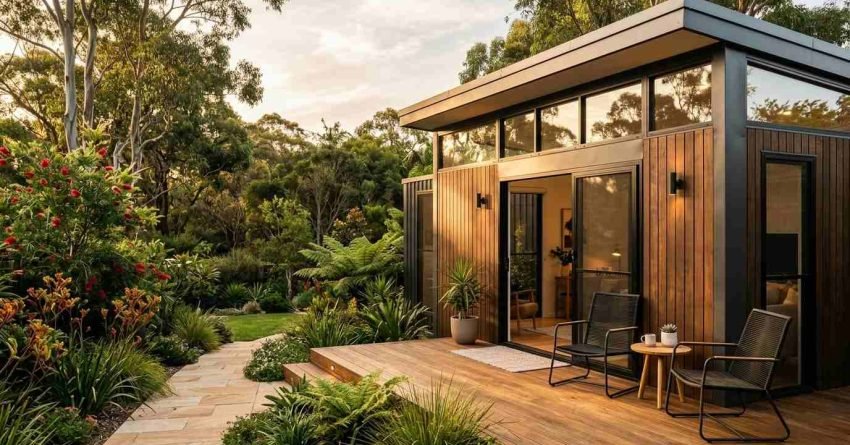
A granny flat in New South Wales can have one or two bedrooms. We find the exact number depends on your site area, the applicable development pathway, and your local council’s controls. Three-bedroom granny flats are not permitted under the NSW State Environmental Planning Policy (Housing) SEPP, which governs complying development approvals across Sydney and regional NSW.
Understanding these limits before you design or build saves time, money, and the frustration of a rejected application.
How Many Bedrooms Does NSW Allow in a Granny Flat?
Under the NSW Housing SEPP, a granny flat, formally called a secondary dwelling, is capped at a maximum floor area of 60 square metres. Within that footprint, most granny flats we design end up with one or two bedrooms. The bedroom count is not stated as a fixed number in the SEPP itself.
Instead, it is constrained indirectly by the maximum floor area and by the minimum lot size requirement of 450 square metres for complying development.
A one-bedroom granny flat suits smaller sites and tighter budgets. A two-bedroom configuration is achievable on larger blocks where the floor plan can accommodate two rooms, a bathroom, a kitchen, and a living area within the 60-square-metre limit. Three bedrooms are not viable within this footprint under complying development rules.
The Role of Site Area in Bedroom Count
Your lot size directly shapes what bedroom configuration is realistic. On a 450 to 600 square metre block, we usually find a one-bedroom layout delivers better liveability. The rooms are proportionate, storage is adequate, and the living space does not feel compressed.
On blocks above 600 square metres, a two-bedroom layout becomes more practical. You have enough floor area to fit two bedrooms without sacrificing the kitchen, bathroom, or living zone. Attempting two bedrooms on a smaller site often results in rooms that meet minimum dimensions on paper but feel cramped in practice.
Council Controls That Affect Bedroom Numbers
Not all granny flat applications go through the complying development pathway. If your site has a heritage overlay, flood affectation, bushfire risk, or falls within a council area with specific local environmental plan (LEP) provisions, a development application (DA) is often required instead.
Under a DA pathway, your local council applies its own development control plan (DCP), which can impose additional requirements around bedroom size, setbacks, or privacy screening. Some Sydney councils apply minimum bedroom dimensions, typically 9 square metres for a single bedroom. This further constrains how many bedrooms fit within the 60-square-metre cap.
We always check the council approval pathway early. It determines which rules apply to your specific site and whether complying development or a DA is the right route forward.
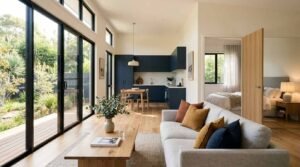
How Bedroom Count Affects Granny Flat Design and Liveability
Choosing between one and two bedrooms is not just a regulatory question. It is a design and liveability decision that shapes the entire floor plan, from circulation space to where natural light enters the dwelling.
A well-designed granny flat balances bedroom count against the quality of every other space in the dwelling. Adding a second bedroom without adjusting the overall layout often compresses the living area or reduces storage, and that affects both liveability and rental appeal.
Single Bedroom vs Two Bedroom, Which Works Better?
A single-bedroom granny flat works well for an ageing parent, a single occupant, or a homeowner prioritising a generous open-plan living and kitchen zone. The floor plan is simpler, construction costs are lower, and the dwelling feels more spacious relative to its footprint.
A two-bedroom granny flat suits couples, small families, or investors targeting higher rental yields. The additional bedroom adds flexibility. It can function as a home office, a guest room, or a second sleeping space. The trade-off is a tighter living area and a more complex floor plan that requires careful design to avoid a cramped result.
How Bedroom Count Affects Granny Flat Build Cost
Bedroom count has a direct impact on construction cost, though not always in the way people expect. Adding a second bedroom within the same 60-square-metre envelope does not necessarily add cost per square metre. It usually adds cost through extra internal walls, an additional door, and often a second built-in wardrobe.
We generally see a one-bedroom granny flat cost slightly less to build than a two-bedroom equivalent of the same total floor area, mainly due to the extra fit-out and joinery a second bedroom requires. Kitchen and bathroom specifications tend to have a bigger impact on overall cost than the bedroom count itself.
Site works, such as excavation, drainage, and access, often influence your budget more than whether you choose one or two bedrooms. We factor all of this in when helping clients plan a granny flat that fits both their block and their budget.
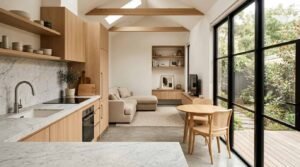
Design Tips to Maximise a One or Two Bedroom Layout
Getting the most out of a compact footprint takes deliberate design choices. We recommend a few strategies that consistently improve liveability regardless of bedroom count.
Orient the main living space toward natural light and, where possible, a northern aspect. Use built-in joinery instead of freestanding furniture to reduce clutter and preserve floor space in smaller bedrooms.
Keep hallways and circulation zones as short as possible. Every metre spent on corridor space is a metre not spent on a bedroom, bathroom, or living area, so efficient planning matters more in a 60-square-metre footprint than in a full-sized home.
Bedroom Count and Rental Return: What Investors Should Know
For property investors in Sydney, a two-bedroom granny flat typically commands a higher weekly rent than a one-bedroom equivalent. Rental demand for two-bedroom secondary dwellings is strong across Western Sydney, the Inner West, and the Northern Beaches, where affordability pressures push tenants toward secondary dwelling stock.
However, the value equation is not purely about bedroom count. Build quality, natural light, storage, and outdoor access all influence what a tenant will pay and how long they will stay.
A well-finished one-bedroom granny flat on a desirable street can outperform a poorly designed two-bedroom on a comparable block. We tell clients the bedroom count sets the ceiling on rental income. The quality of the build determines whether you actually reach it.
Conclusion
A granny flat in NSW can have one or two bedrooms, with the final number shaped by your site area, floor plan, and the approval pathway that applies to your block.
For homeowners and investors, getting the bedroom count right from the start avoids costly redesigns and maximises the rental return on a granny flat over the long term.
At Sydney Home Renovation, we help you plan and build a granny flat that meets council requirements, fits your block, and delivers lasting value. Contact us to get started.
Frequently Asked Questions
Can a granny flat have 2 bedrooms in NSW?
Yes. A two-bedroom granny flat is permitted in NSW provided the total floor area stays within the 60-square-metre maximum and the site meets the minimum 450-square-metre lot size requirement under the Housing SEPP.
What is the minimum lot size for a granny flat in Sydney?
Under complying development rules, the minimum lot size is 450 square metres. Lots below this threshold may still be eligible for a granny flat via a development application, subject to council assessment.
Can a granny flat have 3 bedrooms?
No. Three bedrooms are not achievable within the 60-square-metre maximum floor area permitted under the NSW Housing SEPP. Complying development and most DA pathways do not support a three-bedroom secondary dwelling.
Does bedroom count affect council approval for a granny flat?
Indirectly, yes. Bedroom count affects floor area, room dimensions, and privacy considerations, all of which are assessed during the approval process. Councils applying DCPs may impose minimum bedroom size requirements that limit how many rooms fit within the permitted footprint.
How does bedroom number affect rental income from a granny flat?
A two-bedroom granny flat typically achieves a higher weekly rent than a one-bedroom equivalent in Sydney. However, build quality, layout efficiency, and location also influence rental returns, so bedroom count alone does not guarantee stronger yield.