
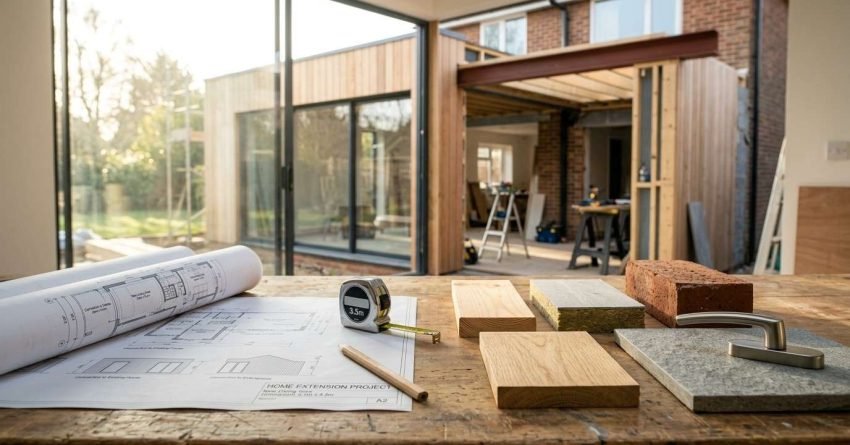
A home extension is a structural addition to an existing residential property, expanding its footprint, floor area, or vertical height to create new living space without the cost or disruption of relocating. In Sydney, where land is scarce and property values are high, extending your home is one of the most financially and practically sound decisions an owner-occupier or investor can make. The process involves far more than hiring a builder and watching walls go up.
Getting a home extension right requires a clear sequence of decisions, each one building on the last. Skipping steps or misunderstanding the order of the process is the single most common reason Sydney homeowners experience cost blowouts, approval delays, and construction disputes.
This guide covers every stage of the home extension process in Sydney, from defining your goals and understanding costs, through design, council approval, builder selection, and construction, to final handover and the value your extension adds to your property.
Step 1: Defining Your Home Extension Goals and Scope
Every successful home extension begins with a clearly defined brief, not a floor plan, not a builder quote, and not a Pinterest board. Before any design work begins, you need to understand precisely what problem you are solving, what outcome you need, and what constraints your property and budget impose.
This first step is the most underestimated in the entire process. Homeowners who skip it or rush through it consistently end up redesigning mid-project, paying for changes after construction has started, or completing an extension that does not actually solve the problem they set out to fix.
How to Clarify What You Need Before You Plan
Start by answering four questions honestly.
What space do you not have that you need? Be specific: a fourth bedroom, an open-plan kitchen and living area, a home office, a larger laundry, or a self-contained space for a family member.
How will your household use this space in five to ten years? Extensions built for today’s needs that ignore tomorrow’s household composition often require further work sooner than expected.
What is your non-negotiable budget ceiling? Not a rough figure, but a firm number that accounts for construction, professional fees, council costs, and a contingency reserve.
What are your property’s physical constraints? Block size, orientation, existing structure, easements, and council zoning all determine what is physically and legally possible before a designer draws a single line.
Answering these questions in writing, before engaging any professional, gives every architect, designer, and builder you speak with a clear brief to respond to. It also gives you a benchmark against which to evaluate their proposals.
Step 2: Understanding Home Extension Costs in Sydney
Home extension costs in Sydney vary significantly depending on the type of extension, the size of the addition, the complexity of the existing structure, and the quality of finishes specified. As a general orientation, single-storey rear extensions in Sydney typically range from $2,500 to $4,500 per square metre for a mid-range finish, while second-storey additions can range from $3,500 to $6,000 per square metre or more depending on structural requirements and site access.
These figures are starting points, not fixed prices. The final cost of any extension is shaped by a combination of factors that are unique to your property, your brief, and the current state of the Sydney construction market.
What Drives the Cost of a Home Extension?
Several variables consistently move the cost needle on Sydney home extensions.
Structural complexity. Extensions that require significant changes to the existing structure, such as removing load-bearing walls, underpinning footings, or integrating with a heritage-listed facade, cost more than additions to straightforward brick veneer or timber-framed homes.
Site access and conditions. Narrow blocks, steep sites, poor soil conditions, and limited crane or machinery access all add cost. A geotechnical report early in the process can surface soil issues before they become construction surprises.
Council and approval pathway. Development Applications (DAs) cost more in time and professional fees than Complying Development Certificates (CDCs). The approval pathway your project requires depends on your council, your zoning, and the scale of your proposed works.
Trades and labour. Sydney labour rates are among the highest in Australia. The availability of skilled trades, particularly electricians, plumbers, and structural carpenters, fluctuates with market demand and directly affects both cost and timeline.
Material and finish selections. The difference between a builder’s standard specification and a mid-range or premium finish can add 20 to 40 percent to the total cost of an extension. Decisions made at the design stage lock in a significant portion of the final budget.
Step 3: Budgeting and Financing Your Home Extension
A realistic budget is not the same as a builder’s quote. Your total project budget must account for every cost associated with the extension, not just the construction contract value. Many homeowners underestimate their total spend by 20 to 30 percent because they budget for the build but not for the full project.
A complete home extension budget in Sydney should include:
Construction contract value. The builder’s price for the physical works, including labour, materials, and site management.
Professional fees. Architect or building designer fees typically range from 8 to 15 percent of the construction cost. Structural engineer, hydraulic engineer, and energy assessor fees are additional.
Council and approval fees. DA lodgement fees, building inspection fees, and long service levy contributions are mandatory costs that vary by council and project value.
Contingency allowance. A minimum 10 to 15 percent contingency on the construction cost is standard practice for residential extensions. Projects involving older homes or complex sites should carry a higher contingency.
Temporary accommodation. Accommodation costs must be factored into the total budget if the extension requires you to vacate part or all of your home during construction.
Landscaping and external works. Driveways, fencing, retaining walls, and garden reinstatement are often excluded from the building contract and represent a high additional cost.
How to Set a Realistic Home Extension Budget
The most effective approach is to work backwards from your maximum spend. Establish your ceiling, subtract all non-construction costs, and use the remaining figure as your construction budget when approaching builders. This prevents the common scenario where a homeowner receives a quote that fits their construction budget but blows their total project budget once all other costs are added.
How to Finance a Home Extension in Sydney
Two financing pathways suit most Sydney homeowners. A construction loan releases funds in stages as the build progresses, which means you pay interest only on drawn funds rather than the full loan amount from day one. An equity release or refinance draws on the existing equity in your property and is often simpler to arrange for established homeowners with significant equity. Both options require pre-approval before you sign a building contract, so engaging your lender or mortgage broker early in the planning process is essential.
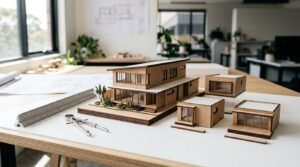
Step 4: Choosing the Right Home Extension Type for Your Property
Not every extension type suits every property. The right choice depends on your block size and shape, your existing home’s structure and orientation, your council’s planning controls, and the outcome you are trying to achieve. Choosing the wrong extension type, or defaulting to the most popular option without assessing your specific site, can result in a project that costs more, takes longer, and delivers less value than a better-matched alternative.
Ground Floor, Second Storey, or Rear Extension: Which Is Right?
Ground floor rear extension. The most common extension type in Sydney. Adds living space to the back of the home, typically expanding the kitchen, dining, and living areas. Suits properties with adequate rear setback and a single-storey footprint. Generally the most cost-effective option per square metre.
Second storey addition. Adds a full or partial upper level to an existing single-storey home. Maximises floor area without consuming backyard space. Structurally more complex and typically more expensive per square metre than a ground floor addition. Requires assessment of the existing structure’s capacity to carry the additional load.
Side extension. Extends the home laterally into the side setback. Suits narrow blocks where rear setback is limited. Often used to add a bedroom, bathroom, or laundry rather than a large open-plan living area.
Dual occupancy or secondary dwelling. A separate self-contained dwelling on the same lot, subject to specific council zoning controls. Relevant for property investors seeking rental income or multigenerational living arrangements. Secondary dwelling approvals in NSW are governed by the State Environmental Planning Policy (Housing), which sets minimum lot size and floor area requirements that vary by council area.
Modular or prefabricated extension. Factory-built components assembled on site. Can reduce construction time and on-site disruption. Suited to straightforward additions where site access allows delivery of prefabricated modules.
Step 5: Design, Architectural Plans, and Council Approval
Once your goals, budget, and extension type are defined, the design and approval phase begins. This is the stage where your brief is translated into architectural drawings, engineering documentation, and a formal application to your local council or a private certifier.
The design and approval phase is where many projects stall. Incomplete documentation, underestimated approval timeframes, and designs that do not comply with council controls are the most common causes of delay. Getting this phase right, with the right professionals and a clear understanding of the approval pathway, protects your timeline and your budget.
Architect, Building Designer, or Draftsperson: Who Do You Need?
The scale and complexity of your project determines who you engage. A registered architect brings the broadest design capability and is best suited to complex projects, heritage properties, or sites with significant constraints. A building designer holds a licence under the Building Designers Act and can prepare full documentation for most residential extensions at a lower fee than an architect. A draftsperson prepares drawings but cannot provide design advice or certify documentation. For most Sydney home extensions, a building designer delivers the right balance of capability and cost. An architect adds value where design complexity or heritage requirements demand it.
Development Application vs. Complying Development Certificate
In New South Wales, most home extensions are approved through one of two pathways.
Development Application (DA). A formal application to your local council. Required when the proposed works do not meet the criteria for complying development, or when the property is heritage-listed, located in a sensitive zone, or subject to specific planning controls. DA assessment timeframes in Sydney typically range from 40 to 120 days, though complex applications can take longer.
Complying Development Certificate (CDC). A faster approval pathway administered by a private certifier rather than council. Available when the proposed works comply with the State Environmental Planning Policy (Housing) and relevant development standards. CDC approvals can be issued in as little as 10 to 20 business days for straightforward projects.
Your architect or building designer will advise which pathway applies to your project based on your property’s zoning, the scale of the proposed works, and any site-specific constraints.
Neighbour Notification and the DA Objection Process
DA applications in NSW trigger a mandatory neighbour notification period, typically 14 days, during which adjoining owners can lodge formal objections. Objections do not automatically block approval, but they can extend the assessment timeline and, in some cases, require a design modification to address a legitimate concern. Understanding this process before lodgement helps you anticipate potential delays and engage with neighbours proactively, which is often the most effective way to prevent a formal objection from being lodged at all.
Energy Efficiency Requirements for Sydney Home Extensions
All new residential construction in NSW, including home extensions, must comply with the energy efficiency provisions of the National Construction Code (NCC). For extensions above a certain floor area threshold, a NatHERS thermal performance assessment or a Section J compliance report is required as part of the documentation package. These requirements affect insulation specifications, glazing performance, and in some cases, mechanical ventilation. Your building designer or energy assessor will confirm which pathway applies to your project and prepare the required documentation.

Step 6: Selecting a Builder or Renovation Contractor
Choosing the right builder is the single most consequential decision in the home extension process. The quality of your builder determines not just the quality of the finished product, but the accuracy of the cost plan, the reliability of the timeline, and the ease of the entire construction experience.
In Sydney’s competitive renovation market, the range of builders operating in the home extension space is wide, from large volume builders and boutique renovation specialists to sole traders and owner-builders. Not all are equally suited to every project type, and the lowest quote is rarely the best value.
What to Look for When Comparing Home Extension Quotes
Licence verification. All builders in NSW must hold a current contractor licence issued by NSW Fair Trading. Verify the licence number before signing any contract. For projects over $20,000, a Home Building Compensation Fund (HBCF) certificate of insurance is also required.
Quote scope and inclusions. A detailed quote specifies exactly what is and is not included in the contract price. Vague quotes with broad exclusions are a reliable indicator of a builder who will present variations, which are additional cost claims, during construction.
References and completed projects. Ask for references from clients whose projects are similar in type and scale to yours. Visit completed projects where possible. A builder’s portfolio of finished work tells you more than any sales conversation.
Communication and project management. How a builder communicates during the quoting process is a strong predictor of how they will communicate during construction. Slow responses, vague answers, and reluctance to provide documentation are warning signs.
Contract terms. A fair and complete building contract protects both parties. Understand the payment schedule, variation process, defects liability period, and dispute resolution mechanism before signing.
Lump Sum vs Cost-Plus Contracts: Which Protects You Better?
A lump sum contract fixes the total price for a defined scope of work. It gives you cost certainty and places the risk of material and labour cost increases on the builder. A cost-plus contract charges you the actual cost of labour and materials plus a builder’s margin, which means your final cost is not fixed at the outset. Lump sum contracts suit most residential extensions because they protect against budget blowout. Cost-plus arrangements can suit highly complex or bespoke projects where the scope cannot be fully defined before construction begins, but they require a high level of trust and transparency from your builder.
Owner-Builder Licence in NSW: What You Need to Know
An owner-builder licence allows you to act as your own builder and manage the construction of your extension directly. In NSW, an owner-builder permit is available for projects valued at $10,000 or more where you intend to live in the property. The key risk is that owner-builders are personally liable for the quality of the work and cannot access HBCF insurance, which means a future buyer of your property will not have statutory warranty protection for the work you performed. Most lenders also treat owner-built properties with additional scrutiny. For most homeowners, engaging a licensed builder delivers better risk management and a cleaner resale position than the cost savings of owner-building.
Step 7: The Construction Phase – What to Expect
Once contracts are signed and approvals are in place, construction begins. For most homeowners, this is the most visible and emotionally charged phase of the project, and the one for which they are least prepared in terms of what to expect day to day.
Understanding the construction sequence, the role of inspections, and the normal rhythm of a building site helps you stay informed without micromanaging your builder. It also helps you identify genuine problems before they escalate.
Key Construction Milestones and Site Inspections
Site preparation and demolition. The first phase involves clearing the site, demolishing any structures being removed, and preparing for new footings. This phase can uncover unexpected conditions, including asbestos, poor soil, or undisclosed structural issues, that require assessment before work proceeds.
Footings and slab. The structural foundation of the extension. Footing design is determined by the structural engineer based on soil conditions and load requirements. A mandatory inspection by the certifier occurs at this stage before concrete is poured.
Frame. The structural frame, whether timber or steel, is erected and inspected before any cladding or lining is applied. The frame stage is a critical inspection point.
Lock-up. External walls, roof, windows, and doors are installed, making the structure weatherproof. This milestone typically triggers a progress payment under the building contract.
Fit-out and fixing. Internal linings, joinery, flooring, tiling, and fixtures are installed. This phase involves the highest concentration of trades on site simultaneously and requires careful coordination.
Practical completion. The builder notifies you that the works are complete. A final inspection is conducted, a defects list is prepared, and the final payment is released once defects are rectified.
Energy Efficiency Requirements for Sydney Home Extensions
All new residential construction in NSW, including home extensions, must comply with the energy efficiency provisions of the National Construction Code. Your certifier will confirm compliance at the frame and lock-up inspection stages. Insulation, glazing, and any mechanical ventilation systems are checked against the approved documentation. Ensuring your builder installs specified materials, rather than substituting cheaper alternatives, is one of the most important quality checks you can make during the construction phase.
Step 8: Managing Hidden Costs and Budget Blowouts
Budget blowouts are the most common complaint among Sydney homeowners who have completed a home extension. In most cases, the overrun was not caused by a dishonest builder or an unrealistic quote. It was caused by costs that were never included in the original budget because the homeowner did not know to ask about them.
Understanding where hidden costs typically emerge gives you the ability to plan for them before construction starts, rather than scrambling to find additional funds mid-project.
The Most Common Budget Surprises in Sydney Home Extensions
Asbestos removal. Homes built before 1990 in Sydney frequently contain asbestos-containing materials in wall sheeting, eaves, and flooring. Removal by a licensed contractor is mandatory and can add $5,000 to $30,000 or more to the project cost depending on the extent of contamination.
Soil and footing conditions. Poor soil bearing capacity, reactive clay, or contaminated fill can require engineered footing solutions that significantly exceed the cost of standard footings. A geotechnical investigation before design is finalised can surface this risk early.
Utility upgrades. Extending a home often requires upgrading the electrical switchboard, water pressure, or stormwater drainage to accommodate the increased load. These upgrades are typically not included in the building contract.
Council and certification fees. DA lodgement fees, construction certificate fees, building inspection fees, and the long service levy are mandatory costs that are frequently omitted from early budget estimates.
Variations. Changes to the scope of work after the contract is signed are priced as variations and are almost always more expensive than if the same work had been included in the original contract. Minimising variations requires a complete and detailed brief before construction begins.
Temporary accommodation. Rental costs for the duration of construction must be factored into the total project budget if the extension requires you to vacate your home.
Step 9: Completion, Handover, and Final Inspections
Practical completion is the formal milestone at which your builder declares the works are finished and ready for handover. It is not the same as perfect completion. Minor defects and incomplete items are normal at this stage and are documented on a defects list that the builder is contractually obligated to rectify.
Understanding what happens at practical completion, what your rights are, and what to inspect before releasing the final payment protects you from inheriting defects that become your problem rather than your builder’s.
What Happens at Practical Completion?
Final inspection. You and your builder conduct a joint walkthrough of the completed works. Document every defect, incomplete item, and non-conformance in writing. Photographs are essential.
Defects list. A formal written list of items requiring rectification. The builder must address all items on the defects list before the final payment is released. Do not release the final payment until defects are rectified to your satisfaction.
Occupation certificate. Your certifier issues an Occupation Certificate confirming the works comply with the approved plans and the Building Code of Australia. This document is required before you can legally occupy the new space.
Defects liability period. Most residential building contracts in NSW include a defects liability period of 13 weeks after practical completion, during which the builder is responsible for rectifying any defects that emerge. Structural defects carry a statutory warranty of six years under the Home Building Act 1989.
Final documentation. Collect all warranties, certificates, and as-built documentation from your builder at handover. This includes appliance warranties, waterproofing certificates, and any engineering sign-off documentation.
How Long Does a Home Extension Take in Sydney?
Timeline is one of the most frequently asked questions in the home extension process, and one of the most difficult to answer accurately without knowing the specifics of a project. As a general guide, the total duration from initial brief to practical completion for a mid-sized Sydney home extension typically ranges from 9 to 18 months, with the approval phase accounting for a significant portion of that time.
| Phase | Single-Storey Extension | Second Storey Addition |
| Design and documentation | 6–12 weeks | 10–20 weeks |
| Approval (CDC) | 2–6 weeks | 2–6 weeks |
| Approval (DA) | 3–6 months | 3–6 months |
| Tendering and contractor selection | 4–8 weeks | 4–8 weeks |
| Construction | 10–20 weeks | 16–30 weeks |
| Total (CDC pathway) | ~6–10 months | ~9–16 months |
| Total (DA pathway) | ~9–15 months | ~12–18 months |
These are orientation-level ranges. Your specific timeline will depend on your extension type, the approval pathway, your builder’s current workload, and the complexity of your site. Delays in the approval phase are the most common cause of overall project timeline blowout, which is why engaging the right professionals early and submitting complete documentation first time is so important.
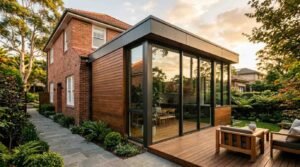
Does a Home Extension Add Value to Your Property?
For most Sydney homeowners, a well-planned and well-executed home extension adds meaningful value to their property, both in terms of liveability and market value. The extent of that value uplift depends on several factors worth understanding before you finalise your brief and budget.
Extension type and size. Adding a bedroom to a three-bedroom home in a family-oriented suburb typically delivers a strong return. Adding a fourth living area to a home that already has generous living space may deliver a weaker return relative to cost.
Quality of finish and integration. Extensions that are architecturally integrated with the existing home, matching materials, proportions, and internal flow, consistently outperform additions that feel bolted on. Quality of finish matters, but only up to the point where it is consistent with the suburb’s price ceiling.
Suburb price ceiling. Every suburb has a price ceiling, the maximum value the market will pay for a property regardless of its quality. Over-capitalising by spending more on an extension than the market will return is a real risk in lower-value suburbs.
Functional improvement. Extensions that solve a genuine functional problem, such as adding a bedroom the household needs, creating an open-plan living area that the existing layout lacks, or adding a second bathroom to a single-bathroom home, deliver stronger returns than extensions that add space for its own sake.
Market data consistently shows that properties with recent structural additions in Sydney’s middle-ring suburbs outperform comparable unimproved properties in resale value, with bedroom additions and open-plan living extensions delivering the strongest relative returns.
Conclusion
A home extension in Sydney is a multi-stage process that moves from goal-setting and budgeting through design, approvals, builder selection, construction, and handover, with each step building directly on the decisions made in the one before it.
The homeowners and investors who achieve the best outcomes are those who treat the process as a system, not a series of isolated decisions. Every section of this guide, from costs and approvals to construction timelines and hidden expenses, connects back to the quality of the brief you start with.
At Sydney Home Renovation, we provide end-to-end home extension guidance, from transparent cost planning and builder coordination to quality construction and confident handover. We are ready to help you move from planning to action.
Frequently Asked Questions
What is the first step in planning a home extension in Sydney?
The first step is defining your goals and scope in writing before engaging any professional. Clarify what space you need, your firm budget ceiling, and your property’s physical constraints; this brief drives every decision that follows.
How much does a home extension cost in Sydney?
Single-storey rear extensions in Sydney typically range from $2,500 to $4,500 per square metre for a mid-range finish. Second-storey additions generally range from $3,500 to $6,000 per square metre, depending on structural complexity and site conditions.
Do I need council approval for a home extension in Sydney?
Yes. Most home extensions in Sydney require either a Development Application (DA) lodged with your local council or a Complying Development Certificate (CDC) issued by a private certifier. The required pathway depends on your zoning, the scale of the works, and any site-specific planning controls.
How long does a home extension take from start to finish?
Most Sydney home extensions take between 9 and 18 months from initial brief to practical completion. Design and documentation typically take 6 to 20 weeks, council approval 2 weeks to 6 months, and construction 10 to 30 weeks depending on extension type and complexity.
What are the most common hidden costs in a home extension?
The most common hidden costs include asbestos removal, engineered footing upgrades due to poor soil conditions, electrical and plumbing upgrades, council and certification fees, builder variations, and temporary accommodation costs during construction.
How do I choose the right builder for my home extension?
Verify the builder’s NSW contractor licence and HBCF insurance, compare detailed itemised quotes rather than lump-sum figures, check references from similar completed projects, and review the contract terms, particularly the payment schedule, variation process, and defects liability period before signing.
Does a home extension add value to a Sydney property?
Yes, in most cases, particularly when the extension adds a functional improvement such as a bedroom, open-plan living area, or second bathroom. The value uplift depends on extension type, quality of finish, integration with the existing home, and the suburb’s price ceiling.
Do I need an architect for a home extension in Sydney?
Not necessarily. A licensed building designer can prepare full documentation for most residential extensions at a lower cost than an architect. An architect adds the most value on complex projects, heritage properties, or sites with significant design constraints.
What is an owner-builder licence and do I need one?
An owner-builder licence lets you manage your own extension without a licensed builder. In NSW, it is available for projects over $10,000 where you intend to live in the property. Most homeowners are better served by a licensed builder because owner-built work is not covered by HBCF insurance, which affects both your protection and your property’s future resale position.


