
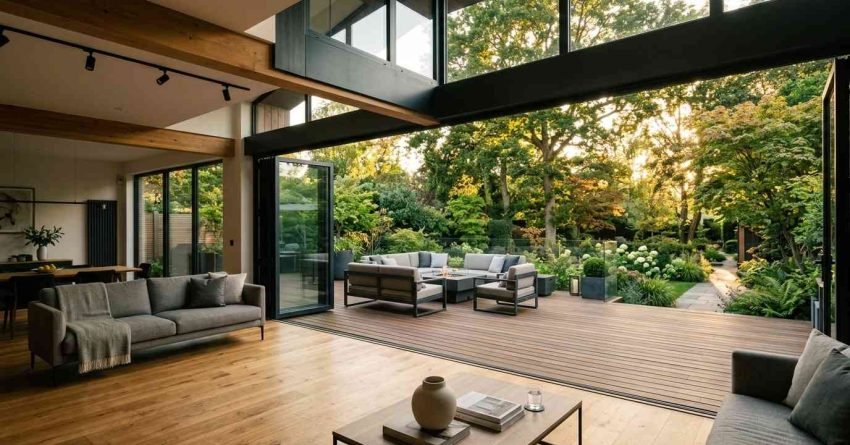
A home extension designed around indoor-outdoor living transforms the way a Sydney household uses its space, connecting interior rooms to alfresco areas, entertaining zones, and gardens through considered design, structural planning, and the right material choices. Getting the design, structure, and compliance right from the start determines whether the result feels seamless or simply like a room with a door to the garden.
This guide covers what indoor-outdoor living means in a home extension context, how to plan and design for it effectively, what outdoor zones to include, what it costs in Sydney, and what council approvals apply.
What Is Indoor-Outdoor Living in a Home Extension?
Indoor-outdoor living, in the context of a home extension, refers to the deliberate design strategy of blurring the physical and visual boundary between interior living spaces and exterior areas. Rather than treating the backyard or side yard as a separate zone, the extension is planned so that internal rooms, typically a kitchen, dining area, or living room, flow directly and naturally into an outdoor space.
This is achieved through a combination of structural decisions, material continuity, door and glazing systems, and the design of the outdoor zone itself. The result is a home that feels larger, functions more flexibly, and responds better to Sydney’s climate, where outdoor living is practical for a significant portion of the year.
The concept is not limited to large extensions. A well-executed indoor-outdoor connection is achievable in a modest rear addition, provided the design decisions are made deliberately and early in the planning process.
Planning Your Home Extension for Indoor-Outdoor Flow
Achieving genuine indoor-outdoor flow requires decisions made at the planning stage, not during construction. The orientation of the extension, the position of openings, the relationship between floor levels, and the structural system all influence how successfully the interior and exterior connect.
Choosing the Right Extension Type
The most common extension types suited to indoor-outdoor living in Sydney are rear ground-floor additions, side additions with garden access, and ground-floor extensions beneath an existing upper storey. Each has different implications for how the outdoor zone is positioned relative to the internal living space.
A rear addition that opens directly onto a north-facing garden is the most straightforward configuration for indoor-outdoor living. Side additions work well where the block is wide enough to accommodate both the extension footprint and a usable outdoor zone. Extensions beneath an existing upper storey require careful attention to ceiling height and the structural implications of the floor above.
Open-plan layouts work hand-in-hand with indoor-outdoor strategies; removing internal walls as part of the extension creates the spatial depth that makes the connection to the exterior feel genuinely expansive rather than incidental.
Structural and Site Considerations in Sydney
Sydney’s varied topography, soil conditions, and block sizes introduce structural variables that affect indoor-outdoor extension planning. Sloping blocks require either cut-and-fill earthworks or a split-level design to achieve a flush or near-flush transition between interior floor level and the outdoor zone. Cut-and-fill on a moderately sloping Sydney block typically adds $15,000–$40,000 to the project cost depending on the volume of material moved and the site access conditions.
Clay-heavy soils classified as reactive Class M or Class H under AS 2870 are common across many Sydney suburbs and require engineered footings that account for seasonal movement. A geotechnical report, typically costing $1,500–$3,500, is standard practice before footing design is finalised on any site with known reactive soil conditions.
Floor level transitions are one of the most common design problems in indoor-outdoor extensions. A step between the internal floor and the outdoor area breaks the visual and physical connection. Achieving a flush or near-flush threshold requires early coordination between the designer, structural engineer, and builder to ensure the slab, drainage, and waterproofing details are resolved before construction begins.
Design Principles That Connect Interior and Exterior Spaces
The design decisions that create a successful indoor-outdoor connection operate at multiple scales simultaneously, from the broad spatial layout down to the specific materials and products used at the threshold between inside and out.
Flooring Continuity and Material Selection
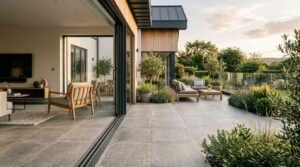
One of the most powerful tools for creating a seamless indoor-outdoor connection is material continuity at the floor plane. When the same or visually similar flooring material runs from the interior through to the outdoor zone, the eye reads the two spaces as a single continuous area rather than two separate rooms.
In practice, this means selecting materials that perform in both interior and exterior conditions. Large-format porcelain tiles are the most common choice because they are available in finishes that suit both applications, are durable in Sydney’s weather, and are laid to a consistent level across the threshold. Timber and timber-look products require careful selection; not all products rated for interior use are appropriate for exposed outdoor conditions, and slip ratings under AS 4586 must be confirmed for any wet-area or outdoor application.
Material selection is more consequential than it first appears. The wrong product at the threshold creates a visual break that undermines the entire indoor-outdoor concept, regardless of how well the rest of the extension is designed.
Glazing, Doors, and Natural Light
The door and glazing system at the boundary between the interior and exterior is the single most consequential design decision in an indoor-outdoor extension. The system determines how wide the opening is, how much natural light enters the interior, how the space feels when the doors are closed, and how the transition functions in practice.
Bifold door systems allow the entire wall to open, effectively removing the boundary between inside and out when the doors are folded back. Sliding door systems offer a cleaner sightline when closed and require less clearance space for operation. Both systems are available in aluminium, timber, and composite frames, with double or triple glazing options that affect both thermal performance and acoustic separation.
Ceiling height at the opening also matters significantly. A higher ceiling at the threshold increases the sense of connection and allows more light to penetrate deeper into the interior. Where the structural system permits, raising the ceiling at the rear of the extension to 2.7 metres or higher makes a measurable difference to how the space feels.
Thermal Comfort and NCC Compliance
Thermal performance is a design requirement, not an optional upgrade. Under Section J of the National Construction Code (NCC), all new residential additions must meet minimum energy efficiency standards, and large glazed openings, which are central to indoor-outdoor design, directly affect how the extension performs against those standards.
In practice, this means specifying thermally broken aluminium frames or timber frames, double-glazed units with a low-e coating, and adequate insulation in the roof and walls of the addition. Getting these specifications right at the design stage avoids costly remediation after the certifier’s inspection.
The good news is that a well-insulated, thermally efficient extension is also a more comfortable one cooler in summer, warmer in winter, and quieter year-round.
Lighting Design for Indoor-Outdoor Spaces
Lighting is what makes an indoor-outdoor extension usable after dark. The most effective approach treats the interior and exterior as a single lit environment using consistent colour temperatures (typically 2700–3000K for a warm, residential feel) across both zones so the connection reads as continuous when the sun goes down.
In the outdoor zone, recessed downlights in a covered ceiling, strip lighting under benchtops or along steps, and low-level path lighting all contribute to a layered effect that is both functional and atmospheric. Outdoor-rated fittings (minimum IP44 for covered areas, IP65 for exposed locations) are a compliance requirement, not a preference.
Outdoor Living Zones: What to Include in Your Extension
The outdoor zone is not a separate project; it is part of the extension. Planning the outdoor living area in parallel with the interior addition ensures the two spaces are designed to work together rather than being retrofitted to each other after the fact.
Alfresco Dining and Entertainment Areas
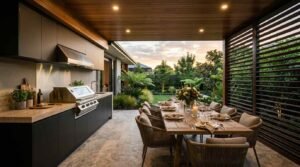
An alfresco dining area is the most common outdoor zone included in a home extension project. At a functional level, it requires a level, durable surface large enough to accommodate a table and chairs for the household’s typical use, with enough clearance around the furniture for comfortable movement.
The relationship between the alfresco area and the interior kitchen or dining room is critical. The alfresco zone sits directly adjacent to the kitchen, with the door system positioned so that food and drinks move between the two spaces without navigating around furniture or through multiple rooms.
A well-designed alfresco dining area functions as a genuine additional room, not a transitional space, and that distinction starts with how it is positioned relative to the interior during the design phase.
Covered Patios, Pergolas, and Outdoor Rooms
A covered outdoor area extends the usability of the alfresco zone across more of the year. In Sydney, where summer sun and occasional heavy rain are both relevant factors, a roof structure over the outdoor living area significantly increases how often the space is used.
The options range from a simple skillion roof extension that continues the roofline of the main addition, through to a freestanding pergola structure with a louvred or polycarbonate roof. A roof structure attached to the main building is treated as part of the extension for council approval purposes. A freestanding pergola may fall within exempt development provisions depending on its size and the applicable council controls.
Outdoor rooms covered structures with three walls, lighting, ceiling fans, and outdoor-rated finishes represent the most complete version of this concept and are increasingly common in Sydney extension projects where the outdoor zone is intended to function as a genuine additional living space.
Outdoor Kitchen and BBQ Integration
An outdoor kitchen elevates the alfresco zone from a dining area to a fully functional entertaining space. At a minimum, this means a weatherproof benchtop, a built-in BBQ or cooktop, and a sink with a cold-water connection. More complete configurations add a bar fridge, storage cabinetry in marine-grade or powder-coated aluminium, and a rangehood or ventilation provision.
The critical planning step is running the gas, water, and power during the main extension construction rather than as a separate fit-out. Retrofitting a gas line or drainage connection through a finished slab is significantly more expensive than roughing it in during the build.
Outdoor kitchen benchtops perform best in porcelain, engineered stone rated for outdoor use, or stainless steel. Standard kitchen stone products are not UV-stable and will degrade in direct sun exposure.
Privacy, Screening, and Boundary Treatments
An alfresco zone that feels exposed to neighbours is an alfresco zone that goes unused. Privacy screening is most effective when it is integrated into the design rather than added as a retrofit. A louvred screen panel, a planted garden bed with a structural edge, or a slatted timber or aluminium fence line all provide separation without closing the space down.
The height and position of screening elements relative to the boundary setback are subject to council controls in most Sydney LGAs. Structures over 1.8 metres in height within a certain distance of the boundary typically require assessment as part of the extension approval.
Cost Considerations for Indoor-Outdoor Home Extensions in Sydney
The cost of a home extension designed around indoor-outdoor living in Sydney varies significantly based on the size of the addition, the complexity of the structural work, the specification of the door and glazing system, and the extent of the outdoor zone included in the scope.
As a general guide, a rear ground-floor extension of 20–40 square metres with a connected alfresco area in Sydney typically ranges from $150,000 to $350,000 or more, depending on the level of finish and the site conditions.
| Cost Component | Typical Range (Sydney) |
| Door and glazing system (bifold or sliding) | $15,000–$40,000 |
| Outdoor zone (paving, roofing, drainage) | $20,000–$60,000 |
| Outdoor kitchen rough-in and fit-out | $8,000–$25,000 |
| Geotechnical report (reactive soil sites) | $1,500–$3,500 |
| Cut-and-fill earthworks (sloping blocks) | $15,000–$40,000 |
| Contingency allowance (10–15% of total) | $15,000–$52,500 |
Contingency allowances of 10–15% of the total project budget are standard practice for home extensions in Sydney, where site conditions, existing structure discoveries, and council requirements introduce costs that are not visible at the quoting stage.
Extensions that create a functional indoor-outdoor connection consistently rank among the highest-value renovation types in Sydney’s property market; the combination of additional floor area and alfresco appeal delivers strong returns for both owner-occupiers and investors.
Council Approvals and Compliance in Sydney, NSW
Home extensions in Sydney require either a Complying Development Certificate (CDC) or a Development Application (DA) depending on the size, location, and characteristics of the proposed work. Understanding which pathway applies before engaging a designer or builder avoids delays and potential redesign costs.
A CDC is a faster approval pathway administered by a private certifier rather than council. It is available for extensions that meet the standardised development standards set out in the State Environmental Planning Policy (Exempt and Complying Development Codes) 2008. Key thresholds include the total floor area of the addition, the setbacks from property boundaries, the height of the structure, and the site coverage percentage.
A DA is required when the proposed extension does not meet CDC standards, when the property is heritage-listed or in a heritage conservation area, or when the local council’s Development Control Plan (DCP) imposes additional requirements that override the state-level codes. DA approval involves a formal assessment period and, in some cases, neighbour notification.
Outdoor structures including covered patios, pergolas, and decks are subject to their own approval thresholds. In many cases, a pergola or deck within certain size and height limits qualifies as exempt development and requires no formal approval. Structures that exceed those limits, or that are attached to the main building, are assessed as part of the extension approval process.
Conclusion
A home extension built around indoor-outdoor living delivers one of the most significant improvements to how a Sydney home functions day-to-day, connecting interior spaces to outdoor zones in a way that adds genuine usable area and long-term property value.
The decisions that determine whether that connection succeeds are made early: in the planning of the extension type, the structural approach, the door system, and the outdoor zone design. Getting those decisions right requires coordinated expertise across design, construction, and compliance.
At Sydney Home Renovation, we bring together the planning knowledge, construction experience, and honest cost guidance to help you move forward with confidence. Contact our team to discuss your indoor-outdoor extension and get a clear picture of what your project involves.
Frequently Asked Questions
What is the difference between a CDC and a DA for a home extension in Sydney?
A CDC is a faster, privately certified approval pathway for extensions that meet standardised state planning codes. A DA is required when the project falls outside those standards, involves a heritage property, or triggers additional council controls.
How much does an indoor-outdoor home extension cost in Sydney?
A rear ground-floor extension with a connected alfresco area typically costs between $150,000 and $350,000 or more. The door and glazing system, outdoor paving, roofing, and drainage are significant cost components that belong in the budget from the outset.
What door system works best for indoor-outdoor living in a home extension?
Bifold systems allow the full wall to open and are the most popular choice for maximising the connection. Sliding systems offer a cleaner sightline and require less operational clearance. The right choice depends on the opening width and how the space is used.
Do I need council approval for an alfresco area or pergola attached to my extension?
In most cases, yes. A covered structure attached to the main building is assessed as part of the extension approval. Freestanding pergolas within certain size and height limits qualify as exempt development, but this depends on your council’s DCP.
How do I achieve a seamless floor transition between inside and outside?
A flush or near-flush threshold requires early coordination between the designer, structural engineer, and builder. The internal slab level, external paving level, drainage falls, and waterproofing detail all need to be resolved at the design stage.
Can a home extension with indoor-outdoor living add value to my Sydney property?
Yes. Extensions that connect interior living spaces to outdoor entertaining areas are consistently among the highest-value renovation types in Sydney’s property market, delivering strong returns for owner-occupiers and investors alike.
What materials work best for flooring in an indoor-outdoor extension?
Large-format porcelain tiles are the most practical choice, durable in Sydney’s weather, available in finishes suited to both applications, and laid to a consistent level across the threshold. Timber-look products work but require outdoor-rated specifications confirmed before purchase.


