
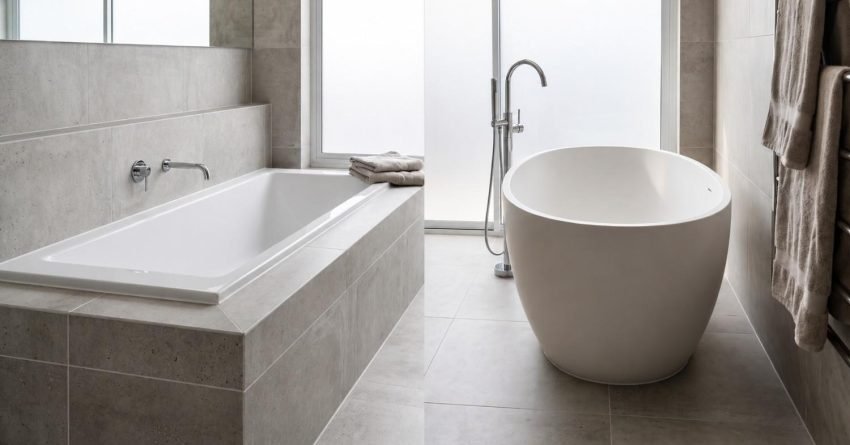
The bathtub you choose shapes your entire bathroom renovation: the budget, the layout, the labour, and the long-term value of the space. Drop-in tubs suit structured, tile-heavy bathrooms where cost control matters most. Freestanding tubs deliver visual impact but carry higher supply and installation costs that catch many Sydney renovators off guard.
This decision affects your renovation timeline, your trades budget, and your property’s resale appeal. Getting it wrong costs real money.
I’ll walk you through both options clearly, definitions, real Sydney costs, installation realities, and a straight decision framework to match your bathroom and budget.
What Is a Drop-In Bathtub?
A drop-in bathtub is a tub that sits inside a framed deck or surround, with its rim resting on top of the deck surface. The tub itself is recessed into the structure, and the surrounding deck, typically tiled, becomes part of the finished bathroom aesthetic.
Most drop-in tubs are installed in alcove positions or against a wall, making them a natural fit for structured bathroom layouts. The deck can be tiled in any material, giving you full control over the look without paying a premium for the tub itself.
It’s a practical, cost-effective choice that integrates cleanly into the bathroom’s architecture.
How Drop-In Tubs Are Installed
Installation starts with building a framed deck structure to support the tub’s weight and define its position. A plumber connects the waste and overflow fittings before the tiler waterproofs and tiles the surround.
The rough-in plumbing must be positioned correctly before the deck is built; moving it later adds high cost. Waterproofing the deck is non-negotiable; any failure here leads to structural damage behind the tiles.
The full installation typically involves a carpenter or builder for the frame, a plumber for the connections, and a tiler for the surround three trades working in sequence.
Drop-In Tub Pros and Cons
Pros: Lower supply cost, fully customisable surround, integrates into any tile scheme, suits compact and standard bathroom sizes, easier to budget for.
Cons: The rim collects grime and is harder to clean thoroughly. Building the deck adds labour cost and construction time. Accessing plumbing later requires cutting into the structure.
The trade-off is clear: you get cost efficiency and design flexibility, but the installation is more involved than it looks on paper.
What Is a Freestanding Bathtub?
A freestanding bathtub stands independently on the bathroom floor, with no surrounding deck or built-in structure. All four sides are exposed, the plumbing connects through the floor, and the tap, typically a floor-mounted freestanding tap, rises separately beside the tub.
Freestanding tubs are the statement piece of a bathroom renovation. They come in acrylic, stone resin, cast iron, and composite materials, ranging from entry-level to high-end luxury finishes. The visual impact is immediate and significant.
But that impact comes with real cost and planning requirements that many renovators underestimate.
How Freestanding Tubs Are Installed
The floor waste must be positioned precisely beneath the tub’s outlet before the slab is poured or the floor is finished; relocating it later means cutting concrete, which adds cost and disruption. The freestanding tap requires its own floor penetration for the supply lines, which must be planned in the rough-in stage.
Exposed supply lines run through the floor and connect to the tap above. If the floor waste or supply penetrations are in the wrong position, the entire installation is compromised.
This is why getting the plumbing rough-in right for a freestanding bath is the single most important planning step and the one most often skipped.
Freestanding Tub Pros and Cons
Pros: Strong visual impact, easier to clean around the exterior, no deck construction required, significant resale appeal in mid-to-high-end properties.
Cons: Higher supply cost, floor waste and tap penetrations must be planned early, exposed plumbing requires precise positioning, larger footprint demands more open floor space.
The cleaning advantage is real; you can get around all four sides easily. But the planning requirements are unforgiving.
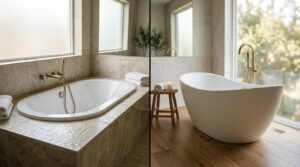
Drop-In vs Freestanding: Side-by-Side Comparison
| Factor | Drop-In Bathtub | Freestanding Bathtub |
| Supply Cost | $800 – $2,500 | $1,500 – $6,000+ |
| Installation Complexity | Medium – deck build + tiling | Medium-High – precise floor penetrations |
| Labour Trades Required | Builder/carpenter, plumber, tiler | Plumber, tiler (floor) |
| Maintenance | Rim collects grime; harder to clean | Easier exterior access; floor around base |
| Space Required | Suits standard and compact layouts | Needs open floor space min. 1,500mm clearance |
| Aesthetic | Integrated, architectural | Statement piece, luxury feel |
| Resale Value | Solid – suits broad buyer appeal | High – strong in mid-to-luxury market |
| Best For | Budget-conscious renovators, family bathrooms, compact spaces | Luxury renovations, large ensuites, high-end resale |
The comparison is not about which tub is better in absolute terms. It’s about which one fits your bathroom, your budget, and your renovation goals.
Cost Breakdown: Drop-In vs Freestanding in Sydney
Cost is where most Sydney renovators get their first surprise. The supply price is only part of the picture; installation labour, trades coordination, and hidden structural requirements drive the real number.
Drop-In Bathtub: Typical Cost Range
A drop-in tub itself typically costs between $800 and $2,500 for supply, depending on material and brand. The deck frame adds a builder or carpenter cost of roughly $400–$800 in labour. Tiling the surround walls and deck adds another $1,200–$2,500 depending on tile selection and area.
Plumbing connections for a drop-in tub in a standard position run $300–$600 for a Sydney plumber. Total installed cost for a drop-in bath in a standard Sydney bathroom typically lands between $3,000 and $6,500, excluding tiles if you’re supplying your own.
That’s a manageable budget range for most renovation projects, and it’s predictable when the rough-in is already in the right position.
Freestanding Bathtub: Typical Cost Range
Freestanding tubs start at around $1,500 for entry-level acrylic and climb to $6,000 or more for stone resin or cast iron options. A quality mid-range freestanding bath in Sydney typically costs $2,500–$4,000 for supply alone.
The floor-mounted tap is a separate purchase; budget $600–$2,000 depending on finish and brand. Plumbing for a freestanding bath, including floor penetrations and supply line connections, runs $800–$1,500 with a Sydney plumber. If the floor waste needs relocating, add $500–$1,500 for concrete cutting and repositioning.
Total installed cost for a freestanding bath in Sydney typically ranges from $5,000 to $12,000+, depending on the tub, tap, and whether plumbing relocation is required. According to HIA Australia, bathroom renovations remain one of the highest-ROI home improvement categories but only when the budget is planned accurately from the start.
Which Bathtub Type Suits Your Bathroom?
The right answer depends on four things: your bathroom’s size, your renovation budget, your property type, and how long you plan to stay. I’ll break it down by scenario.
Best Choice for Small Bathrooms
Drop-in wins here, without question. A freestanding tub needs open floor space on at least three sides to look right and function properly in a compact bathroom; it dominates the room and makes the space feel cramped.
A drop-in tub built into an alcove or against a wall uses the footprint efficiently. The tiled surround integrates with the rest of the room, and you keep usable floor space for movement and storage.
Small bathroom renovations in Sydney benefit most from smart layout planning that maximises every square metre.
Best Choice for Large or Luxury Bathrooms
Freestanding is the natural choice for a large ensuite or a luxury renovation. The open floor space lets the tub breathe, the visual impact is immediate, and the design statement it makes is difficult to replicate with any other fixture.
Stone resin and cast iron options add genuine weight and permanence to the space. In a high-end renovation, a freestanding bath is often the centrepiece the entire room is designed around.
Best Choice for Investment Properties
Drop-in is the smarter call for most investment properties. It’s durable, cost-effective, and appeals to a broad range of tenants and future buyers. The lower supply and installation cost means better ROI on the renovation spend.
Freestanding tubs work in premium investment properties targeting the high-end rental or resale market but only when the bathroom size and overall renovation quality justify the spend. In a standard Sydney investment property, the extra cost rarely returns proportionally at resale.
Understanding how bathroom renovations affect property value in Sydney helps investors make this call with real numbers behind it.
What Sydney Renovators Get Wrong When Choosing a Bathtub
I see the same mistakes repeated across renovation projects in Sydney. Most of them are avoidable with better planning upfront.
Ignoring the floor waste position. For a freestanding bath, the floor waste must be in exactly the right spot before the floor is finished. Renovators who choose their tub after the floor is laid often face expensive concrete cutting to relocate the waste. Plan the tub position first, always.
Underestimating the deck builds for drop-in tubs. The framed deck looks simple but adds a builder, waterproofing, and tiling to the scope. Renovators who budget only for the tub supply and plumbing get caught short when the full trade sequence is quoted.
Choosing a freestanding tap after the rough-in is done. The floor penetrations for a freestanding tap must be positioned based on the specific tap model’s dimensions. Choosing the tap after the floor is finished means the penetrations are in the wrong spot, and fixing that is costly.
Buying the tub before confirming the bathroom dimensions. A freestanding bath that looks proportional in a showroom can overwhelm a real bathroom. Always confirm the tub’s external dimensions against your actual floor plan, with clearances marked, before purchasing.
Conclusion
Drop-in and freestanding bathtubs serve different renovation goals, budgets, and bathroom sizes. The right choice comes down to your specific space, your cost tolerance, and the long-term outcome you’re building toward.
Both options deliver real value when they’re matched to the right project. The mistake is choosing based on aesthetics alone without accounting for installation complexity and total cost.
At Sydney Home Renovation, we help homeowners and investors make this decision with accurate numbers and honest advice so your bathroom renovation stays on budget and delivers lasting value. Get in touch with our team today.
Frequently Asked Questions
Are freestanding baths harder to clean?
No, freestanding baths are generally easier to clean around the exterior because all four sides are accessible. The floor area directly beneath and around the tub requires regular attention, but there’s no rim or deck joint to scrub.
Can a drop-in bath be retrofitted into an existing bathroom?
Yes, a drop-in bath can be retrofitted, but it requires building a new deck structure and retiling the surround. The existing plumbing rough-in position needs to align with the new tub’s waste and overflow; if it doesn’t, plumbing relocation adds to the cost.
Do freestanding baths add value to a home in Sydney?
Freestanding baths add strong visual appeal and resale value in mid-to-high-end Sydney properties. In standard or entry-level homes, the value uplift is less predictable; the overall bathroom quality and size matter more than the tub type alone.
What is the average lifespan of a drop-in vs freestanding bath?
Both types last 15–25 years with proper installation and maintenance. Acrylic tubs at either end of the price range tend to show wear earlier. Stone resin and cast iron freestanding tubs last longer and hold their finish better over time.
Is a freestanding bath suitable for a family bathroom?
A freestanding bath works in a family bathroom if the room is large enough. The open sides make bathing young children slightly less contained than a drop-in with a tiled surround. For most family bathrooms, a drop-in tub is the more practical choice.
How long does it take to install each bathtub type?
A drop-in bath installation, including deck framing, waterproofing, tiling, and plumbing, typically takes 3–5 days across trades. A freestanding bath installation is faster on the construction side, usually 1–2 days for plumbing and floor finishing, assuming the rough-in is already correct.
What materials are drop-in and freestanding baths made from?
Drop-in baths are most commonly made from acrylic or fibreglass. Freestanding baths come in a wider range of acrylic, stone resin, cast iron, and composite materials, with stone resin and cast iron commanding the highest price points and longest lifespans.


