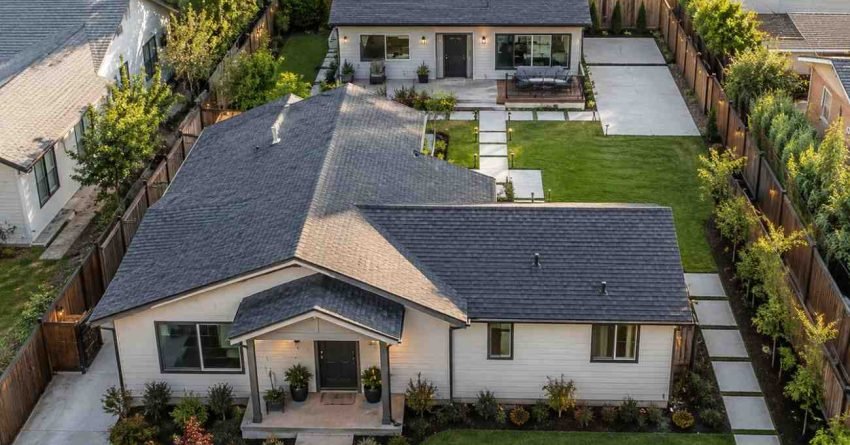
A detached granny flat is a self-contained secondary dwelling on the same lot as your main home, and in Sydney it’s one of the few renovation investments that can generate rental income and lift property value at the same time. For homeowners and investors, the question isn’t whether granny flats are popular; it’s whether the numbers actually work for your block, your budget, and your goals.
Sydney’s rental market, restrictive zoning, and rising housing demand have pushed granny flats from a niche option to a mainstream investment play. Get the build right and ROI compounds for decades.
This guide walks through build costs, rental income, property value uplift, ROI formulas, approval rules, key influencing factors, comparison alternatives, common pitfalls, and how to maximise return on every dollar invested.
What Is a Detached Granny Flat and Why ROI Matters in Sydney
Quick answer: A detached granny flat is a fully self-contained secondary dwelling on the same title as your principal residence, with its own kitchen, bathroom, living space, and separate entrance. In NSW, it can be up to 60 square metres of internal living area on a minimum 450 square metre lot under the Affordable Rental Housing SEPP, the rule that makes Sydney’s market uniquely accessible compared to other Australian states.
Sydney’s combination of high land values, chronic rental undersupply, and a streamlined SEPP approval pathway creates a return profile rarely available elsewhere. That’s why ROI matters here more than in any other Australian capital.
Detached vs. Attached Granny Flats
A detached granny flat is a stand-alone structure separated from the main house, giving tenants and owners full privacy. An attached granny flat shares a wall with the primary home, which typically costs less to build but commands lower rent and reduces resale flexibility.
Detached builds dominate Sydney for one simple reason: privacy drives premium rent.
Granny Flat vs. Dual Occupancy
A granny flat sits on the same title as the main home and cannot be sold separately. A dual occupancy involves two dwellings on one lot that are subdivided or strata-titled, allowing independent sale. Dual occupancy requires a Development Application in most Sydney councils and carries significantly higher approval costs and timelines. For most homeowners, the granny flat pathway under the SEPP is faster, cheaper, and delivers comparable rental returns without the subdivision complexity.
Why Sydney’s Market Makes ROI Compelling
Sydney’s median house price, severe rental shortage, and SEPP-backed approval pathway combine to create returns rarely available in other Australian capitals. Rental vacancy rates have hovered around 1.5% across Sydney’s middle-ring suburbs, pushing weekly rent for two-bedroom granny flats into ranges that pay off the build inside a decade in many cases.
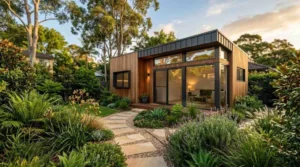
Average Cost to Build a Detached Granny Flat in Sydney
Sydney detached granny flat builds typically range from $120,000 to $200,000+ turnkey, depending on size, finish, site conditions, and inclusions. That range is wide for a reason. The difference between a base-spec one-bedroom build and a premium two-bedroom build with quality finishes is often $80,000 or more, and that gap directly shapes your ROI.
Typical Build Cost Ranges
- 1-bedroom (around 45m²): $120,000–$150,000
- 2-bedroom (around 60m²): $145,000–$185,000
- 3-bedroom (60m² with clever layouts): $170,000–$210,000+
These figures assume standard site conditions, single-storey construction, and mid-range finishes. Custom designs, sloped sites, or high-end inclusions push numbers higher quickly.
What’s Included vs. Excluded
A reputable fixed-price granny flat contract should include slab, frame, roof, full lock-up, kitchen, bathroom, flooring, paint, and basic landscaping connection. What’s frequently excluded and where budgets quietly blow out includes site costs, soil testing, council fees, utility connections, driveway works, fencing, and any allowances for piering or retaining walls on sloped blocks.
Hidden Costs That Catch Owners Out
Site costs are the silent ROI killer. Reactive soil classifications, rock excavation, and stormwater connection alone add $10,000–$30,000 to a project that looked tidy on paper. Add private certifier fees, Section 7.12 contributions in some council areas, and landscaping, and the gap between quoted price and final outlay is often 15–20%.
Budget for the full project cost, not the builder’s base price, before you model your return.
Rental Income Potential and Yield Calculations
Rental income is what transforms a granny flat from an expense into an investment. In Sydney, weekly rent for a two-bedroom detached granny flat typically falls between $450 and $700 per week, with premium inner-ring suburbs reaching $750+ and outer suburbs closer to $400. Over a year, that translates to roughly $23,000–$36,000 in gross rental income per dwelling.
Weekly Rent Benchmarks by Suburb Tier
| Suburb Tier | 1-Bed Weekly Rent | 2-Bed Weekly Rent |
| Inner ring (within 15km of CBD) | $480–$600 | $600–$750 |
| Middle ring (15–25km) | $400–$500 | $500–$650 |
| Outer ring (25km+) | $350–$430 | $430–$550 |
To put those figures in context: a two-bedroom granny flat in Parramatta or Blacktown typically achieves $520–$580 per week, while the same build in Randwick or Marrickville regularly clears $680–$720. Location is the single biggest lever on gross income.
Gross Yield vs. Net Yield
Gross rental yield is annual rent divided by build cost. A $170,000 granny flat earning $600 per week generates a gross yield of around 18%, which is exceptional compared to the 3–4% typical of a standalone Sydney house.
Net yield factors in council rates, insurance, maintenance, property management, and vacancy. That’s where realistic numbers settle closer to 10–13% net, still a strong return by any investment standard.
Property Value Uplift From Adding a Detached Granny Flat
Beyond rental income, a well-built granny flat typically lifts the underlying property’s resale value by $100,000–$200,000 in Sydney, depending on suburb, design quality, and how the dwelling integrates with the main home.
The valuer methodology matters. Lenders often apply a conservative income-capitalisation approach on lower-value blocks, valuing the granny flat at less than its construction cost. On inner-ring sites where land scarcity dominates, the same dwelling attracts a premium valuation because comparable rental evidence supports a higher income stream. A $175,000 build in Penrith generates a different uplift to the same build in Leichhardt.
Buyer profile shapes the uplift too. In family-dominated suburbs, granny flats appeal to multi-generational households and command strong premiums. In investor-heavy markets, the rental yield is what drives the bid. Poorly designed flats that compromise the main home’s backyard or privacy reduce resale appeal a critical reason design discipline matters from day one.
One risk worth understanding: if the granny flat consumes more than 40% of the rear yard, some buyers discount the main home’s liveability. The best builds preserve meaningful outdoor space for both dwellings and present as a coherent property, not a crowded lot.

ROI Calculation Framework: How to Estimate Your Return
ROI on a detached granny flat combines three return streams: rental income, capital uplift, and tax-effective depreciation. Most homeowners only model the first stream and dramatically understate true return.
The Simple ROI Formula
Annual ROI = (Annual Net Rental Income + Annual Capital Uplift) ÷ Total Project Cost × 100
Annual net rental income is gross rent minus rates, insurance, management fees, maintenance allowance, and vacancy provision. Total project cost includes build, site costs, approvals, landscaping, and any financing costs incurred.
Worked Sydney Example
Take a middle-ring Sydney block where you build a 2-bedroom detached granny flat:
- Total project cost (including site costs and approvals): $175,000
- Weekly rent achieved: $580
- Annual gross rent: $30,160
- Annual operating costs (rates, insurance, management at 7%, maintenance, 2-week vacancy): $7,200
- Annual net rental income: $22,960
- Net rental yield: 13.1%
Now add capital uplift. If the granny flat lifts property value by $150,000, that’s a one-time figure that flows into your long-term capital position. The recurring 13.1% net yield is what creates the compounding return year after year.
Payback Period Explained
Payback period is project cost divided by annual net rental income. In the example above, $175,000 ÷ $22,960 = 7.6 years. After year 7–8, the granny flat is effectively a pure income asset, with another 40+ years of useful life on standard build warranties and structural standards.
That long tail is what makes the investment compelling.
Tax Benefits and Depreciation on a Detached Granny Flat
Depreciation is the third return stream most homeowners miss entirely, and it’s a meaningful one. A newly built granny flat qualifies for Division 43 capital works depreciation under Australian tax law, allowing you to claim 2.5% of the construction cost per year for 40 years as a tax deduction.
On a $175,000 build, that’s $4,375 per year in depreciation deductions, reducing your taxable rental income by that amount annually. For an investor in the 37% marginal tax bracket, that’s roughly $1,619 per year in real tax savings money that directly improves net yield.
Plant and equipment items (appliances, carpet, blinds, hot water systems) attract accelerated depreciation on top of the Division 43 claim. A quantity surveyor prepares the depreciation schedule at completion, typically costing $600–$900 and paying for itself many times over in the first year alone.
Negative gearing applies when your deductible expenses (interest, depreciation, management fees, maintenance) exceed your rental income. In the early years of a financed build, negative gearing losses offset other income, reducing your overall tax bill while the asset appreciates. Speak with a tax accountant to model your specific position; the interaction between depreciation, negative gearing, and capital gains tax on eventual sale is where the full financial picture comes together.
How to Finance a Detached Granny Flat Build
Most Sydney homeowners fund a granny flat build through one of three pathways: equity release from the existing home, a construction loan, or a combination of both.
Equity release is the most common route. If your home has appreciated since purchase, a cash-out refinance or home equity loan draws on that equity to fund the build. Interest on funds used for an income-producing granny flat is generally tax-deductible, which improves the net cost of borrowing.
A construction loan draws down in stages as the build progresses, meaning you only pay interest on funds actually used at each milestone. This suits larger builds where cash flow management matters. Lenders assess construction loan applications on the completed property value, so a strong post-build valuation supports a higher loan amount.
Owner-builder arrangements are a third option but carry significant risk. Without a licensed builder holding the contract, you lose access to statutory warranties, and most lenders refuse to finance owner-builder projects. The cost savings rarely justify the exposure on a project of this scale.
Key Factors That Influence Granny Flat ROI
Five variables decide whether your granny flat lands at the top or bottom of the ROI range: location, design, finish quality, build pathway, and tenant strategy. Get four right, and one wrong, and your numbers still work. Get two wrong and ROI collapses.
Location dictates rent and capital uplift simultaneously. Design dictates how efficiently you use your 60m² envelope; a clever 2-bedroom layout rents for the same as a poor 3-bedroom one. Finish quality affects both rent achievable and tenant turnover. Build pathway (CDC vs DA) affects timeline and holding costs.
Tenant strategy deserves more attention than most owners give it. A long-term lease at $580 per week generates $30,160 annually with low vacancy risk and predictable cash flow. A short-stay platform listing in a high-demand suburb generates $700–$900 per week in peak periods but carries 15–25% vacancy, platform fees of 15–20%, higher cleaning and maintenance costs, and council compliance risk in some LGAs. For most investors, the long-term lease produces a better net yield with significantly less management burden.

Granny Flat vs. Other Renovation Investments
Granny flats compete with three common renovation alternatives for the same capital: ground-floor extensions, second-storey additions, and full home renovations. Each has a different ROI profile.
A ground-floor extension typically costs $3,500–$5,000 per square metre and adds value but rarely income. A second-storey addition runs $4,000–$6,000 per square metre and suits sloped lots with limited backyard. A full kitchen and bathroom renovation costs less but produces no rental stream.
Only a granny flat produces both rental income and capital uplift, which is what gives it the highest blended return for most Sydney sites. The comparison sharpens further when you factor in depreciation extensions, and renovations generate no depreciation claim, while a new granny flat generates $4,000+ per year in deductions for four decades.
Council Approvals, CDC Pathway, and NSW Compliance
NSW offers two approval pathways for granny flats: a Complying Development Certificate (CDC) under the Affordable Rental Housing SEPP, or a traditional Development Application (DA) through the local council. The CDC path is significantly faster, typically 10–20 business days versus 3–6 months for a DA, and that timeline gap directly affects your ROI by reducing holding costs and accelerating rental income.
CDC eligibility requires a minimum 450m² lot, 12m frontage, compliance with setback rules (typically 3m rear, 0.9m side), height limits of 3.8m wall and 8.5m overall, and overshadowing assessments that meet SEPP standards. Heritage-listed properties, bushfire zones, and flood-prone areas require DA approval and cost more in compliance work.
The CDC approval pathway for granny flats is the fastest route to rental income for eligible blocks. Confirm your lot’s eligibility before engaging a builder; a private certifier can assess this in a single consultation.
Common Pitfalls That Hurt Granny Flat ROI
Most granny flat ROI failures trace back to predictable mistakes made before construction begins. Recognising them upfront protects your return.
The biggest pitfall is underestimating site costs. Owners commonly assume the builder’s base price is the final figure, only to face $20,000–$40,000 in additional costs once soil tests, stormwater connections, and council contributions land. The second pitfall is over-capitalising on finishes; high-end fixtures rarely translate to proportional rent increases.
Other common ROI killers include poor tenant amenity (no off-street parking, no privacy from the main home), choosing a builder on lowest price without verifying fixed-price scope, neglecting depreciation schedules at completion, and ignoring landlord insurance, which becomes essential the moment a tenant moves in. Each of these issues compounds quietly across years and erodes the gross yield that looked so attractive on paper.
When a Detached Granny Flat Is NOT Worth Building
Detached granny flats don’t suit every property or owner. There are clear scenarios where the numbers don’t work.
If your lot is under 450m², you can’t access the CDC pathway, and DA costs eat into returns. If your suburb has weak rental demand and ample existing supply, achievable rent won’t support the build cost. If your main home occupies most of the block, the granny flat compromises backyard space and resale value drops rather than rises.
If you plan to sell within 3–4 years, the payback period likely outlasts your hold. On a $175,000 build with $22,960 annual net income, you recover roughly $68,880 in net rent over three years, well short of the build cost. Capital uplift of $150,000 closes the gap on paper, but realising that uplift depends on market conditions at sale and a buyer who values the income stream.
Multi-generational living use cases need careful modelling too. You give up rental income but gain occupancy by family members. The financial calculation shifts from yield to the comparable cost of independent living arrangements, typically $400–$600 per week in Sydney for equivalent accommodation, which often makes the granny flat worthwhile even without a paying tenant.
How to Maximise ROI on Your Detached Granny Flat
Six disciplined decisions consistently lift granny flat ROI from average to exceptional: choose a high-rental-demand suburb, design for maximum lettable function within the 60m² envelope, specify finishes that signal quality without premium pricing, lock in fixed-price contracts to eliminate variation creep, pursue CDC approval where eligible to shorten timeline, and engage a quantity surveyor at completion to capture full depreciation deductions.
Layout drives more ROI than any other single factor inside the 60m² envelope. A well-designed 2-bedroom with proper separation rents above a poorly designed 3-bedroom every time, because tenants pay for liveability, not just bedroom count.
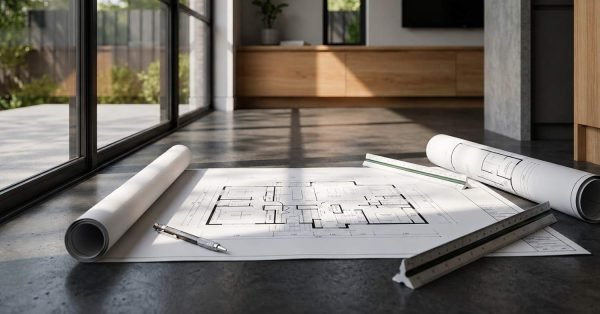
The granny flat floor plan you choose effectively locks in your ROI ceiling before construction starts. Prioritise natural light, bedroom separation, and a private outdoor area; these three features consistently attract higher-paying, longer-staying tenants in Sydney’s rental market.
Working With a Granny Flat Builder in Sydney
Beyond the spreadsheet, ROI ultimately depends on execution quality. The right builder delivers a granny flat that matches the design intent, hits fixed-price commitments, and lands on the rental market exactly when planned. The wrong builder turns a 12-week project into a 28-week saga of variations, delays, and quality compromises that quietly destroy years of yield.
Look for builders who offer genuine fixed-price contracts with detailed inclusion schedules, hold current builder’s licences and insurance, provide referenceable completed Sydney projects, and demonstrate experience navigating both CDC and DA pathways in your local council area.
Watch for these red flags in any contract: a “prime cost” or “provisional sum” allowance for site works (these are open-ended cost items), a variation clause with no cap, and an inclusion schedule that lists categories rather than specific products. Each of these shifts financial risk from the builder to you.
Verify the builder’s licence on the NSW Fair Trading register before signing anything. A licensed builder carries Home Building Compensation Fund cover on projects over $20,000, which protects you if the builder becomes insolvent or fails to complete the work. That protection disappears with unlicensed operators, regardless of how competitive their price looks.
Conclusion
A detached granny flat in Sydney delivers net rental yields of 10–13% and meaningful capital uplift when location, design, build cost, and approval pathway all align. Add depreciation deductions and the right financing structure, and the true return is consistently stronger than most homeowners model at the outset.
Returns compound over decades once the payback period clears, making granny flats one of the strongest blended-return renovation investments available to Sydney homeowners. The key is getting the numbers right before construction starts, not after.
At Sydney Home Renovation, we help you plan, budget, and build a granny flat designed to maximise ROI from day one with fixed-price certainty, CDC pathway expertise, and a single point of accountability from design through handover. Talk to our team about your block.
Frequently Asked Questions
Is a detached granny flat a good investment in Sydney?
Yes, for most Sydney sites a detached granny flat delivers strong net rental yields of 10–13% plus capital uplift. Returns depend heavily on suburb, build cost discipline, and design quality.
How much does it cost to build a detached granny flat in Sydney?
Sydney detached granny flat builds typically cost $120,000–$200,000 turnkey, depending on size, finish, and site conditions. Two-bedroom builds average around $160,000–$185,000 including site costs and approvals.
What is the rental yield on a Sydney granny flat?
Gross rental yields on Sydney granny flats commonly land between 15–20%, with net yields after operating costs settling at 10–13%. Inner-ring suburbs produce higher rent but slightly lower yields due to build costs.
How long does it take to recoup the cost of a granny flat?
Payback periods typically range from 7–10 years in Sydney, calculated by dividing total project cost by annual net rental income. Inner-ring high-rent locations achieve faster payback than outer suburbs.
Do granny flats add value to a property in Sydney?
Yes, a well-designed detached granny flat typically adds $100,000–$200,000 to property value in Sydney. Uplift varies by suburb, buyer profile, design quality, and how the build integrates with the main home.
Can I build a granny flat without council approval in NSW?
You avoid a full Development Application by using the Complying Development Certificate pathway under the Affordable Rental Housing SEPP. Eligibility requires a 450m² minimum lot and SEPP compliance.
What is the minimum block size for a detached granny flat in NSW?
The minimum lot size is 450 square metres with at least 12 metres of frontage to access the CDC approval pathway in NSW. Smaller lots require a Development Application through council.
What tax benefits does a granny flat provide?
A new granny flat qualifies for Division 43 depreciation at 2.5% of construction cost per year for 40 years, plus plant and equipment depreciation. Negative gearing applies when deductible expenses exceed rental income, reducing your overall tax bill.
How do I finance a granny flat build in Sydney?
Most owners use equity release from their existing home or a construction loan. Interest on funds used for an income-producing granny flat is generally tax-deductible. Avoid owner-builder arrangements; most lenders won’t finance them, and statutory warranties don’t apply.