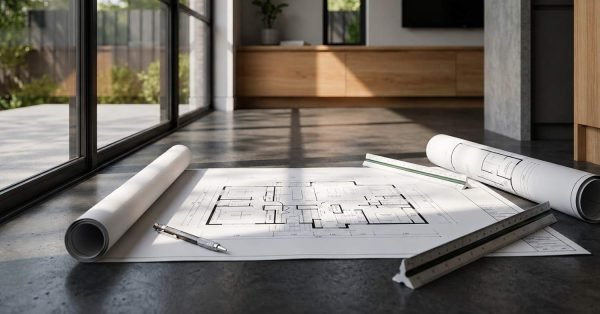
Getting a bathroom renovation permitted in Sydney is not optional, it is a legal requirement the moment you touch waterproofing, plumbing, or electrical work. Most homeowners I speak with assume permits only apply to structural changes. They do not. A wet area membrane, a relocated waste pipe, or a new power point inside a bathroom zone all trigger licensing and inspection obligations under NSW law.
Skipping permits creates real financial and legal exposure that follows the property for years. Understanding what is required before work starts protects your investment and keeps the project on the right side of the law.
This guide covers every permit category, the Australian standards that govern wet area work, and the four inspection stages your renovation must pass from substrate to final sign-off.
Do You Need a Permit for a Bathroom Renovation in Sydney?
Yes. Almost every bathroom renovation in Sydney requires some form of approval or licensed certification — even when the scope feels minor. The type of approval depends on what the work involves and whether it changes the building’s structure or use.
NSW planning law separates renovation work into two main approval pathways. Knowing which one applies to your project determines how you engage a certifier and how long the approval process takes before work can begin.
The short answer: if you are replacing like-for-like fittings with no structural change and no relocation of plumbing, you may fall under exempt development. The moment you move a wall, relocate drainage, or alter the wet area footprint, you need formal approval.
When a Complying Development Certificate (CDC) Applies
A Complying Development Certificate is the faster approval pathway for standard residential renovation work that meets pre-set criteria under the State Environmental Planning Policy (Exempt and Complying Development Codes) 2008. A private certifier, not the council, assesses and issues the CDC, which significantly reduces approval timeframes compared to a full DA.
Most bathroom renovations that involve structural changes but stay within the existing building envelope qualify for a CDC. The certifier confirms compliance with the Building Code of Australia and relevant Australian Standards before issuing the certificate.
I always recommend engaging a certifier early. They identify which pathway applies and flag any issues before the builder is on site.
When a Development Application (DA) Is Required
A DA goes through your local council and applies when the work falls outside complying development criteria. Heritage-listed properties, work that changes the building’s external appearance, or renovations in certain council zones commonly trigger the DA pathway.
DAs take longer, NSW Planning Portal data shows median determination times vary significantly by council, with some exceeding 40 days for straightforward residential applications. Factor this into your project timeline before committing to a start date.
If your property is heritage-listed or sits in a conservation area, assume a DA is required and budget the time accordingly.
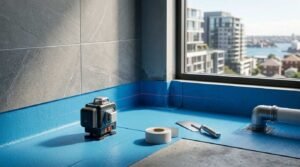
Waterproofing Permit Requirements for Sydney Bathrooms
Waterproofing is the most commonly misunderstood permit area in bathroom renovations. Homeowners assume it is a trade task, not a regulatory one. It is both. In NSW, wet area waterproofing must comply with Australian Standard AS 3740-2021 and must be applied by a licensed contractor and inspected before tiling begins.
No inspection sign-off before tiling means the membrane is permanently concealed without verification. That is a compliance failure, and a future liability if water damage occurs.
Australian Standard AS 3740, What It Mandates
AS 3740 sets the minimum requirements for waterproofing in wet areas of residential buildings. It specifies membrane type, minimum upstand heights, coverage at penetrations, and the classification of wet areas based on water exposure levels.
A shower recess is classified as a high-exposure wet area. The standard requires a continuous membrane with a minimum 150mm upstand at all junctions and full coverage around all penetrations, waste outlets, pipes, and wall-floor junctions. The floor must also be laid to fall toward the drain at a minimum gradient of 1:60 per AS 3740-2021.
These are not suggestions. They are the minimum legal standard, and any deviation is a defect.
Who Is Licensed to Apply and Certify Waterproofing
In NSW, waterproofing in a bathroom must be applied by a holder of a contractor licence or a qualified supervisor certificate issued by NSW Fair Trading. The licence category that covers wet area waterproofing sits under the general building licence.
A licensed builder overseeing the project can supervise waterproofing work, but the person applying the membrane must hold the appropriate qualification. DIY waterproofing in a licensed-work context is not legal in NSW, and it will not pass inspection.
The certifier or building inspector verifies the licence before signing off on the waterproofing stage.
Waterproofing Inspection, What the Inspector Checks
The waterproofing inspection happens after the membrane is applied and cured but before any tiles go down. The inspector physically checks membrane continuity, upstand heights at all junctions, coverage at penetrations, and the substrate condition beneath the membrane.
They also verify that the floor fall is correct and that the membrane product used is compliant with AS 3740. If anything fails, tiling cannot proceed until the defect is rectified and re-inspected.
I have seen projects delayed by two weeks because a membrane upstand was 20mm short. Getting this stage right the first time is far cheaper than rectification after the fact.
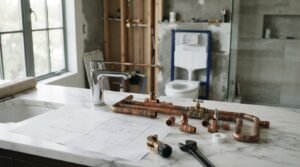
Plumbing Permit Requirements for Bathroom Renovations
Every plumbing change in a bathroom renovation, relocating a waste pipe, installing a new shower drain, replacing a toilet suite in a new position, requires a licensed plumber and a formal notice lodged with NSW Fair Trading. This is not optional and it is not waived for small jobs.
The Plumbing and Drainage Act 2011 (NSW) governs all sanitary plumbing and drainage work in the state. The Act makes the licensed plumber responsible for compliance, and the notice system creates the paper trail that triggers inspection.
What Counts as Licensable Plumbing Work in NSW
Licensable plumbing work covers any work on sanitary plumbing, drainage, hot water systems, and stormwater connections. In a bathroom renovation, this includes relocating or extending waste pipes, installing new floor wastes, connecting new fixtures to existing drainage, and any work on hot and cold water supply lines.
Like-for-like fixture replacement, swapping a tap for a tap in the same location, sits in a grey area, but the moment the rough-in position changes, a licensed plumber and a notice are required. When in doubt, use a licensed plumber. The cost of a notice is trivial compared to the cost of a failed inspection or an insurance dispute.
How to Lodge a Plumbing Notice with NSW Fair Trading
The licensed plumber lodges the plumbing and drainage work notice through the NSW Fair Trading online portal before work begins. The notice details the scope of work, the licence number of the plumber, and the property address.
Fair Trading uses the notice system to schedule inspections and maintain a compliance record for the property. The notice is not a permit in the traditional sense, it is a mandatory notification that activates the inspection process.
The plumber is responsible for lodging the notice. If your contractor tells you a notice is not required for bathroom plumbing work, that is a red flag.
Plumbing Inspection Stages and Sign-Off Requirements
Plumbing inspections in NSW occur at two stages: the rough-in stage (before walls are closed or tiles are laid) and the final stage (after all fixtures are connected and the system is operational). Both stages require a physical inspection by a licensed inspector or certifier.
At rough-in, the inspector checks pipe sizing, fall, junction positions, and access provisions. At final, they test the system under operating conditions, checking for leaks, correct fixture operation, and hot water temperature compliance. A Certificate of Compliance is issued by the plumber after the final inspection confirms everything meets the Plumbing Code of Australia.
Electrical Permit Requirements in a Bathroom Renovation
Bathrooms are classified as a special location under AS/NZS 3000:2018, the Australian wiring rules, because of the elevated risk of electric shock in wet environments. Any electrical work inside a bathroom requires a licensed electrician and a Certificate of Compliance for Electrical Work (CCEW) issued to the property owner after completion.
What Triggers an Electrical Licence and Inspection
The bathroom is divided into zones, Zone 0 (inside the bath or shower), Zone 1 (directly above), and Zone 2 (the surrounding area). Each zone has strict rules about what electrical equipment is permitted and what IP (ingress protection) rating it must carry.
Installing a new exhaust fan, adding a heated towel rail, relocating a power point, or installing a new light fitting inside the bathroom all require a licensed electrician. SafeWork NSW is clear that unlicensed electrical work in a bathroom is illegal and voids home insurance coverage.
The electrician lodges the CCEW with the property owner and retains a copy. This document is required for building certification and for any future insurance claim involving electrical systems.
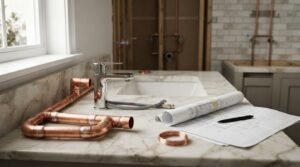
The Bathroom Renovation Inspection Stages In Order
A compliant bathroom renovation in Sydney passes through four distinct inspection stages. Each stage must be signed off before the next phase of work begins. Skipping a stage, even with the intention of catching up later, creates a compliance gap that cannot be retrospectively closed without demolition and re-inspection.
Understanding the sequence before work starts is the single most effective way to avoid costly delays.
Stage 1 Pre-Slab or Substrate Inspection
The first inspection happens before any waterproofing membrane is applied. The inspector checks the substrate condition, whether it is concrete, compressed fibre cement, or a timber-framed floor, and confirms it is structurally sound, correctly prepared, and laid to the required fall toward the drain.
Any substrate defects identified at this stage are far cheaper to fix now than after waterproofing and tiling are complete. This inspection also confirms that drainage rough-in positions are correct before the floor is sealed.
Stage 2 Waterproofing Inspection (Before Tiling)
This is the most critical inspection in a bathroom renovation. The waterproofing membrane must be fully applied, cured, and inspected before a single tile goes down. The inspector verifies compliance with AS 3740-2021 across every surface, floor, walls, junctions, and penetrations.
A pass at this stage is the legal green light to begin tiling. A fail means rectification and re-inspection before any further work proceeds. I cannot overstate how important it is to schedule this inspection proactively, waiting until the last minute creates timeline pressure that leads to corners being cut.
Stage 3, Plumbing Rough-In Inspection
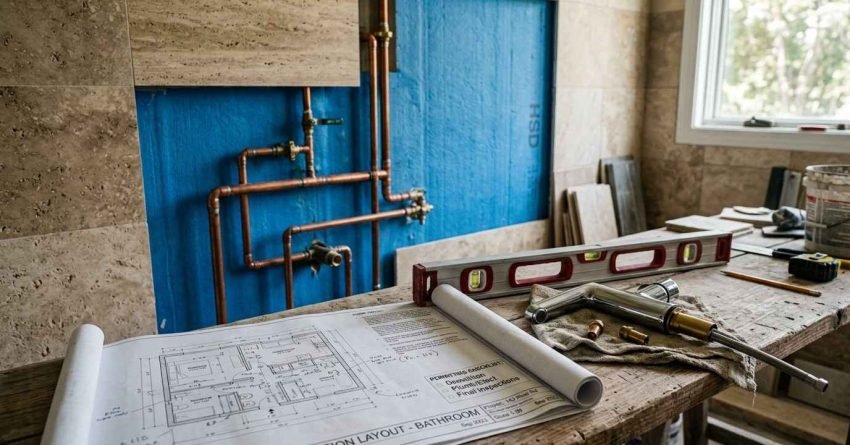
The plumbing rough-in inspection occurs after drainage and water supply lines are installed but before walls are closed or tiled. The licensed plumber arranges this inspection through the notice system lodged with NSW Fair Trading.
The inspector checks pipe sizing, gradient, junction positions, and that all penetrations through the waterproofed substrate are correctly sealed. A signed rough-in inspection is required before the plumber can proceed to fixture connection and final testing.
Stage 4, Final Inspection and Occupation Certificate
The final inspection covers the completed bathroom, all fixtures connected, all surfaces finished, all systems operational. The certifier or inspector checks that the finished work matches the approved plans, that all compliance certificates are in order (waterproofing, plumbing, electrical), and that the bathroom is safe for occupation.
An Occupation Certificate (OC) or equivalent sign-off is issued once the final inspection passes. This document is the legal confirmation that the work is compliant and the space is approved for use. Without it, the renovation is technically incomplete from a regulatory standpoint.
What Happens If You Skip the Permits?
Unpermitted bathroom renovation work in NSW is not a minor administrative oversight. It is illegal work under the Environmental Planning and Assessment Act 1979, and the consequences range from significant fines to demolition orders depending on the severity of the non-compliance.
I have seen homeowners inherit unpermitted bathroom work from a previous owner and face the full cost of rectification at sale. The risk is real and it compounds over time.
Financial and Legal Consequences in NSW
The NSW Building Commission and local councils have the authority to issue stop-work orders, penalty infringement notices, and orders to demolish and reinstate non-compliant work. Fines for unlicensed building work can reach into the tens of thousands of dollars for individuals under the Home Building Act 1989.
Beyond fines, rectification costs for unpermitted work are borne entirely by the property owner. If a waterproofing failure causes water damage to a neighbouring property or a lower floor, the absence of a compliant inspection record removes any protection the owner might otherwise have had.
Impact on Property Sale and Insurance Claims
Unpermitted work must be disclosed during property conveyancing in NSW. Buyers and their solicitors routinely request building records, and a bathroom renovation with no inspection certificates is a red flag that affects sale price and can delay or collapse a transaction.
Home insurance policies in Australia typically exclude damage caused by or related to non-compliant building work. A water leak from an uninspected bathroom membrane is not a covered event if the waterproofing was never inspected. The financial exposure from a single insurance denial can far exceed the cost of doing the permits correctly from the start.
How to Manage Permits Without the Headache
The permit and inspection process for a bathroom renovation involves multiple parties, a certifier, a licensed plumber, a licensed waterproofer, and potentially an electrician, all working to a coordinated sequence. Managing that coordination while also running a renovation is where most homeowners run into trouble.
The practical solution is straightforward: use a licensed contractor who manages the compliance process as part of the project scope.
What a Licensed Contractor Handles on Your Behalf
A licensed renovation contractor coordinates the full permit and inspection sequence on your behalf, engaging the certifier, ensuring the plumbing notice is lodged before work begins, scheduling waterproofing and rough-in inspections at the right stages, and obtaining all compliance certificates before the final sign-off.
This is not a premium service. It is standard practice for any contractor operating legally in NSW. The difference between a contractor who manages compliance and one who does not is the difference between a renovation that settles cleanly at sale and one that creates a legal problem years later.
We handle every permit, notice, and inspection stage as part of our standard project delivery at Sydney Home Renovation. Homeowners get a fully compliant bathroom with every certificate in hand at completion, no chasing, no gaps, no surprises.
Conclusion
Bathroom renovation permits in Sydney are not bureaucratic friction, they are the legal framework that protects your investment, your insurance coverage, and your ability to sell the property without complications. Waterproofing, plumbing, and electrical work each carry their own licensing and inspection obligations, and the four-stage inspection sequence exists to catch problems before they are buried behind tiles and walls.
Getting permits right from the start costs less than fixing unpermitted work later. The paper trail a compliant renovation creates is an asset, not a burden.
At Sydney Home Renovation, we manage the full compliance process on every project, permits, notices, inspections, and certificates, so you can focus on the renovation itself. Reach out to us to start your bathroom renovation the right way.
Frequently Asked Questions
Do I need a permit to retile a bathroom in Sydney?
Retiling alone, with no changes to the substrate, waterproofing, or plumbing, is generally considered exempt development in NSW. The moment you remove existing tiles and reapply waterproofing, a licensed waterproofer and a waterproofing inspection under AS 3740 are required before new tiles go down.
Who is responsible for getting bathroom renovation permits in NSW?
The licensed contractor or owner-builder is responsible for ensuring all required permits, notices, and inspections are in place. In practice, the licensed plumber lodges the plumbing notice, the certifier issues the CDC or DA, and the licensed waterproofer arranges the waterproofing inspection. A competent contractor coordinates all of this.
How long does a bathroom renovation permit take to approve in Sydney?
A CDC through a private certifier typically takes 5 to 10 business days for a standard bathroom renovation. A DA through council takes longer, median timeframes vary by council but commonly range from 30 to 60 days. Engaging a certifier early and having complete documentation ready reduces delays significantly.
What is AS 3740 and why does it matter for my bathroom renovation?
AS 3740 is the Australian Standard for waterproofing in wet areas of residential buildings. It sets the legal minimum requirements for membrane type, upstand heights, coverage at penetrations, and floor fall. Compliance with AS 3740 is mandatory in NSW, and the waterproofing inspection verifies that the membrane meets the standard before tiling begins.
Can I waterproof my own bathroom in NSW?
No. Wet area waterproofing in NSW must be applied by a licensed contractor, either a licensed builder or a qualified supervisor with the appropriate licence category issued by NSW Fair Trading. DIY waterproofing does not meet the licensing requirement and will not pass the mandatory inspection before tiling.
What happens if my bathroom renovation fails inspection?
A failed inspection means work stops at that stage until the defect is rectified and re-inspected. The licensed contractor or tradesperson responsible for that stage must fix the issue at their cost if it falls within their scope of work. Tiling cannot proceed after a failed waterproofing inspection, and fixture connection cannot proceed after a failed plumbing rough-in.
How much do bathroom renovation permits cost in Sydney?
Permit costs vary by approval pathway and certifier. A CDC through a private certifier for a standard bathroom renovation typically costs between $800 and $2,000 including inspection fees. Plumbing notice fees are set by NSW Fair Trading and are relatively modest. DA fees are council-specific and calculated on the estimated cost of works, budget $500 to $1,500 for a typical bathroom renovation DA.