A standard bathroom renovation in Sydney costs between $15,000 and $35,000, depending on the size of the room, the scope of work, and the quality of materials and fittings you choose. Most homeowners underestimate the true cost because they overlook labour-intensive trades, waterproofing compliance, and the small line items that add up fast.
Whether you are renovating your family bathroom, updating an ensuite before selling, or refreshing a rental property to boost returns, understanding where your money goes is the single most important step in avoiding budget blowouts. The difference between a smooth renovation and a stressful one almost always comes down to planning.
This guide breaks down every major cost category, explains the pricing variables that shift your total, exposes the hidden expenses most quotes leave out, and gives you a practical framework for setting and managing a realistic bathroom renovation budget in Sydney.
How Much Does a Bathroom Renovation Cost in Sydney?
Bathroom renovation costs in Sydney vary widely. A basic cosmetic refresh and a full gut-and-rebuild are fundamentally different projects with fundamentally different price tags. The table below gives you a realistic starting point based on the level of renovation, typical inclusions, and the standard of finishes involved.
| Renovation Level | Typical Cost Range | What’s Included |
| Budget | $10,000–$20,000 | Cosmetic updates, basic fixtures, painted surfaces, standard tiling |
| Mid-Range | $20,000–$35,000 | Full strip-out, new waterproofing, quality tiles, upgraded fixtures |
| High-End | $35,000–$60,000+ | Custom design, premium materials, underfloor heating, frameless glass |
These ranges assume a standard-sized bathroom of roughly 4 to 8 square metres. Larger bathrooms, difficult access, or heritage properties in Sydney’s Inner West and Eastern Suburbs push costs higher.
Budget Bathroom Renovation ($10,000–$20,000)
A budget renovation focuses on cosmetic improvements without altering the existing layout or relocating plumbing. You are working with what is already there and making it look and function better.
Typical inclusions at this level:
- Replacing the vanity, toilet, and tapware with standard-quality fittings
- Re-tiling floors and shower walls with basic ceramic or porcelain tiles
- Repainting walls and ceiling
- Replacing the showerscreen
- New lighting fixtures
At this price point, you are unlikely to move any plumbing points, install a freestanding bath, or make structural changes. The existing waterproofing membrane is retained if it passes inspection, which saves a significant portion of the budget. This level suits rental properties, secondary bathrooms, or homeowners who need a functional refresh without a full rebuild.
Mid-Range Bathroom Renovation ($20,000–$35,000)
This is the most common renovation level for owner-occupiers in Sydney. A mid-range renovation typically involves a complete strip-out back to the studs, new waterproofing, and the freedom to update the layout within the existing footprint.
You can expect:
- Full demolition and waste removal
- New waterproofing membrane to Australian Standards (AS 3740)
- Quality porcelain or natural stone tiles
- Wall-hung vanity with stone benchtop
- Upgraded tapware and mixer sets
- Frameless or semi-frameless showerscreen
- Recessed shaving cabinet and improved lighting
- New exhaust fan and ventilation
Mid-range renovations give you the flexibility to choose better materials and fittings without entering custom or luxury territory. This is where most homeowners find the best balance between cost and long-term satisfaction.
High-End Bathroom Renovation ($35,000–$60,000+)
A high-end renovation is a fully custom project. It often involves architectural or interior design input, premium imported materials, and bespoke joinery. Layout changes, niche features, and high-specification fixtures are standard at this level.
Common inclusions:
- Designer tile selections (large-format, natural stone, or handmade tiles)
- Freestanding bathtub
- Wall-mounted toilets with concealed cisterns
- Custom vanity with integrated storage
- Underfloor heating
- Heated towel rails
- Frameless glass shower with ceiling-mounted rain shower
- Smart lighting and mirror demisters
- Niche shelving and custom storage solutions
High-end projects in Sydney’s North Shore, Eastern Suburbs, and Inner West frequently exceed $60,000 when the bathroom is large or the property has heritage constraints that require specialist trades. Projects that involve expanding the home’s footprint, adding a new bathroom as part of a structural addition — carry separate costs on top of the fit-out itself.
Ensuite vs. Main Bathroom Renovation Costs
The size and function of the bathroom directly shape the budget. An ensuite and a main family bathroom are different projects, and treating them the same leads to inaccurate quotes.
| Bathroom Type | Typical Size | Typical Cost Range | Key Differences |
| Ensuite | 2–4 sqm | $10,000–$22,000 | Compact, often cosmetic, limited fixture count |
| Main Bathroom | 5–8 sqm | $18,000–$40,000 | Full suite of fixtures, more tiling, higher labour hours |
| Combined Bath/Laundry | 6–10 sqm | $22,000–$45,000 | Dual-function plumbing, compliance for both wet areas |
| Master Ensuite (luxury) | 6–12 sqm | $35,000–$70,000+ | Custom finishes, freestanding bath, bespoke joinery |
The cost-per-square-metre for a small ensuite is often higher than for a larger main bathroom. Tradespeople spend proportionally more time on cuts, tight access, and fixture density in compact spaces. A 3 sqm ensuite at $15,000 works out to $5,000 per square metre, well above the average for a larger bathroom at the same finish level.
When budgeting for both bathrooms in a renovation, sequencing them together with the same contractor reduces mobilisation costs and trade coordination time. Most Sydney renovation contractors offer a combined-project discount when both bathrooms are scoped simultaneously.
Bathroom Renovation Cost Breakdown
Understanding where your money goes is more useful than knowing the total. Below is a detailed breakdown of the major cost categories in a typical mid-range Sydney bathroom renovation.
| Cost Category | Typical Range | % of Total Budget |
| Labour (all trades) | $8,000–$15,000 | 40–50% |
| Tiling and waterproofing | $3,000–$7,000 | 15–20% |
| Plumbing | $2,500–$5,000 | 10–15% |
| Electrical | $1,000–$3,000 | 5–8% |
| Fixtures and fittings | $2,000–$6,000 | 10–18% |
| Cabinetry and vanity | $1,500–$4,000 | 8–12% |
| Demolition and waste removal | $800–$2,000 | 3–5% |
Bathroom Renovation Cost Per Square Metre
Cost per square metre is a useful cross-check when comparing quotes. It normalises the total against the actual size of the space.
| Finish Level | Typical Cost Per Square Metre |
| Budget | $1,500–$2,500 per sqm |
| Mid-Range | $2,500–$4,500 per sqm |
| High-End | $4,500–$8,000+ per sqm |
These figures include all trades, materials, and fixtures. They exclude structural work, asbestos removal, and any layout changes that require new plumbing rough-in. A bathroom that comes in below $1,500 per sqm is almost certainly excluding waterproofing, compliance certificates, or licensed trade work — all of which are non-negotiable in NSW.
Labour Costs
Labour is the single largest expense in any bathroom renovation. It typically accounts for 40 to 50 percent of the total project cost. A standard bathroom renovation requires coordination between multiple licensed tradespeople: a plumber, electrician, tiler, waterproofer, carpenter, and sometimes a plasterer or painter.
In Sydney, licensed plumbers charge between $80 and $120 per hour, based on current NSW Fair Trading industry data. Licensed electricians charge in a similar range, typically $85–$120 per hour. Tilers quote per square metre, with rates between $60 and $120 per square metre depending on tile size, pattern complexity, and substrate preparation.
The reason labour dominates the budget is straightforward. A bathroom is a small, complex space where every trade overlaps. Plumbing and electrical rough-in must happen before waterproofing. Waterproofing must cure before tiling. Tiling must be complete before fixtures are installed. Each stage depends on the one before it, and each requires a qualified tradesperson.
Tiling and Waterproofing
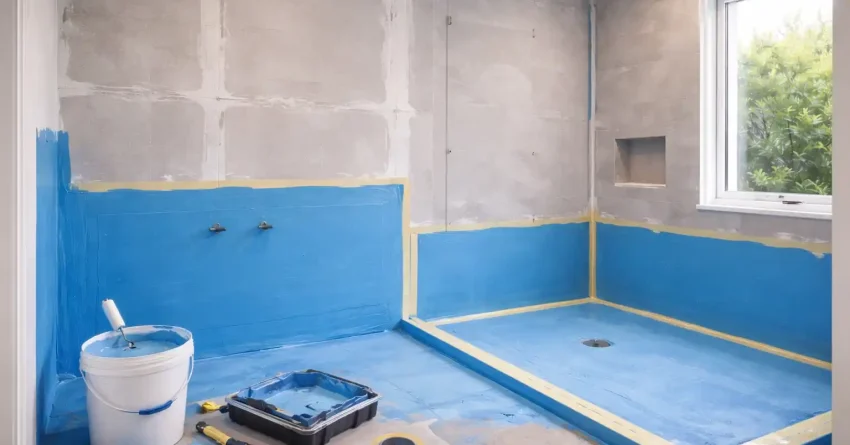
Tiling and waterproofing together represent the second-largest cost category. Waterproofing is not optional. In New South Wales, all wet areas must be waterproofed in accordance with AS 3740 and certified by a licensed waterproofer before tiling begins.
The waterproofing membrane itself costs between $1,000 and $2,500 depending on the bathroom size and the number of wet zones. Basic ceramic tiles start around $30 per square metre for supply, while large-format porcelain or natural stone exceeds $150 per square metre.
Labour for tiling a standard bathroom typically runs between $1,500 and $4,000. Intricate patterns, herringbone layouts, or feature walls with mosaic tiles increase labour time and cost.
Plumbing Costs
Plumbing costs vary depending on whether you are keeping the existing layout or relocating fixtures. A like-for-like replacement of tapware, toilet, and shower mixer is straightforward and relatively affordable. Moving a toilet, shifting a shower drain, or adding a freestanding bath with new supply lines increases the plumbing bill significantly.
Expect to pay between $2,500 and $5,000 for plumbing in a mid-range renovation. This covers rough-in (first fix), final connection (second fix), and any necessary pipework upgrades. Older Sydney homes, particularly those built before the 1980s, often have galvanised or copper pipes that need replacing, which adds to the cost.
Electrical Work
Electrical work in a bathroom renovation covers lighting, exhaust fans, heated towel rails, power points, and any underfloor heating. All electrical work in wet areas must comply with AS/NZS 3000 (Wiring Rules) and be completed by a licensed electrician.
A basic electrical scope, new downlights, exhaust fan, and a shaver point, costs between $1,000 and $1,800. Adding heated towel rails, underfloor heating, or smart lighting systems pushes the electrical budget toward $2,500 to $3,000 or more.
Fixtures and Fittings
Fixtures and fittings include your toilet, basin, tapware, showerhead, showerscreen, and accessories like towel rails and robe hooks. This category has the widest price range because the gap between entry-level and premium products is enormous.
A basic toilet costs between $250 and $500. A wall-hung toilet with a concealed cistern starts around $800 and exceeds $2,000 for European brands. Tapware ranges from $150 for a basic mixer to $800 or more for architectural or matte black finishes.
Showerscreens are another variable. A framed pivot screen costs around $400 to $700 installed. A frameless glass panel starts at $800 and reaches $2,000 depending on size and hardware.
Fixtures are where your budget decisions become visible. Visitors notice the tapware, the showerscreen, and the vanity before they notice the tiles behind the wall.
Cabinetry and Vanity
The vanity is often the centrepiece of a bathroom. A basic floor-standing vanity with a ceramic top starts around $500 to $800. A wall-hung vanity with a stone or solid-surface benchtop typically costs between $1,200 and $3,500 depending on size, material, and whether it is custom-built or off-the-shelf.
Custom joinery for a bathroom vanity in Sydney starts around $2,500 and exceeds $5,000 for bespoke designs with integrated storage, soft-close drawers, and premium finishes. If your bathroom has an awkward layout or non-standard dimensions, custom cabinetry is often the only option that uses the space efficiently.
What Factors Affect Bathroom Renovation Costs?
No two bathroom renovations cost the same. Several variables determine where your project lands on the pricing spectrum.
Bathroom Size and Layout
Size is the most obvious cost driver. A compact ensuite of 3 square metres requires less tiling, fewer materials, and less labour time than a master bathroom of 10 square metres. Very small bathrooms sometimes cost more per square metre because tradespeople work in tighter conditions and waste a higher percentage of materials on cuts.
Layout changes, moving the toilet to the opposite wall or relocating the shower, require plumbing and sometimes structural modifications. Every relocated fixture adds cost.
Scope of Work (Cosmetic vs. Full Gut)
A cosmetic renovation that replaces fixtures and repaints surfaces is a fraction of the cost of a full strip-out. Once you remove tiles and expose the substrate, you are committed to new waterproofing, and potentially new plasterboard, new framing repairs, and updated plumbing and electrical.
The scope decision is the single biggest factor in your final cost. Be clear about what you want before you request quotes, because a vague scope leads to vague pricing. Homeowners planning a broader project, such as a whole home renovation, should factor bathroom scope into the overall project plan from the outset.
Material and Finish Selections
Materials account for a significant portion of the budget, and the range is vast. The difference between a $30 per square metre ceramic tile and a $150 per square metre natural stone tile, multiplied across floors and walls, shifts your total by thousands of dollars.
The same applies to tapware, vanities, and accessories. Choosing mid-range Australian brands like Caroma or Methven keeps costs reasonable. Specifying European imports or architectural brands increases the fittings budget substantially.
Structural and Compliance Requirements
Older Sydney homes sometimes reveal structural issues once demolition begins. Rotted timber framing, termite damage, non-compliant plumbing, or degraded waterproofing membranes all require remediation before the new bathroom can be built.
In NSW, bathroom renovations that involve structural changes, plumbing alterations, or waterproofing work must comply with the National Construction Code and relevant Australian Standards. A compliant renovation protects your investment and avoids costly rectification work later.
What You Can DIY and What Requires a Licensed Tradesperson in NSW
NSW law is clear on this point. Plumbing, drainage, gas fitting, and electrical work in wet areas must be completed by a licensed tradesperson. There are no exceptions, and unlicensed work voids your home insurance and creates serious liability at resale.
What homeowners legally handle themselves includes painting, basic demolition of non-structural elements, and supply of fixtures and fittings. Everything else, waterproofing, tiling over wet areas, plumbing connections, electrical circuits, requires a licensed contractor who issues a compliance certificate on completion.
Attempting to save money by using unlicensed labour on any of these items is one of the most expensive mistakes a renovator makes. Rectification costs, insurance disputes, and failed building inspections routinely cost more than the original licensed quote.
Location and Access Difficulty
Properties with difficult access, multi-storey homes without ground-floor entry, apartments with lift restrictions, or terraces with narrow hallways, cost more to renovate. Tradespeople need to carry materials in and waste out. If that process takes longer, labour costs increase.
Sydney apartments often have strata requirements that restrict renovation hours, require specific insurance, and mandate the use of common-area protection during works. These requirements add time and cost to the project.
Sydney Location and Suburb Pricing Differences
Labour rates and contractor availability vary across Sydney. The Inner West, Eastern Suburbs, and North Shore consistently attract higher trade rates than Western Sydney and the Outer Suburbs, reflecting demand, travel time, and the concentration of heritage and apartment stock that requires specialist handling.
A mid-range bathroom renovation in Mosman or Paddington typically costs 10–20% more than the same scope in Parramatta or Penrith. This is not a quality difference, it reflects market rates, access conditions, and the higher proportion of complex heritage or strata work in those areas.
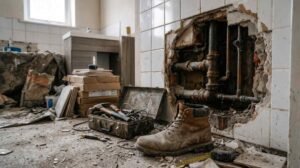
Hidden Costs in Bathroom Renovations
Hidden costs are the expenses that do not appear in the initial quote because they cannot be confirmed until demolition is underway. They are the primary reason bathroom renovations go over budget.
Asbestos Removal and Hazardous Materials
Homes built before 1990 in Sydney commonly contain asbestos in wall sheeting, floor tiles, adhesives, or pipe lagging. Asbestos cannot be identified visually with certainty. If suspected materials are found during demolition, work must stop until a licensed assessor tests the material.
Licensed asbestos removal in Sydney costs between $1,500 and $5,000 depending on the quantity and location. It is illegal to disturb or dispose of asbestos without a licensed removalist, and the health risks are severe, as confirmed by Safe Work Australia’s asbestos guidance.
If your home was built before 1990, budget for an asbestos inspection before demolition begins. A pre-renovation inspection costs between $300 and $600 and prevents costly surprises.
Plumbing and Electrical Upgrades Behind Walls
Once walls are opened, outdated plumbing and electrical wiring is sometimes discovered. Galvanised steel pipes corrode over time and need replacing. Old electrical wiring does not meet current safety standards and must be upgraded before new circuits are connected.
These upgrades are impossible to quote accurately before demolition. A good contractor flags the risk during the quoting process and recommends a contingency allowance to cover it.
Council Permits and Compliance Certificates
Not every bathroom renovation requires council approval, but some do. In Sydney, if your renovation involves structural changes, alterations to external walls, or work on a heritage-listed property, you require a Development Application (DA) or a Complying Development Certificate (CDC), as outlined by NSW Planning.
Even when a DA is not required, your plumber and waterproofer must provide compliance certificates. Your electrician must issue a Certificate of Compliance for Electrical Work (CCEW). These certificates are essential for insurance, resale, and legal compliance.
Permit and certification costs typically range from $500 to $2,500 depending on the scope and local council requirements.
Temporary Living Arrangements and Delays
If you are renovating your only bathroom, you need alternative arrangements for the duration of the project. A standard bathroom renovation takes two to four weeks. During that time, you use a gym, a neighbour’s facilities, or temporary accommodation.
Delays caused by material back-orders, weather, or unexpected structural issues extend the timeline and increase costs. Planning for a buffer of one to two additional weeks is realistic.
How to Budget for a Bathroom Renovation
A well-structured budget is your most effective tool against cost overruns. The process starts before you contact a single contractor.
Setting a Realistic Budget Range
Start by defining your renovation level: budget, mid-range, or high-end. Use the cost ranges in this guide as a baseline and adjust for your specific bathroom size, condition, and goals.
Be honest about what you can afford. A common mistake is setting a budget based on the cheapest possible scenario and then making upgrade decisions during the project that push the total well beyond the original figure. It is better to budget conservatively and finish under budget than to start optimistically and run out of funds mid-project.
Allocating a Contingency Fund
Every bathroom renovation budget should include a contingency of 10 to 20 percent of the total project cost. This fund covers the unknowns: asbestos, rotted framing, plumbing upgrades, or tile supply issues.
On a $25,000 renovation, a 15 percent contingency is $3,750. If you do not use it, you have saved money. If you need it, you have avoided the stress and compromise of running over budget without a safety net.
First-time renovators and owners of older homes should lean toward the 20 percent end. Newer homes with known conditions budget closer to 10 percent.
Renovating in Stages to Manage Your Budget
Not every homeowner has the full budget available at once. Staging a bathroom renovation is a legitimate strategy, but it requires careful planning to avoid paying twice for the same work.
The most cost-effective staging sequence is: waterproofing and structural work first, tiling second, fixtures and fittings third. Never tile before waterproofing is complete and certified. Never install fixtures before tiling is finished. Reversing this order creates rectification costs that exceed any short-term saving.
A staged approach works best when the gap between stages is less than 12 months. Longer gaps risk the waterproofing membrane being damaged by foot traffic or exposure, which requires re-certification before tiling proceeds.
Prioritising Spend for Maximum Value
Not every dollar in a bathroom renovation delivers equal value. Some investments improve daily function and long-term durability. Others are purely aesthetic and are scaled back without affecting the quality of the finished result.
Prioritise spending on:
- Waterproofing: Never cut corners here. A failed membrane leads to water damage, mould, and a second renovation.
- Plumbing and electrical: Quality rough-in work lasts decades. Cheap shortcuts create expensive problems.
- Tiling labour: A skilled tiler produces a visibly better result. The difference between average and excellent tiling is obvious every day.
- Tapware and mixers: You touch these daily. Quality tapware feels better, lasts longer, and is easier to maintain.
Areas where you save without sacrificing quality include paint colour (all paint costs roughly the same to apply), accessory brands, and tile selection (a well-laid affordable tile looks better than a poorly laid expensive one).
Getting Accurate Quotes from Contractors
Request at least three detailed quotes from licensed bathroom renovation contractors. A good quote itemises labour, materials, fixtures, and allowances separately. It clearly states what is included and what is excluded.
Be wary of quotes that are significantly lower than others. In Sydney’s competitive renovation market, a quote that seems too good to be true usually is. It excludes waterproofing, waste removal, or compliance certificates, or it relies on unlicensed subcontractors.
Before accepting any quote, verify the contractor’s licence on the NSW Fair Trading licence register. A licensed contractor’s details are publicly searchable. Any contractor who cannot provide a licence number or resists the check is a red flag.
Ask every contractor:
- Is waterproofing included and certified?
- Are compliance certificates included?
- What is the payment schedule?
- What happens if unexpected issues arise?
- What is the estimated timeline?
- Are all tradespeople licensed and insured?
Where to Save and Where to Spend
Smart budgeting is not about spending less. It is about spending in the right places.
Cost-Saving Strategies That Work
- Keep the existing layout. Avoiding plumbing relocation saves thousands.
- Choose standard tile sizes. Large-format tiles (600x600mm or 600x300mm) are faster to lay and produce less waste than small mosaics or unusual formats.
- Select quality mid-range fixtures. Australian brands like Caroma, Methven, and Phoenix offer excellent quality without the premium price of European imports.
- Retain existing plumbing points. If your toilet, shower, and basin are in functional positions, work with the current layout.
- Limit feature tiling. A single feature wall or niche with a premium tile creates visual impact without tiling the entire bathroom in expensive material.
- Use a builder who manages all trades. A single point of coordination reduces scheduling gaps, miscommunication, and wasted labour time.
Upgrades Worth the Investment
- Frameless showerscreen. The visual difference between a framed and frameless screen is significant, and it adds perceived value to the entire room.
- Wall-hung vanity. Creates the illusion of more floor space and makes cleaning easier. The cost premium over a floor-standing unit is modest.
- Heated towel rail. A relatively inexpensive addition ($300–$600 installed) that improves daily comfort and helps prevent mould in damp bathrooms.
- Quality tapware. Matte black, brushed nickel, or brushed brass finishes elevate the look of the entire bathroom. Invest in mixers and showerheads you use every day.
- Proper ventilation. An upgraded exhaust fan with a timer or humidity sensor protects your new bathroom from moisture damage and extends the life of every surface and fitting.
Bathroom Renovation Costs for Investment Properties
Renovating a bathroom in an investment property requires a different mindset. The goal is not personal preference. It is return on investment.
Renovation Budgets That Maximise Rental Yield
For rental properties, a budget to mid-range renovation between $10,000 and $20,000 typically delivers the best return. Tenants value a clean, functional, modern bathroom. They do not require designer tiles or premium European fixtures.
Focus on:
- Neutral colour palette (white, grey, light timber tones)
- Durable, easy-to-clean surfaces
- Reliable fixtures from established brands
- Compliant waterproofing and ventilation
- Good lighting
A well-executed budget renovation typically increases weekly rent, with the exact uplift depending on suburb, property type, and current market conditions. Over a standard lease period, that increase often recovers a significant portion of the renovation cost.
Renovation Budgets That Maximise Resale Value
If you are renovating before selling, the bathroom is one of the highest-impact rooms in the house. Buyers in Sydney’s market scrutinise bathrooms closely. A dated or poorly maintained bathroom is a negotiation point that reduces offers by far more than the cost of a renovation.
For resale, a mid-range renovation of $20,000 to $35,000 typically delivers the strongest return. The goal is to present a bathroom that feels current, well-built, and move-in ready. Buyers walk in and see nothing that needs changing.
Property industry data consistently shows that bathrooms and kitchens deliver the strongest renovation ROI in Sydney’s middle and upper-middle suburbs. A well-executed bathroom renovation removes a key buyer objection and supports a stronger asking price, the exact return depends on the suburb, the property type, and the quality of the finish.
Bathroom Renovation Timeline and Cost Relationship
Time and cost are directly linked in bathroom renovations. A longer project means more labour days, extended site management, and greater disruption.
| Renovation Level | Typical Timeline | Key Timeline Drivers |
| Budget (cosmetic) | 1–2 weeks | No demolition, no waterproofing, minimal trades |
| Mid-Range (full) | 3–4 weeks | Full strip-out, waterproofing cure time, tiling, fit-off |
| High-End (custom) | 4–6+ weeks | Custom joinery lead times, specialist trades, design complexity |
The most common cause of timeline blowouts is material delays. Tiles, vanities, and specialty fixtures have lead times of four to eight weeks if they are not in stock. Ordering all materials before demolition begins is one of the most effective ways to keep your project on schedule and on budget.
Waterproofing cure time is another fixed constraint. The membrane must cure for a minimum period, typically 24 to 72 hours depending on the product, before tiling begins. This is not rushed without compromising compliance and long-term performance.
Conclusion
Bathroom renovation costs in Sydney range from $10,000 for a basic cosmetic update to $60,000 or more for a high-end custom build. The final number depends on your bathroom size, the scope of work, your material choices, and whether hidden issues emerge during demolition. Understanding each cost category, from labour and waterproofing through to fixtures and compliance, gives you the clarity to make confident budgeting decisions.
Every successful renovation starts with a realistic budget, a clear scope, and a qualified contractor who communicates openly about pricing. Whether you are upgrading your family bathroom, preparing a property for sale, or improving a rental for better returns, the principles are the same: plan thoroughly, allocate a contingency, and invest where it matters most.
We help Sydney homeowners and investors renovate bathrooms with transparent pricing, skilled tradespeople, and clear project management from start to finish. If you are ready to plan your bathroom renovation, contact Sydney Home Renovation for a detailed, obligation-free quote tailored to your property, your goals, and your budget.
Frequently Asked Questions
How much does a small bathroom renovation cost in Sydney?
A small bathroom or ensuite renovation in Sydney typically costs between $10,000 and $22,000 depending on the scope of work and quality of finishes. Cosmetic updates sit at the lower end, while a full strip-out with new waterproofing, tiling, and fixtures reaches the higher end.
What is the most expensive part of a bathroom renovation?
Labour is the most expensive component, accounting for 40 to 50 percent of the total budget. This covers plumbers, electricians, tilers, waterproofers, and carpenters. After labour, tiling and waterproofing combined represent the second-largest cost category.
How long does a bathroom renovation take?
A mid-range bathroom renovation in Sydney takes three to four weeks from demolition to completion. Budget cosmetic renovations are finished in one to two weeks. High-end custom projects with specialist trades and custom joinery take four to six weeks or longer.
Can I renovate a bathroom for under $10,000?
It is possible but limited. A sub-$10,000 renovation typically covers only cosmetic changes: new paint, replacing tapware, a new vanity, and possibly a new toilet. It does not include new tiling, waterproofing, or layout changes. For a functional, compliant renovation, $15,000 is a more realistic starting point.
Do I need council approval for a bathroom renovation in Sydney?
Most standard bathroom renovations do not require a Development Application. However, if your project involves structural changes, external wall alterations, or work on a heritage-listed property, you require council approval or a Complying Development Certificate. Plumbing and waterproofing compliance certificates are required regardless.
How much should I set aside for unexpected costs?
Allocate a contingency of 10 to 20 percent of your total renovation budget. On a $25,000 project, that means setting aside $2,500 to $5,000. Older homes and first-time renovators should budget toward the higher end to cover potential issues like asbestos, outdated plumbing, or structural repairs.
Is it cheaper to renovate or build a new bathroom?
Renovating an existing bathroom is almost always cheaper than building a new one. Adding a bathroom requires new plumbing connections, drainage, structural work, and potentially council approval, which costs $30,000 to $50,000 or more. Renovating an existing space with established plumbing points is significantly more cost-effective.
How do I verify a bathroom renovation contractor is licensed in NSW?
Search the contractor’s name or licence number on the NSW Fair Trading licence register at fairtrading.nsw.gov.au. A licensed contractor’s details are publicly searchable and include their licence class, expiry date, and any disciplinary history. Never engage a contractor who cannot provide a licence number.
What is the typical cost difference between an ensuite and a main bathroom renovation?
An ensuite renovation typically costs $10,000–$22,000 compared to $18,000–$40,000 for a main bathroom. The difference reflects the larger floor area, higher fixture count, and greater tiling and labour hours in a full family bathroom. Cost per square metre is often higher in a compact ensuite due to tight access and proportionally more waste on cuts.