
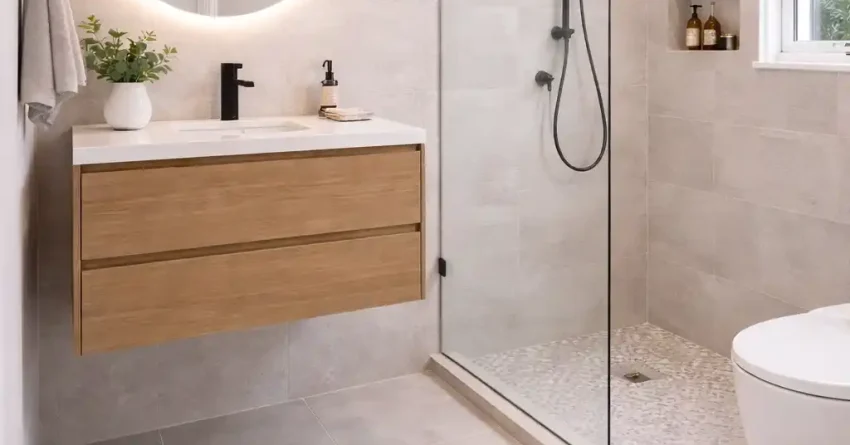
Bathroom fixtures and fittings typically account for 20% to 35% of your total bathroom renovation budget in Sydney. For a standard renovation costing between $25,000 and $45,000, you’re looking at $5,000 to $15,000 spent on toilets, basins, tapware, showerheads, and accessories alone.
Getting this part of your renovation right is critical. The wrong choices don’t just blow your budget; they affect functionality, water efficiency, compliance, and the long-term value of your property.
Every category of bathroom fixture and fitting is covered here, with real Sydney costs for 2026 and a clear framework for where to invest and where to save.
What Are Bathroom Fixtures and Fittings?
The terms “fixtures” and “fittings” get used interchangeably in everyday conversation, but they mean different things in the context of a bathroom renovation. Understanding the distinction helps you read quotes accurately, compare contractor pricing, and make smarter purchasing decisions.
Bathroom fixtures are the permanent, plumbed-in items physically connected to your water supply and drainage system. Bathroom fittings are the smaller, often removable components that attach to or complement those fixtures.
Fixtures vs. Fittings: What’s the Difference?
A fixture requires plumbing connections to function. It’s fixed in place and cannot be removed without disconnecting the water supply or waste lines. Toilets, bathtubs, shower bases, and basins all fall into this category.
A fitting is an accessory or component that attaches to a fixture or to the bathroom walls and surfaces. Taps, mixers, showerheads, towel rails, robe hooks, and drain grates are all fittings.
Here’s a quick reference:
| Category | Examples | Permanently Plumbed? | Typical Cost Range (Sydney) |
| Fixtures | Toilet, bathtub, basin, shower base, bidet | Yes | $300–$5,000+ per item |
| Fittings | Taps, mixers, showerheads, towel rails, drain grates | No (attached/mounted) | $50–$2,000+ per item |
Fixtures drive the higher costs in your renovation budget. Fittings are where small decisions add up quickly if you’re not tracking them.
Why the Distinction Matters for Your Renovation Budget
When a contractor provides a quote with a “fixture allowance,” they’re referring to the budget set aside for the major plumbed items. Fittings may or may not be included in that allowance. Without clarifying this upfront, you can easily find yourself $2,000 to $4,000 over budget once you start selecting tapware, accessories, and hardware.
Always ask your contractor whether the quoted fixture allowance covers fittings as well, or whether those are priced separately. This single question prevents one of the most common budget surprises in bathroom renovations.
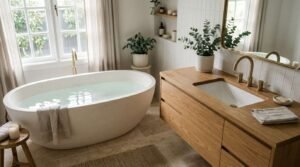
Essential Bathroom Fixtures for Every Renovation
Fixtures are the backbone of your bathroom. They determine the layout, the plumbing requirements, and a significant portion of the total project cost. Choosing the right fixtures early in the planning process helps your contractor design the plumbing rough-in correctly and avoids costly changes mid-build.
Toilets and Cisterns
The toilet is a non-negotiable fixture in every bathroom renovation. In Sydney, you’ll typically choose between close-coupled toilets (where the cistern sits on the back of the pan), wall-faced designs (where the cistern is concealed behind the wall), and back-to-wall models that sit flush against the wall for a cleaner look.
Budget toilets from brands like Caroma or Stylus start around $250 to $400 for a close-coupled model. Wall-hung toilets with concealed cisterns, requiring an in-wall frame, range from $600 to $2,500 depending on the brand and design. Premium options from brands like Duravit or Villeroy & Boch exceed $3,000.
Every toilet sold in Australia must carry a WELS (Water Efficiency Labelling and Standards) rating. A 4-star dual-flush toilet uses approximately 4.5 litres on a full flush and 3 litres on a half flush, the minimum standard most Sydney renovators should target.
Bathtubs and Shower Bases
Whether you include a bathtub depends on the size of your bathroom, your personal preference, and the property’s target market. For family homes and investment properties, retaining at least one bathtub in the home matters for resale value.
Freestanding bathtubs are popular in Sydney renovations. Acrylic freestanding baths start from $500 to $1,200. Composite stone or solid surface baths range from $1,500 to $5,000. Cast iron baths, less common in new renovations, exceed $4,000.
Built-in or drop-in baths are more affordable at $300 to $1,000, but require tiling and framing that adds to the installation cost. Most mid-range to premium Sydney renovations now use a tiled, hobless (step-free) shower floor with a linear drain, which eliminates the need for a separate shower base entirely. Shower bases range from $200 to $800 where they are used.
Bathroom Basins and Vanity Units
The basin is one of the most visible fixtures in your bathroom and has a significant impact on the overall aesthetic. Common types include:
- Undermount basins that sit beneath the vanity benchtop for a seamless look ($150–$600)
- Above-counter (vessel) basins that sit on top of the vanity ($200–$1,200)
- Semi-recessed basins that partially sit within the vanity ($150–$500)
- Wall-hung basins with no vanity, ideal for small bathrooms or powder rooms ($200–$800)
Vanity units themselves range from $400 for a basic wall-hung melamine unit to $3,000 or more for custom timber or stone vanities. The vanity is one area where spending a little more pays off in both durability and visual impact.
Bidets and Specialty Fixtures
Bidets are increasingly popular in Sydney bathrooms. Standalone bidet fixtures require their own plumbing connection and floor space, making them better suited to larger bathrooms. They typically cost $300 to $1,500 for the fixture alone, and your plumber will need to rough in a dedicated water supply line during the initial plumbing stage.
A more practical option for most renovations is an electronic bidet seat that fits onto your existing toilet. Models from brands like TOTO or Coway range from $400 to $2,000 and don’t require additional plumbing rough-in, but they do need a power point within reach of the toilet, so coordinate this with your electrician before the fit-out stage.
Common Bathroom Fittings and Accessories
Fittings are the details that bring your bathroom together. While each individual item may seem small, the combined cost of tapware, showerheads, towel rails, and drainage hardware adds up quickly. This is the category where many renovators accidentally overspend.
Tapware and Mixers
Tapware includes basin mixers, bath spouts, bath mixers, and shower mixers. In Sydney, the most popular finish in 2026 remains matte black, followed by brushed nickel, brushed brass, and chrome.
Budget tapware (chrome finish, basic brands) starts from $80 to $150 per piece. Mid-range options from brands like Caroma, Phoenix, or Methven sit between $200 and $500. Premium tapware from brands like Astra Walker, Brodware, or Sussex Taps ranges from $500 to $1,500 per piece.
A typical bathroom setup includes a basin mixer, a shower mixer, and potentially a bath spout and bath mixer. At mid-range pricing, tapware alone costs $800 to $2,000 for one bathroom. All tapware sold in Australia must meet WaterMark certification standards; always verify compliance before purchasing, especially when buying online or from overseas suppliers.
WaterMark Certification: What It Means and Why It Matters
WaterMark is a mandatory Australian certification scheme administered by the Australian Building Codes Board. It confirms that a plumbing or drainage product is fit for use in Australian plumbing systems and meets the relevant Australian Standards.
Every piece of tapware, every showerhead, and every drainage fitting installed in an Australian bathroom must carry WaterMark certification. You verify it by checking for the WaterMark licence number on the product or its packaging; you can then search that number on the WaterMark Product Database. A licensed plumber is legally entitled to refuse to install any product that lacks valid WaterMark certification, and installing non-certified products voids your home insurance coverage for any resulting water damage.
Tapware Finishes: Durability and Maintenance by Type
Not all tapware finishes age the same way. Chrome is the most durable and easiest to maintain; it resists water spots and cleans with a damp cloth. Matte black and brushed nickel look sharp but require more careful cleaning; abrasive products strip the surface coating.
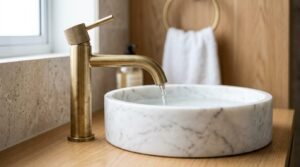
Brushed brass and aged brass finishes are typically applied using PVD (Physical Vapour Deposition) coating, which is significantly more durable than standard electroplating and resists tarnishing for 10 to 15 years with normal care. Standard electroplated brass finishes are cheaper but show wear within 3 to 5 years in a wet environment. When comparing tapware at similar price points, ask specifically whether the finish is PVD-coated; it’s the single biggest durability differentiator in specialty finishes.
Showerheads and Rail Systems
Showerheads come in three main configurations: fixed wall-mounted heads, ceiling-mounted rain showerheads, and hand-held showerheads on a rail.
A basic hand-held showerhead on a rail starts from $80 to $200. Ceiling-mounted rain showerheads (200mm to 400mm diameter) range from $150 to $800 depending on size and brand. Many Sydney renovators opt for a dual system with both a rain head and a hand-held option, which typically costs $300 to $1,200 for the complete set.
Look for showerheads with a minimum 3-star WELS rating, which deliver around 7.5 to 9 litres per minute. This balances water savings with a comfortable shower experience.
Heated Towel Rails: Electric vs. Hydronic
Heated towel rails are one of the most appreciated features in a renovated Sydney bathroom, particularly through the cooler months. The choice between electric and hydronic models affects both installation cost and running cost.
Electric heated towel rails are the most common choice in Sydney renovations. They run independently of your hot water system, require only an electrical connection (typically a dedicated circuit from your switchboard), and range from $200 for a basic chrome rail to $800 or more for a larger designer model in a specialty finish. Running costs are modest; a standard 60W rail costs approximately $0.50 to $0.80 per day at Sydney electricity rates.
Hydronic heated towel rails connect to your home’s hot water or central heating system. They’re more energy-efficient when the system is already running but require a plumber to connect them to the hydronic circuit, adding $300 to $600 in installation cost on top of the rail price. For most Sydney bathroom renovations, electric is the practical choice unless a hydronic system is already in place.
Towel Rails, Robe Hooks, and Hardware
A complete set of accessories for one bathroom typically includes:
- Heated towel rail ($200–$800)
- Towel ring or bar ($40–$200)
- Robe hook(s) ($30–$120 each)
- Toilet roll holder ($30–$150)
- Soap dish or dispenser ($30–$100)
For a coordinated look, most brands offer accessory suites in matching finishes. A full accessory suite in matte black or brushed nickel from a mid-range brand typically costs $300 to $700. Premium brands push this to $1,000 or more.
Floor Wastes, Drains, and Grates
Floor wastes and drain grates are functional fittings that also contribute to the bathroom’s visual design. A standard 80mm square floor waste in chrome costs $20 to $50. Tile-insert floor wastes, which allow the floor tile to continue across the drain for a seamless look, range from $50 to $200.
Linear (strip) drains, commonly used in hobless showers, are a higher-cost option at $150 to $600 depending on length and finish. They require specific waterproofing and fall calculations, so discuss these with your contractor early in the design phase.
Shower Screens and Enclosures
Shower screens are one of the most visible elements in a bathroom renovation and one of the most frequently overlooked in early budget planning. The type of screen you choose affects both the visual scale of the bathroom and the waterproofing requirements for the surrounding walls.
Frameless, Semi-Frameless, and Framed Options
Frameless shower screens use thick 10mm toughened glass with minimal hardware and no frame around the perimeter. They’re the most popular choice in mid-range to premium Sydney renovations because they make the bathroom feel larger and are easier to clean. Frameless screens typically cost $800 to $2,500 supplied and installed, depending on the configuration (single panel, hinged door, or corner entry).
Semi-frameless screens use 6mm glass with a frame on some edges but not all. They’re a cost-effective middle ground at $500 to $1,500 installed. Framed screens use 4–5mm glass with a full aluminium frame and are the most affordable option at $300 to $800 installed, though they’re less common in contemporary Sydney renovations.
Fixed Panels vs. Hinged Doors
Fixed panel screens (no door entry from the side) suit hobless shower designs and are the simplest and most affordable configuration. Hinged door screens add $200 to $500 to the cost but are necessary where the shower layout requires a door for water containment.
Always confirm the screen dimensions with your tiler before ordering. The screen must be sized to the finished tile surface, not the rough framing. Ordering too early is one of the most common causes of shower screen delays on site.
How to Choose Bathroom Fixtures and Fittings in Sydney
Selecting fixtures and fittings isn’t just about picking what looks good in a showroom. Your choices need to align with your renovation goals, your bathroom’s physical dimensions, local compliance requirements, and your overall budget.
Matching Style to Your Renovation Goals
Start by defining the look you want. Sydney bathroom trends in 2025 lean toward clean, contemporary designs with natural materials. Popular styles include:
- Modern minimalist: Wall-hung fixtures, concealed cisterns, frameless shower screens, matte black or brushed nickel fittings
- Coastal contemporary: Lighter colour palettes, timber-look vanities, brass or chrome fittings
- Heritage/classic: Freestanding baths, exposed shower sets, cross-handle tapware, chrome or aged brass finishes
- Luxury spa: Freestanding stone baths, rain showerheads, wall-mounted tapware, premium finishes
Heritage and luxury styles typically require more expensive fittings and specialist installation. Modern minimalist designs are achievable across a wider price range.
If you’re renovating an investment property, prioritise durability and broad appeal over personal taste. Neutral fixtures in chrome or matte black with a clean, modern layout attract the widest range of tenants and buyers.
Planning Your Fixture Layout Before Rough-In
The sequence of fixture selection matters as much as the selection itself. Your plumber sets the rough-in the position of all water supply and waste pipes before any tiling or wall lining goes in. Once the rough-in is set, moving a pipe means opening walls, which adds cost and delays.
Confirm the exact model and dimensions of your toilet, vanity, basin, shower mixer, and bath before the rough-in stage. Wall-hung toilets require the in-wall cistern frame to be positioned at a specific height. Wall-mounted tapware requires the supply pipes to exit the wall at the exact height and spacing the tap body requires, typically specified to the millimetre in the product’s installation guide. Providing your contractor with confirmed product specifications before rough-in is the single most effective way to avoid costly mid-build changes.
Material Quality and Durability Considerations
Not all fixtures and fittings are made equal. The material composition directly affects longevity, maintenance, and long-term cost.
For tapware, solid brass construction is the gold standard. It resists corrosion, holds finishes well, and lasts decades. Zinc alloy tapware is cheaper but more prone to corrosion and finish degradation, particularly in wet environments.
For basins, vitreous china and fine fireclay are the most durable ceramic options. Engineered stone and solid surface basins offer design flexibility but are more susceptible to staining if not properly sealed.
For bathtubs, acrylic is lightweight and affordable but scratches more easily. Composite stone is heavier and more expensive but retains heat better and resists damage.
Spending more on quality materials for high-use items like tapware and the toilet delivers better value over a 10 to 15 year period than choosing the cheapest option and replacing it sooner.
Water Efficiency Ratings and WELS Compliance
In Australia, the Water Efficiency Labelling and Standards (WELS) scheme requires that toilets, tapware, showerheads, and certain other products carry a water efficiency rating. Products are rated from 1 to 6 stars, with higher ratings indicating lower water consumption.
For Sydney renovators, targeting the following minimums is practical:
| Product | Recommended Minimum WELS Rating | Approximate Flow/Flush |
| Toilet (dual flush) | 4 stars | 4.5L full / 3L half |
| Basin tapware | 5 stars | 4.5L per minute |
| Shower | 3 stars | 7.5–9L per minute |
Higher-rated products reduce your household water bill and may be required to meet certain council or BASIX (Building Sustainability Index) requirements for renovations in NSW. Your contractor or certifier confirms the specific BASIX targets for your project.
Sizing and Layout Compatibility
Before committing to a particular fixture, confirm it physically fits your bathroom. Common sizing issues include:
- Freestanding baths that are too large for the available floor space or doorway
- Vanity units that are too deep for narrow bathrooms, blocking door swings or access
- Wall-hung toilets that require a minimum wall cavity depth for the concealed cistern frame (typically 120mm to 200mm)
- Rain showerheads that require adequate ceiling height (minimum 2,100mm from the shower floor to the showerhead is recommended)
Always provide your contractor with the exact product specifications and model numbers before the plumbing rough-in stage. Changing fixtures after rough-in means re-routing pipes, which adds cost and delays.
Bathroom Fixtures and Fittings Cost Guide (Sydney 2026)
Understanding realistic price ranges helps you set a fixture and fitting budget that aligns with your overall renovation spend. The figures below reflect typical Sydney retail and trade pricing as of 2026.
Budget-Friendly Fixtures and Fittings
A budget-friendly approach doesn’t mean low quality. It means selecting reliable, well-rated products from established Australian brands without paying a premium for designer names or specialty finishes.
| Item | Budget Range (AUD) |
| Close-coupled toilet | $250–$450 |
| Wall-hung vanity (600–900mm) | $400–$800 |
| Undermount or semi-recessed basin | $150–$300 |
| Chrome basin mixer | $80–$180 |
| Chrome shower mixer | $100–$200 |
| Hand-held showerhead on rail | $80–$180 |
| Acrylic bath (built-in) | $300–$600 |
| Accessories suite (chrome) | $150–$350 |
| Floor waste | $20–$50 |
| Framed shower screen | $300–$800 |
Total estimated budget range for fixtures and fittings: $1,800–$4,300
At this level, chrome is your most cost-effective finish. Brands like Caroma, Estilo, and Mondella offer solid options that meet WaterMark and WELS requirements.
Mid-Range Options and What You Get
Mid-range is where most Sydney homeowners land. You get better design options, more finish choices (matte black, brushed nickel), improved build quality, and a wider selection of styles.
| Item | Mid-Range (AUD) |
| Wall-faced or back-to-wall toilet | $500–$1,200 |
| Wall-hung vanity with stone top | $800–$2,000 |
| Above-counter or undermount basin | $250–$600 |
| Matte black basin mixer | $200–$450 |
| Shower mixer + diverter | $250–$500 |
| Rain showerhead + hand-held combo | $300–$700 |
| Freestanding acrylic bath | $600–$1,500 |
| Accessories suite (matte black/brushed nickel) | $350–$700 |
| Tile-insert floor waste | $60–$150 |
| Heated towel rail | $250–$500 |
| Semi-frameless shower screen | $500–$1,500 |
Total estimated mid-range for fixtures and fittings: $4,500–$10,500
Brands in this range include Phoenix, Caroma Urbane, Methven, Fienza, and ADP. This is the sweet spot for owner-occupier renovations where you want a quality result without overspending.
Premium and Designer Selections
Premium fixtures and fittings are for renovators who want top-tier design, materials, and brand prestige. Finishes like brushed brass, aged copper, and gunmetal become available. Construction quality is typically the highest, with longer warranties and superior engineering.
| Item | Premium Range (AUD) |
| Wall-hung toilet with concealed cistern | $1,500–$3,500 |
| Custom or designer vanity | $2,000–$5,000+ |
| Designer vessel basin | $500–$1,500 |
| Premium basin mixer (brushed brass/copper) | $500–$1,500 |
| Thermostatic shower system | $800–$2,500 |
| Freestanding composite stone bath | $2,000–$5,000 |
| Designer accessories suite | $700–$1,500 |
| Linear drain (custom length) | $300–$600 |
| Heated towel rail (designer) | $500–$800 |
| Frameless shower screen (custom) | $1,500–$2,500 |
Total estimated premium for fixtures and fittings: $12,000–$28,000+
Brands at this level include Astra Walker, Brodware, Sussex Taps, Omvivo, Villeroy & Boch, and Duravit. If you’re renovating a high-end property or a home you plan to live in long-term, the investment in premium fixtures is justified by both daily enjoyment and property value.
Installation Costs and Labour Allowances
The cost of fixtures and fittings doesn’t end at the purchase price. Installation requires a licensed plumber, and in some cases, an electrician (for heated towel rails, electronic bidet seats, or sensor tapware).
Typical plumbing installation costs in Sydney include:
| Task | Estimated Labour Cost (AUD) |
| Toilet installation | $150–$350 |
| Basin and vanity installation | $200–$400 |
| Bath installation (freestanding) | $300–$600 |
| Tapware installation (per piece) | $80–$200 |
| Shower mixer and showerhead installation | $150–$350 |
| Heated towel rail (electrical connection) | $150–$300 |
| Shower screen installation | $150–$400 |
For a complete bathroom, plumbing labour for fixture and fitting installation typically runs $800 to $2,000 on top of the product costs. This should be itemised in your contractor’s quote. If it’s bundled into a lump sum, ask for a breakdown so you understand exactly what you’re paying for.
Where to Buy Bathroom Fixtures and Fittings in Sydney
Where you source your fixtures and fittings affects both cost and convenience. Sydney offers a wide range of options, from trade-only warehouses to high-end showrooms and online retailers.
Trade Suppliers vs. Retail Showrooms
Trade suppliers like Reece, Tradelink, and E&S Trading offer competitive pricing, particularly if your contractor has a trade account. Buying through your contractor’s trade account saves 10% to 30% compared to retail pricing on the same products.
Retail showrooms like Highgrove Bathrooms, The Blue Space, or brand-specific showrooms (Caroma, Villeroy & Boch) allow you to see and touch products before purchasing. This is valuable for high-cost items like freestanding baths and vanities where colour, texture, and scale matter.
The most cost-effective approach for most renovators is to visit showrooms to make your selections, then purchase through your contractor’s trade account where possible.
Online Purchasing Risks and Savings
Online retailers like ABI Interiors, Temple & Webster, and various eBay/Amazon sellers offer significant savings, sometimes 20% to 40% below showroom pricing. However, there are real risks:
- Warranty issues: Some manufacturers void warranties on products not purchased through authorised retailers
- WaterMark compliance: Products sourced from overseas may not carry WaterMark certification, making them non-compliant for Australian plumbing installations
- Returns and damage: Returning large or fragile items purchased online is expensive and time-consuming
- Colour and finish matching: Screens don’t accurately represent finishes; “brushed nickel” from one brand looks very different from another
If you buy online, verify WaterMark certification, check the returns policy, and order well in advance of your installation date. Your plumber is legally entitled to refuse to install non-WaterMark-certified products.
Common Mistakes When Selecting Bathroom Fixtures and Fittings
Fixture and fitting selection is where many renovation budgets go off track. These are the mistakes we see most often.
Choosing Style Over Function
A stunning vessel basin that sits 150mm above the vanity top might look beautiful in a magazine, but if it means your benchtop is too high for comfortable daily use, it’s a poor choice. Similarly, wall-mounted tapware requires precise plumbing placement inside the wall; if the rough-in is even slightly off, the tap won’t align with the basin.
Always test fixtures for practical usability. Visit a showroom and physically interact with the products. Turn the taps on. Sit on the toilet. Stand under the showerhead height. Function drives the decision, with style as the filter.
Ignoring Waterproofing and Compliance Requirements
In NSW, bathroom waterproofing must comply with AS 3740-2021 (Waterproofing of domestic wet areas). Certain fixture choices affect waterproofing requirements. A hobless shower requires a different waterproofing membrane application than a shower with a hob. A freestanding bath on a timber floor needs additional waterproofing beneath and around the bath.
Your fixtures and fittings must also comply with the National Construction Code (NCC) and relevant Australian Standards. Non-compliant products result in failed inspections, insurance issues, and costly rectification work.
Underestimating Total Fixture and Fitting Costs
The most common budgeting mistake is pricing individual items in isolation without adding up the total. A $400 basin mixer seems reasonable on its own. But when you add a $350 shower mixer, a $250 bath spout, a $180 showerhead, a $500 heated towel rail, and $400 in accessories, you’ve spent $2,080 on fittings alone before touching a single fixture.
Create a complete fixture and fitting schedule: a spreadsheet listing every item, its cost, and its supplier before committing to any purchases. This gives you a clear total and makes it easy to adjust individual items to stay within budget.
How Fixtures and Fittings Affect Your Total Bathroom Renovation Budget
Fixtures and fittings are one component of a larger bathroom renovation budget that includes demolition, waterproofing, tiling, plumbing, electrical, carpentry, and painting. Understanding how fixture costs relate to the total budget helps you allocate funds wisely.
Fixture Allowances Explained
Many Sydney renovation contractors quote with a “fixture allowance” or “PC (Prime Cost) allowance.” This is a provisional budget line within the quote that covers the cost of fixtures and fittings you haven’t yet selected.
For example, a contractor might include a $5,000 fixture allowance in a $35,000 bathroom renovation quote. If your selections total $6,500, you pay the $1,500 difference. If they total $4,200, you save $800.
The key questions to ask about any fixture allowance:
- What specific items does the allowance cover? (Fixtures only? Fittings too? Accessories?)
- Does the allowance include GST?
- Does the allowance include delivery?
- What happens if I go over or under the allowance?
Getting clear answers to these questions before signing a contract prevents disputes and surprises later.
How to Build a Fixture and Fitting Schedule
A fixture and fitting schedule is a simple spreadsheet that lists every item going into your bathroom, its confirmed model number, its cost (product + delivery), and its supplier. It’s the most effective tool for keeping your fixture budget under control.
Build the schedule in this order: start with the fixtures (toilet, bath, basin, shower base or screen), then add the fittings (tapware, showerhead, heated towel rail, drain), then add the accessories (towel rails, robe hooks, toilet roll holder, soap dispenser). Assign a budget line to each item before you start shopping, not after. When you find a product you love that exceeds its budget line, you can immediately see which other line you need to reduce to compensate. Share the completed schedule with your contractor before the rough-in stage so they can confirm all product specifications are compatible with the planned plumbing layout.
Where to Spend and Where to Save
Not all fixtures and fittings deliver equal value. Here’s a practical prioritisation framework:
Spend more on:
- Tapware: You touch it every day. Quality brass tapware lasts 15+ years. Cheap tapware corrodes, leaks, and looks tired within 3 to 5 years.
- Toilet: A reliable, water-efficient toilet with a good flush mechanism saves water, reduces maintenance, and avoids plumber call-outs.
- Showerhead: The shower experience is the most-used feature in any bathroom. A quality showerhead with good water pressure and efficient flow makes a daily difference.
Save on:
- Accessories: Towel rails, robe hooks, and toilet roll holders are easy to upgrade later without any plumbing work. Start with a mid-range set and upgrade if budget allows.
- Bath (if rarely used): If the bath is primarily for resale value and won’t be used daily, a quality acrylic model delivers the same visual impact as a $4,000 stone bath at a fraction of the cost.
- Drain grates: A tile-insert floor waste looks great, but a standard stainless steel grate functions identically. Save here if budget is tight.
This approach ensures your daily-use items are high quality while keeping the overall budget under control.
Conclusion
Bathroom fixtures and fittings are one of the most important budget categories in any renovation. From toilets and basins to tapware, showerheads, shower screens, and accessories, every selection affects your total cost, your bathroom’s functionality, and the long-term value of your property.
Planning a detailed fixture and fitting schedule, understanding the difference between fixtures and fittings, and knowing where to invest and where to save puts you in control of your renovation budget. The right choices today mean fewer repairs, lower water bills, and a bathroom that works beautifully for years.
We help Sydney homeowners and property investors navigate these decisions every day. Sydney Home Renovation provides transparent fixture allowances, honest cost guidance, and end-to-end project management so your bathroom renovation stays on budget and on schedule. Contact us to start planning your renovation with confidence.
Frequently Asked Questions
What is the difference between a bathroom fixture and a fitting?
A bathroom fixture is a permanent, plumbed-in item connected to your water supply and drainage, such as a toilet, basin, bathtub, or shower base. A fitting is a smaller component that attaches to a fixture or wall, such as taps, mixers, showerheads, towel rails, and drain grates.
How much should I budget for bathroom fixtures and fittings in Sydney?
In Sydney in 2026, budget-friendly fixtures and fittings for a standard bathroom cost approximately $1,800 to $4,300. Mid-range selections typically run $4,500 to $10,500. Premium and designer options exceed $12,000 to $28,000. These figures cover products only and don’t include installation labour, which adds $800 to $2,000.
Are expensive bathroom fittings worth the investment?
For high-use items like tapware and showerheads, spending more on quality materials, particularly solid brass construction, delivers better long-term value through greater durability, better finishes, and longer warranties. For lower-use items like accessories and drain grates, mid-range options perform equally well and can be upgraded later without plumbing work.
What bathroom fixtures add the most value to a property?
A modern, water-efficient toilet, a quality vanity with stone benchtop, and well-chosen tapware in a current finish (matte black or brushed nickel) add the most perceived value. For family homes, retaining at least one bathtub in the property is important for resale. A heated towel rail is a relatively low-cost addition that buyers and tenants consistently value.
Can I supply my own fixtures and fittings to a renovation contractor?
Most contractors allow you to supply your own fixtures and fittings, but there are important considerations. You need to ensure all products are WaterMark certified and meet Australian Standards. You’re also responsible for delivery timing, returns, and warranty claims. Some contractors charge a coordination fee for owner-supplied items, and you may lose the trade pricing discount they could have secured.
What WELS rating should I look for in bathroom tapware?
For basin tapware, a 5-star WELS rating (approximately 4.5 litres per minute) is practical for most households. For showerheads, a 3-star rating (7.5 to 9 litres per minute) balances water efficiency with comfortable water pressure. For toilets, a 4-star dual-flush rating (4.5L full flush, 3L half flush) is the standard minimum.
How do I avoid going over budget on bathroom fixtures and fittings?
Create a complete fixture and fitting schedule listing every item, its cost, and its supplier before making any purchases. Clarify exactly what your contractor’s fixture allowance covers. Buy through your contractor’s trade account where possible to access trade pricing. Always add a 10% to 15% contingency to your fixture budget for unexpected costs or last-minute changes.
Do I need a licensed plumber to install all bathroom fixtures?
Yes. In NSW, all plumbing work, including the installation of toilets, basins, baths, tapware, and shower mixers, must be carried out by a licensed plumber. Electrical connections for heated towel rails and electronic bidet seats require a licensed electrician. DIY installation of plumbing fixtures is illegal and voids your home insurance coverage for any resulting water damage.


