
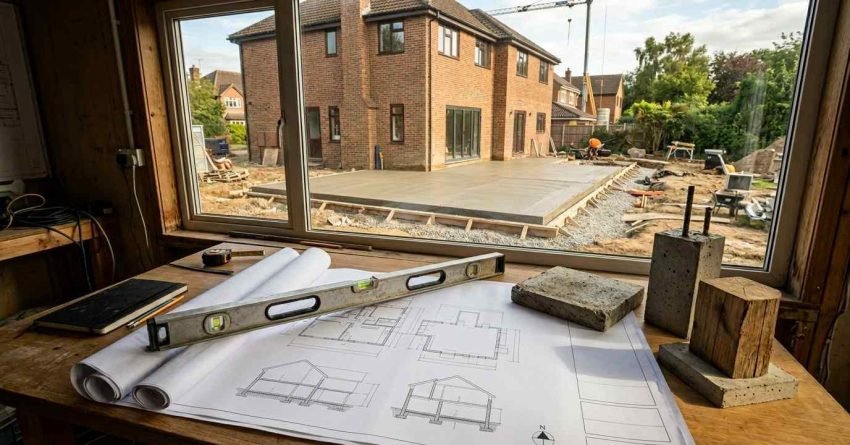
Matching an extension foundation to an existing house is one of the most structurally demanding aspects of any home addition project. Get it wrong, and the consequences range from cracking and settlement to structural failure problems that are expensive to fix and difficult to reverse. In Sydney, where soil conditions vary dramatically across suburbs, and older homes carry a wide range of original footing types, foundation matching requires careful assessment, sound engineering, and the right construction method for your specific site.
Poor foundation decisions are among the leading causes of extension failures in residential construction, and they are almost always preventable with proper planning upfront.
This guide explains how to assess your existing foundation, the matching methods available in Sydney, what soil and structural factors affect your approach, and what the process costs.
Why Foundation Matching Matters in Home Extensions
When you add an extension to an existing house, the new structure and the original building must behave as one. If the new foundation settles at a different rate or carries load differently from the existing footings, the connection point between old and new becomes a stress concentration, and that stress expresses itself as cracking, movement, and in serious cases, structural separation.
Foundation matching is not simply about using the same footing type. It is about ensuring that the new foundation has equivalent bearing capacity, sits at the correct depth relative to the existing footings, and is designed to handle the loads the extension will place on the ground. This is why the process begins with a thorough assessment of what is already there, not with a decision about what to build next.
How to Assess Your Existing Foundation Type
Before any matching method can be selected, you need to know exactly what type of foundation your existing house sits on. This is not always obvious from above ground, and in older Sydney homes built before the 1970s, documentation is often incomplete or absent entirely.
A structural engineer or experienced builder will typically expose a section of the existing footing either by excavating a small test pit or reviewing original building plans if available to confirm the footing type, depth, width, and condition. The condition matters as much as the type: a deteriorated footing changes the matching strategy significantly.
Slab-on-Ground Foundations
Slab-on-ground is the most common foundation type in Sydney homes built from the 1960s onward. The entire floor structure is a reinforced concrete slab poured directly onto prepared ground, with thickened edges acting as the footing. When extending a slab-on-ground home, the new slab must be tied into the existing slab at the correct level, with reinforcement continuity across the joint to prevent differential movement.
Strip and Pad Footings
Strip footings run continuously under load-bearing walls, while pad footings support individual columns or posts. Both are common in Sydney homes built between the 1920s and 1960s. Matching these footings requires excavating to the same depth as the existing footings and ensuring the new concrete bears on the same soil stratum. Shallow original footings in reactive clay soils can complicate this significantly.
Pier and Beam Foundations
Pier and beam construction, where the floor structure is elevated above ground on concrete or timber piers, is found in older Sydney homes, particularly in areas with sloping blocks or high moisture. Matching a pier and beam foundation for an extension involves either continuing the pier grid at consistent spacing and depth or transitioning to a slab with appropriate structural detailing at the junction.
Structural Load Requirements for Extensions
Every extension adds weight to the ground. The new foundation must be designed to carry that weight without causing settlement that differs from the existing structure. This is a structural engineering calculation, not a builder’s estimate.
The key variables are the dead load (the weight of the structure itself), the live load (the weight of occupants, furniture, and contents), and the soil’s bearing capacity at the footing depth. In Sydney, bearing capacity varies considerably, from strong sandstone-based soils in parts of the North Shore to highly reactive clay in the western suburbs and soft fill in some coastal areas. Australian Standard AS 2870 classifies residential sites by soil reactivity, and that classification directly determines the minimum footing depth and design requirements for your extension.
A structural engineer calculates the required footing size and depth based on these loads and the site-specific soil report. The footing design must also account for the loads transferred from the existing structure at the connection point, which are often higher than the loads within the extension itself, particularly where the new structure introduces concentrated point loads near the existing footing line.
Common Foundation Matching Methods Used in Sydney
The method used to match an extension foundation to an existing house depends on the original footing type, the soil conditions, the structural loads, and the level difference between old and new. Three approaches are used most frequently in Sydney residential construction.
Underpinning Existing Footings
Underpinning is used when the existing footings are too shallow, too narrow, or in poor condition to support the loads the extension will introduce. The process involves excavating beneath the existing footing in staged sections and pouring new concrete beneath it to extend its depth or width. Underpinning is labour-intensive and requires careful sequencing to avoid destabilising the existing structure during the work.
The staging sequence is critical. Each bay is excavated, poured, and cured before the adjacent bay is touched, which limits the unsupported span of the existing footing at any one time. On reactive clay sites, this process takes longer and costs more than on stable ground.
Extending the Slab
For slab-on-ground homes, the most common approach is to pour a new slab that connects directly to the existing slab edge. The connection requires saw-cutting the existing slab edge, installing reinforcement dowels into the existing concrete, and pouring the new slab monolithically against it. The new slab must be at the same level as the existing slab unless a step is intentionally designed into the floor plan.
The critical detail here is the reinforcement connection. Dowels must be drilled and epoxy-anchored into the existing slab at the correct spacing and embedment depth to transfer loads across the joint. A poorly executed slab extension joint is one of the most common causes of cracking at the old-new boundary.
New Independent Footings with Structural Ties
In some cases, particularly where the existing and new structures will carry significantly different loads, or where the soil conditions make a direct connection impractical, the extension is built on its own independent footing system. The two structures are then connected at the wall and roof level with structural ties that allow a controlled degree of differential movement while maintaining weatherproofing and structural integrity at the junction.
This approach is more common in larger extensions, split-level additions, and situations where the existing footings are in poor condition and full underpinning is not cost-effective.
Common Mistakes in Extension Foundation Matching
The most expensive problems in extension foundation work are almost always the result of decisions made before a single hole is dug. Skipping the geotechnical investigation is the most common error; without a soil report, the footing design is based on assumptions, and assumptions fail when the ground behaves differently from what was expected.
The second most common mistake is matching the footing type without matching the footing depth. Using the same footing style as the existing house means nothing if the new footings bear on a different soil stratum. The third error is an under-engineered reinforcement connection at the slab joint; dowels installed at the wrong spacing or embedment depth create a weak plane that cracks under load.
Finally, failing to account for the loads transferred from the existing structure at the connection point leads to undersized footings at the most stressed location in the entire build. Each of these mistakes is preventable with proper engineering documentation and an experienced builder who reads and follows the drawings.

Soil Conditions and Site Constraints in Sydney
Sydney’s geology is highly variable, and soil conditions have a direct impact on which foundation matching method is appropriate and how much the work will cost. The three soil types that most commonly affect extension foundation decisions in Sydney are reactive clay, sandy loam, and rock.
Reactive clay, found extensively in Sydney’s western and south-western suburbs, expands when wet and contracts when dry. This movement is the primary cause of footing heave and settlement in Sydney homes, and it is the reason that footing depths in these areas are typically greater than in more stable soil zones. Matching a foundation in reactive clay requires careful attention to footing depth, soil moisture management, and the use of appropriate concrete mixes.
Sandy loam soils, common in coastal and northern Sydney areas, are generally less reactive but can be prone to erosion and loss of bearing capacity if groundwater is present. Rock-based sites, common on the North Shore and in parts of the Inner West, offer excellent bearing capacity but can make excavation expensive and complicate the installation of reinforcement connections.
Cost Factors for Foundation Matching in Sydney
Foundation matching costs in Sydney vary widely depending on the footing type, the method required, the soil conditions, and the size of the extension. Straightforward slab extensions on stable ground are the least expensive option, while underpinning on reactive clay sites with poor existing footings represents the upper end of the cost range.
The main cost drivers are excavation depth and volume, the amount of reinforcement required, whether underpinning is needed, the complexity of the structural connection detail, and the cost of the geotechnical and structural engineering reports that must precede the work. In Sydney, geotechnical reports typically cost between $1,500 and $4,000 depending on the number of test bores required, and structural engineering fees for footing design generally range from $2,000 to $6,000 for a standard residential extension.
| Method | Typical Cost Range (excl. engineering) | Primary Cost Driver |
| Slab extension on stable ground | Lower end | Reinforcement connection detail and concrete volume |
| Independent footings with structural ties | Mid range | Excavation volume and tie-in complexity |
| Underpinning on reactive clay | Upper end | Staged excavation, labour sequencing, soil management |
Labour costs for the foundation work itself depend heavily on site access, soil type, and the method used. Underpinning on constrained sites with reactive clay can cost two to three times as much per linear metre as a slab extension on an accessible flat site with stable soil.
Working with Engineers and Builders on Foundation Plans
Foundation matching for a home extension is not a design-and-build decision that a builder makes independently. It requires a geotechnical engineer to assess the soil, a structural engineer to design the footing system, and a builder with direct experience in foundation matching to execute the work correctly.
The process begins with a geotechnical investigation, soil test bores or dynamic cone penetrometer tests, which produce a report classifying the site and recommending footing parameters. The structural engineer uses this report, along with the architectural plans for the extension, to design the footing system and produce drawings and specifications that the builder works from.
Inspection Stages and Hold Points
Foundation work in Sydney involves mandatory inspection hold points that the builder cannot pass without sign-off. These typically include the excavation inspection (confirming depth and soil conditions match the geotechnical report), the reinforcement inspection (confirming steel placement before concrete is poured), and the concrete pour itself. Missing or rushing a hold point is a compliance failure and can require costly remediation.
Choosing a builder who has completed foundation matching work on similar projects in Sydney is important. The structural details at the old-new junction are the most critical part of the build, and they require a builder who understands the engineering intent behind the drawings, not just the dimensions. Errors at this stage are difficult and expensive to correct once the slab or footings are poured.
Conclusion
Matching an extension foundation to an existing house is a process that connects soil behaviour, structural load, footing type, and construction method into a single engineered outcome. Each variable affects the others, and the right approach for your project depends on what is already in the ground and what the new structure will demand of it.
In Sydney, where soil conditions and original footing standards vary significantly across suburbs and building eras, getting the foundation matching right from the start protects your investment and prevents the costly structural problems that come from differential settlement.
We bring the construction expertise, engineering coordination, and honest project guidance to ensure your extension foundation is matched correctly. Contact Sydney Home Renovation to discuss your site and get a clear plan before work begins.
Frequently Asked Questions
Do I need a structural engineer to match an extension foundation to my existing house?
Yes. Foundation matching requires a structural engineer to design the footing system based on the soil report and the extension’s load requirements. A builder cannot legally or safely determine footing specifications without engineering drawings.
What happens if the extension foundation is not matched correctly?
Differential settlement occurs when the new and existing foundations move at different rates. This causes cracking at the junction, door and window frames racking out of square, and in serious cases, structural separation requiring expensive remediation.
How deep do extension footings need to be in Sydney?
Footing depth depends on the soil classification and the existing footing depth. In reactive clay areas across western Sydney, footings typically need to reach 450mm to 600mm or deeper. A geotechnical report determines the required depth for your specific site.
Can I extend a slab-on-ground foundation myself?
No. Extending a concrete slab requires council approval, structural engineering drawings, and licensed construction work. The reinforcement connection is a structural detail that must be executed to the engineer’s specification and inspected at key stages.
What is underpinning and when is it needed for an extension?
Underpinning deepens or widens an existing footing by excavating beneath it and pouring new concrete. It is needed when existing footings are too shallow, too narrow, or in poor condition to support the loads the extension will introduce.
How long does foundation matching work take for a typical Sydney extension?
A straightforward slab extension on stable ground typically takes one to two weeks. Underpinning projects or sites with complex soil conditions can take three to five weeks depending on scope and the number of underpinning stages required.
What is the difference between extending a slab and building independent footings for an extension?
Extending a slab creates a monolithic connection with reinforcement dowels transferring loads across the joint. Independent footings allow the extension to settle separately, with structural ties at the wall and roof level managing the junction.


