
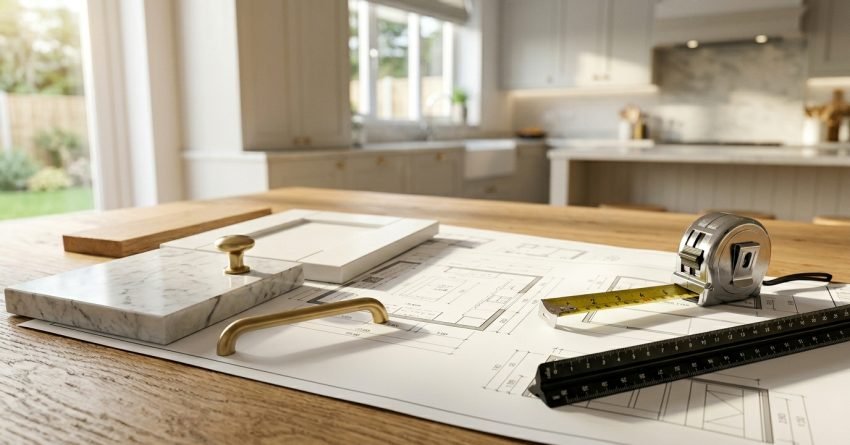
Planning a kitchen renovation in Sydney requires more than choosing new cabinets. It demands a clear sequence of decisions covering budget, scope, layout, materials, trades, and approvals before a single wall comes down.
Without a structured plan, even well-funded renovations run over budget, stall mid-project, or deliver results that fall short of expectations. A step-by-step approach removes the guesswork and keeps your project on track.
This guide walks through every stage of kitchen renovation planning from setting a realistic budget and defining your scope to selecting materials, hiring the right contractor, and managing your timeline through to completion.
What Does a Kitchen Renovation Actually Involve?
A kitchen renovation is the process of upgrading, reconfiguring, or fully rebuilding a kitchen space to improve its functionality, aesthetics, and long-term value. In Sydney, renovations range from cosmetic refreshes, new benchtops, splashbacks, and cabinet doors through to full structural overhauls involving plumbing relocation, electrical upgrades, and layout changes.
The scope of work determines the trades involved, the approvals required, and the total cost. A cosmetic update might involve a cabinetmaker, tiler, and painter. A full renovation typically requires a builder, plumber, electrician, and potentially a structural engineer if walls are being removed.
Understanding what your renovation actually involves before you start is the single most important step in the planning process. Every decision that follows budget, timeline, contractor selection depends on getting this right.

Step 1: Set Your Budget Before Anything Else
Budget is the constraint that shapes every other decision in a kitchen renovation. Setting a realistic figure before you engage any trades or make any design choices prevents the most common and costly planning mistake: scoping a project you cannot afford to finish.
How Much Does a Kitchen Renovation Cost in Sydney?
Kitchen renovation costs in Sydney vary significantly based on scope, materials, and the complexity of the existing space. As a general guide, a cosmetic refresh typically starts from $15,000–$25,000, a mid-range renovation with new cabinetry and appliances ranges from $30,000–$60,000, and a full high-end renovation with structural changes can exceed $80,000–$120,000 or more.
These figures reflect Sydney labour rates, which are among the highest in Australia, and the cost of materials sourced locally. The scope you define in Step 2 is the single biggest driver of where your project lands within these ranges.
How to Allocate Your Kitchen Renovation Budget
A practical budget allocation for a mid-range kitchen renovation typically distributes spend across cabinetry and joinery (30–40%), appliances (15–20%), benchtops (10–15%), labour including plumbing and electrical (20–25%), and tiling, splashbacks, and finishes (10–15%). Contingency should always be held at 10–15% of the total budget to absorb unexpected costs, particularly in older Sydney homes where hidden issues behind walls and under floors are common.
Prioritise spend on items that affect daily function and long-term durability: cabinetry construction quality, benchtop material, and appliance reliability. These are harder and more expensive to replace later than decorative finishes.
What Hidden Costs Should You Budget For?
Hidden costs are the most common cause of budget blowouts in kitchen renovations. The five most frequent surprises we encounter on Sydney projects are:
- Asbestos removal: common in homes built before 1990; testing and licensed removal adds $1,500–$5,000+ depending on extent
- Structural repairs: rot, termite damage, or subfloor issues discovered during demolition
- Electrical switchboard upgrades: older homes often require a panel upgrade to support modern appliances, adding $1,500–$3,000
- Plumbing compliance work: bringing existing drainage up to current code when relocating or replacing fixtures
- Extended lead times: custom cabinetry or stone benchtops delayed past the scheduled installation window, adding temporary kitchen costs
Holding a genuine 15% contingency, not 10%, is the single most effective way to absorb these costs without derailing the project.
Step 2: Define Your Goals and Renovation Scope
Before engaging a designer or contractor, define what you actually want the renovation to achieve. Are you renovating to improve daily liveability, to increase resale value, to modernise an outdated space, or all three? Your goals determine your scope, and your scope determines your budget.
Full Renovation vs. Cosmetic Refresh: Which Do You Need?
A full renovation involves structural changes, new cabinetry, relocated plumbing or electrical, and a complete rebuild of the kitchen from the substrate up. A cosmetic refresh retains the existing layout and infrastructure but replaces visible surfaces: cabinet doors, benchtops, splashbacks, tapware, and appliances.
A cosmetic refresh delivers significant visual impact at a fraction of the cost of a full renovation, provided the existing layout functions well and the cabinet carcasses are structurally sound. If your kitchen has poor workflow, inadequate storage, or outdated plumbing and electrical, a cosmetic update will not resolve the underlying problems.
The scope of your project shapes every decision that follows. Getting this definition right before you engage anyone saves time, money, and the frustration of mid-project scope changes.
Do You Need a Kitchen Designer or a Builder?
A kitchen designer focuses on layout, aesthetics, and product specification; they produce drawings and a materials schedule but do not manage construction. A builder or renovation contractor manages the full build, coordinates trades, and takes responsibility for the finished result.
For a cosmetic refresh, a cabinetmaker with design capability is often sufficient. For a full renovation involving structural changes, plumbing relocation, or electrical upgrades, a licensed builder is required. Many Sydney renovation contractors offer an integrated design-and-build service that covers both functions under one contract.
Step 3: Choose the Right Kitchen Layout
Layout determines how your kitchen functions every day. The best layout for your space depends on the room’s dimensions, the location of existing plumbing and electrical connections, and how you use the kitchen.
Common Kitchen Layouts and When to Use Them
The galley layout, with two parallel runs of cabinetry, suits narrow spaces and delivers excellent workflow efficiency. The L-shaped layout works well in open-plan living areas and provides a natural work triangle between the sink, cooktop, and refrigerator. The U-shaped layout maximises storage and bench space in larger kitchens. Island layouts add prep space and social functionality but require sufficient floor area, typically a minimum of 900mm clearance on all sides of the island.
Comparing Layout Options: Pros and Trade-Offs
| Layout | Best For | Key Advantage | Main Trade-Off |
| Galley | Narrow rooms, high-traffic kitchens | Maximum workflow efficiency | Limited social interaction |
| L-Shaped | Open-plan living areas | Natural work triangle, flexible | Corner storage can be awkward |
| U-Shaped | Larger kitchens, serious cooks | Maximum bench and storage space | Requires significant floor area |
| Island | Spacious kitchens, entertaining | Prep space + social hub | Needs 900mm+ clearance all sides |
| Single Wall | Studio apartments, compact spaces | Space-efficient | Limited storage and bench run |
Changing your layout to move plumbing or electrical connections adds high cost and complexity. Where the existing layout functions well, working within it and optimising storage and workflow through cabinetry design is almost always the more cost-effective approach.
Step 4: Select Materials, Finishes, and Appliances
Material and appliance selection is where renovation budgets most commonly drift. The range of options at every price point is wide, and without a clear framework for decision-making, it is easy to overspend on low-impact items while underinvesting in high-impact ones.
Where to Spend and Where to Save
Spend on benchtops, cabinetry construction quality, and appliances; these are the elements that affect daily function and long-term durability. Benchtops are one of the highest-impact material choices in any kitchen renovation, and the four main options each carry different cost, durability, and maintenance profiles:
- Stone (engineered quartz): $500–$1,200/m² installed; highly durable, low maintenance, the most popular choice in Sydney renovations
- Natural stone (granite, marble): $800–$2,000/m² installed; premium aesthetic, requires sealing, susceptible to staining
- Laminate: $150–$400/m² installed; budget-friendly, wide colour range, less heat and scratch resistant
- Timber: $400–$900/m² installed; warm aesthetic, requires regular oiling, not ideal near wet areas
Save on decorative hardware, splashback tiles, and light fittings; these are easy and inexpensive to update later if your taste changes. A well-constructed kitchen with mid-range finishes consistently outperforms a poorly constructed kitchen with premium surfaces.
For appliances, prioritise the cooktop and oven; these are used daily and directly affect cooking performance. Dishwasher and rangehood quality matter for longevity and noise levels. Refrigerators are typically freestanding and can be purchased independently of the renovation.

Step 5: Hire the Right Renovation Contractor
The contractor you choose has more influence over the outcome of your renovation than any other single decision. A skilled, experienced contractor delivers quality workmanship, manages trades effectively, communicates clearly, and keeps the project on schedule and within budget.
What to Look for When Comparing Quotes
Obtain a minimum of three detailed quotes. Each quote should itemise labour and materials separately, specify the brands and grades of materials included, and provide a clear payment schedule tied to project milestones rather than arbitrary dates.
Be cautious of quotes that are significantly lower than others; this typically reflects either missing scope, lower-quality materials, or a contractor who will seek variations to recover margin once work has begun. Verify that every contractor holds a current NSW builder’s licence, carries public liability and workers’ compensation insurance, and can provide references from comparable completed projects.
The right contractor protects your budget, your timeline, and the quality of the finished result.
Step 6: Understand the Permits and Approvals Process
Not all kitchen renovations require council approval, but some do, and failing to obtain the correct permits creates compliance issues, insurance complications, and problems at resale.
In NSW, a Development Application (DA) is generally required when structural changes are involved, such as removing a load-bearing wall. A Complying Development Certificate (CDC) may be sufficient for less complex structural work. Cosmetic renovations that do not affect the building structure, plumbing drainage, or electrical switchboard typically do not require council approval, though a licensed plumber and electrician must still certify their work.
DA vs CDC: Which Approval Do You Need?
The distinction between a DA and a CDC comes down to the nature and scale of the work:
- CDC (Complying Development Certificate): A faster, certifier-approved pathway for work that meets pre-set standards under the NSW Housing Code. Approval typically takes 10–20 business days. Suitable for straightforward structural changes in complying properties.
- DA (Development Application): Required when the work falls outside the Housing Code, for example, heritage-listed properties, non-standard structural changes, or sites with specific planning controls. Council assessment timelines vary from 40 to 100+ days depending on complexity and council workload.
Your licensed builder or a private certifier can advise which pathway applies to your specific property and scope. Getting this confirmed before work begins prevents costly stop-work orders and resale complications.
Step 7: Manage the Renovation Timeline
A realistic timeline prevents the frustration and cost of delays caused by poor sequencing, late material deliveries, or unavailable trades.
Typical Kitchen Renovation Timeline in Sydney
A cosmetic kitchen refresh typically takes two to four weeks from commencement to completion. A mid-range renovation with new cabinetry, benchtops, and appliances generally runs four to eight weeks. A full renovation involving structural changes, plumbing relocation, and electrical upgrades can take eight to fourteen weeks or longer, depending on approval timelines and trade availability.
The critical sequencing is: demolition, structural work, rough-in plumbing and electrical, waterproofing where applicable, cabinetry installation, benchtop templating and fabrication, appliance installation, tiling, painting, and final fit-off.
Cabinetry and benchtop lead times, often four to eight weeks for custom joinery, are the most common cause of project delays. Order these as early as possible, ideally before demolition begins.

How Much Value Does a Kitchen Renovation Add in Sydney?
A well-executed kitchen renovation adds measurable resale value in Sydney’s property market, though the return depends heavily on the quality of the finish, the alignment with buyer expectations in your suburb, and the condition of the rest of the property.
As a general benchmark, a mid-range kitchen renovation in Sydney typically returns 60–80% of its cost in added property value at resale, according to property valuation data from the Australian Property Institute. A high-end renovation in a premium suburb can return more, particularly when the kitchen is the primary selling feature of the home.
The elements that buyers and valuers respond to most consistently are functional layout, quality cabinetry, stone benchtops, and integrated appliances. Cosmetic updates new splashbacks, tapware, and paint- deliver strong visual impact relative to their cost and are often the highest-ROI investment in a kitchen that already functions well.
Renovating purely for resale requires a different decision framework than renovating for liveability. If resale is the primary goal, align your finish level with comparable properties in your suburb rather than exceeding them; over-capitalising on a kitchen in a mid-range suburb rarely returns full value.
Common Kitchen Renovation Mistakes to Avoid
The most expensive kitchen renovation mistakes are almost always planning mistakes, not construction mistakes. Underestimating the budget, failing to account for hidden costs, changing the design mid-project, and choosing a contractor on price alone are the four decisions that most consistently result in cost overruns and poor outcomes.
Other common errors include neglecting ventilation. A rangehood ducted to the exterior is significantly more effective than a recirculating model and must be planned into the layout from the start; retrofitting ducting after cabinetry is installed is expensive and sometimes impossible.
Ignoring storage planning is another frequent mistake: a kitchen with beautiful finishes but inadequate storage fails in daily use. And ordering materials before confirming measurements with the installer leads to costly remakes and delays.
Conclusion
Planning a kitchen renovation from start to finish requires a clear sequence: set a realistic budget, define your scope, choose a functional layout, select materials strategically, hire a qualified contractor, secure the right approvals, and manage your timeline with precision.
Each step builds on the one before it, and skipping any stage creates problems that compound through the rest of the project. The homeowners and investors who achieve the best outcomes are those who invest time in planning before they invest money in construction.
At Sydney Home Renovation, we guide clients through every stage of this process from transparent cost planning and detailed scoping through to skilled workmanship and project coordination. Contact our team today to start your kitchen renovation with a clear plan, honest pricing, and the confidence that comes from working with experienced professionals.
Frequently Asked Questions
How long does a kitchen renovation take in Sydney?
A cosmetic refresh takes two to four weeks. A mid-range renovation runs four to eight weeks, and a full structural renovation takes eight to fourteen weeks depending on approvals and trade availability.
Do I need council approval for a kitchen renovation in Sydney?
Most cosmetic renovations do not require council approval. Structural changes need either a CDC or DA. Licensed tradespeople must certify all plumbing and electrical work regardless of approval type.
What is the most expensive part of a kitchen renovation?
Cabinetry and joinery typically account for 30–40% of the total budget. Labour, including plumbing, electrical, and building work, is the second highest cost in Sydney.
Should I move the plumbing in my kitchen renovation?
Only move plumbing when the existing layout genuinely does not function well. Relocating a sink or dishwasher connection adds $2,000–$5,000 or more and may require additional approvals.
How do I plan a kitchen renovation on a tight budget?
Focus spend on cabinetry quality, benchtops, and appliances. Retain the existing layout to avoid relocation costs. Choose mid-range finishes for decorative elements and hold a 15% contingency.
What adds the most value in a kitchen renovation?
Functional layout, quality cabinetry, stone benchtops, and integrated appliances consistently add strong resale value in Sydney. Lighting and storage improvements also rank highly with buyers and valuers.