
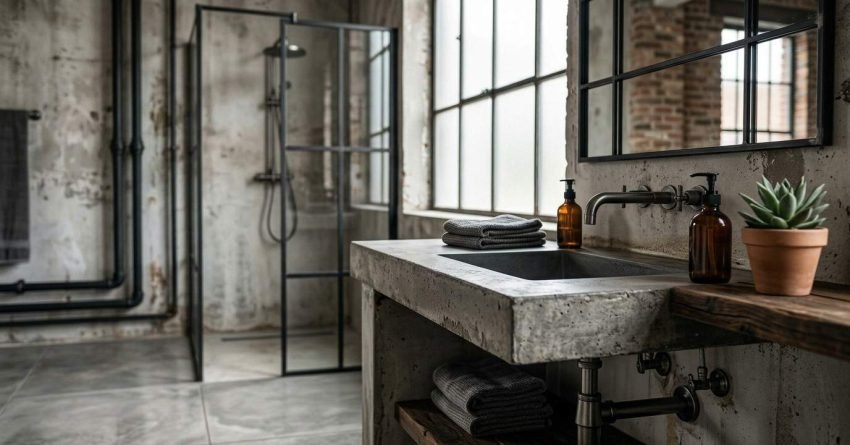
Industrial bathroom design transforms a functional space into a bold, character-rich room built around raw materials, honest finishes, and purposeful simplicity. In Sydney homes, this style has moved well beyond a passing trend, with homeowners and property investors choosing exposed concrete, matte black hardware, and reclaimed timber to create bathrooms that feel both modern and enduring.
Getting the look right requires more than choosing the right tiles. Every element from lighting to vanity selection to wall texture needs to work together to deliver a cohesive result that holds its value long-term.
This guide covers the key design elements, material choices, fixture options, and practical cost considerations that define a well-executed industrial bathroom renovation in Sydney.
What Is Industrial Bathroom Design?
Industrial bathroom design draws its visual language from commercial and warehouse architecture, bringing exposed structural materials, utilitarian fixtures, and a restrained colour palette into a residential bathroom setting. The style prioritises authenticity over decoration, letting the materials themselves carry the aesthetic weight.
Industrial bathroom design is a residential style that applies raw materials exposed concrete, matte metal, reclaimed timber, and utilitarian fixtures to create a bathroom that reads as honest, structural, and deliberately unfinished. It is defined by textural contrast rather than decorative detail.
In a Sydney context, industrial design works particularly well in terrace homes, warehouse conversions, and contemporary new builds where the architectural bones already lean toward raw, honest construction. It also adapts well to standard suburban bathrooms when the right material combinations are applied.
Core Visual Characteristics
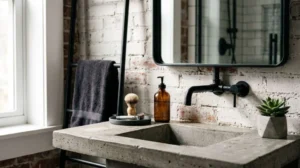
The defining visual characteristics of an industrial bathroom include exposed concrete or cement-render surfaces, raw metal fixtures in matte black or brushed steel, open shelving, and minimal ornamentation. Grout lines are typically wide and visible, reinforcing the structural, unfinished aesthetic rather than concealing it.
How Industrial Style Differs from Other Bathroom Styles
Where Scandinavian design relies on warmth and softness, and contemporary design prioritises clean minimalism, industrial style deliberately introduces tension through contrast. Rough textures sit alongside polished surfaces. Dark metal hardware offsets pale concrete. Timber warmth balances cold steel.
This deliberate contrast is what gives industrial bathrooms their distinctive character.
Key Elements of an Industrial Bathroom
A well-executed industrial bathroom is built around a small number of carefully chosen elements rather than a large number of decorative details. Getting these core elements right is more important than adding volume.
Exposed Materials and Raw Finishes
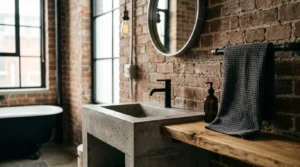
Exposed materials are the foundation of the industrial look. Concrete render, raw brick, unsealed stone, and visible structural elements like pipes or conduit all contribute to the aesthetic. In residential bathrooms, we achieve these through surface treatments and material selections rather than actual structural exposure, but the visual effect is the same when executed well.
Cement-look tiles, textured render, and honed stone are the most practical ways to achieve raw finishes in a Sydney bathroom renovation without the waterproofing and maintenance complications of genuinely unsealed surfaces.
Industrial Fixtures and Fittings
Fixtures in an industrial bathroom are chosen for their functional, utilitarian appearance. Matte black tapware, exposed pipe shower arms, wall-mounted mixers, and cast iron or steel basin formats are all consistent with the style.
Brushed nickel and gunmetal are strong alternatives to matte black. Brushed nickel offers slightly more warmth and resists water spotting better than a true matte finish, while gunmetal sits between the two, darker than nickel, warmer than flat black. All three hold their finish well in wet areas when sourced from quality suppliers.
Hardware consistency matters significantly in this style. Mixing finish types across tapware, towel rails, and accessories undermines the cohesion of the design. Committing to one metal finish across all hardware is one of the most effective ways to elevate the final result.
Industrial Shower Design
The shower is where the industrial aesthetic gets its strongest expression. Exposed pipe shower arms either ceiling-mounted or wall-mounted are the most characteristic fixture choice, and we pair them with a frameless glass screen to keep the space visually open.
A recessed niche in the shower wall, finished in the same concrete-look tile as the surround, replaces the need for a separate shelf and reinforces the clean, structural quality of the design. Matte black or gunmetal shower fittings complete the look without competing with the tile surface.
Colour Palette for Industrial Bathrooms
The industrial colour palette is anchored in neutrals: charcoal, slate grey, warm white, off-black, and raw concrete tones. Timber accents introduce warmth without softening the overall aesthetic. Deep navy and forest green work as accent colours in feature walls or cabinetry without conflicting with the core palette.
Avoid bright whites and high-gloss surfaces in an industrial bathroom. They read as too polished and undermine the raw, textural quality that defines the style.
Industrial Bathroom Flooring and Wall Options
Material selection for floors and walls is where the industrial aesthetic is most directly expressed. The right combination of surfaces creates the visual depth and textural contrast that makes this style work.
Concrete and Cement-Look Tiles
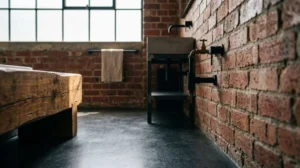
Concrete-look porcelain tiles are the most practical choice for industrial bathroom floors and walls in Sydney. They deliver the raw, matte finish of genuine concrete without the sealing requirements, cracking risk, or waterproofing complications that come with poured concrete in a wet area.
Large-format tiles in 600x600mm or 600x1200mm formats are the most commonly specified sizes. Wide grout joints in a matching or contrasting tone reinforce the industrial grid pattern a charcoal grout against a mid-grey tile reads as more structural than a flush-matched joint, and we recommend testing both on a sample board before committing.
Microcement is an alternative for homeowners seeking a seamless, grout-free concrete surface. It requires professional application and a fully waterproofed substrate; any compromise on the waterproofing membrane beneath microcement creates a failure point that is expensive to repair. When the preparation is done correctly, the result is genuinely distinctive in both floor and wall applications.
Brick, Stone, and Textured Wall Finishes
Feature walls in exposed brick or stone veneer add significant character to an industrial bathroom without requiring structural work. Brick slips, thin brick-face tiles, are the most practical format for residential applications, delivering the authentic brick appearance with standard tile installation methods.
Textured render and board-formed concrete panels are strong alternatives for homeowners who want a more contemporary interpretation of the industrial aesthetic. Both work well as feature wall treatments behind a freestanding bath or vanity.
Industrial Bathroom Vanities and Storage
The vanity is the functional centrepiece of any bathroom, and in an industrial design it carries significant aesthetic weight. Material, format, and hardware selection all need to align with the broader design direction.
Floating Vanities and Open Shelving
Wall-hung floating vanities are the most consistent choice for industrial bathrooms. They reinforce the clean, utilitarian aesthetic, make floor cleaning easier, and work well in both compact and full-size bathroom layouts.
Timber veneer, raw oak, and dark-stained timber finishes are the most popular vanity materials in this style, providing warmth against the harder concrete and metal surfaces. Open shelving below or beside the vanity contributes to the open, unfinished character of the design; steel pipe shelving brackets and raw timber shelves are a particularly strong combination.
Metal and Timber Storage Solutions
Beyond the vanity, industrial bathrooms benefit from storage solutions that are visible and purposeful rather than concealed. Steel mesh baskets, black wire shelving, and wall-mounted metal cabinets all contribute to the aesthetic while providing practical storage.
Reclaimed timber shelving adds warmth and texture, particularly in bathrooms where the primary surfaces are concrete or stone.
Accessories and Finishing Details
Accessories are where the industrial look is either confirmed or undermined. We specify matte black or gunmetal towel hooks, toilet roll holders, and soap dispensers in the same finish as the tapware; consistency across every touchpoint is what separates a considered result from a surface-level interpretation.
Mirrors with a raw steel or blackened timber frame reinforce the aesthetic without adding visual weight. A single large-format mirror above the vanity reads better than a framed cabinet in most industrial bathrooms, keeping the wall surface visible and the design honest.
Lighting for Industrial Bathrooms
Lighting in an industrial bathroom serves both functional and atmospheric purposes. The right fixtures reinforce the design language while delivering adequate illumination for a practical wet area.
Pendant Lights and Exposed Bulb Fixtures
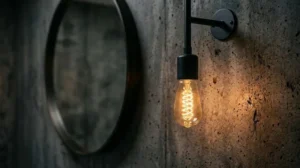
Pendant lights with metal shades, cage-style fixtures, and exposed Edison bulbs are the most characteristic lighting choices for industrial bathrooms. Wall-mounted sconces in matte black or brushed steel work well as vanity lighting, providing even illumination without the clinical appearance of recessed downlights.
Where building regulations permit, a single pendant or cage light over a freestanding bath creates a strong focal point and reinforces the warehouse-inspired aesthetic. Always confirm compliance with Australian Standard AS/NZS 3000 for electrical installations in wet areas before specifying pendant fixtures in bathroom zones.
Combining Natural and Artificial Light
Natural light enhances the textural quality of industrial materials significantly. Concrete, brick, and raw timber all read differently under natural light than under artificial sources, and maximising window openings or adding a skylight where structurally feasible improves the overall result.
Where natural light is limited, layered artificial lighting combining ambient downlights with task lighting at the vanity and accent lighting on feature walls delivers the most effective result.
Industrial Bathroom Design for Small Spaces
Industrial design principles adapt well to smaller bathrooms, provided the material palette is managed carefully. The key risk in a compact industrial bathroom is visual heaviness; too many dark surfaces in a small space make it feel oppressive rather than characterful.
The most effective approach for small industrial bathrooms in Sydney is to limit dark tones to one surface, typically the floor or a single feature wall, and use lighter concrete tones or warm white render on the remaining surfaces. This preserves the industrial aesthetic while keeping the space feeling open.
Wall-hung fixtures, including the vanity, toilet, and any shelving, are particularly important in compact industrial bathrooms. They free up floor area visually and make the space easier to clean. Frameless shower screens rather than framed or semi-frameless options also reduce visual clutter without compromising the design direction.
Caring for Industrial Bathroom Finishes
Raw and matte surfaces require a different maintenance approach than polished or glazed finishes. Getting this right protects the investment and keeps the aesthetic looking intentional rather than worn.
Matte black tapware is best cleaned with a soft, damp cloth and a pH-neutral cleaner. Abrasive products and harsh bathroom sprays strip the PVD or powder-coat finish over time. We advise clients to dry matte fixtures after each use in hard-water areas, it takes thirty seconds and prevents the mineral build-up that dulls the finish.
Concrete-look porcelain tiles are low-maintenance by design. The porcelain surface does not require sealing and cleans with standard tile cleaners. Microcement floors and walls need an annual application of a penetrating sealer to maintain water resistance this is a straightforward process, but skipping it allows moisture ingress that degrades the surface from beneath.
How Much Does an Industrial Bathroom Renovation Cost in Sydney?
The cost of an industrial bathroom renovation in Sydney varies based on bathroom size, material selections, fixture quality, and the extent of structural or layout changes required. As a general guide, a standard bathroom renovation in Sydney ranges from $15,000 to $35,000 for a full renovation including all labour, materials, fixtures, and fittings.
Industrial-style bathrooms sit within this range, though the material choices specific to this style large-format concrete tiles, quality matte black tapware, custom vanities, and feature wall treatments push costs toward the upper end of a mid-range budget. Microcement finishes and custom metalwork are the elements most likely to add cost above a standard renovation budget.
The most effective way to manage costs in an industrial bathroom renovation is to prioritise the surfaces and fixtures that carry the most visual weight, typically the floor tile, vanity, and tapware, and use more cost-effective options for secondary surfaces and accessories.
A detailed cost breakdown across labour, materials, fittings, and contingency gives Sydney homeowners a realistic picture of what to budget before work begins. We provide this as part of every initial consultation, so there are no surprises once the project is underway.
Conclusion
Industrial bathroom design delivers a distinctive, durable aesthetic built around raw materials, honest finishes, and purposeful fixture selection. When the key elements surfaces, vanity, hardware, and lighting work together, the result is a bathroom that feels both considered and genuinely characterful.
The style rewards careful material selection and consistent hardware choices more than it rewards decorative additions. Getting those foundational decisions right is what separates a well-executed industrial bathroom from one that simply borrows the surface aesthetic.
We at Sydney Home Renovation specialise in end-to-end bathroom renovations that bring this style to life with precision, honest pricing, and quality workmanship. Contact our team to discuss your industrial bathroom renovation and get a clear, detailed quote.
Frequently Asked Questions
What tiles are best for an industrial bathroom?
Large-format concrete-look porcelain tiles are the most practical and visually effective choice. Sizes of 600x600mm or 600x1200mm with wide grout joints deliver the raw, structural aesthetic that defines the style.
Can industrial bathroom design work in a small bathroom?
Yes. We limit dark tones to one surface and use wall-hung fixtures throughout. Keeping the palette lighter on walls and ceiling prevents the space from feeling heavy or closed in.
What colours suit an industrial bathroom?
Charcoal, slate grey, warm white, off-black, and raw concrete tones form the core industrial palette. Timber accents add warmth, and deep navy or forest green work well as accent colours on a feature wall or vanity cabinetry.
How do I add warmth to an industrial bathroom?
Timber vanities, raw oak shelving, warm-toned concrete tiles, and Edison bulb lighting are the most effective ways to introduce warmth without softening the overall aesthetic or conflicting with the design direction.
What is the difference between industrial and modern bathroom design?
Modern bathroom design prioritises clean lines, minimal texture, and a polished finish. Industrial design introduces deliberate contrast through raw materials, visible texture, and utilitarian fixtures. Both share a preference for simplicity, but industrial design embraces imperfection where modern design avoids it.
Do industrial bathrooms suit older Sydney homes?
Yes. Industrial design works particularly well in Sydney terrace homes and older properties where the existing architecture has character and texture. The raw material palette complements exposed brick, timber floors, and period-era proportions without conflicting with the original building fabric.
How long does an industrial bathroom renovation take in Sydney?
A standard industrial bathroom renovation in Sydney typically takes three to five weeks from demolition to completion, depending on scope, material lead times, and whether structural or layout changes are required. Custom elements such as microcement finishes or bespoke metalwork extend this timeline.


