Working with a bathroom designer gives your renovation a clear direction, a resolved layout, and a material palette that fits your budget before a single tile is ordered. For Sydney homeowners, first-time renovators, and property investors, the design phase is where cost overruns are either prevented or created, and knowing how to navigate it makes the difference between a smooth project and an expensive one.
Getting the most from a designer requires more than handing over a Pinterest board. It means understanding the process, communicating your budget honestly, and knowing what to look for before you approve anything.
This guide walks through every stage of working with a bathroom designer from finding the right person and briefing them clearly, to reviewing plans, avoiding common mistakes, and ensuring your designer and contractor are aligned from day one.
What Does a Bathroom Designer Actually Do?
A bathroom designer is a specialist who translates your functional needs, aesthetic preferences, and budget constraints into a resolved, buildable design. Their work covers spatial planning, fixture and fitting selection, material specification, and documenting the drawings and schedules a contractor needs to price and build accurately.
Design Services vs. Full Project Management
Designers work across three fee models: a fixed project fee, an hourly rate, or a percentage of construction costs. Fixed fees are most common for residential bathrooms and give you cost certainty upfront. Hourly arrangements suit smaller or undefined scopes. Percentage-based fees typically apply to full project management engagements where the designer coordinates trades and procurement on your behalf.
Some designers offer design-only services, delivering concept drawings, mood boards, and a specification schedule. Others provide full project management, coordinating trades, managing procurement, and overseeing construction on your behalf. Understanding which service you are engaging and what it costs is essential before you sign anything.
Design-only fees in Sydney typically range from $1,500 to $5,000 depending on bathroom size and scope. Full project management adds a percentage on top of construction costs, usually between 10% and 20%.
When You Need a Designer vs. When You Don’t
A designer adds the most value when your renovation involves a layout change, a wet area reconfiguration, or a high-specification finish where material and fixture choices carry significant cost implications. For a straightforward like-for-like refresh same layout, standard fittings, no structural changes a skilled contractor can often manage selections without a separate designer.
If your project scope grows during the design phase and the documentation starts pushing past your budget, a good designer will flag it early and present trade-off options rather than letting the design run ahead of what you can build. That conversation is far easier to have at concept stage than after documentation is complete.
How to Find the Right Bathroom Designer in Sydney
Finding a designer whose work, process, and communication style suits your project takes more than a Google search. The right designer for a $15,000 functional renovation is not necessarily the right designer for a $60,000 luxury ensuite.
Where to Look and What to Check
Start with portfolio reviews on Houzz, Instagram, and designer websites. Look for completed projects that match your style direction and budget range, not just aspirational work. Check that they hold relevant qualifications a Certificate IV in Interior Decoration or a Bachelor of Interior Architecture are the most common credentials in Australia and that they carry professional indemnity insurance.
Ask for references from recent clients and, where possible, speak directly with the contractor who built their designs. A designer whose documentation is incomplete or whose specifications are vague creates problems on site that cost you money.
Red Flags to Watch For
Some warning signs are worth knowing before you commit. Be cautious of designers who cannot provide a sample specification schedule, who are vague about what their fee includes, or who have no references from completed bathroom projects at your budget level.
A designer who resists working with your preferred contractor rather than simply having a preference for their own is also worth questioning. And if a designer’s portfolio shows only renders with no completed site photography, that is a gap worth probing directly.
Questions to Ask Before You Commit
Before signing a design agreement, ask these questions directly:
- What does your fee include, and what is charged separately?
- Do you provide a full specification schedule for the contractor?
- Have you worked on projects at this budget level before?
- How do you handle design changes once documentation is complete?
- Do you have preferred contractors, and are you open to working with mine?
The answers reveal how structured their process is and whether their working style will suit yours.
How the Design Process Works Step by Step
A well-run design process follows a clear sequence. For a standard bathroom, the full process from initial consultation to approved documentation typically runs four to eight weeks longer for projects involving custom joinery, imported materials, or structural changes. Understanding each stage helps you contribute meaningfully at the right time and avoid costly changes later.
Initial Consultation and Brief
The first meeting establishes your needs, preferences, constraints, and budget. Come prepared with reference images, a list of must-haves and nice-to-haves, and a clear budget range. The more specific your brief, the more accurate the designer’s response will be.
What to Include in Your Design Brief
A strong bathroom design brief covers more than style references. Include your confirmed budget (all-inclusive), the non-negotiables for the space (heated floor, double vanity, freestanding bath), any site constraints you are aware of (existing plumbing locations, ceiling height, structural walls), and your timeline. Note which fixtures you are open to sourcing yourself and which you want the designer to specify and procure.
The more resolved your brief, the less revision the designer needs to do and the lower your total design fee.
Concept Development and Layout Planning
The designer produces initial concept options, typically two or three layout variations with a preliminary material direction. This is the stage to ask questions, push back on anything that does not feel right, and explore alternatives. Changes at concept stage cost nothing. Changes after documentation is complete cost time and money.
Finalising Selections and Approvals
Once a concept direction is approved, the designer moves into detailed documentation: dimensioned drawings, fixture schedules, tile layouts, and finish specifications. Review everything carefully before signing off. Confirm that every specified product is available, within budget, and has an acceptable lead time, particularly for imported tiles and custom joinery.
How to Communicate Your Budget Clearly
One of the most common reasons design projects go wrong is a mismatch between what the homeowner expects and what the designer assumes is possible. The solution is a direct, honest budget conversation at the very first meeting.
Setting Realistic Expectations Around Costs
Give your designer a real number not a vague range, and not a number you hope to negotiate down from. If your budget is $25,000 all-inclusive, say so. A good designer will tell you honestly what is achievable at that figure and where trade-offs will need to be made.
Knowing what bathroom renovation costs typically look like in Sydney before that first meeting means you walk in with realistic expectations already set and the budget conversation becomes a planning tool rather than a negotiation.
Be clear about what your budget includes. Does it cover the designer’s fee? Demolition? Waterproofing? Fixtures and fittings? Joinery? Knowing the full cost picture before design begins prevents the most common source of budget blowout: a beautifully designed bathroom that costs 40% more to build than expected.
How to Review and Approve Design Plans
Approving design documentation is one of the most consequential decisions in your renovation. Once construction begins, changes to approved plans are expensive and disruptive.
What to Look For Before You Sign Off
Before approving any drawings or specification schedules, check the following:
- All dimensions are confirmed against your actual site measurements
- Every specified product has a confirmed price and availability date
- The layout complies with Australian Standards for wet areas (AS 3740)
- Waterproofing, drainage, and ventilation requirements are documented
- The specification matches what was discussed and agreed in the brief
- There are no items listed as “TBC” or “client to confirm”
If anything is unclear, ask for clarification in writing before signing. A signed approval is a contractual commitment; treat it as one.
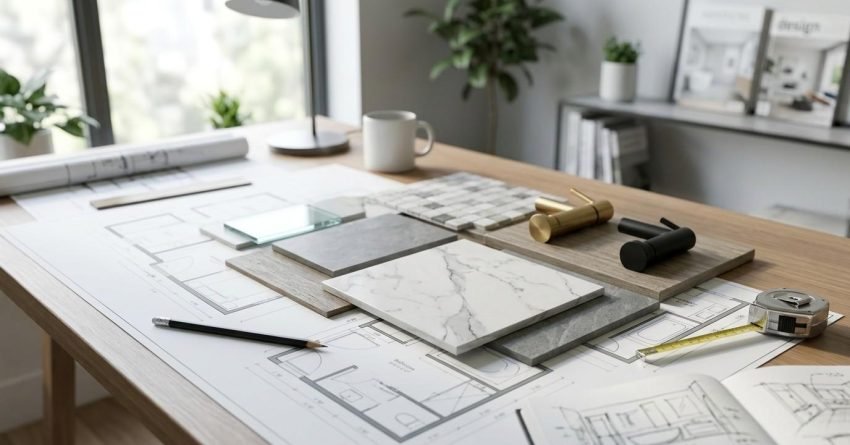
How to Read a Dimensioned Drawing
You do not need a construction background to read a bathroom drawing effectively. Focus on three things: the overall room dimensions and how they match your actual space, the position of the waste and water supply points relative to the proposed fixture layout, and the clearances around the toilet, vanity, and shower. Australian Standards require minimum clearances that affect how the finished space actually functions.
If a dimension does not match what you measured on site, raise it before you sign. A discrepancy on paper is a ten-minute conversation. The same discrepancy discovered during tiling is a week’s delay.
Common Mistakes Homeowners Make When Working with a Designer
Most design-phase problems are predictable and preventable. These are the mistakes that consistently create cost overruns and project delays.
Giving a vague or aspirational brief. Showing a designer images of $200,000 bathrooms when your budget is $30,000 wastes everyone’s time and produces a concept that cannot be built as specified.
Withholding the real budget. Designers cannot make good decisions without accurate financial parameters. Giving a lower number to “leave room for negotiation” results in a design that does not reflect your actual priorities.
Approving plans without reading them. Many homeowners sign off on documentation they have not fully reviewed. Errors discovered during construction are far more expensive to fix than errors caught on paper.
Changing your mind after documentation is complete. Every design change after documentation is finalised generates additional fees and delays. Make decisions at concept stage, not construction stage.
Not confirming product availability before approval. Specifying a tile with a 16-week lead time on a project that starts in four weeks creates a site delay that costs money every day.
How a Designer and Contractor Work Together
The relationship between your designer and contractor directly affects how smoothly your renovation runs. When they are aligned, the project moves efficiently. When they are not, you spend your time managing the gap between them.
A good contractor reads design documentation carefully, prices it accurately, and raises any buildability concerns before construction begins, not during it. A good designer produces documentation that is complete, dimensionally accurate, and buildable within the specified budget.
If you are bringing your own contractor to a designer-led project, introduce them early. Give the contractor the opportunity to review concept drawings before documentation is finalised. Their input on construction sequencing, trade coordination, and material lead times can prevent problems that only become visible on site.
The handover of documentation from designer to contractor is a critical moment. A complete package includes dimensioned floor plans, wet area drawings, a full specification schedule, and a tile layout drawing. When any of those documents are missing or incomplete, the contractor fills the gap with assumptions and assumptions on site cost money. Confirming the documentation is complete before construction begins is one of the most effective things you can do to protect your budget.
Choosing a bathroom renovator in Sydney whose process is built around clear documentation, transparent pricing, and a working relationship with design professionals makes that handover straightforward rather than stressful.
Conclusion
Working effectively with a bathroom designer comes down to clear communication, honest budgeting, and active participation at every stage of the process. The homeowners who get the best outcomes are the ones who arrive prepared, ask direct questions, and treat design approvals with the same seriousness as a construction contract.
A well-briefed designer produces documentation that protects your budget, reduces on-site surprises, and gives your contractor everything needed to build accurately and efficiently.
At Sydney Home Renovation, we work alongside designers and manage the full construction process from pricing design documentation to coordinating trades and delivering quality finishes on budget. Contact us to discuss your bathroom renovation and find out how we can help bring your design to life.
Frequently Asked Questions
Do I need a bathroom designer for a renovation in Sydney?
Not always. A designer adds the most value when your renovation involves a layout change, wet area reconfiguration, or high-specification finishes. An experienced contractor can often manage selections for a straightforward refresh.
How much does a bathroom designer cost in Sydney?
Design-only fees typically range from $1,500 to $5,000 depending on scope. Full project management adds 10–20% on top of construction costs. Always confirm what is included before signing.
What should I bring to my first meeting with a bathroom designer?
Bring reference images, a list of must-haves and nice-to-haves, your confirmed budget range, and any site constraints existing plumbing locations, ceiling height, or structural walls. Specificity makes the designer’s response more useful.
How long does the bathroom design process take?
For a standard bathroom, the process from initial consultation to approved documentation typically takes four to eight weeks. Complex projects with custom joinery or imported materials take longer.
What is included in a bathroom design specification schedule?
A complete specification schedule lists every product, finish, and fitting, including brand, model, colour, size, supplier, price, and lead time. It gives your contractor everything needed to price and build accurately.
Can I use my own contractor if I hire a bathroom designer?
Yes. Most independent designers are open to working with a contractor of your choice. Introduce your contractor early so they can review concept drawings and raise any buildability concerns before documentation is finalised.
What happens if I want to change the design after it has been approved?
Design changes after approval generate additional fees and can delay the project. The extent depends on how significant the change is and how far construction has progressed. Make all major decisions at the concept stage.