
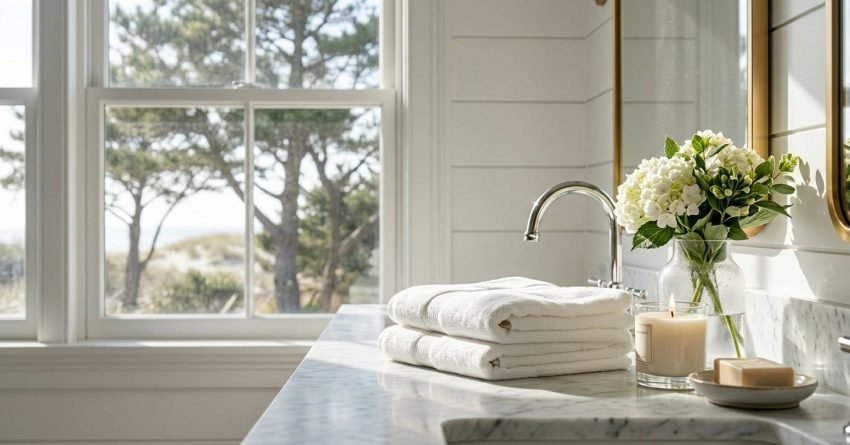
A Hamptons-style bathroom combines coastal elegance with timeless practicality: crisp whites, natural textures, freestanding baths, and quality hardware that holds its value for decades. In Sydney, it remains one of the most requested bathroom design styles for owner-occupiers and property investors alike, delivering strong visual appeal and long-term resale value.
Getting the look right requires more than choosing white tiles. Every element, from grout colour to tapware finish, contributes to whether the result feels genuinely Hamptons or simply generic.
What Is Hamptons-Style Bathroom Design?
Hamptons-style bathroom design draws its identity from the coastal architecture of Long Island’s Hamptons region in New York, a design language built on relaxed luxury, natural materials, and a restrained colour palette that feels both refined and liveable. In Australian homes, the style has been adapted to suit local conditions and tastes, retaining its signature coastal elegance while integrating well with contemporary open-plan living.
The defining quality of a Hamptons bathroom is its sense of considered calm. Nothing feels rushed or overdone. Every element is chosen to contribute to a cohesive whole; surfaces are clean, hardware is deliberate, and the overall effect is one of understated quality.
The Hamptons style is one of the most requested design directions in bathroom renovation Sydney projects, valued for its timeless coastal elegance and broad appeal across property types.
Key Visual Characteristics of the Hamptons Look
The Hamptons bathroom is defined by a consistent set of visual attributes that, when combined correctly, produce its signature result:
- White or soft neutral base tones across walls, cabinetry, and ceiling
- Subway tiles or shiplap panelling as the primary wall treatment
- Hexagon or encaustic floor tiles in white, grey, or black-and-white combinations
- Freestanding bath as the centrepiece where space allows
- Wall-hung or freestanding vanity with a stone or engineered stone benchtop
- Brushed nickel, chrome, or matte black tapware with cross-handle or lever detailing
- Timber accents in flooring transitions, mirror frames, or shelving
- Layered lighting combining overhead, vanity, and ambient sources
Each of these elements can be scaled to suit different budgets and bathroom sizes without losing the essential character of the style.
Colour Palette and Surface Finishes
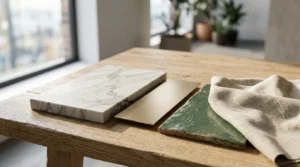
Colour is the foundation of the Hamptons look, and getting it right requires more precision than simply choosing white. The palette is built on a layered system of whites, off-whites, and soft neutrals, each playing a specific role in the overall composition.
Walls and cabinetry typically use a warm or cool white depending on the natural light available. Bathrooms with strong northern light can carry cooler whites without feeling clinical. South-facing bathrooms benefit from warmer whites with a slight cream or grey undertone to prevent the space from reading as harsh.
Benchtops and stone surfaces introduce texture and subtle variation. Carrara marble, or its engineered equivalents, is the most common choice, offering white-to-grey veining that reinforces the coastal palette without introducing competing colour. Calacatta marble provides a bolder veining pattern suited to larger bathrooms where the stone can be appreciated at scale.
Accent tones are used sparingly. Navy blue is the most recognisable Hamptons accent, appearing in cabinetry, feature walls, or tile borders. Sage green and warm greige are increasingly common in Sydney interpretations of the style, offering a softer alternative that suits the local climate and light conditions.
Surface finishes should be consistent throughout. Matte and satin finishes on walls and cabinetry pair well with polished or honed stone benchtops. Mixing too many finish types, gloss cabinetry with matte tiles and polished hardware, creates visual noise that works against the calm, cohesive quality the style depends on.
Finish consistency is the single most overlooked detail in Hamptons bathroom design.
Choosing the Right White for Hamptons Bathrooms
The most common mistake in Hamptons bathroom design is selecting a white that reads as too cool, too yellow, or too stark under artificial light. The safest approach is to test shortlisted whites in the actual space under both natural and artificial lighting conditions before committing.
Dulux Vivid White, Dulux Antique White USA, and Taubmans White on White are frequently used in Sydney Hamptons bathrooms. Each offers a slightly different undertone suited to different light conditions and cabinetry choices.
Tiles, Flooring, and Wall Treatments
Tile selection is where the Hamptons look is most clearly defined, and most easily undermined. The wrong tile format, size, or grout colour can shift the result from coastal elegance to something that reads as dated or generic.
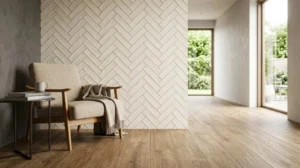
Subway tiles remain the most widely used wall tile in Hamptons bathrooms. The standard 75x150mm format is the most authentic choice, though 100x200mm and 100x300mm formats are increasingly used in larger bathrooms to reduce grout line frequency and create a cleaner visual field. Bevelled subway tiles add depth and shadow that reinforce the traditional Hamptons character.
Grout colour is critical. White grout creates a seamless, airy result; grey grout adds definition and is more forgiving in high-use areas.
Hexagon floor tiles in 48mm or 95mm formats are the most common Hamptons floor choice, typically in white, black-and-white, or grey-and-white combinations. The geometric pattern adds visual interest at floor level without competing with the wall treatment. Larger format hexagons in 200mm or 300mm sizes suit contemporary Hamptons interpretations where a cleaner, less busy floor is preferred.
Shiplap and beadboard panelling on lower walls or as a full-height feature wall is a defining Hamptons element that introduces texture and architectural character. In wet areas, moisture-resistant MDF or PVC shiplap profiles are used in place of timber. Painted in the same white as the walls, shiplap creates a seamless, layered effect. Painted in a contrasting navy or sage, it becomes a deliberate feature.
Subway Tiles, Hexagon Floors, and Shiplap Panels
The combination of subway wall tiles, hexagon floor tiles, and shiplap panelling is the most recognisable Hamptons bathroom formula. Used together, they create a layered, textured interior that reads as both traditional and considered.
The key to making this combination work is maintaining tonal consistency. All three elements should sit within the same white-to-grey range, with contrast introduced through grout colour and hardware rather than competing tile tones.
Hamptons Shower Design
The shower is one of the most used spaces in any bathroom, and in a Hamptons design it needs to carry the same considered quality as every other element. We find that frameless or semi-frameless shower screens are the strongest choice, keeping the visual field open and avoiding the heavy aluminium framing that reads as dated against a Hamptons palette.
Shower niches tiled in the same subway or hexagon format as the surrounding walls integrate seamlessly and avoid the visual interruption of a contrasting insert. A single, well-proportioned niche at shoulder height is more effective than multiple smaller ones.
Shower rose selection follows the same finish rule as all other tapware. A brushed nickel or chrome overhead rose with a matching hand shower and wall arm maintains the hardware consistency the style depends on. Matte black overhead roses work well in bathrooms where navy cabinetry or darker accent tones are the dominant feature.
Shower Screens and Wet Area Detailing
Frameless shower screens in clear or low-iron glass maximise light transmission and keep the bathroom feeling open. Low-iron glass eliminates the green tint present in standard float glass, which is particularly noticeable against white tile backgrounds.
Shower floor tiles in the same hexagon format as the main floor create a continuous visual field. Where a separate shower floor tile is preferred, a smaller format in the same tonal range, such as a 48mm white hexagon against a 95mm grey-and-white main floor, maintains cohesion without exact repetition.
Fixtures, Fittings, and Hardware
Fixtures and hardware are where the Hamptons bathroom moves from a design concept to a lived experience. The quality and character of these elements determine whether the result feels genuinely premium or simply styled to look that way.
Freestanding baths are the signature Hamptons fixture. A classic roll-top or slipper bath in white acrylic or cast iron, positioned as a centrepiece against a tiled or shiplap wall, anchors the entire design. In bathrooms where a freestanding bath is not practical, a built-in bath with a freestanding floor-mounted tap provides a similar visual effect at a lower cost and space requirement.
Vanities in Hamptons bathrooms are typically wall-hung or freestanding with a furniture-style profile, raised panel doors, soft-close hinges, and a stone or engineered stone benchtop. White, off-white, and navy are the most common cabinetry colours. Undermount basins maintain the clean benchtop line that is central to the Hamptons aesthetic.
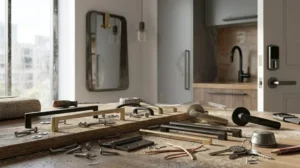
Tapware and hardware should be consistent in finish throughout the bathroom. Brushed nickel and chrome are the most traditional Hamptons choices, offering a cool, refined quality that complements white and grey palettes. Matte black has become a popular contemporary alternative, particularly in bathrooms with navy cabinetry or darker accent tones. Cross-handle tapware reinforces the traditional coastal character; lever handles suit more contemporary Hamptons interpretations.
Freestanding Baths, Vanities, and Tapware Finishes
The most important rule when selecting Hamptons fixtures is consistency of finish. Mixing brushed nickel tapware with chrome accessories, or pairing a matte black shower rose with chrome basin mixers, creates a disjointed result that undermines the cohesive quality the style depends on.
Choose one metal finish and apply it across every hardware element in the bathroom: tapware, towel rails, toilet roll holders, robe hooks, and mirror frames.
Storage and Cabinetry in Hamptons Bathrooms
Storage is one of the most practical decisions in a Hamptons bathroom, and it is where the style’s furniture-influenced character is most clearly expressed. Built-in niches tiled in the same wall tile as the surrounding surface are the cleanest storage solution, eliminating the visual interruption of a contrasting shelf insert while keeping the tonal palette intact.
Open timber shelving in white-painted or natural oak finishes suits the Hamptons aesthetic well, particularly in bathrooms where a freestanding vanity leaves wall space available. We recommend keeping open shelves to one or two runs to avoid the cluttered appearance that works against the style’s defining calm.
Shaker-style cabinetry with inset panel doors and a stone benchtop is the most authentic Hamptons vanity profile. Soft-close hinges and full-extension drawer runners are worth specifying at any budget tier, as they contribute directly to the quality-of-use experience the style is meant to deliver.
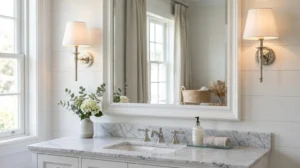
Lighting and Mirrors in Hamptons Bathrooms
Lighting is one of the most underbudgeted elements in bathroom renovations, and in a Hamptons bathroom it plays a particularly important role. The style depends on a warm, layered quality of light that recessed downlights alone cannot achieve.
Vanity lighting should be positioned to illuminate the face from the front rather than from above. Wall-mounted vanity lights flanking the mirror, or an illuminated mirror with integrated warm-white LEDs, provide the most flattering and functional result. Rattan, wicker, or white ceramic pendant lights above a freestanding bath introduce the coastal character that is central to the Hamptons aesthetic.
In wet zones, all light fittings must meet a minimum IP44 rating under Australian Standards, with IP65 required for fittings positioned directly above a shower or bath. We always specify IP-rated fittings in these zones regardless of ceiling height, as compliance is non-negotiable and the cost difference is minimal.
Mirrors in Hamptons bathrooms are typically large-format, framed pieces rather than frameless glass panels. Timber frames in white, natural oak, or black suit different palette directions. Arched mirrors have become a popular contemporary addition, softening the geometry of a tiled bathroom and adding architectural interest.
For bathrooms with limited natural light, an oversized mirror positioned opposite the primary light source significantly increases the perceived brightness and spaciousness of the room. Natural light should be maximised wherever possible. Frosted or textured glass in windows and skylights introduces light without compromising privacy, and the soft, diffused quality of natural light is particularly well-suited to the Hamptons palette.
How Much Does a Hamptons-Style Bathroom Renovation Cost in Sydney?
A Hamptons-style bathroom renovation in Sydney typically ranges from $18,000 to $45,000 or more, depending on the size of the bathroom, the quality of materials selected, and the extent of structural or layout changes required. The style’s reliance on quality fixtures, stone benchtops, and detailed tiling means it sits at the higher end of the renovation cost spectrum compared to more minimal design approaches.
The Hamptons bathroom’s enduring popularity with Sydney property owners is partly driven by its resale performance. A well-executed Hamptons bathroom consistently ranks among the highest-return renovation investments in the Sydney market, particularly in established suburbs where the style aligns with buyer expectations.
Budget, Mid-Range, and Premium Hamptons Bathroom Tiers
| Tier | Typical Cost Range | What It Includes |
| Budget Hamptons | $18,000–$25,000 | Subway tiles, engineered stone benchtop, standard vanity, chrome tapware, no structural changes |
| Mid-Range Hamptons | $25,000–$35,000 | Bevelled subway tiles, Carrara-look stone, furniture-style vanity, brushed nickel tapware, shiplap feature wall |
| Premium Hamptons | $35,000–$50,000+ | Natural stone, freestanding bath, custom cabinetry, designer tapware, heated floors, full layout reconfiguration |
The largest cost variables in a Hamptons bathroom are the freestanding bath (typically $1,500–$8,000 depending on material and brand), the vanity and benchtop combination ($2,000–$12,000), and tiling labour, which increases significantly with complex layouts, hexagon floors, and shiplap installation.
Waterproofing and Compliance in NSW
Every bathroom renovation in NSW requires waterproofing to AS 3740 standard, carried out by a licensed waterproofer. This is a non-negotiable compliance requirement, not an optional upgrade, and it must be completed before tiling begins.
Waterproofing typically adds $800–$1,500 to a renovation budget depending on bathroom size and the extent of wet areas. We include this in every project scope from the outset, as retrofitting waterproofing after tiling is one of the most expensive corrections a homeowner can face.
A licensed builder or bathroom renovator will manage compliance documentation, including the required inspection certificates, as part of the project handover.
How to Achieve the Hamptons Look Without Overspending
The Hamptons aesthetic is achievable at a range of price points when the right elements are prioritised. The key is understanding which elements carry the most visual weight and allocating budget accordingly, while identifying where cost savings can be made without compromising the overall result.
Prioritise these elements:
- Subway tiles and grout colour are the single highest-impact decision in a Hamptons bathroom
- Tapware finish consistency: a cohesive hardware finish elevates the entire space
- Vanity profile and benchtop: furniture-style cabinetry with a stone benchtop reads as premium regardless of price tier
- Mirror and lighting: a well-chosen framed mirror and quality vanity lighting transform the feel of the space
Where savings can be made:
- Engineered stone over natural stone visually equivalent at a fraction of the cost
- Acrylic freestanding bath over cast iron, same visual impact, significantly lower price point
- Standard subway tile over bevelled: the difference is subtle; grout colour has more impact
- Shiplap in moisture-resistant MDF over solid timber: identical appearance, better moisture performance, lower cost
Prioritising the right elements makes it possible to achieve a genuine Hamptons result without exceeding your bathroom renovation budget.
Conclusion
A Hamptons-style bathroom succeeds when every element, colour, tile, fixture, and hardware works together as a cohesive system rather than a collection of individual choices. The style’s enduring appeal in Sydney comes from its ability to feel both timeless and liveable, delivering strong aesthetic value and long-term property appeal.
Getting the details right from the outset, particularly tile selection, tapware consistency, and lighting, prevents the costly corrections that come from treating these decisions as secondary. The investment in quality at the right points pays dividends in both daily experience and resale value.
At Sydney Home Renovation, we specialise in Hamptons bathroom renovations across Sydney, combining design expertise with transparent cost planning and skilled workmanship. Contact our team to discuss your project and receive a detailed, obligation-free renovation proposal.
Frequently Asked Questions
What makes a bathroom look Hamptons-style?
A Hamptons bathroom is defined by a white or soft neutral palette, subway or shiplap wall treatments, hexagon floor tiles, furniture-style cabinetry, stone benchtops, and consistent brushed nickel or chrome hardware. The combination of these elements creates the style’s signature coastal elegance.
What tiles are used in a Hamptons bathroom?
Subway tiles are the most common Hamptons wall tile, typically in a 75x150mm or 100x200mm format with white or light grey grout. Hexagon floor tiles in white, grey, or black-and-white combinations are the standard floor choice, often paired with shiplap panelling on lower walls.
What colour is a Hamptons bathroom?
The Hamptons palette is built on white and soft neutrals, with navy blue, sage green, or warm greige used as accent tones in cabinetry or feature walls. Carrara marble or engineered stone benchtops introduce subtle grey veining that reinforces the coastal palette.
What tapware finish suits a Hamptons bathroom?
Brushed nickel and chrome are the most traditional Hamptons tapware finishes. Matte black is a popular contemporary alternative, particularly in bathrooms with navy cabinetry. The most important rule is consistency: one finish applied across all hardware throughout the bathroom.
Do I need a freestanding bath for a Hamptons bathroom?
A freestanding bath is the signature Hamptons fixture but is not essential. A built-in bath with a freestanding floor-mounted tap achieves a similar visual effect in bathrooms where space or budget does not allow for a full freestanding installation.
How much does a Hamptons bathroom renovation cost in Sydney?
A Hamptons-style bathroom renovation in Sydney typically costs between $18,000 and $50,000 or more, depending on bathroom size, material quality, and the extent of structural changes. Budget-tier Hamptons bathrooms start around $18,000–$25,000; premium custom projects exceed $45,000.
Can I achieve a Hamptons bathroom on a limited budget?
Yes. Prioritising subway tiles with the right grout colour, consistent tapware finish, a furniture-style vanity with an engineered stone benchtop, and a quality framed mirror delivers a strong Hamptons result at a budget price point. Engineered stone, acrylic baths, and MDF shiplap provide the same visual outcome as their premium equivalents at significantly lower cost.


