The most effective bathroom windows resolve the privacy-light tension through glazing choice and placement, not by making the window smaller. Frosted or obscure glass, awning or louvre window types, and high-set or corner positioning consistently deliver the best outcomes for Sydney bathrooms across a range of budgets and configurations.
Bathroom windows are one of the most technically demanding design decisions in any renovation. They must deliver natural light and ventilation while maintaining complete privacy, meeting compliance requirements, and holding up against moisture and heat. Getting this balance right from the start prevents costly retrofits and ensures your bathroom functions well for years.
Most homeowners underestimate how much a poorly chosen or poorly positioned bathroom window affects daily comfort. The wrong glazing choice, an incorrectly sized opening, or a window placed without considering sightlines compromises both privacy and livability from day one. This guide covers the key window types, glazing solutions, placement strategies, and ventilation requirements Sydney homeowners need to make confident, well-informed decisions.
Why Bathroom Windows Require a Different Design Approach
Bathroom windows operate under conditions no other window in the home faces simultaneously: high humidity, direct water exposure, privacy demands, and the need for meaningful natural light in a typically compact space. A window that works perfectly in a bedroom or living area often fails in a bathroom environment within a few years if the wrong product or placement is chosen.
The core challenge is that the two primary goals pull in opposite directions. Larger windows let in more light but increase exposure. Smaller or higher-set windows protect privacy but leave a bathroom feeling dark and enclosed. Resolving this tension requires deliberate decisions about window type, glazing, and position rather than defaulting to whatever fits the available wall space.
The Privacy-Light Tension Explained
Privacy in a bathroom window context means preventing any clear view into the space from outside, whether from a neighbouring property, a shared driveway, or a public footpath. Light transmission means allowing enough natural light to reduce reliance on artificial lighting during the day and to make the space feel open and comfortable.
The most effective bathroom window designs resolve this tension through glazing rather than size reduction. Obscure or frosted glass allows high levels of light transmission while completely blocking visual clarity. This approach preserves the functional benefits of a larger window opening without sacrificing privacy, a significantly better outcome than simply making the window smaller.
How Sydney’s Climate Affects Bathroom Window Choices
Sydney’s temperate climate with warm, humid summers creates specific demands for bathroom windows. Ventilation is critical to managing moisture and preventing mould growth, which means windows need to open effectively rather than being fixed glazing panels. The orientation of the bathroom within the home also matters: south-facing bathrooms in Sydney receive limited direct sunlight, making window size and glazing type more important for achieving adequate light levels.
Window choices connect directly to layout, waterproofing, and fixture selection across the full scope of a renovation. We factor all of these relationships in from the planning stage to avoid conflicts that are expensive to fix once tiling has started.
Best Window Types for Bathroom Privacy and Natural Light
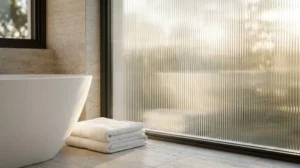
Not all window types perform equally in a bathroom environment. The best options combine effective ventilation, moisture resistance, ease of operation, and compatibility with privacy glazing. The wrong window type, even with the right glass, creates ongoing maintenance problems or fails to provide adequate airflow.
Frosted and Obscure Glass Options
Frosted glass is the most widely used privacy solution for bathroom windows in Sydney. It is available in a range of obscuration levels, from light frosting that softens outlines to heavy obscure glass that blocks all visual detail while still transmitting significant light. The key advantage of frosted glass over privacy film is permanence: it is part of the glass unit itself and does not degrade, peel, or require replacement over time.
Obscure glass comes in several pattern types beyond standard frosting, including reeded, hammered, and ripple finishes. Each offers a different aesthetic while providing equivalent privacy. For bathrooms where design is a priority, patterned obscure glass serves as a decorative feature rather than simply a functional necessity.
Louvre and Jalousie Windows
Louvre windows, horizontal glass slats that open and close via a lever or crank mechanism, are particularly well suited to Sydney bathrooms because they provide exceptional ventilation control. The slats angle to direct airflow while maintaining privacy, and they allow ventilation even during light rain without water ingress. When fitted with frosted or obscure glass slats, louvre windows resolve the privacy-light tension effectively.
The limitation of louvre windows is their sealing performance. When closed, the gaps between slats allow more air infiltration than a sealed casement or awning window, which matters in bathrooms where temperature control is a priority.
Awning and Casement Windows for Ventilation
Awning windows, hinged at the top and opening outward from the bottom, are one of the most practical choices for Sydney bathrooms. They remain open during rain without water entering the room, seal tightly when closed, and are available in a wide range of sizes suitable for bathroom openings. Fitted with frosted or obscure glass, an awning window provides reliable ventilation, strong privacy, and good light transmission.
Casement windows, hinged at the side, offer similar performance but require more clearance outside the window for the sash to open. In tight Sydney block situations where neighbouring structures are close, awning windows are generally the more practical choice.
Window Frame Materials for Bathroom Environments
Frame material is a decision that affects both longevity and maintenance in a bathroom environment. Aluminium frames are the most common choice in Sydney bathrooms: they are moisture-resistant, low-maintenance, and available in a wide range of powder-coat colours. We specify aluminium as the default for most bathroom window replacements because it holds up reliably against the humidity and condensation cycles a bathroom produces daily.
uPVC frames offer better thermal performance than aluminium and do not conduct cold in the same way, which reduces condensation on the frame itself. Timber frames are occasionally specified for heritage or high-end renovations but require careful sealing and ongoing maintenance in a wet environment. For most Sydney bathroom renovations, aluminium or uPVC are the practical choices, with aluminium leading on cost and uPVC leading on thermal performance.
Glazing and Film Solutions That Balance Privacy With Light
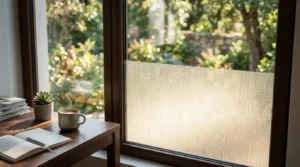
The glazing choice is often more important than the window type itself when it comes to resolving the privacy-light balance. Two primary options are available to Sydney homeowners: factory-applied frosted or obscure glass, and adhesive privacy film applied to existing clear glass.
Frosted Glass vs. Privacy Film: What Works Better
Factory-frosted glass is the superior long-term solution for bathroom applications. It is integral to the glass unit, unaffected by moisture or cleaning products, and maintains consistent performance over the life of the window. Privacy film, by contrast, is an adhesive product applied to the surface of existing glass. In a bathroom environment, with regular steam, condensation, and cleaning, film edges lift, bubbles form, and the adhesive degrades within a few years.
Privacy film is a cost-effective short-term solution or a useful option when replacing glass is not feasible. For new installations or window replacements, factory-frosted glass is the right choice for any bathroom in a Sydney renovation.
Textured and Patterned Glass for Decorative Privacy
Textured glass options, including reeded, fluted, and cast glass patterns, have become increasingly popular in bathroom renovations where the window is a visible design element. These products provide equivalent privacy to standard frosted glass while adding visual interest to the space. Fluted glass in particular has seen strong uptake in contemporary Sydney bathroom renovations, where its vertical pattern complements modern tile and fixture choices.
The light transmission characteristics of textured glass vary by pattern. Reeded and fluted glass transmit light well while providing strong privacy. Heavily cast or hammered patterns reduce light transmission more significantly, which is worth considering in south-facing bathrooms with limited natural light.
Double Glazing in Bathroom Environments
Double glazing is less commonly specified for bathrooms than for living areas, but it offers genuine benefits in the right situations. The primary advantage in a bathroom context is condensation reduction: the inner pane stays closer to room temperature, which significantly reduces the moisture that forms on the glass surface during showers. In Sydney’s climate, this is most relevant for south-facing bathrooms that stay cooler in winter.
Double glazing also provides meaningful acoustic performance, which matters in bathrooms that face a street, a shared driveway, or a neighbouring property. The cost premium over single glazing is real, but for bathrooms where condensation management or noise reduction is a priority, we find double glazing pays for itself in reduced maintenance and improved comfort over the life of the renovation.
Window Placement Strategies for Maximum Privacy and Light
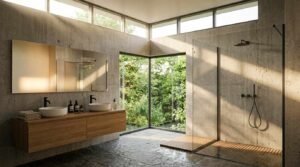
Where a window is positioned within a bathroom wall has as much impact on privacy and light as the glazing choice itself. Poor placement creates privacy problems that no amount of frosting fully resolves, while well-considered placement allows larger, clearer windows that flood the space with light.
High-Set Windows and Clerestory Positioning
High-set windows, positioned near the ceiling rather than at standard eye level, are one of the most effective privacy strategies available. A window positioned above standing eye height, typically above 1,800mm from finished floor level, eliminates direct sightlines into the bathroom from outside, even when fitted with clear glass. This allows maximum light transmission without any privacy compromise.
Clerestory windows, which run along the top of a wall or at the junction of wall and ceiling, take this approach further. They are particularly effective in bathrooms that share a wall with a neighbouring property, where a standard window position would require heavy obscure glazing to maintain privacy.
Corner and Splayed Window Placement
Corner windows, positioned at the junction of two walls, introduce light from two directions simultaneously, significantly improving the brightness of a bathroom without increasing the total glazed area. The geometry of a corner window also naturally limits external sightlines, providing inherent privacy benefits.
Splayed window reveals, where the internal wall is cut at an angle around the window opening, increase the spread of natural light into the room without enlarging the window itself. This is a useful technique in bathrooms where the window size is constrained by structural or planning requirements.
Skylights and Roof Windows for Bathroom Natural Light
Skylights and roof windows are worth considering in bathrooms where wall space is limited or where privacy from neighbouring properties makes any wall-mounted window difficult to position. A fixed skylight in a bathroom ceiling delivers consistent, diffused natural light throughout the day without any privacy risk. Tubular skylights, which channel daylight through a reflective tube from the roof to the ceiling, are particularly useful in bathrooms located away from the external walls of the home.
Roof windows that open provide ventilation as well as light, though they require careful waterproofing and flashing to perform reliably in Sydney’s rain events. We specify roof windows with integrated flashing systems and recommend professional installation to ensure the waterproofing membrane integrates correctly with the surrounding roof structure.
Ventilation Requirements for Sydney Bathrooms
Ventilation is not optional in a Sydney bathroom. It is a compliance requirement under the National Construction Code, and inadequate ventilation is one of the leading causes of mould, surface damage, and poor air quality in residential bathrooms. Window design must account for ventilation performance alongside privacy and light.
NCC Compliance and Minimum Ventilation Standards
The National Construction Code requires bathrooms to meet minimum ventilation standards, achievable through natural ventilation via openable windows or through mechanical extraction systems. Where natural ventilation is used, the openable area of the window must equal at least 5% of the bathroom’s floor area. For a typical Sydney bathroom of 5 square metres, that means a minimum openable area of 0.25 square metres, roughly equivalent to a 500mm x 500mm awning window fully open.
In practice, a fixed frosted glass panel, regardless of its size, does not satisfy ventilation requirements on its own. The window must include an openable component. For Sydney bathrooms, awning, casement, or louvre windows with frosted or obscure glass are the most common compliant solutions. Where natural ventilation is not achievable due to the bathroom’s position within the home, a mechanical exhaust fan rated at a minimum of 25 litres per second satisfies the NCC requirement as an alternative.
Waterproofing and Sealing Around Bathroom Windows
The junction between a window frame and the surrounding wall is one of the most common failure points in bathroom waterproofing. Water that penetrates this junction, whether from condensation, cleaning, or direct splash, tracks behind the wall lining and causes damage that is often invisible until it becomes significant. We treat every bathroom window frame as a wet-area junction and apply a continuous bead of silicone sealant at the internal perimeter, with the waterproofing membrane lapped up behind the frame on any wall within the wet zone.
External flashing is equally important. A correctly installed head flashing above the window opening prevents water from tracking behind the external cladding during rain. In Sydney’s climate, where summer storms can be intense, this detail is not optional. Any window replacement or repositioning in a bathroom renovation should include a full inspection of the existing flashing and sealant condition before the new frame is installed.
Cost Considerations for Bathroom Window Upgrades in Sydney
Bathroom window upgrade costs in Sydney vary significantly depending on the window type, glazing specification, frame material, and whether structural work is required to alter the opening size or position.
A like-for-like replacement of an existing window with a frosted awning window in an aluminium frame typically ranges from $600 to $1,500, depending on size and access conditions. Repositioning a window or enlarging an opening adds waterproofing, tiling, and potentially structural costs that push the total to $2,500 to $5,000 or more, depending on scope. Upgrading to uPVC frames adds roughly 10 to 20% over equivalent aluminium specifications. Double glazing adds a further $200 to $600 per window over single-glazed equivalents, depending on size and unit specification.
Frosted glass units cost more than clear glass but less than custom textured or patterned glass products. Privacy film is the lowest upfront cost option but carries ongoing replacement costs in a bathroom environment. Louvre windows with frosted slats sit at a mid-range price point and offer strong ventilation performance for the investment. We provide itemised cost breakdowns as part of our renovation planning process so homeowners understand exactly where their budget is going before work begins.
Conclusion
Bathroom window design in Sydney requires balancing privacy, natural light, ventilation compliance, and moisture resistance within a compact space. The right combination of window type, glazing, and placement resolves these competing demands without compromise.
Frosted or obscure glass, awning or louvre window types, and high-set or corner placement strategies consistently deliver the best outcomes for Sydney bathrooms across a range of budgets and configurations. Frame material, waterproofing detail, and NCC compliance are equally important parts of the decision that are easy to overlook until they become problems.
At Sydney Home Renovation, we work with homeowners and property investors to plan and deliver bathroom renovations where every detail, including window design, is considered from the start. Contact us to discuss your project and get clear, practical guidance on the right window solutions for your bathroom.
Frequently Asked Questions
What is the best window type for a bathroom in Sydney?
Awning windows fitted with frosted or obscure glass are the most practical choice for Sydney bathrooms. They provide reliable ventilation, seal well against weather, and suit most bathroom opening sizes.
Does frosted glass let enough light into a bathroom?
Yes. Standard frosted glass transmits a high percentage of available light while completely blocking visual clarity. Most frosted glass options provide sufficient natural light for a bathroom environment.
Can I use privacy film instead of frosted glass in a bathroom?
Privacy film is a workable short-term solution, but it degrades faster in bathroom conditions due to steam, condensation, and cleaning. Factory-frosted glass is the more durable and cost-effective long-term choice.
How high should a bathroom window be for privacy?
A window with its sill at or above 1,800mm from the finished floor level eliminates direct sightlines from outside at standing height. High-set windows at this height use clear or lightly frosted glass without compromising privacy.
Do bathroom windows need to open for ventilation compliance in Sydney?
Yes. Under the National Construction Code, natural ventilation in a bathroom requires an openable window area of at least 5% of the floor area. Fixed glazing panels alone do not satisfy this requirement.
What is the difference between frosted and obscure glass?
Frosted glass is produced by acid etching or sandblasting to create a uniform translucent surface. Obscure glass is a broader category that includes frosted glass as well as patterned, textured, and cast glass products, all of which provide privacy while transmitting light.
How much does it cost to replace a bathroom window with frosted glass in Sydney?
A like-for-like replacement with a frosted awning window in an aluminium frame typically ranges from $600 to $1,500 in Sydney, depending on size, frame specification, and access conditions. Repositioning or enlarging the opening increases costs significantly due to waterproofing and tiling requirements.