Renovating a gym or fitness studio in Sydney involves far more than new flooring and fresh paint. It requires coordinated structural, mechanical, and design work to create a safe, functional, and commercially viable training environment.
Without a clear renovation plan, gym owners and property investors risk cost blowouts, compliance failures, and extended downtime that directly affects revenue and member retention. This guide covers everything you need to know about gym and fitness studio renovation in Sydney, from typical costs and material choices to layout planning, permits, and realistic project timelines.
What Does a Gym and Fitness Studio Renovation Involve?
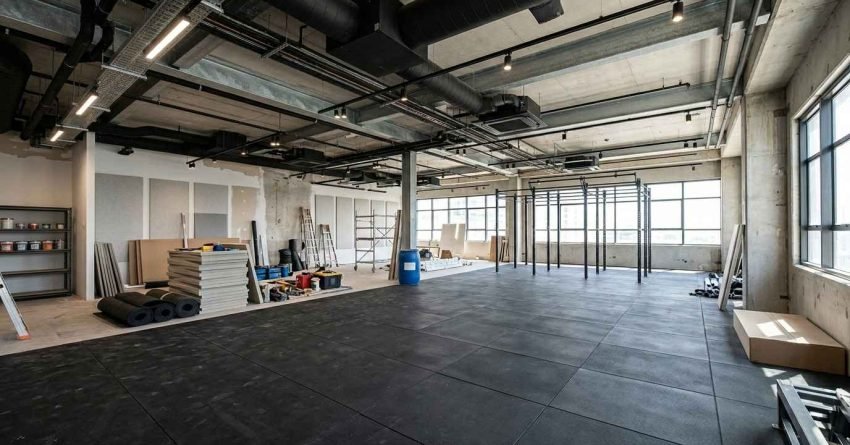
A gym and fitness studio renovation covers a wide range of construction and fitout works, depending on the condition of the existing space and the intended use. At its most basic, a renovation involves resurfacing floors, repainting walls, and upgrading lighting. At a more comprehensive level, it includes full structural reconfiguration, new mechanical systems, acoustic treatment, and purpose-built equipment zones.
Most gym renovations in Sydney fall somewhere between these two extremes. The scope is driven by three factors: the age and condition of the existing building, the type of training the facility supports, and the budget available for the project.
Structural and Layout Changes
Structural work in a gym renovation commonly includes removing or repositioning internal walls to create open training floors, installing new partition systems to separate functional zones such as cardio, free weights, and group fitness, and upgrading entry and amenity areas including changerooms and reception. Load-bearing considerations are critical when opening up large floor areas, and a structural engineer’s assessment is required before demolition begins.
We coordinate structural engineering assessments as part of our standard pre-construction process, so load-bearing risks are identified and resolved before a single wall comes down.
Mechanical, Electrical, and Ventilation Upgrades
Gyms generate significant heat, humidity, and noise, which means mechanical and electrical systems must be designed specifically for the demands of a fitness environment. Electrical upgrades typically include new switchboards, additional power circuits for commercial equipment, and LED lighting systems with appropriate lux levels for training areas.
Ventilation and HVAC upgrades are among the most significant cost items in any gym renovation. Inadequate airflow directly affects member comfort, equipment longevity, and compliance with commercial building standards, and it is one of the most common areas where under-specified renovations fail post-occupancy inspections.
Energy Efficiency and Sustainability in Gym Fitouts
Energy consumption in commercial gyms is substantial. LED lighting systems with motion-sensor zoning, high-efficiency HVAC units with variable speed drives, and insulated building envelopes all reduce ongoing operating costs while meeting the energy efficiency provisions of the National Construction Code Section J.
We specify energy-efficient mechanical and electrical systems as a default on all commercial gym projects. The upfront cost difference is typically recovered within two to three years through reduced energy bills.
Home Gym vs. Commercial Gym Renovation: Key Differences
The scope, cost, and compliance requirements for a home gym renovation differ significantly from a commercial fitness facility fitout. Understanding which category your project falls into determines the approval pathway, the trades required, and the standards the finished space must meet.
A home gym renovation converting a garage, basement, or spare room into a private training space is generally treated as a residential alteration. It typically requires a CDC or minor DA depending on structural changes, and the compliance obligations are lighter than those applied to a commercial facility. Costs for a well-fitted home gym in Sydney generally range from $15,000 to $60,000 depending on size, flooring, and equipment.
A commercial gym renovation is classified as a Class 9b assembly building under the National Construction Code. It triggers full commercial building compliance, including fire safety systems, accessible design requirements under the Disability Discrimination Act, and mandatory occupation certificates before the facility opens. We manage both categories, and the first step on any project is confirming the correct use classification so the approval pathway is right from the start.
How Much Does a Gym and Fitness Studio Renovation Cost in Sydney?
Gym renovation costs in Sydney vary considerably based on the size of the space, the extent of works, and the quality of finishes and equipment specified. A basic refresh of an existing gym new flooring, paint, and lighting- starts from $30,000 to $60,000 for a small to mid-sized studio. A mid-range renovation involving new mechanical systems, partition walls, and upgraded amenities generally falls between $80,000 and $200,000. A full commercial fitout of a new or stripped-back space exceeds $300,000 for larger facilities.
These figures are indicative. Every project is priced individually based on a detailed scope of works, site conditions, and current labour and material rates in Sydney.
Cost by Renovation Scope
| Renovation Scope | Typical Cost Range (Sydney) |
| Basic refresh (flooring, paint, lighting) | $30,000 – $60,000 |
| Mid-range renovation (mechanical, partitions, amenities) | $80,000 – $200,000 |
| Full commercial fitout (stripped or new space) | $200,000 – $400,000+ |
These ranges apply to spaces between 150 and 500 square metres. Larger facilities scale proportionally, and heritage buildings or complex structural conditions add high cost.
Cost Per Square Metre Benchmarks
For budgeting purposes, we typically see gym renovation costs in Sydney fall between $400 and $900 per square metre for mid-range works, and $900 to $1,500+ per square metre for full commercial fitouts with high-specification mechanical systems and premium finishes. Basic refreshes sit below $300 per square metre for straightforward scope.
These benchmarks are a planning guide only. The actual rate on any project depends on the condition of the existing building, the complexity of the mechanical and structural works, and the specification level of finishes and equipment.
Key Pricing Variables in Sydney
Several factors consistently influence the final cost of a gym renovation in Sydney. Labour rates for licensed trades including electricians, plumbers, and HVAC technicians reflect Sydney’s competitive construction market. Material costs for commercial-grade flooring, acoustic panels, and gym-specific wall systems are higher than residential equivalents.
Council fees, development application costs, and certifier fees add to the overall budget, particularly for change-of-use applications or significant structural works. We provide detailed, itemised cost breakdowns at the quoting stage so there are no surprises once works begin.
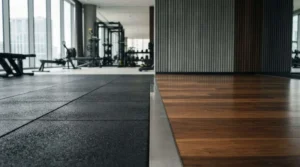
Flooring, Walls, and Surfaces for Gym Renovations
Flooring is one of the most consequential decisions in any gym renovation. The wrong surface creates safety risks, accelerates equipment wear, and increases long-term maintenance costs. The right surface supports the specific training activities the facility is designed for, absorbs impact, reduces noise transmission to adjacent spaces, and withstands the daily demands of commercial use.
The most common flooring systems we install in Sydney gym renovations include vulcanised rubber tiles, rolled rubber sheeting, interlocking foam or EVA tiles, polyurethane poured floors, and hardwood or engineered timber for studio and functional training areas. Each material has a different load rating, acoustic performance, slip resistance rating, and maintenance requirement.
Choosing the Right Materials for High-Impact Spaces
Slip resistance is a non-negotiable specification in commercial gym environments. We specify flooring that meets the wet and dry pendulum test requirements under AS 4586:2013, with P4 or P5 ratings for wet areas including changerooms and pool surrounds, and R10 or R11 ratings for dry training floors.
Walls and ceilings in gym environments require materials that handle moisture, impact, and acoustic demands simultaneously. Moisture-resistant plasterboard or fibre cement sheeting is standard in changerooms and wet areas. Impact-resistant wall panels are specified in free weight zones where equipment contact is likely.
Acoustic insulation within wall cavities and ceiling systems is essential in multi-tenancy buildings or where a gym occupies a floor above or below other commercial or residential uses. We target a minimum Rw 50 wall assembly rating for shared walls in mixed-use buildings, and specify resilient ceiling mounts to reduce impact noise transmission to floors below.
Changerooms and Amenity Fitout
Changeroom and amenity fitout is a high-cost and compliance item in any commercial gym renovation. Waterproofing to AS 3740 is mandatory in all wet areas, and we use membrane systems with a minimum 10-year warranty on all shower and wet room applications.
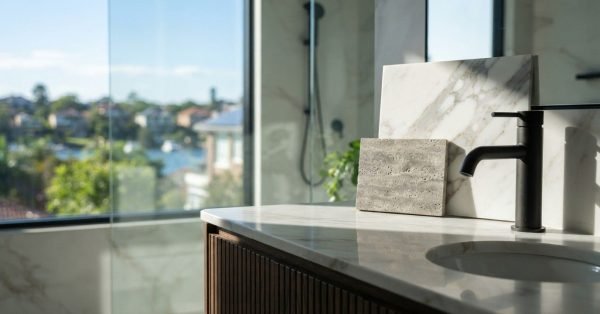
Fixture specifications for commercial changerooms include stainless steel or solid-surface vanities, commercial-grade tapware rated for high-frequency use, and non-slip floor tiles with appropriate fall gradients to floor wastes. Accessible amenities compliant with AS 1428.1 are required in all new commercial fitouts and most significant renovations.
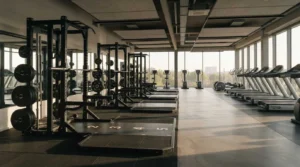
Equipment Zones, Layout Planning, and Functional Design
Effective gym layout planning begins with understanding how members move through the space and how different training activities interact. A well-designed gym separates high-intensity zones, free weights, and functional training areas from lower-intensity zones like stretching, cardio, and recovery. This separation reduces congestion, improves safety, and creates a better member experience.
Zone planning also determines structural and mechanical requirements. Heavy equipment zones require reinforced flooring and additional electrical circuits. Cardio zones benefit from enhanced ventilation and natural light where possible. Group fitness studios require acoustic isolation, sprung or cushioned floors, and mirrored walls with appropriate fixing systems.
Designing for Safety, Flow, and Member Experience
Safety is a non-negotiable design requirement in any commercial gym. Circulation paths must meet minimum width requirements under the National Construction Code, emergency egress must be clearly defined and unobstructed, and equipment placement must allow adequate clearance on all sides.
Lighting levels, surface finishes, and signage all contribute to a safe and compliant training environment. We design circulation paths to a minimum 1,500mm clear width in all primary movement zones, and specify emergency lighting and exit signage to comply with AS 2293.1 as part of every commercial fitout.
Equipment Procurement and Installation Coordination
Equipment procurement is a parallel workstream to the construction program, and poor coordination between the two is one of the most common causes of gym renovation delays. Structural reinforcement for heavy equipment, including cable machines, rig systems, and plate-loaded stations, must be completed before flooring is installed, and electrical rough-in for treadmills and cardio equipment must be confirmed before walls are closed.
We coordinate directly with equipment suppliers during the construction phase to confirm anchor points, power requirements, and delivery schedules. This prevents the costly scenario of completed flooring being cut up to accommodate equipment that was specified after installation.
Permits, Compliance, and Council Requirements in NSW
Most gym renovations in Sydney require some form of regulatory approval. The type of approval depends on the nature and extent of the works, the existing use classification of the building, and whether the renovation involves a change of use.
Development Applications (DAs) are typically required when a renovation involves structural changes, a change of building use, or works that affect the external appearance of a building. Complying Development Certificates (CDCs) offer a faster approval pathway for works that meet pre-set standards under the State Environmental Planning Policy. Building approvals and occupation certificates are required for most commercial fitouts, and a licensed certifier must inspect and sign off on completed works before the facility opens.
Fire safety compliance is a critical consideration in gym renovations. Commercial fitness facilities must meet specific requirements for fire detection, suppression, emergency lighting, and exit signage under the Building Code of Australia. Failure to meet these requirements results in delayed occupation certificates and costly rectification works.
We manage the full approval process on behalf of our clients from pre-DA consultation with council through to occupation certificate sign-off. Understanding the correct approval pathway before works begin is what keeps projects on schedule and on budget.
Minimising Downtime During a Gym Renovation
Downtime is a direct revenue cost for any operating gym. A facility running 500 members at $60 per week loses $30,000 in revenue for every week it is fully closed. Minimising closure time is therefore as important a project management objective as hitting the construction budget.
The most effective strategy is a staged renovation program that sequences works to keep unaffected areas operational. We divide the facility into zones and complete structural, mechanical, and electrical works in one zone at a time, allowing members to continue training in the remaining areas. This approach works well for mid-range renovations where the scope does not require a full building shutdown.
Full closure is unavoidable for projects involving new switchboards, full HVAC replacement, or structural reconfiguration that affects the entire floor plate. In these cases, we compress the construction program through parallel trade scheduling, running electrical, plumbing, and framing works simultaneously rather than sequentially to reduce total closure time. We provide a detailed staging plan and daily program update at the start of every project so gym owners know exactly when each area reopens.
How Long Does a Gym Renovation Take in Sydney?
The timeline for a gym renovation in Sydney depends on the scope of works, the complexity of approvals, and the availability of trades. A basic refresh with no structural changes or council approvals is completed in two to four weeks. A mid-range renovation involving new mechanical systems, partition walls, and amenity upgrades typically takes six to twelve weeks from commencement on site. A full commercial fitout of a new or stripped space generally requires three to six months, including the approval and procurement phases.
Approval timelines are often the most variable element of a gym renovation schedule. A CDC is issued within ten business days for straightforward works. A DA takes anywhere from four weeks to several months depending on the council, the complexity of the application, and whether any objections are raised during the notification period.
We build approval timelines into the master program from day one, running procurement and pre-construction activities in parallel with the approval process to avoid dead time between consent and commencement.
How to Choose a Gym Renovation Contractor in Sydney
Choosing the right contractor is the single most important decision in a gym renovation. A contractor without commercial fitout experience will underestimate the complexity of HVAC coordination, equipment rough-in, and compliance documentation, and the project will show it.
The questions worth asking any contractor before signing a contract include: Do you hold a current NSW contractor licence for commercial building work? Have you completed commercial gym or fitness studio fitouts previously, and can you provide references? Do you manage the full approval process, or does that fall to us? How do you handle trade sequencing and program management on a live or partially operating site?
We hold a current NSW contractor licence, carry full public liability and contract works insurance, and have delivered commercial gym and fitness studio renovations across Sydney. We provide a fixed-price contract, a detailed construction program, and a single point of contact from first consultation through to handover.
Conclusion
A gym and fitness studio renovation is a significant investment that requires careful planning across cost, compliance, design, and construction. Getting the scope, budget, and approvals right from the start is what separates a smooth project from a costly one.
The difference between a renovation that delivers long-term value and one that creates ongoing problems almost always comes down to the quality of planning before works begin, not the quality of the finishes after they are complete.
At Sydney Home Renovation, we bring together the trades, project management, and commercial renovation expertise to deliver gym fitouts that are built to standard, on budget, and on schedule. Contact us today to discuss your gym renovation project and get a clear, detailed quote tailored to your space and goals.
Frequently Asked Questions
How much does it cost to renovate a gym in Sydney?
Gym renovation costs in Sydney range from $30,000 for a basic refresh to over $300,000 for a full commercial fitout. The final cost depends on the size of the space, the scope of works, and the quality of finishes and mechanical systems specified.
Do I need council approval to renovate a gym in NSW?
Most gym renovations in NSW require either a Development Application or a Complying Development Certificate, particularly where structural changes, a change of use, or external alterations are involved. A licensed certifier advises on the correct approval pathway for your specific project.
What flooring is best for a gym renovation?
Vulcanised rubber tiles and rolled rubber sheeting are the most widely used flooring systems in commercial gym renovations due to their impact absorption, durability, and slip resistance. The best choice depends on the training activities the space supports and the load requirements of the equipment.
How long does a gym renovation take?
A basic gym refresh takes two to four weeks. A mid-range renovation with mechanical and structural works typically takes six to twelve weeks. A full commercial fitout takes three to six months, including approvals and procurement.
Can I renovate a gym while it stays open?
Partial renovations are staged to allow continued operation in unaffected areas, but most structural, mechanical, and electrical works require the facility to close temporarily. A detailed staging plan developed before works begin minimises downtime and revenue impact.
What is the ROI of renovating a gym or fitness studio?
A well-planned gym renovation increases member retention, attracts new members, and supports higher membership pricing, delivering a strong return over time. The ROI depends on the quality of the renovation, the local market, and how effectively the upgraded facility is marketed.
What trades are involved in a gym renovation?
A gym renovation typically involves builders, carpenters, electricians, plumbers, HVAC technicians, tilers, painters, and flooring specialists. Larger projects also require structural engineers, certifiers, and acoustic consultants depending on the scope and building type.
What is the difference between a home gym and a commercial gym renovation?
A home gym renovation is treated as a residential alteration with lighter compliance obligations. A commercial gym is classified as a Class 9b assembly building under the NCC, triggering full commercial compliance including fire safety, accessible design, and occupation certificates.
How do I minimise downtime during a gym renovation?
Staging the renovation by zone keeps unaffected areas operational during construction. Full closure is unavoidable for whole-building mechanical or structural works, but parallel trade scheduling compresses the program and reduces total closure time.
What should I look for in a gym renovation contractor in Sydney?
Look for a current NSW contractor licence, demonstrated commercial fitout experience, fixed-price contracts, and a contractor who manages the full approval process. Ask for references from completed gym or fitness studio projects before signing.