
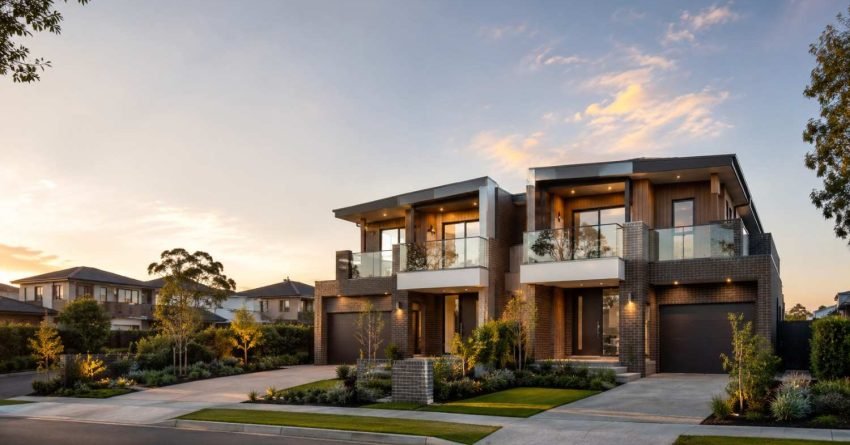
Building a duplex in Sydney typically delivers a gross return on investment of 15% to 25% on a well-located, well-built project, with capital uplift often exceeding $400,000 above total project cost. That margin is real, but it is not automatic, and the gap between a profitable duplex and a stalled one comes down to numbers most owners never see until contracts are signed.
Sydney’s tight land supply, rising rental demand, and dual-occupancy zoning have made duplexes one of the strongest small-scale developments in the country. Understanding the ROI changes how you plan, finance, and finish.
This guide breaks down build costs, resale value, rental yield, key ROI drivers, hidden risks, and the strategies Sydney homeowners use to lift returns on every duplex project.
What ROI on a Sydney Duplex Build Actually Means
Return on investment for a duplex build is the percentage gain you make after subtracting total project cost from the combined end value of both dwellings. It is the single number that tells you whether your time, capital, and risk have produced a meaningful financial result.
The calculation is straightforward: take the combined gross realisation of both completed dwellings, subtract every dollar spent from land purchase through to handover, and divide the difference by total project cost. A project that costs $2.5 million all-in and produces $3.1 million in combined end value delivers a gross ROI of 24% before selling costs and tax.
Capital Growth vs Rental Yield vs Total Return
There are three returns to track. Capital growth measures how much the finished asset appreciates over time. Rental yield measures annual rent against property value. Total return combines both with the immediate equity uplift created by the build itself.
Most Sydney duplex owners earn their largest gain at completion, when the finished value exceeds combined land and build costs. That equity uplift is the defining financial event of the project, and it happens before a single rent payment is collected.
Duplex ROI Worked Example (Sydney Numbers)
We find it useful to run a real set of numbers so the calculation is concrete rather than theoretical. Consider a middle-ring Sydney suburb, Ryde, Hurstville, or Kogarah, where duplex activity is consistent and comparable sales are available.
A typical project in this tier looks like this: land purchase at $1.35 million, demolition and site preparation at $45,000, construction contract at $1.1 million, professional fees and council contributions at $75,000, and holding and finance costs during the build at $90,000. Total project cost lands at approximately $2.66 million.
At completion, each dwelling is valued at $1.55 million based on recent comparable sales, producing a combined gross realisation of $3.1 million. Gross ROI on that project is ($3.1M − $2.66M) ÷ $2.66M = 16.5%, representing a gross equity uplift of $440,000. Owners who hold both sides as rentals then layer rental income and depreciation benefits on top of that base return.
How to Run a Duplex Feasibility Study in Sydney
A feasibility study is the single most important step in a duplex project, and we see more projects fail from skipping it than from any other cause. It takes two to three days to complete properly and can save hundreds of thousands of dollars by identifying a site that will not stack up before any money is committed.
The process follows four steps. First, confirm zoning and dual-occupancy permissibility under the relevant Local Environmental Plan; not every R2 or R3 zoned lot allows a duplex, and frontage and site area minimums vary by council. Second, obtain a preliminary land valuation and construction estimate to establish a realistic total project cost. Third, research comparable duplex sales within one kilometre of the site to establish a credible end value. Fourth, run the ROI calculation with a 10% contingency built in and confirm the margin justifies the risk before exchanging contracts.
A site that produces less than 12% gross ROI at feasibility stage rarely improves once construction begins. Variation orders, holding cost blowouts, and market softening all compress the margin further. We recommend a minimum feasibility target of 15% to leave room for the unexpected.
Average Cost to Build a Duplex in Sydney (2025–2026)
A standard duplex build in Sydney currently ranges from $850,000 to $1.6 million for the construction component alone, depending on size, design complexity, and finish level. Add land, demolition, council fees, and professional costs, and total project budgets commonly land between $1.8 million and $3.2 million.
Construction Cost Per Square Metre
Per square metre rates for duplex construction in Sydney sit between $2,800 and $4,200 per m² for mid-range builds, with premium architectural duplexes reaching $5,500 per m² or higher. A typical 400 m² combined floor area across two dwellings therefore costs roughly $1.12 million to $1.68 million in base construction.
Finish tier drives a significant portion of that range. Entry-level builds use laminate joinery, standard tiles, and split-system air conditioning. Mid-range builds, the tier that produces the strongest valuation uplift relative to cost, use stone benchtops, semi-frameless showers, engineered timber flooring, and ducted air conditioning. Premium builds add architectural facades, void ceilings, and bespoke joinery that add cost faster than they add value in most Sydney suburbs.
We consistently see mid-range finishes deliver the best ROI per dollar spent. The valuation gap between entry-level and mid-range is typically $80,000 to $150,000 per side in Sydney’s middle ring, while the cost difference is often only $40,000 to $70,000 per side.
Site Works, Council Fees, and Professional Costs
Site costs vary more than any other line item. Demolition of an existing home runs from $25,000 to $55,000. Council Section 7.11 contributions, sewer peg-outs, stormwater upgrades, and traffic management commonly add $40,000 to $90,000. Architectural design, engineering, surveyors, and a private certifier together generally cost $45,000 to $80,000.
Soil classification is a line item many first-time developers underestimate. A Class M or Class H2 site reactive clay soil, common across Western and South-Western Sydney, requires an engineered slab rather than a standard waffle pod, adding $15,000 to $35,000 to the structural cost. A geotechnical report before design begins is money well spent.
DA Approval Process and Timeline for Sydney Duplexes
Most Sydney duplexes are approved through one of two pathways: a Development Application (DA) lodged with the local council, or a Complying Development Certificate (CDC) assessed by a private certifier. The CDC pathway is faster and more predictable when the site and design comply with the relevant State Environmental Planning Policy.
A CDC for a compliant duplex typically takes 6 to 10 weeks from lodgement to approval. A DA through council takes 4 to 9 months depending on the council, the complexity of the proposal, and whether the application requires neighbour notification or referral to a specialist panel. We plan for the DA pathway in our project timelines and treat the CDC as a bonus when the site qualifies.
Key milestones in the approval sequence are: pre-DA meeting with council (optional but valuable), design development and documentation, lodgement, assessment period, conditions of consent, and Construction Certificate. The Construction Certificate issued separately from the DA is what allows site works to begin, and delays here are a common source of holding cost blowout.
How Construction Finance Works for a Sydney Duplex
Construction finance for a duplex operates differently from a standard home loan, and understanding the draw-down structure protects your ROI from the start. Lenders release funds in progressive payments called progress draws tied to construction milestones: slab, frame, lock-up, fixing, and practical completion.
Interest is charged only on the drawn balance during construction, not the full loan amount. On a $1.5 million construction loan, interest during a 12-month build at a typical construction rate of 6.5% costs approximately $58,000 to $65,000 in interest, a figure that must be included in the total project cost for an accurate ROI calculation. Many first-time developers omit this and overstate their return.
Lenders assess duplex construction loans on the end value of the completed dwellings, not the land value alone. A strong feasibility study with comparable sales evidence is the most effective tool for securing approval and maximising the loan-to-value ratio. We recommend engaging a mortgage broker with documented duplex lending experience before committing to a site.
Expected Resale Value and End Property Valuation
End valuation drives the entire ROI calculation. A completed duplex in a strong Sydney suburb commonly sells for $1.4 million to $2.4 million per side. Combined gross realisation of $2.8 million to $4.8 million is achievable in middle-ring suburbs such as Ryde, Hurstville, Kogarah, Bankstown, the Penrith hills, and the Hills District.
The valuation depends on three things: comparable recent sales within one kilometre, the quality of finish in kitchens and bathrooms, and whether the dwellings can be sold individually.
Torrens Title vs Strata Title Impact on Value
A Torrens title duplex sells for noticeably more than a strata-titled equivalent. Buyers pay a premium for full land ownership, no shared walls under common property rules, and no quarterly strata levies. The uplift in Sydney typically ranges from $50,000 to $120,000 per side.
Torrens title requires a Torrens title subdivision, a separate approval process that runs after the Construction Certificate and before or alongside the Occupation Certificate. Not every council or site allows it, but where it is achievable, it is almost always worth pursuing. The approval adds 2 to 4 months to the project timeline and costs $15,000 to $30,000 in survey, legal, and council fees a cost that is recovered many times over in the resale premium.
Rental Yield and Dual-Income Potential
Holding both dwellings as rentals produces two income streams from one project. A Sydney duplex typically rents for $650 to $1,100 per side per week, generating combined annual gross rent of $67,000 to $114,000. Against a $2.8 million total project cost, that produces a gross rental yield between 2.4% and 4.1%.
Gross yield understates the real return on a new build. Depreciation on a new duplex is substantial; owners commonly claim $12,000 to $25,000 in depreciation in year one through a quantity surveyor’s schedule, which materially lifts after-tax cash flow. A duplex with a $25,000 annual depreciation claim and a combined gross rent of $90,000 produces a very different after-tax position than the gross yield figure suggests.
A quantity surveyor’s depreciation schedule costs $600 to $900 and is one of the highest-return professional fees in the project. We recommend commissioning it at practical completion, before the first tax return is lodged.
Key Factors That Influence Duplex ROI in Sydney
Three factors move ROI more than anything else. Get them right, and the financial result follows.
Location, Zoning, and Lot Frontage
Council zoning is non-negotiable. The lot must allow dual-occupancy under the relevant Local Environmental Plan, satisfy minimum frontage requirements typically 15 to 18 metres, and meet minimum site area. Suburbs with strong school catchments, train access, and a track record of duplex sales produce the strongest end values.
We look for suburbs where at least 10 duplex sales have occurred in the past 24 months within one kilometre of the target site. That volume of comparable sales gives valuers confidence and buyers certainty, both of which protect the end value.
Build Quality and Finish Selection
Buyers and valuers reward quality finishes. Stone benchtops, semi-frameless showers, ducted air conditioning, engineered timber flooring, and a considered facade lift end value far more than they add to cost.
Floor plan design has an equally significant impact that is often overlooked. A duplex with a north-facing living area, a minimum 2.7-metre ceiling height, and a functional separation between living and sleeping zones consistently achieves stronger valuations than a technically compliant but poorly oriented design. We work with architects who understand Sydney buyer expectations at each price point; the layout decisions made at design stage are largely irreversible once construction begins.
Duplex vs Single Dwelling: ROI Comparison
A single dwelling on the same lot produces one end value, one rental income stream, and one depreciation schedule. A duplex on the same lot produces two of each from the same land cost. That structural advantage is the core of the duplex ROI argument.
On a $1.35 million lot in a middle-ring Sydney suburb, a single high-quality dwelling might produce an end value of $2.1 million against a total project cost of $2.05 million, a gross ROI of approximately 2.4%. The duplex on the same lot, as modelled in the worked example above, produces a gross ROI of 16.5%. The land cost is identical. The difference is entirely in how the site is used.
Market Cycle and Holding Strategy
Time in the market matters. Owners who complete during a softening cycle and hold for two to three years often outperform owners who sell at completion in the same market.
The three exit paths each have a distinct financial logic. Selling both sides at completion crystallises the equity uplift immediately and clears construction debt, but it also triggers capital gains tax on the full profit and removes any future growth. Holding both sides as rentals preserves long-term capital growth and produces dual income, but it requires refinancing the construction loan into investment loans and accepting a lower immediate cash return. Selling one side and holding the other is the structure we see most often among experienced Sydney duplex owners; it crystallises enough profit to clear the construction debt, retains one asset for long-term growth, and produces ongoing rental income from the held dwelling. A clear exit strategy decided before contracts are signed protects returns from short-term price movement.
Hidden Costs and Risks That Erode ROI
The risks that erode duplex ROI are predictable and largely avoidable. Variation orders during construction are the most common cause of budget creep, often adding 8% to 12% to a fixed contract price when finishes are upgraded mid-build. Holding costs during longer-than-expected builds quietly eat returns at the rate of interest plus rates plus insurance every month.
Other regular ROI killers include underestimated demolition, unsuitable soil classifications requiring engineered slabs, delayed Subdivision Certificates from council, undersized contingency budgets, and finance products that do not suit construction drawdowns.
A contingency of 7% to 10% of total project cost is the realistic minimum for a Sydney duplex in current market conditions. Tight sites, demolition work, or steep blocks usually require contingency closer to 12%. We treat contingency as a non-negotiable line item, not a buffer to be trimmed to make the feasibility look better.
How to Maximise ROI on a Sydney Duplex Build
Lifting ROI on a duplex starts at the feasibility stage, not at construction. The owners who consistently outperform follow a disciplined sequence: confirm zoning and yield before purchasing land, lock a fixed-price construction contract with detailed inclusions, sequence council and certifier work in parallel, and choose finishes proven to lift valuation rather than personal taste alone.
Choosing a Torrens title subdivision wherever the lot allows it is one of the highest single returns available in the project. Selecting a builder with documented duplex experience, transparent quotes, and a published variation policy protects every later decision. Holding one dwelling and selling the other is also a powerful structure that crystallises profit while preserving long-term capital growth.
Is Building a Duplex in Sydney Still Worth It?
For owners with the right site, realistic budget, and a quality builder, building a duplex in Sydney remains one of the most reliable wealth-building projects available in the residential market. Equity uplift at completion, dual-income optionality, and ongoing capital growth combine in a way that few other small developments can match.
The projects that fail almost always share the same root causes: thin feasibility, underfunded contingency, a builder mismatch, or a site that never supported the build profile assumed at purchase. Each of those is preventable with the right preparation.
Conclusion
Strong ROI on a Sydney duplex build comes from disciplined feasibility, realistic budgeting, Torrens title where possible, and finish choices that lift valuation. Each lever compounds with the others.
Sydney’s land scarcity, dual-occupancy zoning, and steady rental demand continue to make duplexes one of the most resilient small developments available to local homeowners and investors planning ahead.
We help homeowners plan, cost, and build duplex projects that meet their ROI targets. At Sydney Home Renovation, we bring transparent pricing, documented duplex experience, and honest feasibility guidance to every project so you know the numbers before you commit to the site.
Frequently Asked Questions
What is a realistic ROI for a duplex build in Sydney?
A realistic gross ROI for a Sydney duplex build is 15% to 25% on total project cost, assuming a well-located lot, fixed-price contract, and quality finishes. Returns above 25% are achievable but require strong site selection.
How long does it take to build a duplex in Sydney?
Most Sydney duplex builds take 10 to 14 months from site start to handover, plus 4 to 9 months for design, council approval, and certification beforehand. Subdivision adds another 2 to 4 months at completion.
Is it better to sell or rent a completed duplex?
Selling crystallises equity immediately and clears construction debt. Renting both sides preserves long-term capital growth and produces dual income. Many owners sell one side and hold the other, capturing both outcomes.
Do I need Torrens title to make a duplex profitable?
Strata-titled duplexes are still profitable, but Torrens title typically adds $50,000 to $120,000 per side in resale value. Where the council and site allow it, Torrens almost always improves the final ROI.
How much contingency should I budget for a Sydney duplex?
A contingency of 7% to 10% of total project cost is the realistic minimum in current Sydney conditions. Tight sites, demolition work, or steep blocks usually require contingency closer to 12% to absorb surprises safely.
Can I live on one side of the duplex while renting the other?
Yes, this is a common structure and can attract owner-occupier finance terms and partial capital gains tax exemption on the side you live in. Speak with a qualified accountant about the precise tax outcome.
What lot size do I need to build a duplex in Sydney?
Most Sydney councils require 600 m² to 800 m² with a minimum 15-metre to 18-metre frontage for a dual-occupancy approval. Always confirm against the relevant Local Environmental Plan.
How does construction finance work for a duplex build?
Construction loans release funds in progressive draws tied to build milestones. Interest accrues only on the drawn balance, but total interest during the build must be included in your project cost for an accurate ROI calculation.
How long does DA approval take for a Sydney duplex?
A Complying Development Certificate typically takes 6 to 10 weeks. A full Development Application through council takes 4 to 9 months depending on the council and proposal complexity.


