
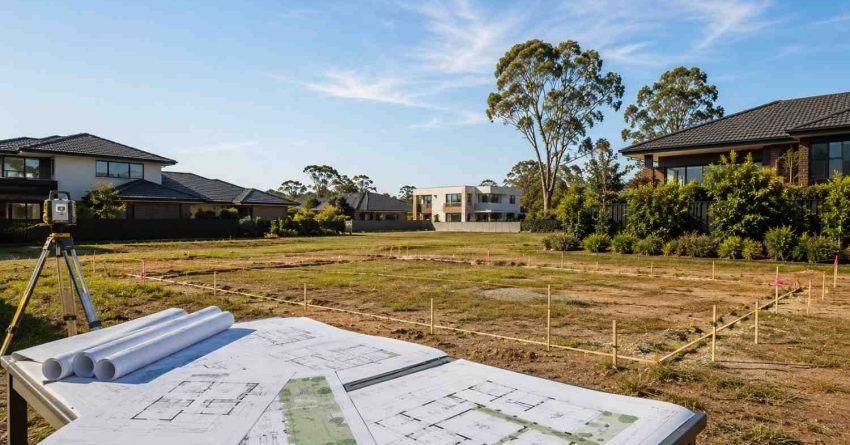
Building a duplex in NSW requires either a Complying Development Certificate (CDC) or a Development Application (DA), depending on whether your site meets state planning standards. Choosing the right pathway upfront can shorten approval from several months to as little as 20 working days.
Council approval shapes the cost, timeline, and feasibility of every duplex project. Getting it right protects your budget, prevents rework, and keeps your build on schedule from day one.
This guide breaks down approval pathways, documents, timeframes, costs, common rejection reasons, and proven strategies to streamline your duplex application across NSW councils.
Understanding Duplex Council Approval in NSW
A duplex is a residential building containing two separate dwellings on one lot, sharing a common wall or floor. Under NSW planning law, duplexes are classified as dual occupancy developments and fall under the State Environmental Planning Policy (Housing) 2021 and the Local Environmental Plan (LEP) of the relevant council.
Council approval is required because duplexes affect lot density, infrastructure load, neighbourhood character, and compliance with the Building Code of Australia. Without formal approval, owners face stop-work orders, demolition notices, and significant fines from the local council or the NSW Department of Planning.
What Qualifies as a Duplex Under NSW Planning Law
A duplex must contain two dwellings of similar size, each with independent entry, kitchen, bathroom, and living areas. NSW planning law recognises both attached duplexes where dwellings share a common wall and detached dual occupancies on the same lot, though council LEPs determine which configurations are permissible in each zone.
Both units typically sit on a single Torrens or strata title until subdivision is approved separately. Understanding which title structure suits your investment goals is worth clarifying with your solicitor before lodgement, since it affects how the property can be sold or financed after construction.
Why Council Approval Is Required
Approval ensures the build meets zoning rules, minimum lot size, floor space ratio (FSR), setbacks, height limits, stormwater management, and BASIX energy standards. Each council applies these controls differently, which is why early consultation matters.
Unapproved duplex construction carries serious consequences. The NSW Department of Planning can issue stop-work orders, require demolition at the owner’s expense, and impose fines of up to $1.1 million for major breaches under the Environmental Planning and Assessment Act 1979. Infrastructure contributions charged per dwelling are also triggered at the approval stage, so the financial exposure of bypassing the process is substantial.
Approval Pathways for Duplex Developments
NSW offers two main approval routes for duplexes: the Complying Development Certificate (CDC) and the Development Application (DA). The right pathway depends on lot dimensions, zoning, overlays, and design compliance with the Housing Code.
| Feature | CDC | DA |
| Issued by | Council or private certifier | Local council only |
| Typical timeframe | 20 working days | 60–120 days |
| Design flexibility | Low-must meet every standard | High-merit-assessed |
| Public notification | Not required | Required |
| Best suited for | Standard lots meeting The Housing Code | Complex sites, heritage areas, non-standard designs |
| Cost (approval only) | $3,000–$7,000 | $2,500–$8,000 |
Complying Development Certificate (CDC)
A CDC is a fast-track pathway issued by a council or a private certifier when your duplex meets every standard under the State Environmental Planning Policy (Exempt and Complying Development Codes). Typical CDC criteria include a minimum lot width of 15 metres, a minimum site area set by the council, and full compliance with setback, height, and floor space requirements.
CDC approval often takes 20 working days or less, making it the preferred route when the site qualifies. A private certifier can run the assessment independently of council, which removes the public notification step and typically produces a faster, more predictable outcome.
Development Application (DA)
A DA is required when the site or design does not meet complying development rules. Councils assess DAs against the LEP, Development Control Plan (DCP), and community feedback during a public notification period.
DAs allow more design flexibility but take longer, typically 60 to 120 days depending on the council and complexity.
Neighbour Notification and Objections
When a DA is lodged, the council notifies adjoining owners and, in some cases, the broader neighbourhood. The standard notification period is 14 days, though some councils extend this to 28 days for larger or more complex proposals.
Objections must be based on planning grounds: amenity, solar access, privacy, traffic, not personal preference. Councils weigh submissions against the LEP and DCP, and a high volume of objections can trigger a referral to the local planning panel, adding weeks to the assessment timeline.
Step-by-Step Duplex Approval Process
The duplex approval process in NSW follows a clear sequence. Following each step in order reduces rework, prevents document gaps, and shortens the overall timeline.
- Site assessment. Confirm zoning, minimum lot size, easements, flood and bushfire mapping, and heritage overlays through your council’s planning portal.
- Concept design. Engage a designer or architect to prepare initial plans that align with LEP, DCP, or Housing Code rules.
- Pre-lodgement meeting. Many councils offer paid pre-DA meetings to flag issues before formal lodgement. We recommend booking this even when the site looks straightforward; it regularly surfaces setback or FSR issues that would otherwise cause a resubmission.
- Document preparation. Compile architectural plans, BASIX certificate, stormwater plan, waste management plan, and statement of environmental effects.
- Lodgement. Submit through the NSW Planning Portal with all supporting documents and fees.
- Assessment and notification. Council reviews the application, notifies neighbours, and may request additional information.
- Determination. The application is approved, approved with conditions, or refused.
- Construction Certificate (CC). Required before any work begins on site.
Construction Certificate (CC)
A Construction Certificate is a separate approval that confirms your detailed construction plans and specifications comply with the Building Code of Australia and any conditions attached to your DA or CDC. It is issued by either the council or a private certifier and must be in hand before the first sod is turned.
The CC stage is where structural engineering, hydraulic plans, and energy compliance documentation are formally reviewed. We see projects stall here when the CC documentation does not match the approved DA drawings, so aligning your certifier and engineer from the design stage prevents that gap.
Documents and Requirements for Duplex Approval
Strong documentation is the single biggest factor in fast approval. Most NSW councils require the following package for a duplex DA or CDC:
- Architectural plans including site plan, floor plans, elevations, and sections
- Survey plan prepared by a registered surveyor
- BASIX certificate showing energy, water, and thermal compliance
- Statement of Environmental Effects (DA only)
- Stormwater management and drainage plan
- Waste management plan for demolition and construction
- Landscape plan
- Bushfire, flood, or acoustic reports where applicable
- Cost summary report signed by a quantity surveyor for projects above council thresholds
BASIX Certificate Requirements
A BASIX (Building Sustainability Index) certificate is mandatory for all new residential dwellings in NSW, including duplexes. It demonstrates that the design meets minimum benchmarks for water efficiency, energy use, and thermal comfort set by the NSW Government.
Each dwelling in a duplex requires its own BASIX assessment. The certificate is generated through the BASIX online tool and must be current at the time of lodgement; if the design changes materially after lodgement, a new certificate is required. Passive design features like north-facing glazing, insulation ratings, and rainwater tank sizing all affect the score.
Timeframes and Costs of Duplex Approval in NSW
Approval timeframes vary widely between councils and pathways. CDC approvals typically take 20 working days, while DA approvals range from 60 to 120 days, with complex sites stretching beyond six months.
Under the Environmental Planning and Assessment Act 1979, councils have a statutory obligation to determine DAs within 40 days for straightforward applications and 60 days for those requiring referrals. In practice, the clock stops each time council requests additional information, which is why complete documentation at lodgement is the most effective way to protect your timeline.
Typical approval costs in NSW include:
- Council DA fees: $2,500 to $8,000 depending on construction value
- Private certifier CDC fees: $3,000 to $7,000
- Long Service Levy: 0.35% of construction value (projects over $250,000)
- Section 7.11 contributions: $5,000 to $25,000 per dwelling depending on council
- Consultant fees: $8,000 to $20,000 for plans, BASIX, surveys, and reports
Total approval costs typically fall between $20,000 and $50,000 before construction begins, depending on the council area and project complexity.
How Approval Rules Vary Across NSW Councils
NSW planning rules set a state-wide framework, but individual councils apply their own LEP and DCP controls on top of it. The result is meaningful variation in minimum lot sizes, frontage requirements, and FSR limits across the state.
Blacktown City Council permits duplexes in R2 Low Density zones with a minimum lot area of 450 m² and a minimum frontage of 15 metres, making it one of the more accessible councils for CDC-pathway projects in Western Sydney.
Inner West Council applies tighter controls in its R2 zones, with minimum lot sizes typically starting at 600 m² and heritage conservation overlays covering large portions of suburbs like Leichhardt and Balmain. Most Inner West duplex projects proceed via DA rather than CDC.
Northern Beaches Council requires a minimum lot area of 600 m² in standard R2 zones, with additional controls around tree preservation, foreshore setbacks, and bushfire-prone land that frequently trigger specialist reports. Pre-DA consultation is strongly recommended before purchasing land in this LGA.
We always verify the specific LEP and DCP controls for a client’s lot before any design work begins, because a site that looks viable on paper can carry overlays that change the pathway entirely.
Common Reasons Councils Reject Duplex Applications
Understanding why councils refuse applications helps you avoid the same mistakes. The most common rejection triggers across NSW councils include:
- Lot size or width below the minimum threshold under the LEP
- Floor space ratio or height exceedance
- Inadequate setbacks from boundaries or neighbouring windows
- Poor solar access for neighbouring dwellings
- Stormwater plans that fail to manage runoff onto adjoining properties
- Heritage conservation area conflicts
- Bushfire-prone land without an Asset Protection Zone
- Inadequate parking, manoeuvring, or waste collection space
- Incomplete or inconsistent documentation
What to Do If Your Application Is Refused
A refusal is not the end of the road. Under the Environmental Planning and Assessment Act, applicants have the right to request a Section 8.2 review of the council’s decision; this is an internal review conducted by a different officer and must be lodged within 28 days of the determination.
If the design can be modified to address the council’s reasons for refusal, a Section 4.55 modification application allows changes to an approved consent without starting the DA process from scratch. For refusals that involve a genuine dispute over planning merit, an appeal to the NSW Land and Environment Court is available within 6 months of the determination date. We recommend engaging a town planner to assess which pathway offers the strongest prospects before committing to an appeal.
How to Streamline Your Duplex Approval
Smooth approvals come from preparation, not luck. We’ve seen five strategies consistently shorten timelines and improve outcomes across NSW councils.
Confirm zoning and overlays before purchasing land. Use the NSW Planning Portal’s spatial viewer to verify lot suitability. Overlays for heritage, bushfire, and flood can fundamentally change the approval pathway and cost.
Aim for CDC compliance from the design stage. Even small design tweaks, adjusting a setback by half a metre or reducing the floor plate, can move a project from the DA pathway to CDC, saving months of assessment time.
Book a pre-DA meeting. This single conversation often saves weeks of revisions. Councils use these sessions to flag non-compliances before they become formal refusal grounds.
Use a single coordinated team. Aligning your designer, certifier, and engineer from day one prevents conflicting documents, the most common cause of council requests for additional information.
Respond quickly to council requests. Most delays come from slow applicant responses, not slow councils. The statutory clock stops every time council issues an information request, so a fast response keeps the timeline moving.
Engage a private certifier for CDC-eligible projects. When your site qualifies for complying development, a private certifier can run the full assessment independently of council. This removes the public notification step and typically delivers a determination in 20 working days or less.
Conclusion
The duplex council approval process in NSW combines zoning rules, planning pathways, technical documents, and council assessment into one structured journey. Knowing the difference between a CDC and DA, preparing complete documentation, and avoiding common rejection triggers protects both your timeline and your budget.
As planning rules continue to evolve under the NSW Housing SEPP, working with experienced professionals keeps your duplex project aligned with current standards from concept through to completion. The council variation we see across LGAs from Blacktown to the Northern Beaches means that what works on one site does not automatically transfer to the next.
At Sydney Home Renovation, we guide homeowners and investors through every step of the duplex approval and build process with transparent advice, coordinated trades, and a fixed delivery plan you can rely on. If you’re ready to move forward, get in touch, and we’ll assess your site’s approval pathway before any design costs are committed.
Frequently Asked Questions
Do I need council approval to build a duplex in NSW?
Yes. Every duplex in NSW requires either a Complying Development Certificate or a Development Application before construction can begin. Building without approval risks fines, stop-work orders, and forced demolition.
What is the minimum lot size for a duplex in NSW?
Minimum lot size varies by council and zone, typically ranging from 450 to 700 square metres with a minimum frontage of 15 metres. We always check the Local Environmental Plan that applies to your specific property before advising on feasibility.
How long does duplex approval take in NSW?
A CDC usually takes 20 working days through a private certifier. A standard DA takes 60 to 120 days, while complex DAs involving overlays or objections can extend beyond six months.
What is the difference between a CDC and a DA for duplexes?
A CDC is a fast-track approval issued when the project meets every standard in the Housing Code. A DA is a council-assessed approval used when the site or design does not fully meet complying development rules.
Can I subdivide a duplex into two separate titles?
Yes. Subdivision into Torrens or strata titles is possible but requires a separate subdivision application after construction is complete, or as a concurrent DA in some councils.
How much does it cost to get duplex approval in NSW?
Total approval costs typically fall between $20,000 and $50,000, including council fees, certifier fees, Section 7.11 contributions, BASIX certificates, surveys, and consultant reports. Costs vary by council and construction value.
Can a private certifier approve my duplex instead of the council?
A private certifier can issue a CDC if your project meets every requirement of the Complying Development Code. Private certifiers cannot issue DAs, which remain the responsibility of the local council.
What happens if my duplex is built without council approval?
Building without approval exposes owners to stop-work orders, mandatory demolition at their own cost, and fines of up to $1.1 million under the Environmental Planning and Assessment Act. Unapproved structures also create significant complications when selling or refinancing the property.


