
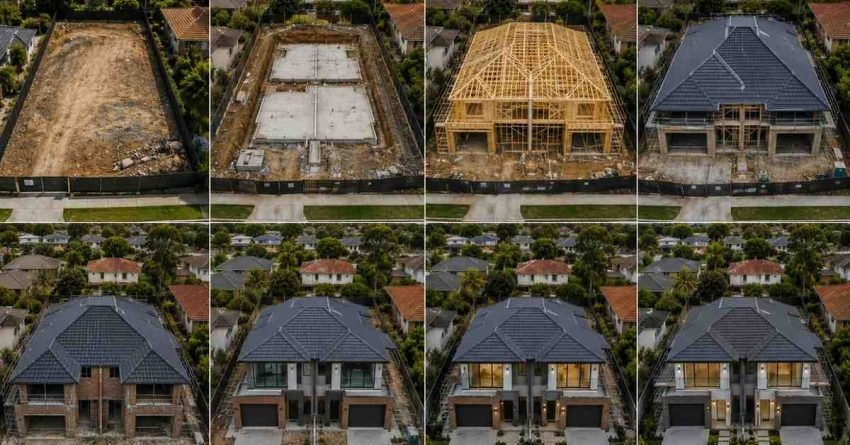
Building a duplex in Sydney typically takes 12 to 18 months from concept to keys, roughly 3 to 6 months of design and approvals followed by 9 to 12 months of on-site construction. Complex sites, council pathways, and finish selections shift this range in either direction.
Knowing realistic timeframes upfront helps homeowners and investors plan finance, lease end dates, and dual-occupancy income with confidence rather than guesswork. This guide breaks down each stage of a Sydney duplex build, the factors that stretch timelines, common delays to avoid, and proven ways to speed up your project.
Typical Duplex Build Timeline in Sydney
A standard Sydney duplex moves through two clear blocks. The first is the pre-construction phase covering design, engineering, council approvals, and contract signing, which usually runs 3 to 6 months. The second is the on-site construction phase, covering everything from demolition and footings through to practical completion, which typically takes 9 to 12 months for a standard two-storey duplex.
End to end, most projects land between 12 and 18 months.
| Phase | Typical Duration | Notes |
| Concept design + engineering | 6–12 weeks | Longer for custom architectural briefs |
| DA approval (council) | 3–6 months | Varies significantly by LGA |
| CDC approval (private certifier) | 20–40 business days | Only where design meets SEPP standards |
| Construction Certificate + contracts | 4–8 weeks | Follows DA; not required for CDC |
| Site works + footings | 4–6 weeks | Add 2–4 weeks for rock or sloping sites |
| Frame + lockup | 8–12 weeks | Two-storey standard duplex |
| Fixing stage | 8–12 weeks | Longest on-site phase |
| Practical completion + handover | 4–6 weeks | Includes OC and final certifier inspection |
| Total | 12–18 months | 10 months possible; 20+ months on complex sites |
Smaller, single-storey duplexes on flat lots with straightforward approvals can finish closer to 10 months. Larger three-bedroom designs on sloping sites, in conservation zones, or with custom finishes commonly stretch to 20 months or beyond. Two-storey duplexes add frame complexity and typically run 4 to 6 weeks longer on-site than single-storey equivalents on comparable lots.
These ranges assume a competent builder, a council with average processing times, and no major scope changes once contracts are signed.
Pre-Construction Phase: Design, DA, and Approvals
The pre-construction phase sets the rhythm for the whole project. Rushing this stage almost always creates expensive problems later, so it pays to plan it carefully.
Concept Design and Engineering
Concept design through to working drawings usually takes 6 to 12 weeks. This covers site analysis, floor plans, elevations, structural engineering, energy ratings (BASIX), and stormwater design. Custom architectural duplexes take longer, particularly where heritage overlays or complex site constraints require additional consultant input.
Development Application (DA) or CDC
Approval timing depends entirely on which pathway suits your site.
| Pathway | Timeframe | Best For |
| Complying Development Certificate (CDC) | 20–40 business days | Designs meeting all SEPP standards; flat or standard lots |
| Development Application (DA) | 3–6 months (can be longer) | Non-complying designs; complex sites; conservation zones |
A CDC is assessed by a private certifier rather than council, which removes the public notification period and most of the queue. A DA lodged with council can stretch further in busy LGAs or where objections are raised. The approval pathway is the single biggest timing lever available before construction starts.
Construction Certificate and Contracts
Once DA approval is granted, a Construction Certificate (CC) is required before work starts. Tender review, final selections, and contract execution generally add 4 to 8 weeks. This window is also when long-lead items windows, stone, imported tiles should be ordered to avoid delays later.
Construction Phase: From Site Works to Handover
Construction unfolds in predictable stages with predictable durations. Each milestone also triggers a progress payment, so understanding the sequence helps with cash-flow planning as well as scheduling.
Site Establishment and Footings
Demolition (if required), site setup, excavation, and slab pour usually take 4 to 6 weeks. Sloping or rock-affected sites can add 2 to 4 weeks for piering or retaining works. A geotechnical report commissioned before DA lodgement removes the risk of discovering rock mid-excavation and blowing the program.
Frame, Lockup, and Fixing Stages
Frame stage typically takes 4 to 6 weeks for a two-storey duplex. Lockup roof, external cladding, windows, and external doors adds another 4 to 6 weeks. The Fixing stage, covering internal linings, cabinetry, tiling, and joinery, generally runs 8 to 12 weeks and is consistently the longest on-site phase.
Practical Completion and Handover
Final fit-off, painting, landscaping, certifier inspection, and Occupation Certificate issue typically take 4 to 6 weeks. The Occupation Certificate is the legal document that allows the building to be occupied; without it, neither side of the duplex can be leased or settled. After practical completion, the defects liability period begins, but the keys are handed over.
Factors That Affect Your Duplex Build Time
Site conditions are the biggest swing factor on any duplex program. Rock excavation, contaminated soil, sloping blocks, demolition of an existing dwelling, and tight street access can each add weeks or months to the schedule. These are the variables that most often push a project from the 14-month range into the 18-to-20-month range.
Council and certifier processing times vary significantly across Sydney LGAs. Some inner-city councils average twice the DA assessment time of outer growth areas, and that gap alone can represent 2 to 3 months of additional pre-construction time. Choosing the CDC pathway where the design qualifies removes this variable entirely.
Weather, material lead times, and design complexity each play a role too. Prolonged wet periods during slab, frame, and external trades commonly cause 2 to 6 weeks of delay. Imported tiles, custom joinery, and specialised steel still carry extended lead times in parts of the supply chain. A duplex with bespoke joinery, stone benchtops, and feature stairs takes longer to detail and install than a project with standard inclusions, and that difference flows through every trade that follows.
Timeline and duplex construction costs are tightly linked. Site conditions and finish selections that extend the program almost always increase the budget too, which is why both need to be stress-tested at feasibility stage rather than after contracts are signed.
Common Delays and How to Avoid Them
Most duplex delays come from a small set of recurring causes. Mid-design DA revisions, late selections from clients, scope variations after contract signing, undocumented soil conditions, and overloaded builders running too many active sites all cost weeks at a time.
The fix is structural rather than reactive. Finalise all selections before contract signing, commission a detailed geotechnical report early in the design phase, lock specifications in writing, and confirm your builder’s current job load before signing anything.
Builder capacity deserves particular attention. A builder managing six active sites simultaneously has less scheduling flexibility than one running three. We ask every builder we consider to show us their current project list, their subcontractor relationships, and their average time between frame and lockup on recent jobs. Those three data points tell you more about likely program performance than any sales conversation.
How to Speed Up Your Duplex Construction
Several practical levers shorten a duplex program without cutting corners. The CDC pathway removes months from approvals for designs that qualify; it is the single highest-return timing decision available before construction starts.
Locking scope and selections before contracts are signed eliminates the biggest source of mid-build delay. Every variation after contract execution costs time twice: once to document and price it, and again when it disrupts the trade sequence. A fixed-price building contract with fully specified inclusions is the structural protection against this.
Engage a builder who self-performs key trades or has long-standing subcontractor relationships, sequence long-lead items windows, stone, tapware at the start of the build, and hold weekly site meetings to clear blockers before they compound. Together, these habits routinely save 4 to 8 weeks across a duplex program.
Conclusion
A Sydney duplex build is a predictable 12 to 18-month journey when planning, approvals, and construction are properly sequenced. Site conditions, council pathways, and selection discipline are the levers that move that timeline up or down.
Getting the early stages right is the single highest-return decision you can make for an on-schedule duplex. Every week saved on-site traces back to a decision made before the slab was poured.
We help Sydney homeowners and investors plan, approve, and build duplexes with clear timelines and honest communication at every stage. Talk to Sydney Home Renovation to map out your project timeline today.
Frequently Asked Questions
How long does duplex approval take in Sydney?
A Complying Development Certificate (CDC) is typically approved in 20 to 40 business days, while a council-assessed Development Application (DA) usually takes 3 to 6 months in Sydney.
Can you build a duplex in under 12 months?
Yes. Smaller single-storey duplexes on flat lots using the CDC pathway, fixed selections, and a builder with strong scheduling can finish in 10 to 11 months total.
What is the longest part of a duplex build?
The fixing stage and the DA approval process are usually the longest. Fixing typically runs 8 to 12 weeks on-site, and DA approvals can take 3 to 6 months in busy Sydney councils.
Does building a duplex take twice as long as a single home?
No. Both sides are built simultaneously by the same trades. A duplex takes roughly the same on-site time as a single large home; the parallel construction is what makes the investment case work.
How long after slab pour is a duplex finished?
After the slab, expect roughly 9 to 11 months to practical completion. Frame, lockup, fixing, and finishing each follow in sequence with predictable durations.
What delays a Sydney duplex build the most?
Late client selections, mid-build variations, rock or contaminated soil, council DA processing times, and wet weather during external stages are the most common causes of duplex delay.


