
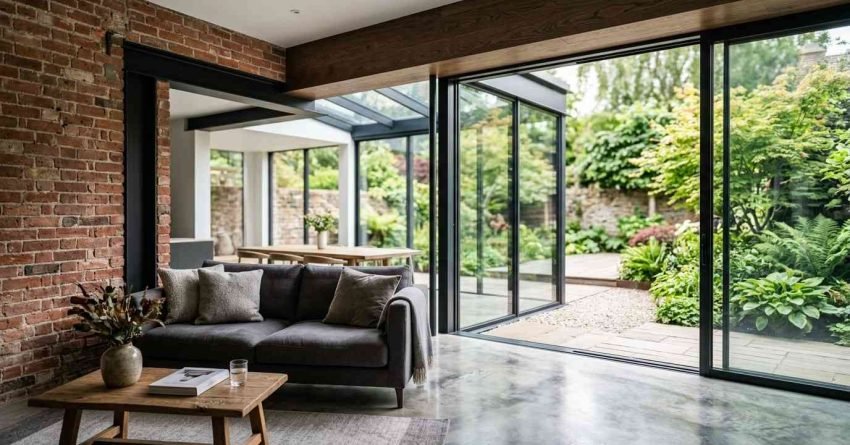
A home extension is almost always worth the investment when it solves a genuine space problem, suits the block, and adds liveable square metres that the local market values. For Sydney homeowners weighing cost against gain, the decision comes down to design quality, build budget, and long-term lifestyle return.
Rising property prices and limited inner-Sydney supply have made extending more attractive than relocating for many growing households. The financial case increasingly favours staying put and building smarter.
This guide breaks down the real benefits of home extensions, typical Sydney costs, expected return on investment, and the key risks every homeowner needs to plan around.
What Is a Home Extension?
A home extension is a structural addition that expands the existing footprint of a property to deliver more usable living space. The four most common formats are ground floor rear extensions, side additions, second storey builds, and granny flats or secondary dwellings.
A rear extension pushes the back of the home outward, typically opening into a new kitchen, living, or dining zone. A side addition uses unused boundary space to add a bedroom, bathroom, or utility room. A second storey addition builds vertically, doubling the home’s footprint without touching the backyard. A granny flat creates a self-contained dwelling on the same lot, which suits multigenerational households and generates rental income.
Unlike a full knock-down-rebuild, an extension preserves the original dwelling and adds to it. This makes it faster to deliver, generally cheaper than starting from scratch, and easier to finance because the existing structure continues to anchor the property’s value.
Extensions in Sydney are governed by local council planning controls, the National Construction Code, and the NSW State Environmental Planning Policy. Projects under certain size and setback thresholds qualify for a Complying Development Certificate, which a private certifier approves without council involvement. Larger or more complex projects require full Development Approval through the local council, which involves a formal assessment period and, in some cases, neighbour notification.

Top Benefits of a Home Extension
The strongest case for extending sits across four areas: space, value, personalisation, and long-term cost efficiency. Each delivers a measurable return when planned correctly.
More Living Space Without Moving
The most immediate benefit is space. An extension adds bedrooms, larger living zones, a second bathroom, a study, or an open-plan kitchen and dining area without changing suburbs, schools, or commute. For families growing into their home, this avoids the hidden costs of relocating, including stamp duty, agent commissions, and removalist fees, which in Sydney total 8–10% of the new purchase price according to NSW Fair Trading and Revenue NSW.
Increased Property Value
A well-designed extension typically lifts property value by more than its construction cost when the resulting layout matches buyer expectations in the suburb. Adding a second bathroom, a fourth bedroom, or a larger family room consistently delivers the strongest uplift across the Sydney market.
Personalised Design and Lifestyle Upgrades
Unlike buying an existing home, an extension lets us design exactly what the household needs. Natural light, ceiling heights, indoor-outdoor flow, and material finishes are all tailored to how the family actually lives, not how a previous owner chose to build. Bespoke joinery, wider openings, and considered orientation are details a finished home on the market rarely offers at the same price point.
The ability to integrate an alfresco or covered outdoor living area is one of the most requested design elements we see. A well-connected indoor-outdoor extension adds functional square metres that buyers and valuers recognise, particularly in Sydney’s climate.
Long-Term Cost Efficiency
Moving costs are largely sunk costs. Stamp duty in NSW on a median Sydney property runs into tens of thousands of dollars and returns nothing. Money invested in an extension stays inside the asset, appreciates with the market, and delivers daily lifestyle value for every year the owners remain in the home.
How Much Does a Home Extension Cost in Sydney?
Sydney home extension costs vary significantly by type, size, and finish level. The table below shows typical ranges based on current Rawlinsons Construction Cost Guide benchmarks.
| Extension Type | Standard (per m²) | Premium (per m²) | Typical Total (40m²) |
| Rear ground floor | $3,000–$4,500 | $4,500–$6,500 | $120,000–$260,000 |
| Side addition | $3,200–$4,800 | $4,800–$7,000 | $128,000–$280,000 |
| Second storey | $3,800–$5,500 | $5,500–$8,000+ | $152,000–$320,000 |
| Granny flat (detached) | $2,800–$4,200 | $4,200–$6,000 | $112,000–$240,000 |
Major cost drivers include:
- Site access and excavation: Tight Sydney blocks add significant labour cost
- Structural complexity: Removing load-bearing walls or adding upper levels increases engineering and crane requirements
- Finishes and fittings: Tiles, joinery, glazing, and appliances shift the budget by 20–40%
- Council approvals: DA fees, certifier costs, and consultant reports
- Services: Plumbing, electrical, and HVAC extension
Hidden costs to budget for include temporary accommodation if the home becomes uninhabitable mid-build, contingency for unknown site conditions (allow 10–15%), and post-build landscaping or restoration.
A knock-down-rebuild on the same Sydney block typically costs $350,000–$600,000+ for a standard four-bedroom home, making a well-scoped extension considerably cheaper for households that need to add one or two rooms rather than replace the entire structure.

Return on Investment: Will an Extension Add Value?
Return on investment depends on three variables: the cost of the build, the resulting valuation uplift, and the market conditions at sale. Most well-executed Sydney extensions return between 50% and 100% of construction cost in added value, with the strongest performers exceeding cost when local scarcity is high, according to CoreLogic’s renovation value research.
The projects that consistently deliver the best ROI correct a layout deficiency the market recognises. A three-bedroom home with one bathroom in a four-bedroom family suburb is undervalued. Adding the missing bedroom and bathroom closes that gap fully. Breaking down ROI by extension type gives a clearer picture:
- Adding a fourth bedroom in a suburb where four-bedroom homes command a significant premium typically returns 80–120% of build cost in added value
- Adding a second bathroom to a home with one is one of the highest-returning upgrades in Sydney, often returning more than its cost in suburbs where two-bathroom homes are the norm
- Expanding the living and kitchen area into an open-plan layout returns 50–80% of build cost, with the strongest results in inner-ring suburbs where buyers pay a premium for liveability
Extensions that overcapitalise push a home above the ceiling price for its suburb and return less. The local market sets the upper limit on what any property sells for, regardless of how much is spent.
How Long Does a Home Extension Take in Sydney?
The timeline from first conversation to handover typically runs 9–15 months for a standard ground floor extension and 12–18 months for a second storey. Understanding each phase helps with planning temporary accommodation, school terms, and financing drawdowns.
| Phase | Ground Floor | Second Storey |
| Design and documentation | 6–10 weeks | 8–14 weeks |
| CDC or DA approval | 4–8 weeks (CDC) / 8–20 weeks (DA) | 10–24 weeks (DA required) |
| Construction | 12–20 weeks | 20–32 weeks |
| Practical completion and defects | 2–4 weeks | 2–4 weeks |
The approval phase is the most variable. A CDC application on a straightforward rear extension in a standard residential zone moves quickly. A DA in a heritage overlay, a flood zone, or a sensitive streetscape takes considerably longer and benefits from early engagement with the council’s duty planner.
How to Finance a Home Extension in Sydney
Most Sydney homeowners fund an extension through one of three routes: equity release from the existing mortgage, a construction loan, or a combination of both.
Equity access is the most common path. If the home has appreciated since purchase, refinancing to release equity provides a lump sum or a redraw facility that draws down as construction milestones are reached. Lenders typically require a loan-to-value ratio of 80% or below after the extension is complete, so a current valuation and a realistic post-build estimate are essential before approaching the bank.
Construction loans are structured differently from standard home loans. Funds are released in progress payments tied to build milestones, which means interest accrues only on the drawn amount during construction. This suits larger projects where the full budget is not needed on day one.
We recommend getting pre-approval in place before signing a building contract. Lenders assess the post-construction value, not just the current one, so a detailed scope of works and a fixed-price contract from a licensed builder strengthens the application significantly.
When a Home Extension Is Worth the Investment
A home extension is worth the investment when these conditions align:
- Planning to stay 5+ years. Lifestyle return compounds with time.
- Home sits below suburb median size or bedroom count. Closing the gap delivers strong ROI.
- Block supports the design. Setbacks, easements, and zoning allow the addition.
- Build cost plus existing value stays under the suburb ceiling. Avoids overcapitalisation.
- Finances absorb a 10–15% contingency. Protects against budget shock.
For homeowners on narrow blocks where ground floor expansion is restricted, going up is often the smartest path. Vertical expansion suits tight lots where ground floor space is limited, and a second storey addition typically adds the most significant bedroom and bathroom count in a single project.
If the plan is to sell within two years, the maths generally favours selling the existing home and buying up rather than extending. Construction returns less in short timeframes once transaction costs are factored in.

Potential Risks and How to Avoid Them
Every extension carries risk, but most risks are predictable and manageable with proper planning.
Cost blowouts are the most common issue. They trace back to mid-build scope changes, unknown site conditions, or inadequate initial allowances. Locking in a fixed-price contract with a detailed scope of works and a defined variation process prevents most overruns. We always recommend a contingency of at least 10–15% above the contracted sum.
Approval delays stall projects by months. Engaging a builder familiar with the local council and submitting a complete, accurate DA package reduces the back-and-forth that delays approval. For CDC-eligible projects, using an experienced private certifier speeds the process considerably.
Quality issues show up years later as cracking, leaks, or finish failures. These trace back to undertrained labour or rushed sequencing. Using a licensed builder with verifiable Sydney references and insisting on milestone inspections protects the long-term result. We check builder licences through NSW Fair Trading’s licence lookup before recommending any contractor to our clients.
Disruption during the build is unavoidable but manageable. Clear staging plans, dust protection, and weekly client communication keep the household functional throughout construction.
Conclusion
A home extension delivers strong lifestyle and financial return when the project corrects a genuine space deficiency, fits the block, and stays within the suburb’s value ceiling. For most Sydney owner-occupiers planning a long-term stay, extending beats moving on both the numbers and the lifestyle outcome.
The decision rests on accurate costing, realistic ROI expectations, and disciplined project execution. Get those three things right and the investment pays back across decades of daily use and resale uplift.
At Sydney Home Renovation, we help homeowners plan, cost, and deliver extensions built for long-term value. Talk to our team today to get a realistic scope and budget for your project.
Frequently Asked Questions
Does a home extension add more value than it costs?
A well-designed extension typically returns 50–100% of build cost in added value, and often more when it corrects a layout gap the local market recognises. Suburb ceiling prices set the upper limit.
How long does a home extension take in Sydney?
Most ground floor extensions take 4–6 months from site start to handover, while second storey additions run 6–9 months. Design and approval add another 3–6 months before construction begins.
Do I need council approval for a home extension?
Yes, in nearly all cases. Smaller extensions qualify for a Complying Development Certificate through a private certifier. Larger projects require full Development Approval through the local council.
Is it cheaper to extend or move house in Sydney?
Extending is generally cheaper once stamp duty, agent commissions, and removalist costs are factored in. Those transaction costs total 8–10% of a new purchase and return nothing.
What is the best ROI home extension?
Adding a second bathroom, a fourth bedroom, or a larger open-plan living and kitchen area consistently delivers the strongest resale uplift in Sydney. Matching missing features to suburb buyer expectations drives the highest return.
How much contingency should I budget for an extension?
Allow 10–15% above the contracted build cost for variations, site unknowns, and finish upgrades. Tight Sydney blocks or older homes justify the higher end of that range.
Will my home extension be worth it if I sell soon?
If the plan is to sell within two years, an extension rarely returns its full cost after transaction fees. Selling the existing home and buying up makes more financial sense for short-term horizons.


