
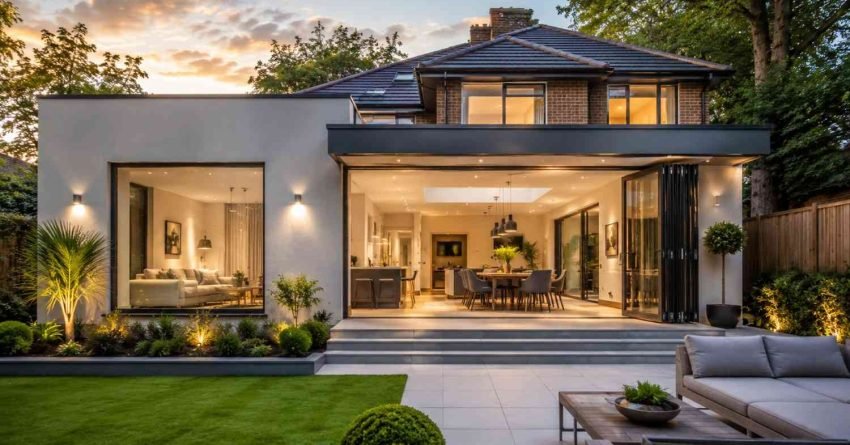
A home extension is worth it when the added space, lifestyle benefit, and property value gain exceed the construction cost and disruption. For most Sydney homeowners with a sound site and a clear brief, well-planned extensions and home additions deliver strong long-term returns both in equity and in daily quality of life.
With Sydney property prices climbing and family needs evolving, choosing between extending and relocating has become one of the most important financial decisions homeowners face. This guide explains the costs, value gains, approval pathways, financing options, and decision factors that determine whether your home extension delivers strong returns or becomes expensive regret.
What Determines If a Home Extension Is Worth It
The answer rarely comes down to one number. A home extension is worth it when three forces line up: a genuine space need, a property that can absorb more value, and a budget that covers the build without straining your finances. Miss any one of these and the project moves from smart investment to expensive lesson.
Lifestyle and Space Needs
Most successful extensions begin with a clear functional gap. A growing family needing a fourth bedroom, a work-from-home household needing a dedicated office, or a parent moving in and needing a private suite are all examples where the new floor area solves a problem you would otherwise pay to escape by moving.
Property Value Potential
The suburb sets the ceiling. If comparable extended homes in your street sell for significantly more than your current property, there is room to add value. If they sell for only marginally more, the upside shrinks fast.
Budget and Loan Capacity
A realistic budget includes design fees, council approvals, construction, finishes, and a contingency of at least 10–15 percent. Stretching beyond your serviceable loan amount turns a good project into a financial trap.
Types of Home Extension in Sydney
Not all extensions are the same, and the type you choose shapes both the cost and the value outcome. Understanding the options before committing to a design saves time, money, and planning headaches.
Rear Extension
A rear extension pushes the footprint of the home toward the back boundary. It is the most common type in Sydney because rear yards typically offer the clearest access and the fewest setback complications. Rear extensions suit open-plan kitchen-living-dining expansions and indoor-outdoor connections.
Side Return Extension
A side return fills the narrow gap that runs alongside many semi-detached and terrace homes. The usable area is often modest, but the gain in kitchen or living width transforms how a home feels and functions. Side returns are popular in inner-west and eastern suburbs where rear yards are small.
First-Floor Addition
A first-floor addition adds a full or partial upper level to a single-storey home. It is the highest-cost option per square metre but delivers the largest floor area gain without reducing the backyard. First-floor additions suit families who need multiple bedrooms and want to preserve outdoor space.
Secondary Dwelling (Granny Flat)
A secondary dwelling is a self-contained unit built on the same lot as the main home. It creates a separately tenantable space that generates rental income, suits multigenerational living, and often qualifies for faster approval under complying development rules. For homeowners whose primary goal is yield rather than family space, a secondary dwelling frequently delivers a stronger return on investment than extending the main house.
Average Cost of a Home Extension in Sydney
Home extension pricing in Sydney typically falls between $3,000 and $6,000 per square metre for quality builds, with high-end finishes and complex sites pushing higher. A modest 30 square metre rear extension lands anywhere from $90,000 to $200,000 depending on inclusions.
Ground-Floor Extension Cost
Ground-floor additions are the most cost-efficient option because foundations, slabs, and roof tie-ins are simpler than upper-level work. Budget for excavation, slab or suspended floor, framing, roofing, windows, internal linings, electrical, plumbing, and finishes. Wet areas, bathrooms, kitchens, and laundries, add the most cost per square metre, often $15,000–$30,000 more than a dry living or bedroom addition of the same size. A suspended timber floor over a sloping site adds cost compared to a flat slab, and that difference shows up early in any honest quote.
Second-Storey Addition Cost
Going up rather than out triggers structural upgrades, scaffolding, and temporary roof removal that ground-floor work avoids. The existing structure often needs reinforcement to carry the additional load, and most families need to temporarily relocate during the most disruptive construction phase. Second storeys typically cost 20–40 percent more per square metre than equivalent ground-floor work, but they preserve the backyard and deliver the largest bedroom count gain of any extension type.
Hidden and Variable Costs
Site access, sloping blocks, asbestos in older homes, stormwater upgrades, retaining walls, and council requirements regularly add tens of thousands beyond the base build price. Common surprise costs we see on Sydney sites include:
- Asbestos removal in pre-1990 homes: $3,000–$15,000 depending on volume and type
- Stormwater detention required by many councils: $5,000–$12,000
- Retaining walls on sloping blocks: $10,000–$40,000+ depending on height and material
- Neighbour notification and boundary survey fees: $1,500–$4,000
- Temporary accommodation during second-storey construction: $5,000–$20,000
Pricing varies dramatically by structure type, site conditions, and finish level. A contingency of at least 10–15 percent on top of the base contract price is not optional, it is the difference between a project that finishes on budget and one that doesn’t.
How Council Approval Works for a Sydney Home Extension
Most Sydney home extensions require formal approval before a single wall goes up. The pathway you take determines how long the process takes and what design constraints apply.
Complying Development Certificate (CDC)
A CDC is a fast-track approval issued by a private certifier rather than council. Extensions that meet the standard size, setback, and height requirements under the State Environmental Planning Policy (Exempt and Complying Development Codes) SEPP qualify for this pathway. Approval typically takes 10–20 business days. Most straightforward rear and side extensions on standard residential lots qualify.
Development Application (DA)
A DA goes through your local council and is required when the proposed extension does not meet CDC standards, for example, on heritage-listed properties, flood-affected land, or sites with unusual setbacks. DA timelines in Sydney range from 40 to 120 days depending on the council and the complexity of the application. Heritage overlays, bushfire ratings, and sewer easements all trigger DA requirements and add cost to the approval process.
Exempt Development
Minor works under specific size and setback thresholds require no approval at all. Pergolas, small sheds, and minor internal alterations often qualify. Any structural addition to the main dwelling almost always requires either a CDC or a DA.
How to Finance a Home Extension in Sydney
Most Sydney homeowners fund extensions through one of two routes: equity access or a construction loan. Understanding how each works protects your cash flow through the build.
Accessing Home Equity
If your home has increased in value since purchase, you may be able to refinance or draw on a home equity line of credit to fund the extension. Lenders typically allow borrowing up to 80 percent of the property’s current value minus the outstanding mortgage. This approach suits homeowners with significant equity who want a straightforward drawdown without a separate loan product.
Construction Loans
A construction loan releases funds in stages, called progress payments, that align with the builder’s construction milestones: slab, frame, lock-up, fit-out, and completion. You pay interest only on the amount drawn at each stage, which reduces carrying costs during the build. Construction loans convert to a standard mortgage on completion. They suit larger projects where the total cost exceeds what equity access alone can cover.
What Lenders Assess
Lenders assess the post-construction value of the property, not just the current value. A well-designed extension that lifts the property into a higher price bracket can improve your borrowing position. Bring a builder’s fixed-price contract and council-approved plans to any finance conversation, lenders move faster with both in hand.
How a Home Extension Adds Value to Your Property
A well-executed extension creates value on two fronts: the immediate uplift in market price and the years of improved living before you ever sell. The strongest projects deliver both.
Resale Value Uplift
Sydney buyers consistently pay more for additional bedrooms, second bathrooms, open-plan kitchen-living areas, and indoor-outdoor flow. Adding a fourth bedroom with an ensuite, for example, moves a home into a higher buyer bracket entirely, often adding $150,000–$300,000 in value in well-located suburbs. A second bathroom on a three-bedroom home regularly returns more than its construction cost in resale uplift. Open-plan kitchen-living-dining extensions with alfresco access are the single most requested layout by Sydney buyers, and properties that deliver it sell faster and at stronger prices than comparable homes without it. Value uplift depends on how the extension integrates with the rest of the property, a poorly connected addition that disrupts flow can actually reduce buyer appeal.
Long-Term Lifestyle ROI
Resale gains are only part of the equation. The years spent with extra space, better light, and a layout that suits how your family actually lives carry real value, even if it never shows up on a contract of sale. For homeowners planning to stay ten or more years, lifestyle ROI compounds over time, every year in a home that works well is a year you are not paying to move, not compromising on space, and not managing the stress of a layout that no longer fits. That accumulated benefit is real, even when it is hard to put a dollar figure on it.
When a Home Extension Is Not Worth It
Not every home should be extended. Knowing when to walk away protects you from sinking money into a project that the market will never return.
Overcapitalisation Risk
Overcapitalising means spending more on the property than the suburb will reward. If your finished home prices above the suburb ceiling, you are unlikely to recover the cost on sale. This is most common when premium extensions are added to homes in mid-market streets. The test is simple: find the top three recent sales of extended homes in your street and compare them to your projected post-extension value. If the gap is narrow, the numbers do not work.
Site and Planning Constraints
Heritage overlays, flood zones, bushfire ratings, sewer easements, narrow blocks, and side setback rules make some extensions either impossible or so expensive they no longer make financial sense. A pre-design site assessment surfaces these issues before you commit to design fees and council costs. When the floor plan already works and the suburb ceiling is close, focused improvements, a kitchen upgrade, a bathroom renovation, or an outdoor living area, often deliver stronger returns than added square metres.

Home Extension vs Moving House: A Cost Comparison
Extending looks expensive in isolation. It looks very different next to the true cost of relocating in Sydney.
True Cost of Selling and Buying
Stamp duty alone on a $1.5 million Sydney purchase exceeds $67,000. Add agent commission on the sale, conveyancing, removalists, loan establishment fees, and the inevitable cosmetic work on the new property, and total moving costs often pass $120,000 before you have gained a single extra square metre. None of those costs return value, they are pure transaction friction. An extension, by contrast, reinvests every dollar into the property you already own.
When Extending Beats Relocating
Extending wins when you love your location, your block has room to grow, and the suburb ceiling sits well above your current home value. Moving wins when the property has structural problems, the suburb caps your upside, or your needs have changed beyond what any extension can resolve. The honest comparison is not extension cost versus purchase price, it is extension cost versus the full cost of moving, including stamp duty, agent fees, and the premium you pay to buy into a suburb that already has what you need.
How to Maximise ROI on Your Home Extension
A worthwhile extension is engineered, not hoped for. Two decisions drive most of the return.
Smart Design Choices
Prioritise layouts that future buyers want: open-plan kitchen-living-dining, a second living zone, an extra bedroom with bathroom access, and strong connection to outdoor space. North-facing living areas, covered alfresco zones, and integrated storage consistently rank as the features Sydney buyers pay most for. Keep finishes mid to upper-mid range. Premium finishes rarely return their cost outside premium suburbs, and the money saved on finishes is better spent on floor area or structural quality. A well-designed 40 square metre extension with practical finishes outperforms a 25 square metre extension with luxury tiles every time.
Choosing the Right Builder
A fixed-price contract from a licensed builder with transparent allowances, detailed inclusions, and a realistic timeline protects your budget more than any design choice. The difference between a fixed-price contract and a cost-plus arrangement is the difference between a predictable project and one where every variation becomes a negotiation. Check that your builder holds a current NSW contractor licence, carries home building compensation insurance, and has a track record of completing extensions on time. Variations, delays, and vague prime-cost allowances are where extension budgets quietly bleed out, and where the cheapest quote on paper becomes the most expensive project in practice.
Conclusion
A home extension is worth it when site potential, suburb ceiling, design quality, and builder accountability all line up behind a clear family need. The strongest projects deliver immediate lifestyle gains and long-term equity growth, and the numbers consistently reward homeowners who plan carefully over those who rush approvals or chase the lowest quote.
Sydney homeowners who cost honestly, choose the right approval pathway, and build with a licensed partner consistently outperform those who skip the planning stage. Every dollar of preparation saves multiples in construction.
At Sydney Home Renovation, we help homeowners turn extension plans into finished, on-budget projects, from the first site assessment through to the final inspection. Talk to our team today to get a clear picture of what your extension will cost, what it will return, and how to make it happen without the stress.
Frequently Asked Questions
How much does a home extension cost in Sydney?
Most quality Sydney extensions cost between $3,000 and $6,000 per square metre, putting a typical 30–50 square metre addition between $90,000 and $300,000 depending on site, finishes, and complexity.
Does a home extension always add value?
No. Extensions add value when the finished property stays under the suburb ceiling and matches what local buyers want. Overcapitalising, poor design, or unapproved work reduces value instead.
Is it cheaper to extend or move house in Sydney?
Extending is usually cheaper than moving once stamp duty, agent fees, conveyancing, and relocation costs are added up, especially for homeowners in well-located suburbs with room to build.
How long does a Sydney home extension take?
Most ground-floor extensions take four to six months on site after approvals. Second-storey additions typically take six to nine months. Council approval adds a further two to four months upfront.
Do I need council approval for a home extension?
Most extensions require either a Complying Development Certificate or a full Development Application. Minor works under specific size and setback limits may qualify as exempt development.
What is the biggest mistake homeowners make when extending?
Underestimating contingency. Site surprises, design changes, and material price movements regularly add 10–15 percent. Builders who win on price but rely on variations cause most budget blowouts.
What is the difference between a CDC and a DA for a home extension?
A CDC is approved by a private certifier in 10–20 business days for standard extensions that meet code requirements. A DA goes through council and takes 40–120 days, required for heritage sites, flood zones, or non-standard setbacks.


