Labour typically accounts for 40% to 60% of a bathroom renovation budget in Sydney, with most full renovations costing between $8,000 and $18,000 in labour alone. The exact figure depends on the scope, layout changes, fixture quality, and the number of trades involved across plumbing, electrical, waterproofing, tiling, carpentry, and finishing.
Understanding labour costs upfront prevents the budget shocks that derail most first-time renovations and helps you weigh design choices against real-world pricing before committing to a contract.
This guide breaks down what each trade charges, why Sydney labour rates vary, the hidden costs most quotes miss, and how to control your budget without sacrificing the finish you want.
What Bathroom Renovation Labour Costs Actually Cover
Bathroom renovation labour costs cover every hour of skilled trade work required to transform a wet area, including demolition, rough-in plumbing, electrical wiring, waterproofing, tiling, carpentry, plastering, painting, fixture installation, and final cleanup. Labour is the human cost of the project, separate from materials, fittings, and council fees.
Most Sydney bathroom renovations involve six to nine licensed trades working in sequence over two to four weeks. Each trade has its own day rate, minimum charge, and scope of work, and small overlaps or delays between trades compound quickly across a project.
Trades Involved in a Bathroom Renovation
A standard bathroom renovation calls on:
- Demolition labourers to strip the existing space
- Plumbers for rough-in and fit-off
- Electricians for lighting, power, exhaust fans, and heated towel rails
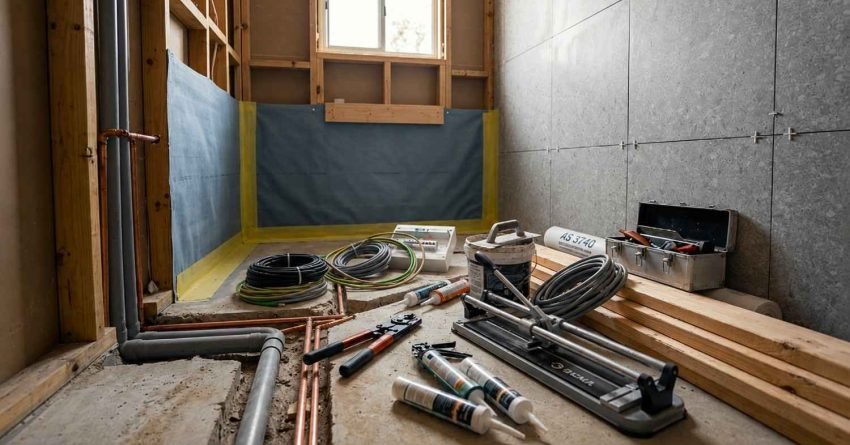
- Waterproofers certified to apply membrane to AS 3740
- Tilers for floor and wall finishes
- Carpenters for vanities, niches, and structural changes
- Plasterers and painters for ceilings and exposed walls
- Glaziers for shower screens and mirrors
Each trade brings tools, expertise, and licensing that protects compliance and warranty.
Labour vs Materials in the Total Budget
For a standard Sydney bathroom, materials and fittings make up around 40% to 60% of the total cost, with labour accounting for the remainder. Premium fixture choices shift the ratio toward materials, while complex layout changes or older homes push the ratio toward labour.
Labour is one cost layer inside a larger project budget that also includes fixtures, fittings, council fees, and contingency. Understanding where each layer sits helps you make design decisions that genuinely move the number.
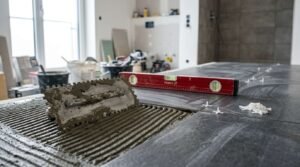
Typical Bathroom Renovation Labour Costs in Sydney
Sydney labour rates sit at the higher end of the national range due to demand, licensing requirements, and the cost of operating across metropolitan suburbs. The figures below reflect typical 2025 to 2026 pricing for a standard residential bathroom of 4 to 6 square metres.
Labour Cost Summary by Trade
| Trade | Typical Labour Range | Key Cost Variables |
| Plumbing | $2,500–$5,500 | Layout changes, number of fixtures, slab penetrations |
| Electrical | $800–$2,200 | Circuits, heated floors, exhaust ducting |
| Waterproofing | $600–$1,200 | Wet area size, membrane system, inspection |
| Tiling | $1,800–$4,800 | Tile format, pattern complexity, floor prep |
| Carpentry | $1,000–$3,500 | Custom vanities, niches, structural changes |
| Plastering & Painting | $600–$1,500 | Ceiling area, exposed walls, finish level |
| Demolition | $800–$1,800 | Access, asbestos, waste disposal |
Labour Cost Per Square Metre
As a general benchmark, bathroom renovation labour in Sydney runs between $1,200 and $2,500 per square metre of wet area, depending on scope and complexity. A compact 3 sqm ensuite at the lower end of that range sits in a very different budget bracket from a 7 sqm main bathroom with full layout changes.
Per-square-metre rates are useful for early budgeting but lose accuracy quickly once layout changes, premium fixtures, or access constraints enter the picture. A detailed trade-by-trade quote always gives a more reliable number than a sqm estimate alone.
Plumbing Labour Costs
Plumbing is usually the largest single labour line item, ranging from $2,500 to $5,500 for a standard renovation. This covers rough-in work (relocating waste pipes, water supply lines, and floor wastes) and fit-off (installing tapware, toilets, basins, showers, and connecting the vanity). Moving plumbing points to change the layout adds $500 to $1,500 per relocation, since walls and slabs may need to be opened and patched.
Electrical Labour Costs
Electrical labour typically costs $800 to $2,200, depending on how many new circuits, downlights, GPOs, and IXL-style heat lamps are installed. Modern bathrooms often include heated floors, demister mirrors, and exhaust fans ducted to the exterior, each of which adds wiring and certification time. All work must be performed by a licensed electrician and certified through the relevant compliance process.
Tiling and Waterproofing Labour Costs
Tiling and waterproofing labour combined ranges from $2,500 to $6,000 for a full bathroom. Waterproofing alone costs around $600 to $1,200 and must comply with Australian Standard AS 3740, the wet area waterproofing code enforced by NSW Fair Trading.
A compliant AS 3740 waterproofing job includes surface preparation, a minimum of two membrane coats applied to the correct thickness, curing time between coats, and a waterproofing certificate issued before tiling begins. Tilers typically charge $50 to $90 per square metre for standard ceramic or porcelain tiles, with mosaic tiles, large-format slabs, and herringbone patterns priced higher due to slower lay times.
Carpentry, Plastering and Painting Labour Costs
Carpentry for custom vanities, wall niches, bulkheads, or structural changes ranges from $1,000 to $3,500. This trade is frequently underquoted in early estimates because scope items like bulkhead framing, niche boxing, and make-good work after plumbing relocations are easy to overlook until demolition reveals what is actually needed. Plastering and painting of ceilings and any exposed walls usually adds $600 to $1,500, and both trades are essential for the final finish quality.

Factors That Influence Bathroom Labour Costs
Two bathrooms of identical size carry labour quotes that differ by $5,000 or more. The drivers below explain why, and they are the variables you can negotiate or design around before signing a contract.
Bathroom Size and Layout Changes
Larger bathrooms take longer to tile, waterproof, and fit out, but the bigger cost driver is layout change. Keeping plumbing in its existing location is the single most effective way to reduce labour. Moving the toilet, shower, or vanity wall typically adds $1,500 to $4,000 to the total, because it triggers extra plumbing, electrical, carpentry, and waterproofing hours.
Ensuite vs. Main Bathroom Labour Costs
Ensuites are typically smaller 2 to 4 sqm and often share a plumbing wall with the main bathroom, which reduces rough-in complexity. Labour for a standard ensuite renovation generally runs $5,000 to $10,000, compared to $8,000 to $18,000 for a full main bathroom. The gap widens significantly if the ensuite requires a new exhaust duct run or layout changes that cross into a bedroom wall.
Quality of Fixtures and Finishes
Higher-end fixtures take more time to install correctly. Wall-hung vanities, concealed cisterns, frameless shower screens, and feature tiles all require precision work and specialist trade time. A standard fit-off might take a plumber half a day, while a premium fit-off with wall-hung fixtures takes a full day or more.
Site Access, Age of Home, and Compliance
Older Sydney homes particularly pre-1980 builds often hide outdated plumbing, asbestos sheeting, or non-compliant wiring. Removing and replacing these adds labour, disposal fees, and time. Asbestos-containing materials were commonly used in Australian homes built before 1987, and testing is mandatory before any demolition work in these properties.
Apartments and homes with restricted access (narrow stairwells, no lift, on-street parking only) attract higher labour quotes because of slower handling time for materials and waste. Strata properties add another layer approval from the owners corporation is required before structural or waterproofing work begins, and the approval process itself adds time and sometimes a certifier fee to the project.
How Trade Sequencing Affects the Timeline and Budget
A bathroom renovation runs in a fixed sequence: demolition → rough-in plumbing and electrical → waterproofing → tiling → fit-off plumbing and electrical → carpentry and glazing → painting. Each trade must complete and clear before the next begins, and a delay at any point pushes every subsequent trade back.
In a well-coordinated project, this sequence runs over two to four weeks. When trades are booked independently rather than managed under one contract, gaps between bookings stretch the timeline and add mobilisation costs each time a trade returns. Coordinating all trades under a single contractor removes this risk and locks the sequence in from day one.
Hidden Labour Costs Most Homeowners Miss
These are the labour line items most often absent from initial quotes:
- Demolition and waste removal ($800 to $1,800), often quoted separately or excluded
- Asbestos testing and removal ($500 to $3,000 in older homes)
- Make-good work to adjoining rooms after pipe relocations or wall removal
- Subfloor repairs discovered during demolition
- Council and certifier fees for structural changes or strata approvals
- Tradesperson call-back fees for warranty or minor defect work
- Project management hours if you are coordinating trades yourself
Building a contingency of 10% to 15% into the labour budget covers most of these surprises without forcing a mid-project compromise on finishes.

How to Plan, Compare, and Control Labour Costs
The most reliable way to control labour costs is to start with a fixed-scope quote from a contractor who manages all trades under one contract. This removes coordination risk, eliminates double-handling, and locks in pricing before work begins. Get at least two detailed quotes, and treat any quote under the market range as a warning sign rather than a saving.
Avoid changing scope after the contract is signed. Mid-project variations are the single biggest cause of budget blowouts, since they disrupt trade sequencing and often require return visits at premium rates.
Reading a Detailed Bathroom Renovation Quote
A trustworthy quote separates labour and materials line by line, names each trade, specifies the brand and model of every fixture, and includes a waterproofing certificate, electrical compliance certificate, and a written warranty period. If a quote bundles everything into one figure with no breakdown, ask for an itemised version before comparing.
Watch for these red flags in any quote: no waterproofing line item listed separately, no fixture brands or models specified, and a total price more than 20% below the market range for the same scope. Each of these signals either missing scope or a contractor planning to cut corners once work begins. A quote that cannot be itemised is a quote that cannot be trusted.

Where Bathroom Labour Costs Fit in a Wider Renovation
Bathroom labour is rarely a standalone decision. Many Sydney homeowners renovate the kitchen at the same time, and understanding how kitchen renovation labour costs compare particularly across cabinetry installation, appliance connection, and splashback tiling helps you plan both budgets together rather than treating them as separate projects.
Wet-area trades like plumbing, waterproofing, and tiling overlap heavily between rooms. Combining a bathroom and laundry renovation into the same project window reduces overall labour costs by sharing trade mobilisations the plumber, waterproofer, and tiler visit once and complete both rooms rather than returning for a second mobilisation.
If the bathroom is part of a larger project, sequencing trades across multiple rooms from the start reduces duplication, cuts mobilisation fees, and compresses the total timeline. A whole-home renovation approach means every trade is booked in the correct order across all wet areas simultaneously, which is where the largest labour savings are found.
Where Bathroom Labour Costs Fit in a Wider Renovation
Bathroom labour is rarely a standalone decision. Many Sydney homeowners renovate the kitchen at the same time, and understanding how kitchen renovation labour costs compare particularly across cabinetry installation, appliance connection, and splashback tiling helps you plan both budgets together rather than treating them as separate projects.
Wet-area trades like plumbing, waterproofing, and tiling overlap heavily between rooms. Combining a bathroom and laundry renovation into the same project window reduces overall labour costs by sharing trade mobilisations the plumber, waterproofer, and tiler visit once and complete both rooms rather than returning for a second mobilisation.
If the bathroom is part of a larger project, sequencing trades across multiple rooms from the start reduces duplication, cuts mobilisation fees, and compresses the total timeline. A whole-home renovation approach means every trade is booked in the correct order across all wet areas simultaneously, which is where the largest labour savings are found.
Conclusion
Labour costs sit at the heart of every bathroom renovation budget, shaped by trade rates, layout decisions, fixture complexity, and the condition of the existing space. Understanding each line item turns a vague estimate into a controllable plan.
A realistic Sydney bathroom renovation labour budget of $8,000 to $18,000, paired with a 10% to 15% contingency and a detailed itemised quote, gives you the foundation to finish on time and on budget without compromising on finish.
At Sydney Home Renovation, we deliver transparent labour pricing, coordinated trade scheduling, and quality workmanship across every bathroom project, so you can renovate with confidence. Request a detailed quote today and take the guesswork out of your budget.
Frequently Asked Questions
How much does labour cost for a bathroom renovation in Sydney?
Labour for a standard Sydney bathroom renovation ranges from $8,000 to $18,000, representing 40% to 60% of the total budget. The exact figure depends on layout changes, fixture quality, and the age of the home.
Which trade is the most expensive in a bathroom renovation?
Plumbing is usually the most expensive single trade, costing $2,500 to $5,500 for rough-in and fit-off work. Relocating plumbing points adds significantly more, since walls and slabs may need to be opened and reinstated.
Can I reduce labour costs by keeping the existing layout?
Yes. Keeping plumbing fixtures in their original positions saves $1,500 to $4,000 in labour. It avoids extra plumbing hours, additional waterproofing, and the carpentry needed to reframe walls or rebuild bulkheads.
Are waterproofing and tiling priced together or separately?
They are usually quoted as separate line items but performed in sequence. Waterproofing typically costs $600 to $1,200 and must comply with AS 3740. Tiling is then priced per square metre based on tile type and pattern complexity.
Why are Sydney bathroom labour rates higher than other cities?
Sydney has higher trade demand, stricter licensing oversight, and elevated operating costs across metropolitan suburbs. These factors lift hourly and day rates above national averages, particularly for licensed plumbers, electricians, and certified waterproofers.
How long does a standard bathroom renovation take?
A standard Sydney bathroom renovation takes two to four weeks of active work, depending on the scope, layout changes, and trade availability. Older homes or apartments with access restrictions extend the timeline by a week or more.
Should I get a fixed-price labour quote or hourly rates?
A detailed fixed-price quote is almost always safer for homeowners. It locks in scope, reduces budget risk, and prevents mid-project disputes. Hourly rates are only suitable for small repairs or variations to an already agreed contract.